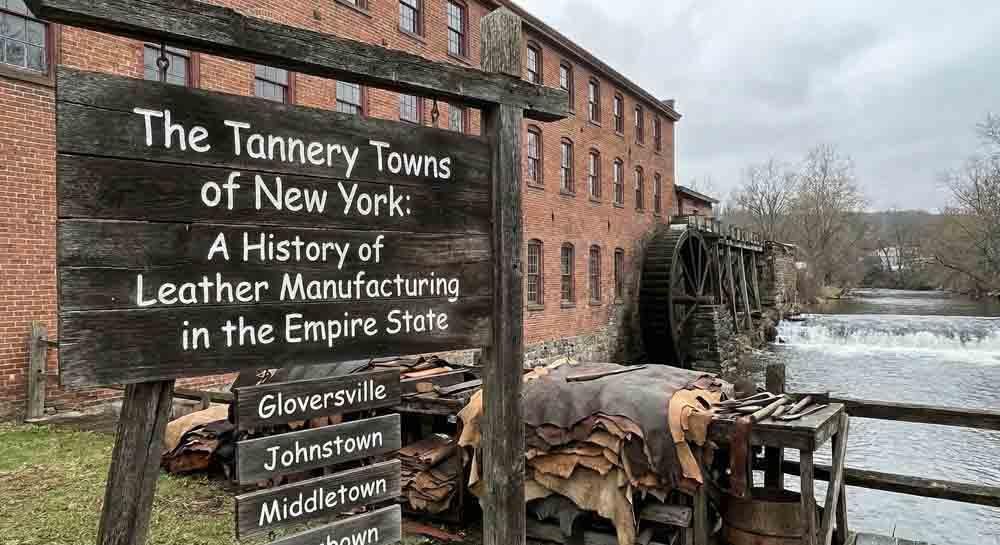
There is a particular quality of silence in the forests above Prattsville, Greene County, that tells you something happened here—something vast and extractive and irrevocable. The mixed hardwoods that blanket the Catskill slopes today are second-growth, a replacement ecosystem that rose from the devastated earth left behind when an estimated seventy million eastern hemlocks were felled in a single generation to feed the tanning vats of the Empire State’s leather industry (Northern Woodlands, 2011). Walk these trails on a September morning, when the mist lifts off the Schoharie Kill and the air carries the faintest mineral edge of creek water over stone, and you are walking through a landscape of recovery—a place where ecological catastrophe gave way to what local historian Paul Misko calls “an environmental disaster with a happy ending” (Hudson Valley One, 2018). I think about that paradox often, standing behind the flattop at The Heritage Diner in Mount Sinai at five in the morning, working a cast-iron surface whose seasoning took twenty-five years to build. Leather, like cast iron, like a good diner, like a well-made briefcase, is an artifact of patience. And New York’s leather story—from the reeking swamp of lower Manhattan to the silent Catskill ridges, from the glove cutters of Fulton County to the bespoke atelier craftsmen of today—is the story of what happens when patience collides with ambition, when an industry transforms not just raw hides but entire communities, entire geographies, entire economies. It is the story of the Empire State itself.
The Swamp: Where New York’s Leather Legacy Began
The Dutch established New York’s first large-scale tannery in 1638, in the low-lying marshlands of New Amsterdam near what is now the Brooklyn Bridge approach. The neighborhood earned its name—”The Swamp”—honestly. By 1790, tens of thousands of hides from the West Indies and Central and South America were being processed in a damp quarter south of today’s City Hall, along Gold, Frankfort, Pearl, Water, and Ferry Streets (Silverman and Silver, The Catskills: Its History and How It Changed America). The noxious odors and organic waste discharged into the streets made the area notorious even by the standards of colonial sanitation. A 1939 magazine profile of Manhattan’s commercial districts noted that “The Swamp” remained the headquarters for more than half of the city’s two hundred leather jobbers and hide dealers well into the twentieth century, with stocks of skins from every continent carried in tumbledown buildings: sheepskins, kangaroo skins, snakeskins, goatskins, horsehides (Ephemeral New York, 2022).
What the city lacked, however, was the essential ingredient for the tanning process itself: bark. Three elements were non-negotiable for nineteenth-century leather production—lime to strip the hair from raw hides, abundant clean water, and massive quantities of tannin-rich bark. Alexander Hamilton understood this as well as anyone. In his landmark Report on the Subject of Manufactures in 1791, he wrote that there were scarcely any industries of greater importance to the young republic than leather (Encyclopedia.com). Hamilton’s insight was prophetic: by mid-century, tanning ranked as America’s fifth-largest industry by both employment and number of establishments. And New York, with its convergence of port access, waterways, and vast hemlock forests, would become the epicenter of that industry’s explosive growth.
This is something I recognize in my own work. Whether I am sourcing the Heritage Diner’s beef from local North Shore farms or hand-selecting J&E Sedgwick English bridle leather for a Marcellino NY briefcase at my workshop in Huntington, the logic is the same: raw material, water, time, expertise, and an intimate understanding of place. Hamilton could not have imagined the Marcellino standard of bespoke craftsmanship, but he understood implicitly that leather, like liberty, was built from the ground up.
The Hemlock Empire: Catskill Tanneries and the Boom That Consumed a Mountain Range
The migration of tanning from Manhattan’s Swamp to the Catskill Mountains was driven by a single botanical fact: the bark of the eastern hemlock (Tsuga canadensis) contains exceptionally high concentrations of tannin, and the Catskill slopes were covered with millions of these trees. In 1805, British researchers had demonstrated that hemlock bark could substitute for the traditional oak bark used in European tanning, and by 1817, Colonel William Edwards had constructed the region’s first large-scale tannery at what is now the village of Hunter (Northern Woodlands, 2011). The rush was on.
Edwards was a Massachusetts man, a serial entrepreneur who had made and lost several fortunes in the leather trade. His Catskill operation brought mechanical innovations to the industry—including a hide mill for softening and a roller mill for finishing sole leather—but his ambitions outpaced his capital. By 1839, he had filed for bankruptcy. The town of Hunter, which had been renamed Edwards in his honor, reverted to its original name—a quiet act of civic resentment that speaks volumes about the precariousness of these tannery communities (Hudson Valley One, 2018).
The man who would eclipse Edwards in every way was Zadock Pratt. A congressman, civic visionary, and relentless industrialist, Pratt purchased a meadow on the Schoharie Kill in 1824 for thirteen hundred dollars and within eighty-two days had constructed a tannery that would become the world’s largest. The building was 350 feet long, two and a half stories high, and contained three hundred tanning vats. Over its twenty-year operation, the Prattsville tannery processed an estimated one million sides of sole leather using 6,000 cords of bark annually—stripping roughly 400,000 hemlock trees in the process (Zadock Pratt Museum; Sullivan County Historical Society). The town of Prattsville, built entirely around the tannery, swelled to two thousand residents. When the operation closed, Pratt had the foresight to transition his workers into sawmills and dairies. Not every tannery baron showed such conscience.
By 1860, the five Catskill counties of Delaware, Schoharie, Ulster, Orange, and Sullivan accounted for nearly one-third of New York’s annual leather output, valued at over seven million dollars. Sullivan County alone produced half of that total. The Union Army marched to war on Sullivan-tanned red leather—the distinctive amber hue imparted by hemlock bark—and their horses wore saddles and harnesses cut from locally processed hides (Sullivan County Historical Society). At peak production, sixty-four tanneries operated simultaneously across the Catskill region. An 1856 New York Times article noted that a single large-class tannery consumed nearly a square mile of hemlock forest per year (Mike Redwood, United States Leather Company).
The environmental cost was staggering. Mountainsides were stripped bare. Tannery sludge choked the creeks. Fishing collapsed. And when the hemlocks were exhausted—as everyone knew they would be—the industry simply moved on, leaving behind eroded slopes, abandoned communities, and waterways that would take generations to recover. But from this devastation emerged something remarkable: the denuded land was acquired by New York State, forming the nucleus of the Catskill Forest Preserve, which today protects some of the most beautiful mixed hardwood forests in the Northeast (Hudson River Valley Heritage Exhibits). The disaster birthed the conservation movement. The wound became the medicine.
The Glove Cities: Gloversville, Johnstown, and the Artisan Economy of Fulton County
While the Catskills processed heavy sole leather for the nation’s boots and belts, a different leather culture was taking root sixty miles to the north, in the foothills of the Adirondacks. The twin cities of Gloversville and Johnstown in Fulton County would become, by the turn of the twentieth century, the glove-making capital of the world—a title that rested not on mass production but on the irreplaceable skill of the individual craftsman.
The origins are modest. In 1806, a man named Ezekiel Case brought deerskin-tanning knowledge from Cincinnati to the hamlet of Kingsboro. By 1809, leather mittens were being manufactured and sold by the dozen (Schenectady Digital History Archive). The industry that grew from this seed was fed by the purity of local water, the availability of hemlock bark, and a continuous influx of skilled immigrants—Italian, German, Polish, and Jewish artisans who had practiced glove-making in their home countries and crossed the Atlantic when they heard about available work in Fulton County (Fulton County Center for Regional Growth, 2021).
What emerged was not a factory system in the conventional sense, but something closer to a distributed workshop. In Gloversville’s golden age, from roughly 1880 to 1950, the manufacture of leather gloves operated as a sophisticated cottage industry. Men cut the leather in factories—the “glove cutter” was a position of genuine prestige, each one personally responsible for the quality of his product—while women sewed the gloves at home, picking up cut pieces and returning finished pairs (NCPR, 2018). At its peak, Fulton County manufactured ninety percent of America’s men’s leather gloves, and in 1900, Gloversville and Johnstown together produced nearly sixty percent of all gloves made in the United States (Zadock Pratt Museum). By 1919, Gloversville alone boasted 206 factories, over six thousand workers, and annual production valued at nearly thirty-nine million dollars (Schenectady Digital History Archive).
The ancillary economy was vast—box manufacturers, thread dealers, sewing machine repairmen, chemical companies. Charles Knox, a Johnstown resident, took advantage of a tanning by-product by founding Knox Gelatine in 1890, discovering how to make granulated gelatin and building an empire on what was essentially waste (Fulton County Center for Regional Growth, 2021). Morocco leather, traditionally made from goatskin using sumac tannin rather than hemlock, centered in Gloversville, and as late as 1916, the city still operated twenty active tanneries (Zadock Pratt Museum).
This is the dimension of the leather story that resonates most deeply with what I do, both at the Heritage Diner and at Marcellino NY. Gloversville’s glove cutters were not assembly-line workers. They were artisans—each pair of gloves a singular act of craftsmanship. There was no middle management between the cutter and the company owner. Quality was personal. Accountability was absolute. That standard—the standard that says every stitch, every edge, every measurement reflects the maker’s character—is the same standard that governs the hand-stitched English bridle leather briefcases I build for lawyers, physicians, and executives worldwide. It is a standard that the twenty-first century needs to rediscover.
The Southern Tier: Endicott Johnson and the Industrial Democracy of Leather
If the Catskills represented leather’s frontier era and the Glove Cities its artisan aristocracy, the Southern Tier around Binghamton represented its industrial maturity. The Endicott-Johnson Corporation, which grew from the Lester Brothers Boot and Shoe Company founded in Binghamton in 1854, would become one of the largest vertically integrated shoe manufacturers in American history—and one of the most consequential employers New York State has ever known.
George F. Johnson, who arrived in Binghamton in 1878 at the age of twenty-two, transformed the struggling Lester operation into an empire. By the 1920s, Endicott-Johnson employed twenty thousand workers across the “Triple Cities” of Binghamton, Endicott, and Johnson City. At peak wartime production in the mid-1940s, the company was producing fifty-two million pairs of shoes per year. During World War I, E-J factories manufactured every pair of military boots worn by American soldiers (Wikipedia; Visit Binghamton).
Johnson’s innovation was not merely industrial but philosophical. His “Square Deal” policy—immortalized on stone arches at the entrances to both Johnson City and Endicott—promised workers fair wages, comprehensive medical care, company-built housing sold at cost, free carousels in public parks, and a forty-hour work week announced on October 16, 1916, which became the American standard. E-J was vertically integrated in a way that would impress any modern supply-chain theorist: the company operated its own tanneries, rubber-reclamation plants, and steam-generating facilities, controlling every stage from raw hide to finished shoe (Gregory Couch; Gerald Zahavi, Workers, Managers, and Welfare Capitalism, University of Illinois Press, 1988).
Johnson’s paternalism had real limits—his initial resistance to women in the workforce was well documented before he reversed his position in 1928—but his fundamental insight was sound. The leather industry, at its best, creates not just products but communities. The Heritage Diner has operated on this same principle for twenty-five years in Mount Sinai: a quarter-century institution built on the belief that a neighborhood landmark creates value that radiates outward, into real estate, into civic life, into the cultural fabric of the North Shore. Paola and I see this same dynamic at work as we prepare to launch our boutique real estate venture in 2026—the conviction that authentic local institutions are the ultimate hedge against homogenization.
Chrome, Consolidation, and the Decline of Empire
The forces that dismantled New York’s leather dominance arrived from multiple directions simultaneously. The scientific revolution in tanning—pioneered in part by New Yorker Augustus Schultz, a dye salesman who developed chrome tanning in the 1880s, substituting chromic acid for vegetable tannin and reducing processing time from weeks to hours (Encyclopedia.com)—democratized production and eliminated the geographical advantage of hemlock-rich regions. The consolidation of the cattle industry in Chicago’s Union Stock Yards after 1865 drew tanneries westward, closer to the source of raw hides. The formation of the United States Leather Company in 1893—a combination of seventy companies operating over one hundred tanneries, capitalized at $128 million, making it temporarily the largest company in America and a founding component of the Dow Jones Industrial Average—attempted to impose monopolistic control on an industry that resisted economies of scale (Mike Redwood).
The twentieth century brought further disruption. The automobile displaced the horse, destroying the market for harness leather. Rubber and synthetic belting replaced leather in industrial machinery. Federal environmental regulations, particularly the Clean Water Act of 1972, imposed costs that many small tanneries could not absorb. Globalization sent production to developing nations with cheaper labor and laxer environmental standards. By 1978, the United States had approximately 250 tanneries. By 2005, roughly twenty remained (Horween Leather Company). The Glove Cities emptied. Endicott-Johnson closed its last factories. The Catskill tanneries had been gone for a century.
In Gloversville, the collapse arrived in the 1980s, sudden and devastating. Federal and state environmental regulations required companies to treat wastewater and capture chemicals. Overseas competition undercut prices. The creek that had run various shades of chemical color for generations finally ran clear—but the factories along its banks stood silent. The city sank into a depression that lasted decades (Undark, 2017).
The Renaissance of the Maker: Modern Leather Craft in New York
And yet. The story does not end in decline. It ends—or rather, it continues—in the workshops and ateliers where a new generation of leather craftsmen are building something that the tannery barons of the Catskills could never have imagined: a luxury market built not on volume but on provenance, not on extraction but on stewardship, not on speed but on the deliberate, meditative slowness of hand-stitched, vegetable-tanned, heirloom-quality work.
In Gloversville, a handful of survivors adapted. Townsend Leather in nearby Johnstown pivoted to producing performance upholstery leather for aircraft interiors. Small operators like Brooklynn Custom Leather Works found niches in custom work for furniture makers and interior designers. The common denominator for those who endured, as an Undark investigation documented, was quality custom work—precisely the market segment that cannot be offshored (Undark, 2017).
Nationally, Wickett & Craig, founded in 1867 and now one of the few remaining vegetable tanneries in North America, continues to produce premium English bridle and skirting leather using the same slow, six-week process that characterized the craft before chrome tanning changed everything (Wickett & Craig; Nick’s Handmade Boots). Horween Leather Company in Chicago—founded in 1905 by Ukrainian immigrant Isidore Horween and now operated by the fifth generation of the family—remains the exclusive leather supplier for NFL footballs and a benchmark of American quality. Skip Horween III, the company’s current president, put it simply: “As tanneries go we’re not the biggest, the fastest, or the cheapest, which means we need to be the best” (Horween Leather Company).
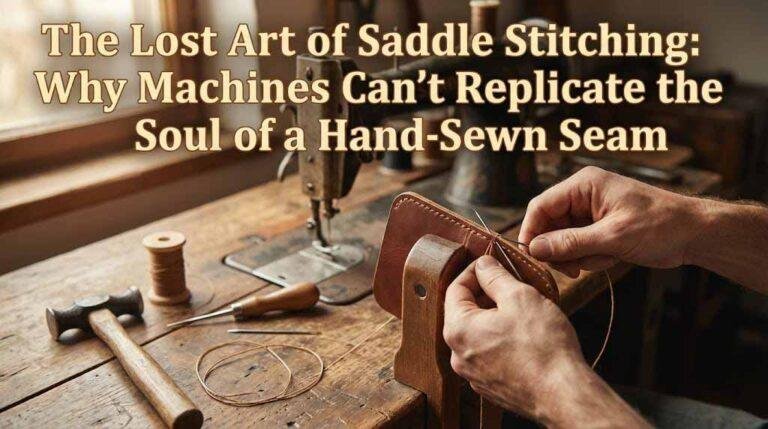
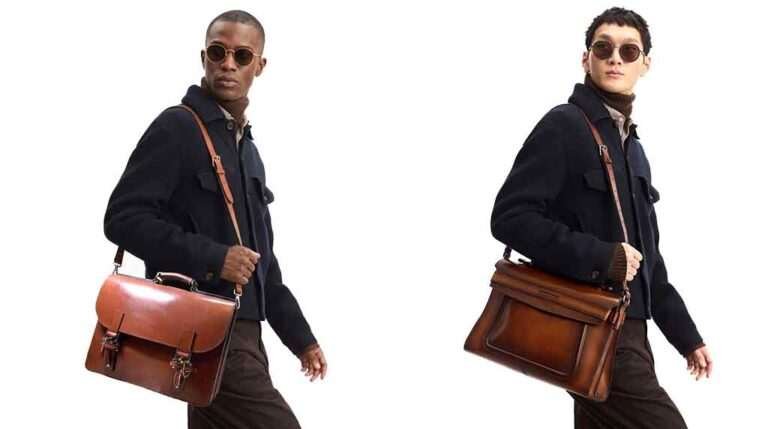
This is the world I inhabit at Marcellino NY—a world where the material itself carries history. When I hand-select a side of Wickett & Craig English bridle leather for a bespoke briefcase, I am working with a material whose production process connects directly to the hemlock tanneries of the Catskills, through two centuries of accumulated knowledge about how vegetable tannins interact with collagen fibers, how time and pressure and chemistry transform a raw hide into something that will outlast its owner. Each Marcellino briefcase takes weeks to complete: hand-stitched with waxed linen thread, fitted to the client’s specifications, designed to develop the rich patina that only vegetable-tanned leather achieves with use. The Catskill tanneries processed sixty thousand sides of leather a year. I build perhaps a few dozen pieces. The scale is inverted, but the principle—that the quality of the material and the integrity of the process determine the worth of the object—remains unchanged.
From Hemlock to Heritage: What the Leather Towns Teach Us About the Future
The tannery towns of New York are ghost stories and resurrection stories simultaneously. Prattsville exists today as a charming village where the Zadock Pratt Museum hosts exhibitions connecting nineteenth-century leather production to contemporary questions about industry and environment (Zadock Pratt Museum, 2025). Gloversville’s architectural gems—three- and four-story Victorian structures that survived the urban renewal demolitions of the 1960s—are being reimagined as artists’ studios, galleries, and maker spaces, the old glove factories finding new purpose as creative workshops (City of Gloversville). The Catskill Forest Preserve, born from ecological devastation, now protects a diverse hardwood ecosystem far healthier than the hemlock monoculture it replaced (Hudson Valley One, 2018).
The lesson, for anyone who builds things with their hands—whether that is a Heritage Burger with a twenty-five-year-seasoned crust, a briefcase designed to accompany its owner through a forty-year legal career, or a North Shore real estate venture rooted in the conviction that authentic places create enduring value—is that industries die but craftsmanship endures. The sixty-four Catskill tanneries are gone. The ninety percent market share of Gloversville’s glove cutters is gone. The twenty thousand workers of Endicott-Johnson are gone. But the knowledge persists: in the hands of the artisans at Wickett & Craig who still measure tanning time in weeks, in the Horween family’s proprietary vegetable bark formula that has hardly changed since 1905, in the small workshops scattered across New York where leather workers are choosing the slow path—the path of the maker, the path of the hand—because they understand what Zadock Pratt and George F. Johnson and every bark peeler who ever dragged hemlock down a Catskill slope understood instinctively: that the things we build with patience and skill become the things that outlast us.
Standing at the Heritage Diner counter at dawn, watching the light come through the windows onto Route 25A, I think about the men who hauled hemlock bark on ox-drawn sleds through Catskill winters two hundred years ago, and I think about the Italian grandmothers who sewed gloves at kitchen tables in Gloversville, and I think about the tanner’s knife and the fleshing beam and the slow alchemy of bark and water and time. And then I fire the flattop and begin another day of the same essential work: transforming raw materials into something worth having, in a place worth being, for people who understand the difference.
Multimedia Resources:
- Inside Horween Leather Company — Ashland Leather’s detailed tour of America’s most storied tannery, showing the step-by-step process from raw hide to finished leather: https://www.youtube.com/watch?v=UhFgAFiBKMk
- The Tanneries of the Catskills — Local historian Paul Misko’s presentation on the rise and fall of Catskill leather production and its environmental legacy: https://www.greatnortherncatskills.com/kaaterskill-clove/about/tanners
- Zadock Pratt Museum: Leather and Plastic Exhibition — A contemporary art exhibition connecting nineteenth-century tanning to today’s global material economy: https://www.zadockprattmuseum.org/current-exhibitions-1
Peter is the twenty-five-year owner of The Heritage Diner in Mount Sinai, New York, the founder of Marcellino NY bespoke leather briefcases, and—with his wife, broker Paola—the co-founder of a boutique North Shore real estate venture launching in 2026. He writes about craftsmanship, local culture, and the philosophy of making things that last at heritagediner.com/blog.