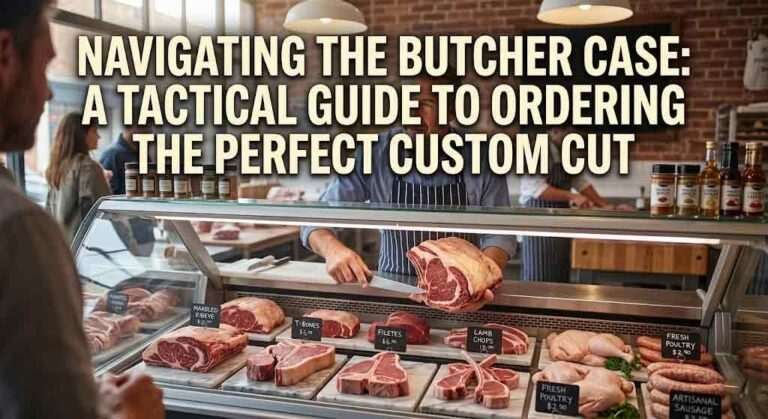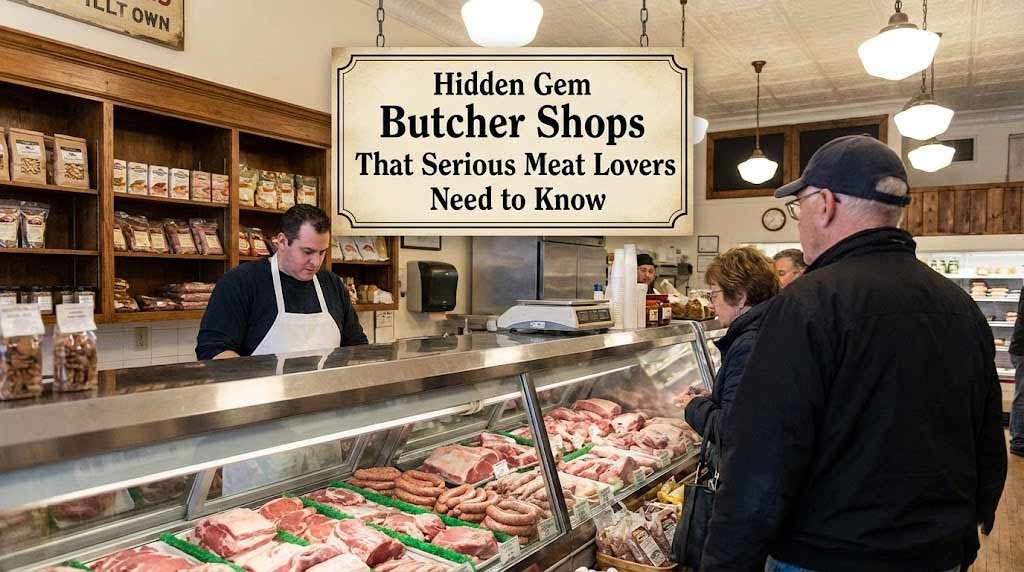
The industrial refrigeration hum and the sharp smell of rendered fat and fresh-cut meat constitute a sensory environment increasingly rare in American food culture. The traditional neighborhood butcher shop—that combination of skilled craftsperson and purveyor of high-quality protein—nearly disappeared in the era of supermarket consolidation and industrial meat processing. Yet on Long Island, a network of independent butchers has not merely survived but actively thrived, representing a genuine alternative to supermarket meat and a necessary infrastructure for home cooks serious about quality. These aren’t nostalgia operations; they’re specialized retailers operating with the technical skill and sourcing integrity that once defined American butchery before industrialization rendered it invisible.
The renaissance of artisanal butchery reflects a broader cultural shift toward transparency, quality, and understanding where food originates. According to 2025 industry data, searches for “local butcher” and “quality butcher” have increased 34% year-over-year as consumers recognize that supermarket meat departments operate as warehouses rather than craft operations (Yelp Search Trends, 2025). The Long Island butcher community offers an education unavailable elsewhere: the difference between a porterhouse and a porterhouse, the relationship between animal husbandry and meat quality, the philosophical stance that involves taking responsibility for meat not as a commodity but as a final product of animal life worthy of respect and skillful execution.
Chubs Meats: The Benchmark Retailer
Chubs Meats operates locations in Medford, Ronkonkoma, and Smithtown with the kind of reputation that suggests a business operating with absolute commitment to quality and customer service. A six-time winner of “Best of Long Island” for butcher shop operations, Chubs maintains USDA Choice beef as its baseline and extends to specialty items and prepared foods that rival restaurant output (Chubs Meats, 2025). Owner Ryan Jones has built the business on a simple proposition: provide customers with the highest quality meats available, along with gourmet specialty items and outstanding customer service. The operation extends beyond butchery into catering—”Cousin Vinny” sandwiches with crispy chicken cutlets, prepared foods that customers describe as indistinguishable from restaurant-quality output.
The operational sophistication reflects a business model that understands butchery as a complete service. The commitment to USDA Choice as a minimum standard (rather than maximum, as in many supermarkets) means that even the “everyday” meat purchase maintains integrity. The custom cutting service—the willingness to cut meat precisely to customer specifications—represents the kind of personalized service that industrial processors abandoned decades ago. The prepared foods component, featuring house-made items, demonstrates kitchen talent and understanding that home cooks want assistance that extends beyond raw material provision.
Scott’s Five Star Meat Center: Longevity and Consistency
Scott’s Five Star Meat Center in Commack has operated for 18 years with the commitment to top-quality meats and personalized service that distinguishes genuinely successful butchers from those merely surviving (Best of Long Island, 2025). The inventory includes premium cuts of steak, pork, chicken, and lamb, with a particular emphasis on custom burger blends—a seemingly simple product that demands real knowledge about fat ratios, grinding technique, and meat selection. The availability of fresh pasta alongside meat purchases suggests a business model where the butcher positions itself as a primary destination for meat-forward cooking rather than a supplemental resource.
The seasonal sales program—Valentine’s Day, Fourth of July, Thanksgiving, and other holidays—indicates structural business thinking about customer engagement. Rather than passive inventory management, Scott’s actively creates promotional calendars that position meat purchases within celebratory narratives. This merchandising sophistication, combined with technical skill, explains the business’s ability to survive a landscape where supermarket meat departments compete on price rather than quality.
Cow Palace Butcher Shop: Family Legacy and Geographic Reach
Cow Palace operates three locations on Long Island (with the original opened in Middle Island in 1974 by Jerry Masotto) with an operational ethos rooted in family and long-term customer relationships (Cow Palace, 2025). The business model emphasizes fresh premium meats, discounted prices by negotiating directly with suppliers rather than through distribution layers, and “old-fashioned service” in an era when supermarkets have deliberately eliminated service as an operational category. The iconic cow head logo, conceptualized by the founder’s best friend Uncle Julio while sitting in a parking lot considering potential names, has become a visual marker of butchery integrity recognized across Nassau and Suffolk counties.
The operational detail that “we provide many local restaurants with our quality meats” indicates that Cow Palace functions simultaneously as retail butcher and wholesale supplier to establishments that demand superior ingredients. This dual role creates a quality control mechanism: a butcher trusted by restaurants cannot operate with commodity assumptions about their retail customers. The bi-weekly specials and internet coupons represent pricing strategy within a framework of maintained quality—not a race to the bottom but rather an understanding that loyalty can be built through fair pricing combined with superior product.
Prime Time Butcher: The Mail-Order Revolution
Prime Time Butcher has operated for over 25 years as Long Island’s trusted source for dry-aged prime beef and premium poultry, with a business model that extends beyond retail to nationwide mail order (Prime Time Butcher, 2025). Each order arrives hand-cut, individually vacuum sealed, securely packed, and frozen, shipped overnight with specific delivery windows (Monday, Tuesday, Wednesday shipments with overnight delivery). The commitment to dry-aged prime beef as a specialty product, rather than merely one option among commodity alternatives, positions the company as a purveyor for consumers unable to access superior butchery locally or unwilling to accept supermarket meat.
The operation signals sophistication through the phrase “become part of our family,” language that invokes the personal relationship historically central to butchery practice. The all-natural beef, all-natural veal, and premium Angus beef represent tier-based sourcing that acknowledges customer sophistication: not all protein is equivalent; customers should understand the sourcing distinctions; the butcher’s role includes education alongside provision.
Farmingdale Meat Market: The Multi-Generation Institution
Farmingdale Meat Market represents a three-generation family operation with the kind of longevity (implied by multi-generation tenure) that suggests genuine expertise and community integration. The commitment to “strictly USDA Choice and USDA Prime beef, the two highest grades of beef” establishes an explicit quality standard that educates customers about beef grading while simultaneously committing to exclusion of commodity-grade protein (Farmingdale Meat Market, 2025). The operation offers custom cutting, grinding, and packaging services, and maintains a fleet of delivery trucks serving Long Island, NYC, and specific parts of Westchester and Connecticut, with free delivery on orders exceeding $200.
The customer testimonial quoted on the website—”The only place to purchase meat on Long Island”—and the statement that customers travel from Long Beach specifically for Farmingdale’s products reflects the geographic premium Long Islanders place on superior butchery. The specialized inventory including filet mignon steaks, whole roasts, corned beef, lamb, and “Akaushi Wagyu and more” indicates commitment to diversity within a framework of uncompromised quality.
Karl Ehmer Patchogue: Specialty and Cultural Specificity
Karl Ehmer Patchogue operates as a specialized butcher shop with emphasis on quality meats and imported European specialties, suggesting a business model rooted in specific ethnic and cultural communities with distinct meat preferences and preparation traditions (Karl Ehmer, 2025). German and European specialty imports alongside American prime beef indicate a customer base sophisticated enough to demand both traditional preparation ingredients and premium conventional cuts. This dual commitment positions the business as an educational resource for customers interested in Old World cooking techniques and ingredients.
Forest Pork Store: The Specialized Alternative
Forest Pork Store in Huntington Station operates as a German meat market and delicatessen with deep historical roots—the original location operated on Forest Avenue in Ridgewood, Queens, itself a German enclave in the first half of the twentieth century (Tripadvisor, 2024). The current operation maintains the original kitchen in Ridgewood while operating the retail location in Huntington, producing traditional German sausages including bratwurst, frankfurters, weisswurst, and leberwurst alongside prime beef selection. The gourmet items including German potato salad, coleslaw, and German beer selections position the business as a cultural institution rather than merely a meat retailer.
The observation that “quality makes the price a bargain” reflects an operational philosophy uncommon in contemporary retail: the assumption that customers value authenticity and quality sufficiently to pay premium pricing when justified by genuine superiority. The continuity of “the same butchers” working the counters for years, “each friendlier than the next,” represents customer relationship integrity increasingly rare in service industries.
The Technical Knowledge Advantage: What Separates Genuine Butchers from Meat Retailers
The distinction between a true butcher and a retail meat department operator lies in technical knowledge. A skilled butcher understands animal anatomy, knows how to break down a whole animal for maximum yield and quality, and possesses knowledge about how different cuts should be prepared—the relationship between muscle structure and cooking method, the role of marbling in determining cooking approach, the specific virtues of different ages and breeds of animal. This knowledge cannot be reduced to inventory management.
The current restaurant industry data showing increased demand for premium proteins and willingness to pay for quality suggests that American consumers increasingly understand meat as a category worthy of serious consideration (Yelp State of the Restaurant Industry, 2025). The Long Island butcher community serves as an educational and provisioning resource for home cooks attempting to replicate restaurant-quality outcomes. The custom cutting service represents the translator between theoretical knowledge and practical execution: the butcher who understands that a customer needs a specific cut for a specific preparation technique and can execute that request with precision provides value inestimable to serious cooks.
The infrastructure of quality meat provisioning—from butcher shop through steakhouse kitchen—creates the entire ecosystem of superior carnivorous dining. Explore The Best Steakhouses on Long Island, Ranked by Cut and Experience to understand how these butcher shops supply the restaurants that define the island’s reputation. Consider also Long Island’s Farm-to-Table Restaurants: Where Your Food Actually Comes From to recognize how butchery philosophy parallels produce sourcing—both demand respect for the source and commitment to quality that transcends commodity assumptions.