Building a plate like the Heritage Lumberjack Special isn’t just cooking — it’s sequencing. Every element has a window. Hit them all in the wrong order and something cold sits next to something overcooked, and the whole thing falls apart before it reaches the table. This guide breaks down the exact timing, assembly logic, and plating sequence behind a proper diner breakfast platter: eggs, pancakes, bacon, sausage, and everything else that earns the real estate on the plate.
Prep Time: 10 minutes Cook Time: 25 minutes Total Time: 35 minutes Servings: 1–2 Difficulty: Medium
Key Ingredients
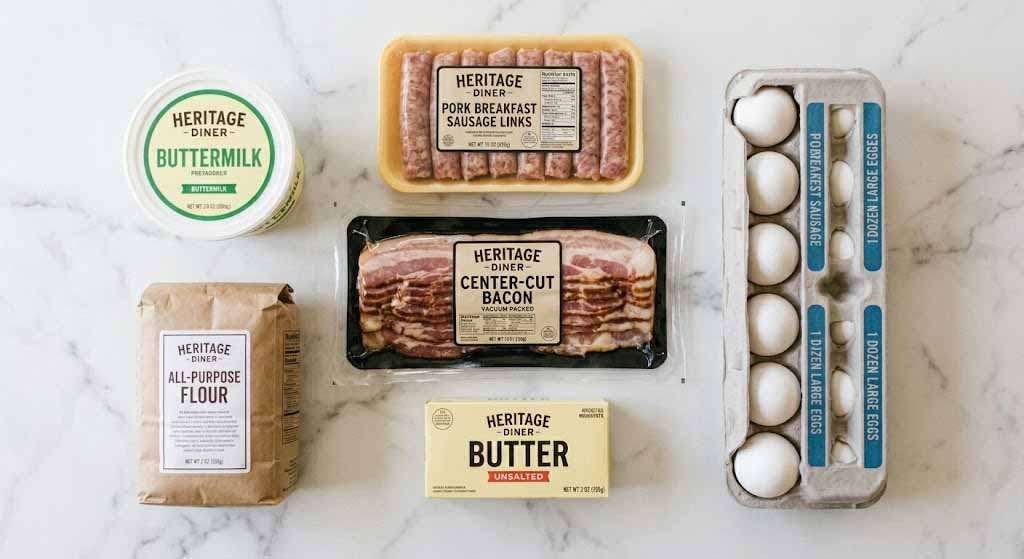
Thick-cut bacon — Look for center-cut strips at least ¼ inch thick. Thin bacon finishes too fast and goes brittle before the rest of the plate is ready. Substitution: turkey bacon works but renders less fat and cooks faster — watch it closely.
Breakfast sausage links — Pork links or patties both work; links are easier to time and harder to overcook. If using frozen, thaw completely before cooking or the outside burns before the center is safe.
Large eggs — Fresh, room temperature eggs hold their shape better in the pan. Cold eggs straight from the refrigerator can cause whites to spread unevenly in a hot pan. Substitution: any style — scrambled, over-easy, sunny-side up — works with this platter.
Buttermilk pancakes — If you’ve made Fluffy Heritage Buttermilk Pancakes before, use that same batter here. The crispy butter edge holds up on the platter without turning soggy.
Unsalted butter — For the griddle and the pancakes. Salted butter can over-season the eggs if you’re not careful, especially if bacon fat is already in the pan.
How to Build the Perfect Diner Breakfast Platter
The entire secret to a platter like this is reverse sequencing: start with what takes longest and finish with what takes least. Most home cooks do the opposite — they start the eggs and then scramble to catch everything else up. Don’t.
Step 1 — Start the bacon and sausage first.
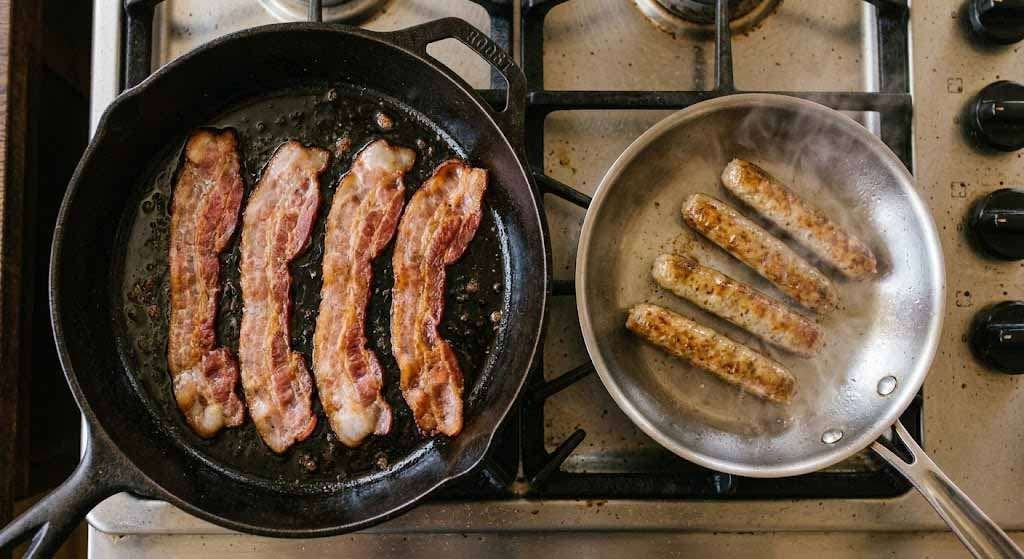
Lay cold bacon strips flat in a room-temperature skillet, then bring the heat up to medium. Starting cold renders the fat slowly and gives you even, flat strips instead of curled ones. Sausage links go into a separate pan with a small splash of water — cover for the first 3 minutes, then uncover and brown. Once the bacon is about halfway cooked and starting to curl at the edges, flip it. The sausage should be rotating every minute or two to brown evenly.
Step 2 — Build your pancake batter and start the griddle.
While bacon and sausage are working, mix your pancake batter — if you’re following the Fluffy Heritage Buttermilk Pancakes recipe, let it rest for 5 minutes after mixing. Rest time lets the buttermilk and baking soda react fully, which is what gives you that tight, airy bubble structure inside. Heat a griddle or second pan to medium-high. Butter it lightly — you want a sizzle when the batter hits, not smoke. Pour pancakes to about 4 inches across. Watch for bubbles breaking the surface and edges going matte before flipping — that’s your visual cue, not a timer.
Step 3 — Pull the bacon. Rest the sausage. Hold warm.
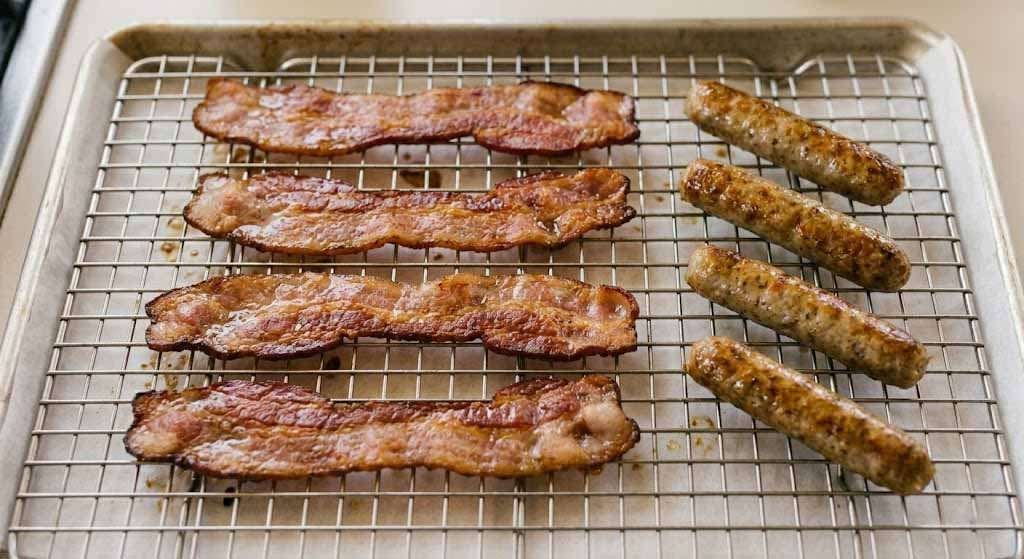
The moment the bacon reaches the color you want, it’s done — it will continue cooking from residual heat even off the pan. Transfer it to a paper-towel-lined plate, then move it to a 200°F oven to hold. Sausage links should be deeply browned by now; they go in with the bacon. This oven hold is what separates a diner platter from a home plate — everything arrives hot at the same time because it’s all been held together.
Step 4 — Cook the eggs last, always.
Eggs are the fastest and most fragile thing on the plate. They should hit the pan only when the pancakes are off the griddle and the rest of the platter is already held warm. For a classic platter: over-easy means 2 minutes on the first side, 30 seconds on the flip, yolk still fully liquid. Sunny-side up means no flip at all — cover the pan with a lid for the last 45 seconds to set the white over the yolk. Scrambled eggs go last on the pan but first on the plate, as a kind of buffer between pancakes and the protein.
Step 5 — Plate in sequence: anchor, build, finish.
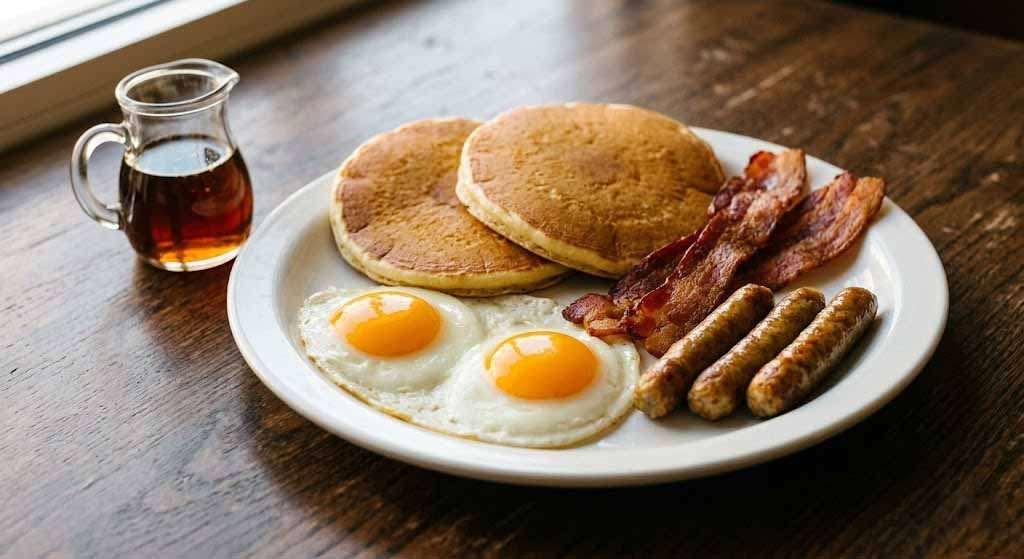
Start with the largest item as your anchor. On a Heritage-style platter, that’s two pancakes, slightly overlapping, at the back of the plate. Eggs go directly in front of the pancakes — sunny-side up positioned so the yolks face out toward the person eating. Bacon strips fan diagonally across the right side of the plate. Sausage links tuck against the bacon. If you’re adding toast or a fruit cup, those go at 9 o’clock on the plate’s edge — never in the center, where they’d compete with the main event.
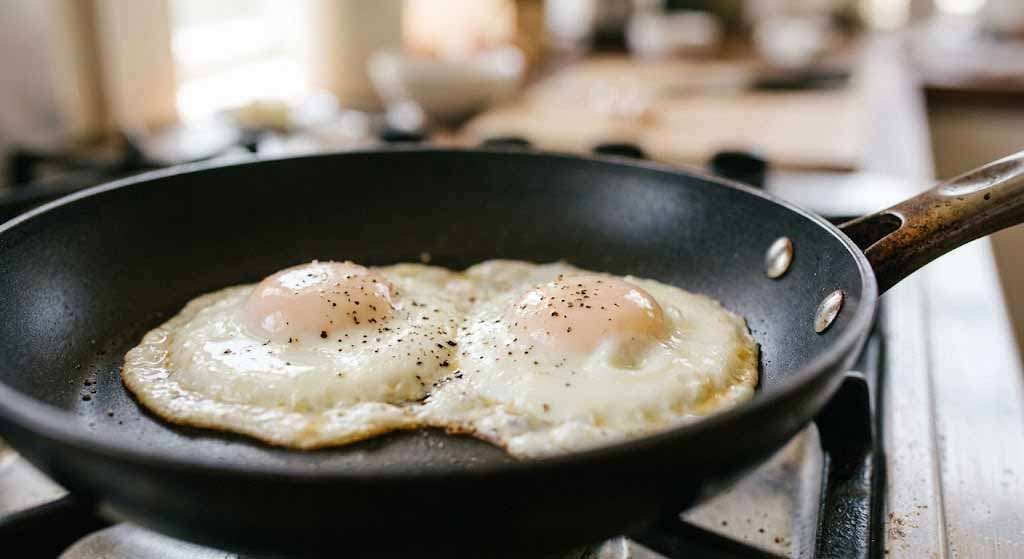
This is the same logic behind plating a full Heritage Lumberjack Special — everything earns its place, nothing crowds anything else, and every bite from the first to the last arrives at the right temperature.
Pro Tips
- Bacon temp math: If you like medium-crispy bacon, pull it when it still looks slightly underdone. It finishes cooking off-heat and firms up perfectly in the oven hold.
- Pancake stacking: Never stack more than two pancakes on the plate — they steam each other and the bottom one turns rubbery. Side-by-side or slight overlap is always better.
- The two-pan rule: Bacon fat and egg whites don’t share a pan well unless you want very lacey, brown-edged fried eggs. If that’s your style, great. If not, keep a separate clean non-stick for eggs only.
- Egg timing: From cold pan to table, over-easy eggs take less than 4 minutes total. If your eggs are taking longer, your pan isn’t hot enough.
- Warm your plate: Run the serving plate under hot water and dry it quickly, or hold it in the warm oven for 2 minutes before plating. A cold plate drops food temperature by 10–15°F in the first 60 seconds.
Storage & Make-Ahead
This platter is designed to be eaten immediately — there’s no meaningful make-ahead for assembled eggs and bacon. That said:
- Pancake batter can be made the night before and stored covered in the refrigerator. Give it a gentle stir before using; don’t re-whisk it aggressively or you’ll deflate the bubbles.
- Cooked bacon stores well in the refrigerator for up to 4 days in an airtight container. Reheat in a dry skillet for 30 seconds per side to re-crisp.
- Cooked sausage links refrigerate for 3–4 days. Reheat in a covered pan with a tablespoon of water to prevent drying out.
Frequently Asked Questions
What’s the right pan for eggs on a platter like this?
A non-stick skillet, 8 or 10 inches, over medium heat. Cast iron holds too much heat and can overcook the edges of the white before the yolk sets. Stainless steel without enough butter will stick. Non-stick with butter is the most forgiving option for timed, sequential cooking.
Can I make this for two people at the same time?
Yes — double the quantities and use the oven hold aggressively. Bacon and sausage for two fits on a sheet pan in the oven at 400°F in 18–20 minutes, freeing up your stovetop entirely for pancakes and eggs.
How do I keep pancakes warm without them getting soggy?
Place them in a single layer on a wire rack set over a baking sheet in a 200°F oven. Never stack them in the oven — steam from the stack is what makes them go limp.
What’s the difference between a breakfast platter and a breakfast plate?
On a platter, everything arrives together and is plated as a composed presentation. A plate is more casual — whatever’s ready goes out. The sequencing and hold technique described here is what turns a plate into a platter.
Can I substitute turkey or plant-based sausage?
Yes. Turkey sausage works nearly identically in timing. Plant-based sausage tends to brown faster on the outside without fully cooking through — keep the heat at medium-low and add 2–3 extra minutes to the cook time.
Recipe: Heritage Diner Breakfast Platter — Full Assembly
Prep Time: 10 minutes Cook Time: 25 minutes Total Time: 35 minutes Servings: 1–2 Difficulty: Medium
Ingredients
For the Bacon & Sausage
- 4 strips thick-cut center-cut bacon
- 4 breakfast sausage links (pork or turkey)
- 1 tbsp water (for sausage steam-start)
For the Pancakes
- 1 cup all-purpose flour
- 1 tbsp sugar
- 1 tsp baking powder
- ½ tsp baking soda
- ¼ tsp kosher salt
- 1 cup buttermilk
- 1 large egg
- 2 tbsp unsalted butter, melted (plus more for griddle)
For the Eggs
- 2–3 large eggs
- 1 tbsp unsalted butter
- Kosher salt and black pepper to taste
To Serve
- Maple syrup
- Fresh fruit or fruit cup (optional)
- Toast (optional)
Instructions
- Preheat oven to 200°F. Line a sheet pan with a wire rack and set aside.
- Lay bacon strips cold in a room-temperature skillet. Bring heat to medium. Cook, flipping once, until desired crispness — about 8–10 minutes total. Transfer to rack in warm oven.
- In a separate skillet, add sausage links and 1 tbsp water. Cover and cook over medium heat for 3 minutes. Uncover and continue cooking, turning every 1–2 minutes, until browned on all sides and cooked through — about 10–12 minutes total. Transfer to oven with bacon.
- While meats cook, whisk together flour, sugar, baking powder, baking soda, and salt in a medium bowl. In a separate bowl, whisk buttermilk, egg, and melted butter. Add wet ingredients to dry and stir just until combined — a few lumps are fine. Let batter rest 5 minutes.
- Heat a griddle or large non-stick skillet over medium-high heat. Butter lightly. Pour batter in 4-inch rounds. Cook until bubbles break the surface and edges look matte — about 2–3 minutes. Flip and cook 1–2 minutes more. Transfer pancakes to oven rack.
- In a clean non-stick pan, melt butter over medium heat. Crack eggs in. For over-easy: cook 2 minutes undisturbed, flip gently, cook 30 seconds more. For sunny-side up: cook 2 minutes, cover pan, cook 45 more seconds. Season with salt and pepper.
- Plate immediately: pancakes at the back of the plate, eggs in front, bacon fanned diagonally to the right, sausage links tucked alongside. Serve with maple syrup on the side.
Notes
- Pulling bacon slightly before it looks done prevents over-crisping during the oven hold.
- Never stack pancakes in the oven — use a single layer on the wire rack to preserve texture.
- Eggs go into the pan last, always. They’re the fastest item and the most sensitive to timing.