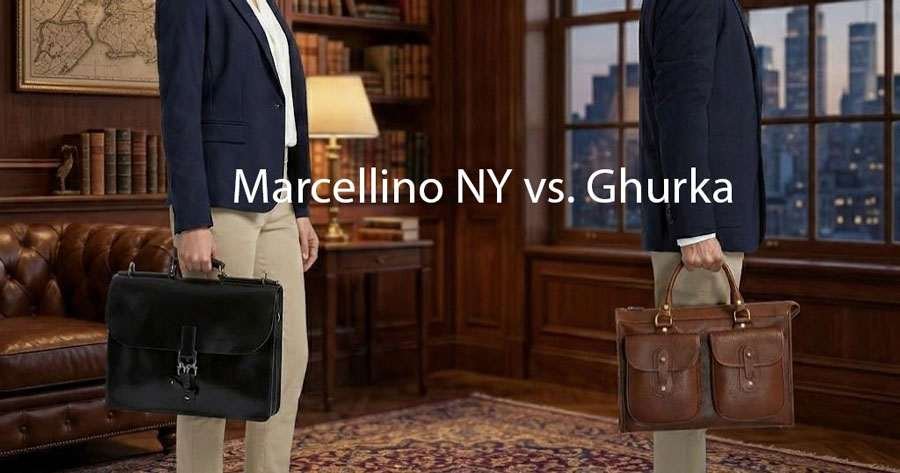
Name a bag after a Gurkha soldier. Name it after a philosopher. Both choices say something. But they don’t say the same thing — and that difference, if you sit with it long enough, reveals everything about what it means to carry a story on your shoulder versus carry one in your hands.
Two American leather brands, both built on the premise that objects should outlast the people who own them, have arrived at very different answers to the same essential question: whose story are we telling?
The Soldier and the Briefcase
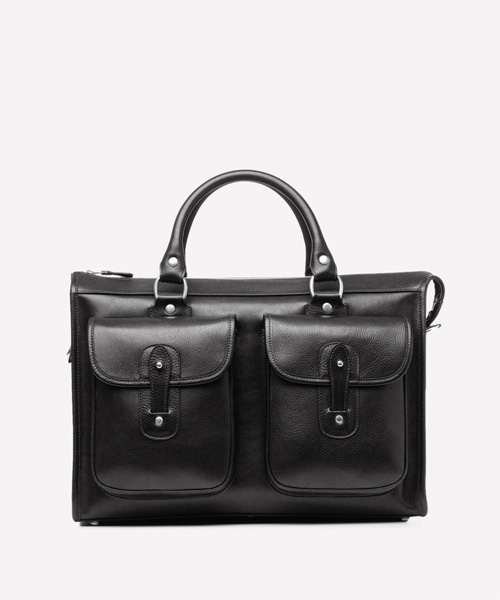
Connecticut, 1975. Marley Hodgson bids at a British auction house on campaign gear once carried by a Gurkha regimental officer stationed in colonial India. The leather, nearly a century old, is still supple. Hodgson doesn’t win the auction — but he makes a friend, eventually tracks down the lost tanning formula, and founds Ghurka. Named for the legendary Nepalese warriors whose bravery became so mythologized that Field Marshal Sam Manekshaw once said, “If a man is not afraid of dying, he is either lying or is a Ghurka.”
The brand’s identity was set from the first stitch: rugged elegance, colonial adventure, military romance. The bags were designed to reflect what Hodgson called the “quiet confidence and adventurous spirit” of their clients. Styles are catalogued by number — the Cavalier No. 97, the Examiner No. 5, the Express No. 2 — evoking military ordnance and regimental precision. There is a particular beauty to this system: the bag as equipment, numbered and issued, built for a theater of action.
Ghurka’s story is, at its core, borrowed glory. Not in a cynical sense — the craft is genuine, the quality historically exceptional. The bags are made of French calf sourced from a 100-year-old tannery in northeast France, aniline-dyed to preserve the natural surface, each skin carefully inspected to determine which part of a bag it should become. But the mythology is borrowed from soldiers who never carried these bags — from an empire that no longer exists, from a theater of history that belongs to someone else’s ancestors. The Gurkha warrior lends his reputation to an American luxury good. He never consented to this. He probably never heard of Connecticut.
This is not an accusation. It is an observation about what narrative choices reveal.
The Thinker and the Briefcase
Long Island. A leather craftsman names his briefcase after Jürgen Habermas — the German philosopher who spent a lifetime arguing that rational discourse is the foundation of a just society. He names another after Alfred Russel Wallace — the naturalist who, working independently, arrived at the theory of evolution at almost the same moment Darwin did, and was nearly erased from the history books for it. He names another after Achilles — not the film version, not the Marvel version, but the ancient Greek warrior whose rage opened the Iliad and whose heel became the model for how even the most formidable things carry a hidden vulnerability. He names another after Abraham Woodhull — the Long Island farmer who became the linchpin of Washington’s Culper Spy Ring and helped turn the tide of a revolution.
These are not decorative names. They are loaded. Each one carries a philosophical argument inside it.
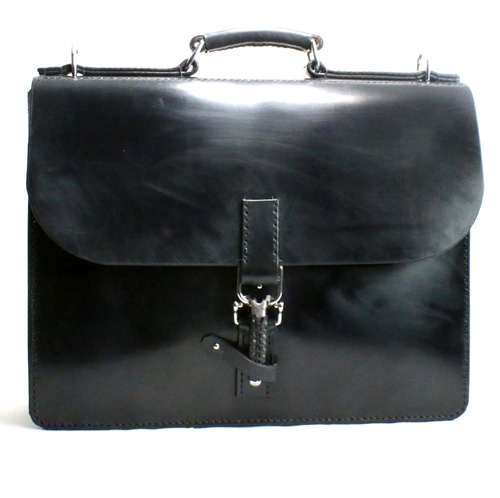
The Habermas Briefcase at Marcellino NY is built for lawyers — people who argue for a living, who stand in rooms where words must be precise or someone loses everything. Naming it after the philosopher of communicative reason is not an accident. It is a thesis. The Alfred Wallace is a classic English-style case, built the way these briefcases were built over a century ago — hand saddle-stitched, brass-locked, unmistakably serious. Naming it after a man who did the work and nearly missed the credit is a statement about the relationship between labor, recognition, and time.
The Abraham Woodhull is the largest briefcase in the collection — made originally for a doctor-lawyer who wanted to keep it open on his desk like a file cabinet, closing only when he left for the day. Naming it after Long Island’s most consequential spy, a man who operated in secrecy so total that history almost forgot him entirely, is its own kind of poetry.
What We Name Things, and Why It Matters
The naming convention is one of the least discussed and most revealing aspects of any brand in the luxury space. Names are a commitment. They tell you what the maker thinks is worth remembering.
Ghurka’s numerical system says: the object is the category. It is the Cavalier, the Examiner, the Blazer. The product line is the vocabulary.
Marcellino’s naming convention says: every briefcase is an argument. It is a position on who deserves to be remembered, on what kind of mind built this thing, on what the person carrying it values. You don’t just own a Habermas — you carry, however unconsciously, a brief for rational discourse in a world that often refuses to practice it.
This distinction matters more than it might initially seem. When Ghurka invokes the Gurkha soldier, it borrows an established narrative. The story is already written. The brand inserts itself into a pre-existing mythology of toughness, colonial adventure, and rugged British empire. There is comfort in that — it requires no explanation, no intellectual negotiation. The romantic imagery does the work.
When Marcellino names a briefcase after Jürgen Habermas, it makes a demand. It asks the person holding it to wonder, even briefly: who was this? Why does that name sit on this latch? The briefcase becomes a provocation. Not an aggressive one — the leather is quiet, the craftsmanship speaks softly — but a provocation nonetheless. An invitation into a conversation about ideas, figures, and the weight of intellectual inheritance.
Both American. Not the Same America.
There is something worth noting: both brands are American. Ghurka was founded in Connecticut. Marcellino NY is built on Long Island, where Abraham Woodhull himself farmed before he became a spy. Both make their cases in America, with American hands, for an American clientele that increasingly understands the value of buying something built to last longer than a season.
But they represent different versions of American aspiration. Ghurka reaches toward Britain — toward empire, toward colonial elegance, toward a world of campaign trails and Himalayan regiments. It is America looking across the Atlantic for its aesthetic vocabulary, borrowing prestige from a history it did not live.
Marcellino reaches inward and backward through a different lens. Wallace was British, yes — but he was also the man who got left out of his own discovery. Woodhull was a Long Island farmer, a neighbor in the most literal geographic sense. Habermas was German, a philosopher who survived National Socialism and spent decades arguing that open dialogue was civilization’s best hope. Achilles was Greek. These figures did not share a flag. They shared a quality: each of them did something of consequence that the world nearly failed to notice, or remember, or value properly.
That is a very particular kind of American instinct — the underdog’s instinct, the craftsman’s instinct, the instinct of someone who knows what it means to do serious work in a world that often rewards noise over substance.
The Patina of Who You Carry
English bridle leather changes with the person who carries it. It darkens at the corners where hands grip it. The oil from skin works into the surface over years, pulling out depth that wasn’t visible on the day of purchase. By the time a well-made briefcase has earned its patina, it has absorbed something of its owner — the commutes, the hearings, the hospital rounds, the negotiations, the quiet mornings and the long nights.
What you name that object shapes, in a small but real way, the relationship between the carrier and the carried. A bag named after a numbered military style asks you to project confidence through adventure. A bag named after a philosopher asks you to carry something more complicated — the awareness that the person who thought longest and most carefully about rational discourse also walked into rooms where irrationality was in charge, and kept talking anyway.
Both are valid choices. But only one of them asks something of you.
Ghurka tells someone else’s story. Marcellino names its pieces after figures whose ideas are still alive, still contested, still worth arguing about. The difference is not about prestige — both brands command serious prices and serious respect. The difference is in the direction the story travels. One looks outward, toward borrowed glory. The other looks inward, toward ideas that outlast any campaign.
That is what a name carries. That is the weight you don’t feel in your shoulder — only in your thinking.
Sources:
- Robb Report, “Inside the Rise, Fall, and Spectacular Comeback of Ghurka’s Luxe Bags” (2024): https://robbreport.com/style/accessories/ghurka-is-bringing-american-luxury-1235701097/
- Surface Magazine, “How It’s Made: Ghurka”: https://www.surfacemag.com/articles/ghurka-how-its-made/
- Just Luxe, “A Look at the History Behind Ghurka Leather Bags”: https://www.justluxe.com/fine-living/mens-fashion/feature-1917988.php
- Edge Media Network, “Ghurka: For the Love of Leather”: https://www.edgemedianetwork.com/story/161005
- Marcellino NY (Official): https://marcellinony.com
- Marcellino NY – Habermas Style: https://marcellinony.com/product-category/briefcases/habermas-briefcases/
- Marcellino NY – Alfred Wallace Style: https://marcellinony.com/product-category/briefcases/wallace-style-briefcases/
- Marcellino NY – Woodhull Briefcase: https://marcellinony.com/product-category/briefcases/abraham-woodhull-style/