 275 Route 25A, Mt Sinai, NY 11766



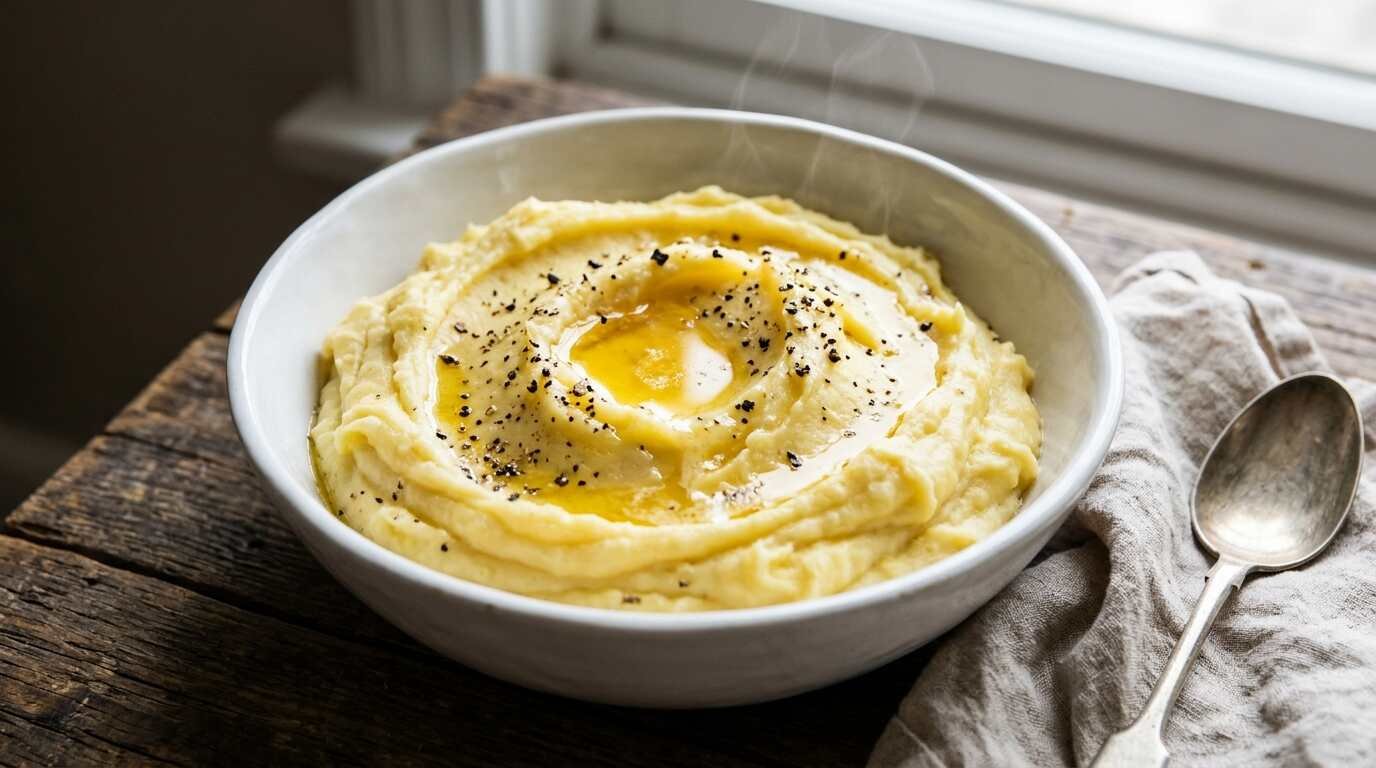
Mashed potatoes look like the simplest dish on the table, and they fail more often than most. The failure has a texture, a sticky, wallpaper-paste heaviness, and it comes from a short list of causes: the wrong potato, too much force, cold dairy, bland water. Each has a documented fix, and the fixes are cheap.
Video: “How to use a potato ricer,” from the I Want To Cook channel.
Test kitchens and the potato industry agree on more than the folklore of Thanksgiving arguments suggests. America’s Test Kitchen describes the dish as a fine line between creamy and gluey, and the Idaho Potato Commission, which has an obvious interest, builds its own recipe around a single tool and a single temperature rule. What follows is the reasoning behind those choices, then a recipe that applies them.
Russet or Yukon Gold
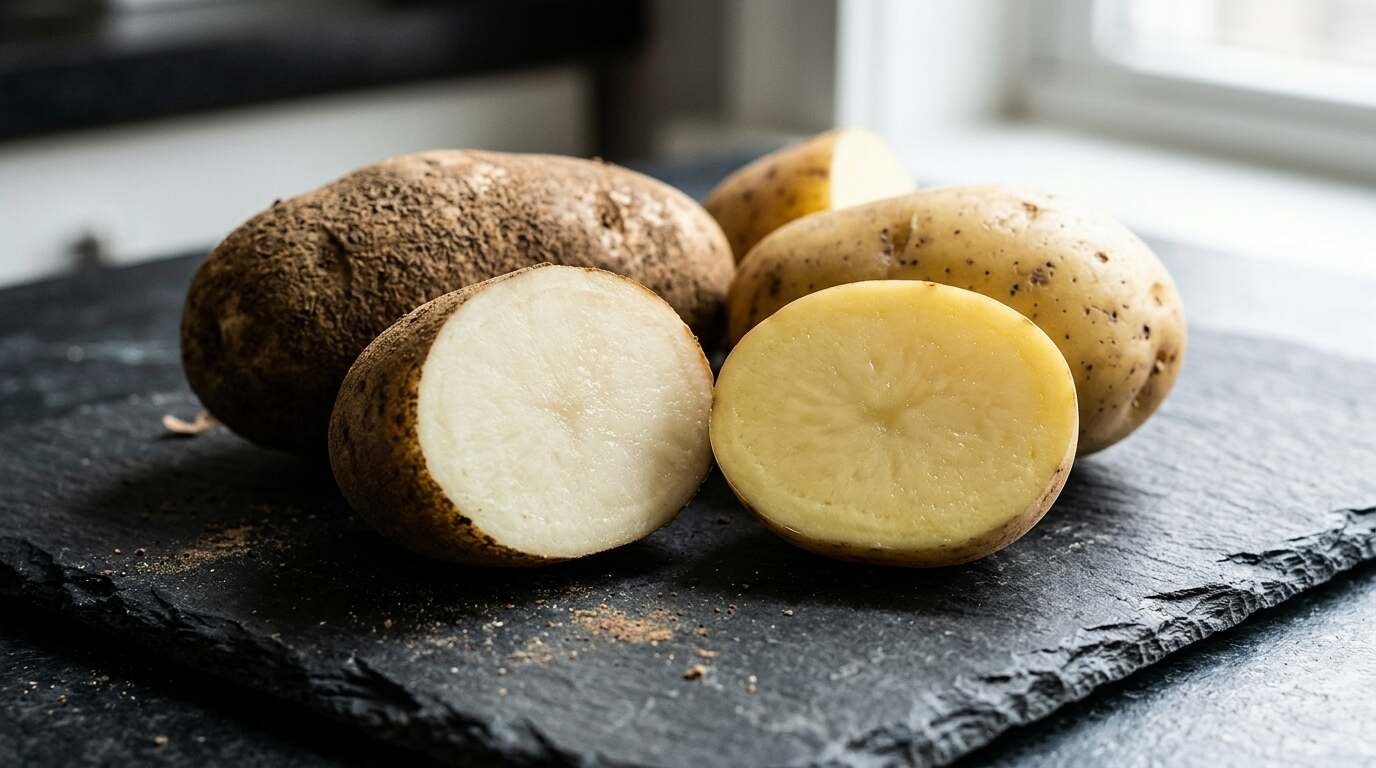
The two potatoes that keep winning this argument sit at opposite ends of a spectrum. A Kansas State University extension article by Karen Blakeslee, Which Potato Should I Buy?, sorts them by starch and moisture. Russets are high in starch and low in moisture, with a “dry, fluffy, mealy texture” suited to baking, mashing, frying or pureeing. Yellow potatoes sit lower on starch and higher on moisture, with a waxy texture, and the same article lists them for baking, boiling, mashing or roasting.
The Idaho Potato Commission’s reference guide to potato types draws the same line in more sensory terms. Russets are “floury, dry, light and fluffy” and make what the guide calls “heavenly mashed potatoes.” Yellow potatoes are “slightly waxy, velvety and moist,” and their naturally smooth texture and golden color mean less butter, or none, is needed.
So the choice is a choice of destination. A russet mash is airy, almost cloud-like, and it drinks butter and cream the way a dry sponge takes water. A Yukon Gold mash is denser and silkier, closer to a custard than a foam, and it arrives already tinted.
The professional recipes split accordingly. The Idaho Potato Commission’s recipe calls for Idaho russets, noting that Idaho gold also works. America’s Test Kitchen prefers Yukon Golds in its creamy mashed potatoes, calling them creamier than russets but not as heavy as red potatoes. Its easy version also leads with Yukon Golds and allows that russets “will work in a pinch.”
Waxy types are the real exclusion. The Farmers’ Almanac, in its argument for the potato ricer, says red, fingerling and new potatoes lack the starch for this job and turn gummy, and it recommends Russet or Yukon Gold instead.
Why overworked potatoes turn gluey
Starch is the villain and the hero at once. It gives russets their fluff, and it is also what turns to glue when cooked potato is handled too hard. The Farmers’ Almanac puts the mechanism plainly: a food processor “over-works cooked potato and releases too much starch, creating a gluey, gummy mash.” The more the potato is mashed, stirred or whipped, the same article adds, the more of that starch is released.
That explains why the blender and the food processor sit at the bottom of every ranking, and why a hand mixer is a gamble. A mixer’s beaters keep moving long after the lumps are gone, and every extra second is more handling.
America’s Test Kitchen attacks the problem from the other side. Its creamy recipe has the cook rinse the sliced potatoes under running water for 30 seconds to wash away surface starch before boiling, which it says intensifies the creamy texture without making the potatoes gluey. The recipe also dries the drained potatoes over low heat so that excess moisture cooks off rather than thinning the mash.
Surface starch and worked starch are different problems, and the fixes are different too. Rinsing handles the first. Gentle, brief mashing handles the second.
Ricer, masher or mixer
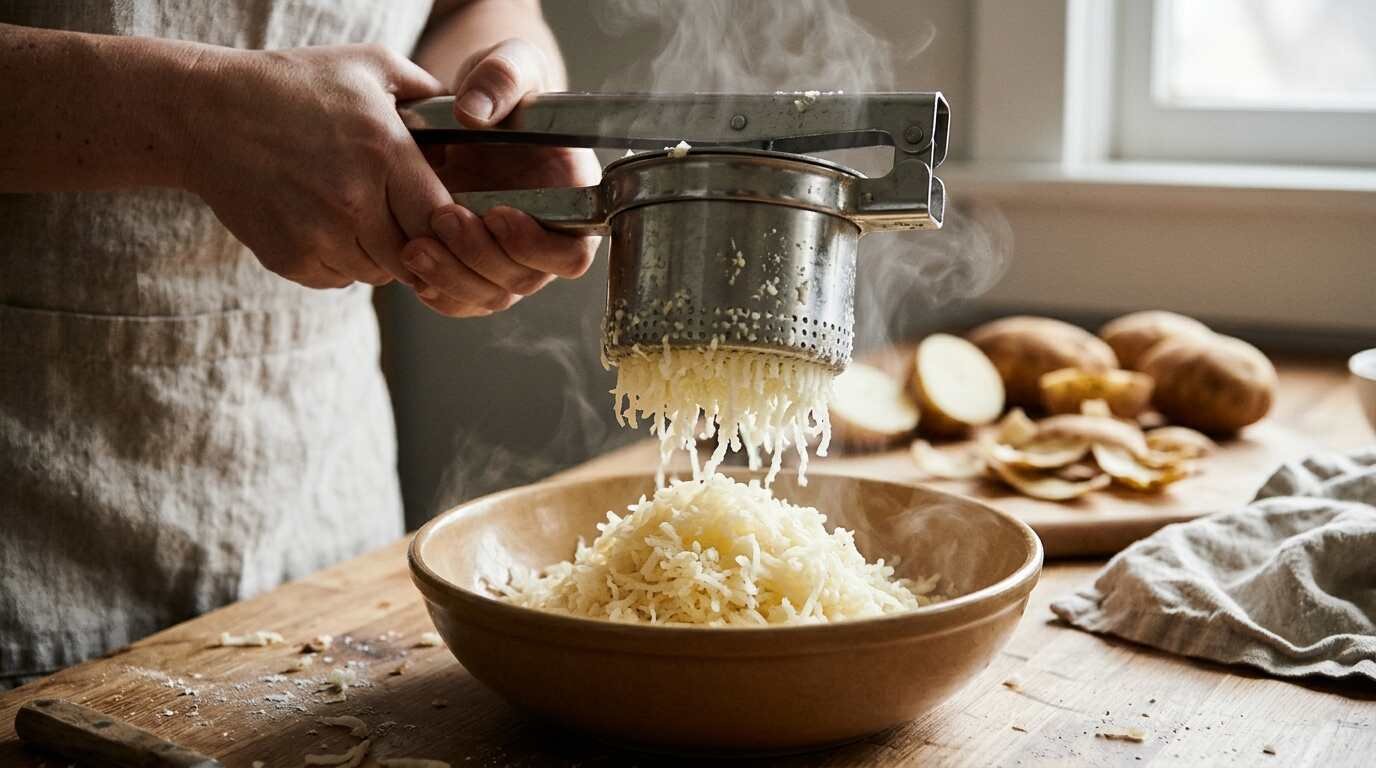
The ricer pushes cooked potato through small holes, a motion closer to extrusion than to mashing. The Farmers’ Almanac claims that mashed potatoes made with a ricer “are lighter and fluffier than anything a masher, fork, or mixer can produce,” and explains that the ricer passes potato through without grinding it. The Idaho Potato Commission’s recipe agrees in practice: it presses the potatoes through a ricer in batches, using the smallest blade, and notes that the method works best with hot potatoes.
A masher is the forgiving middle option. America’s Test Kitchen’s easy recipe, built for a weeknight, uses only a large saucepan, a measuring cup, a paring knife and a potato masher. The result is a rustic mash with some texture, and the recipe’s drying step does the work a ricer would otherwise do.
The decision comes down to what the table wants:
- Ricer: the smoothest result, the lowest risk of gumminess, one more tool to wash. Best with russets.
- Masher: cheaper, quicker, slightly lumpy by design. Best with Yukon Golds, which need less coaxing.
- Mixer: fast and hazardous. If used, short bursts on low speed, stopping the moment the potatoes are smooth.
The video above shows a ricer at work, which makes the difference easier to picture than any description.
Warm dairy, hot potatoes
Cold cream poured onto hot potatoes does two bad things at once. It drops the temperature of the whole bowl, and it forces extra mashing to bring the mixture back together.
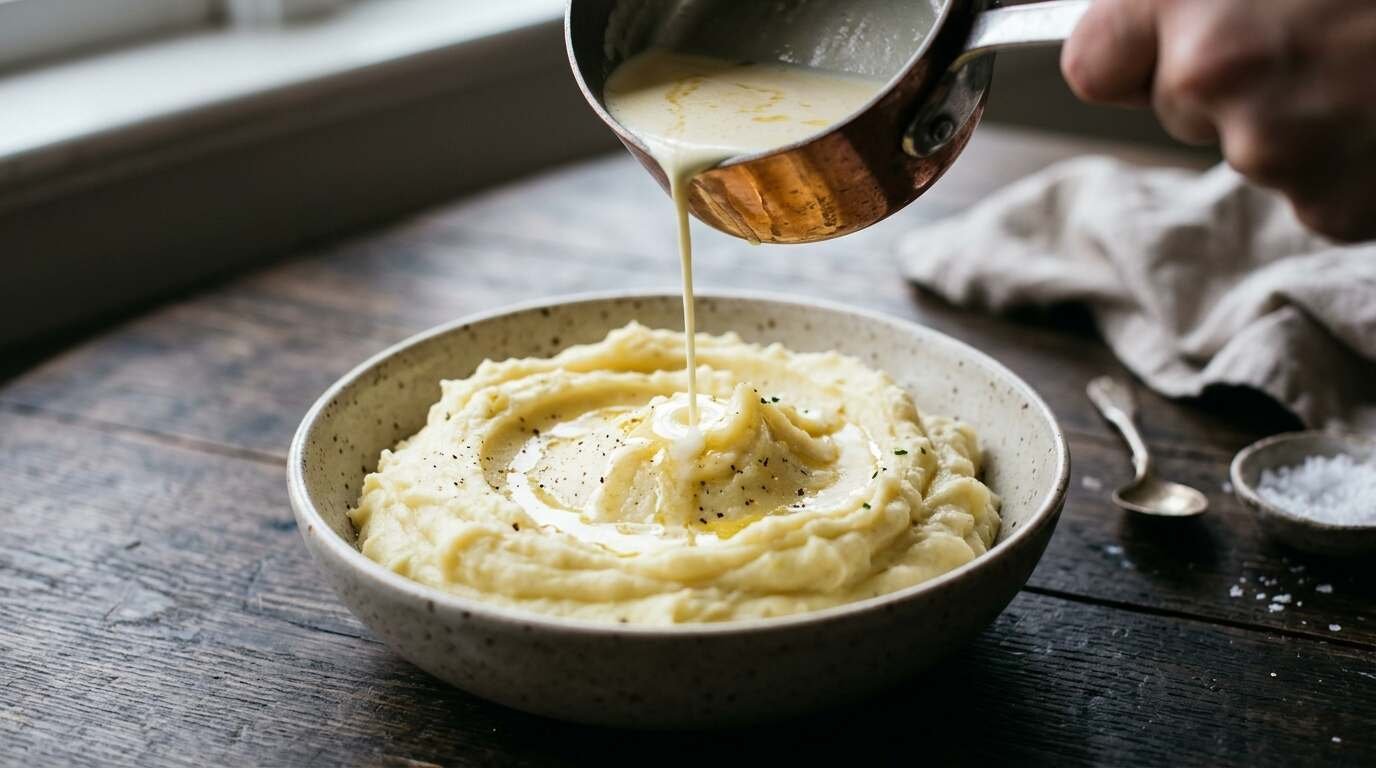
Every source fetched for this piece warms the dairy. The Idaho Potato Commission recipe heats the half-and-half and half of the butter together on the stove while the potatoes cook, then pours the hot mixture over the riced potatoes and folds gently. The commission’s culinary advice for operators likewise says to heat the milk, use room-temperature butter and keep the potatoes hot while mixing for a consistent result. Its consumer Q&A, How do I achieve the best results when mashing Idaho Potatoes?, adds that warm milk goes in gradually while mashing, with the consistency checked as it goes.
America’s Test Kitchen microwaves the half-and-half and butter, covered, for about two minutes, until the butter melts and the mixture is warm to the touch, a step it credits for a bowl of piping-hot potatoes at the table.
Warm dairy also changes the pace. Added in stages, it lets the cook stop at the exact moment the texture is right, which protects against the overworking described above.
Salt in the water
Potato is a bland vehicle, and salt added only at the end sits on the surface. The recipes that were fetched season the cooking water. America’s Test Kitchen’s easy recipe adds 1 tablespoon of salt to the saucepan, covers the potatoes with water by 1 inch, and describes the result as potatoes cooked in “well-seasoned water.” The Idaho Potato Commission recipe adds at least 1 teaspoon of salt to the pot, then more to taste at the end.
The quantities differ because the volumes differ: the Idaho recipe cooks 5 pounds of russets and the Test Kitchen recipe cooks 2 pounds of Yukon Golds. Both finish with more salt in the mash itself. Neither source states a scientific reason for salting the water, so that part stays a matter of what the recipes do, not why.
Cooking time follows the cut. Yukon Golds sliced a half inch thick simmer for 18 to 22 minutes in the Test Kitchen’s method, while halved russets in the Idaho recipe boil gently for at least 35 minutes, until a knife pierces the first potato easily.
The recipe
This version follows the proportions of the America’s Test Kitchen easy mashed potatoes, serves four, and borrows the Idaho Potato Commission’s ricer-and-hot-cream method as an option.
Ingredients
- 2 pounds Yukon Gold potatoes, peeled and sliced ½ inch thick
- 1 tablespoon salt, for the cooking water
- ¾ cup half-and-half
- 6 tablespoons unsalted butter
- ¾ teaspoon salt, plus more to taste
- ½ teaspoon pepper
Method
- Put the sliced potatoes in a large saucepan with 1 tablespoon salt. Add cold water to cover by 1 inch.
- Bring to a simmer and cook 18 to 22 minutes, until a paring knife slides in easily.
- While the potatoes cook, combine the half-and-half and butter in a measuring cup. Microwave, covered, about 2 minutes, until the butter melts and the mixture is warm.
- Drain the potatoes. Return them to the dry pot over low heat for a minute or two so the surface moisture cooks off.
- Mash with a potato masher, or press through a ricer into a warm bowl.
- Add the warm half-and-half mixture in stages, folding gently. Stir in ¾ teaspoon salt and the pepper. Taste, and add salt as needed.
- Serve at once while piping hot.
For a russet version: the Idaho Potato Commission uses 5 pounds of peeled, halved russets, at least 1 teaspoon of salt in the water, 2 cups half-and-half and 1 cup butter (half melted over the top at the end). Rice the potatoes while they are hot, using the smallest blade, then fold in the hot cream and butter.
Leftovers and the next day
The fetched sources do not give a storage window, and the USDA leftovers guidance could not be retrieved, so no refrigeration timeline is stated here. Reheating is better treated with the same logic as the original cook: gentle heat, a splash of warm dairy, minimal stirring. Hard stirring is the same overworking that causes gumminess in the first place.
Mashed potatoes also make a natural base for other plates. They sit under the gravy of a chuck-roast pot roast, and they are the classic partner for pan-fried pork chops with applesauce.
For the holiday table, the cost of the meal is its own story. PwC’s projection for Thanksgiving dinner in 2026 puts the total at $90 and notes that butter and cream are falling in price, which is good news for this particular side dish.
Sources
- America’s Test Kitchen, Creamy Mashed Potatoes: https://www.americastestkitchen.com/recipes/3191-creamy-mashed-potatoes
- America’s Test Kitchen, Easy Mashed Potatoes: https://www.americastestkitchen.com/recipes/10052-easy-mashed-potatoes
- Idaho Potato Commission, The Fluffiest Mashed Idaho Potatoes: https://idahopotato.com/recipes/the-fluffiest-mashed-idaho-potatoes
- Idaho Potato Commission, press room, signature mashed potato video for operators: https://idahopotato.com/pressroom/idaho-potato-commission-releases-latest-signature-video-shows-operators-how-to-make-perfect-mashed-potatoes
- Idaho Potato Commission, Dr. Potato, best way to make Idaho mashed potatoes: https://idahopotato.com/dr-potato/print/the-best-way-to-make-idaho-mashed-potatoes
- Idaho Potato Commission, potato types reference guide (PDF): https://potatogoodness.com/wp-content/uploads/2019/05/potato-types-reference-guide.pdf
- Kansas State University, Which Potato Should I Buy?: https://www.k-state.edu/news/you-asked-it/articles/2025/11/which-potato-should-i-buy.html
- Farmers’ Almanac, Why You Need a Potato Ricer: https://www.farmersalmanac.com/why-you-need-to-own-a-potato-ricer
- I Want To Cook, How to use a potato ricer (video): https://www.youtube.com/watch?v=m_xqiwVpkYE
Leave a Reply