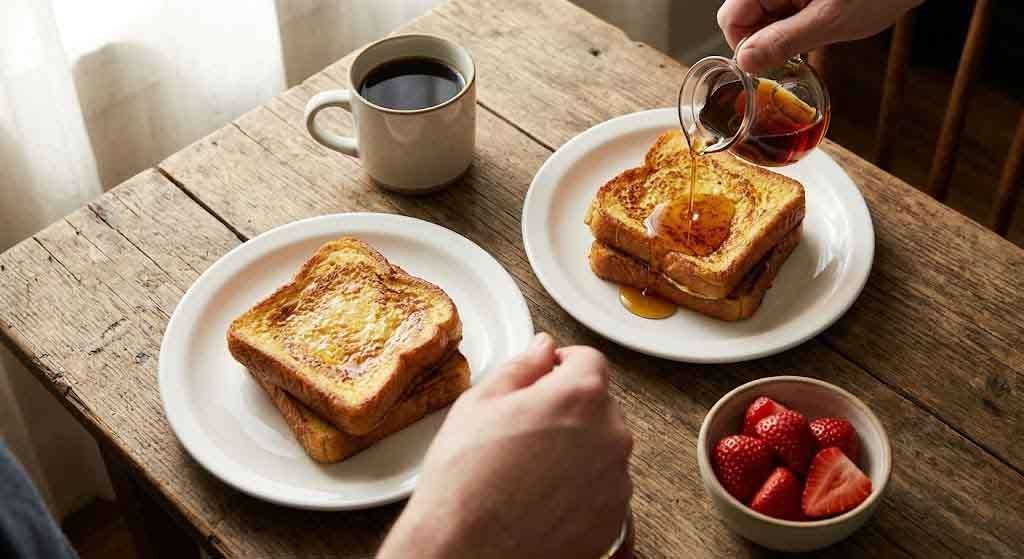
Classic diner French toast done right — thick white bread soaked in a rich cinnamon-vanilla custard, cooked low and slow until the outside is deeply golden and the inside is soft and yielding. This is the version that actually tastes like something, not the pale, eggy afterthought you get everywhere else. Twenty minutes, one bowl, and a skillet you already own.
Prep Time: 10 minutes
Cook Time: 12 minutes
Total Time: 22 minutes
Servings: 4
Difficulty: Easy
Key Ingredients
White Sandwich Bread — Day-old white bread is the move here. Fresh bread absorbs too fast and turns mushy; bread that’s had a night to dry slightly will hold its structure through the soak and the cook. A standard Pullman loaf or thick-cut white bread works best. Aim for slices cut at least ¾ inch thick — thinner than that and you lose the custardy interior that makes this worth making.
Eggs — Three whole eggs plus one yolk for richness. The extra yolk deepens the color and adds a silkier texture to the custard. Use large eggs, room temperature if you have time.
Whole Milk — Full-fat milk gives you the body you want. You can swap in half-and-half for something richer, or a 50/50 blend of milk and heavy cream if you want to push it toward the indulgent side. Avoid skim — the custard will be thin and won’t coat the bread properly.
Cinnamon and Vanilla — Both are non-negotiable. Ground cinnamon goes in the batter; pure vanilla extract (not imitation) adds depth that fake vanilla can’t match. A small pinch of nutmeg rounds the whole thing out.
Unsalted Butter — For cooking. It gives you flavor and browning that oil simply can’t replicate. Cook at medium heat and watch it carefully — browned butter is excellent, burnt butter ruins the batch.
How to Make Old-Fashioned French Toast
Start with the batter. In a shallow bowl or baking dish wide enough to fit a slice of bread flat, whisk together the eggs and egg yolk until fully combined. Add the milk, vanilla extract, cinnamon, nutmeg, and a pinch of salt. Whisk again until smooth and uniform — you want no streaks of egg white running through the mixture.
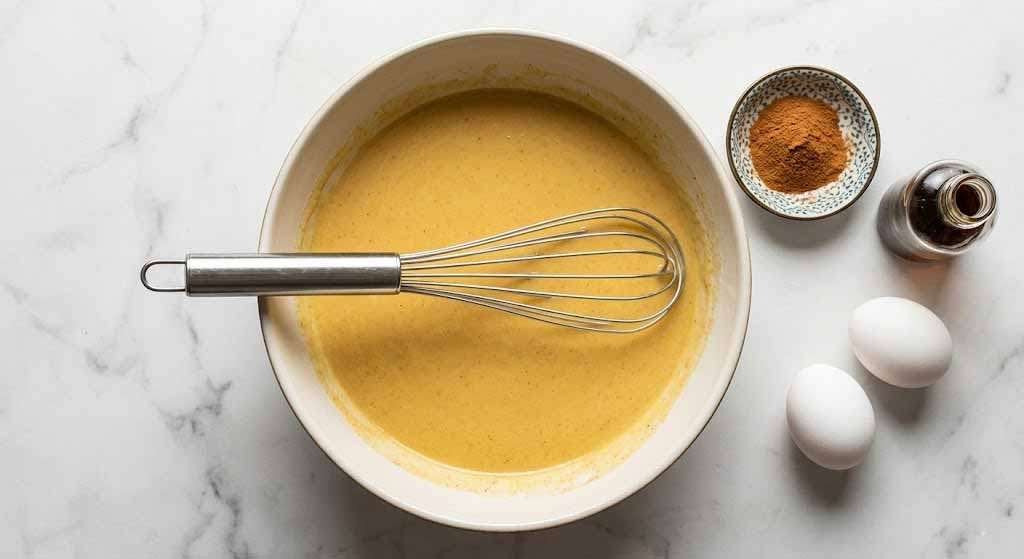
Lay a slice of bread into the custard and let it soak for about 30 seconds per side. Press down gently with your fingertips — you want the bread to absorb the custard all the way through without falling apart. Lift it out and let any excess drip back into the bowl before it goes to the pan. Don’t rush this step. Under-soaked bread toasts up dry at the center; properly soaked bread cooks through to that soft, almost bread-pudding-like interior that defines good French toast.
Heat a large skillet or griddle over medium heat. Add one tablespoon of butter and let it melt fully, swirling to coat the pan. When the foam begins to subside, you’re ready. Lay the soaked slices in without crowding — two at a time in a standard skillet is ideal. You’ll hear a satisfying sizzle when the bread hits the butter.
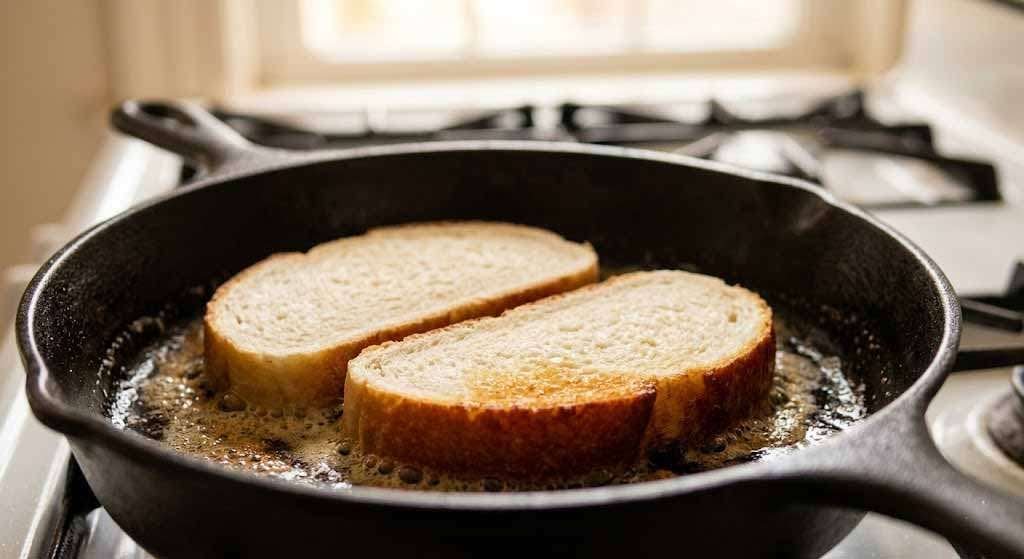
Cook the first side undisturbed for 3 to 4 minutes. Resist the urge to move them around or press down — let the heat do the work. You’re looking for a deep amber color that runs evenly from edge to edge. Flip carefully with a wide spatula and cook the second side for another 2 to 3 minutes. The internal temperature should reach around 160°F if you’re checking — or simply press the center lightly; it should feel set, not liquid.
Transfer finished slices to a rack in a low oven (200°F) to keep warm while you cook the remaining batches. Add a fresh pat of butter to the pan between each round.
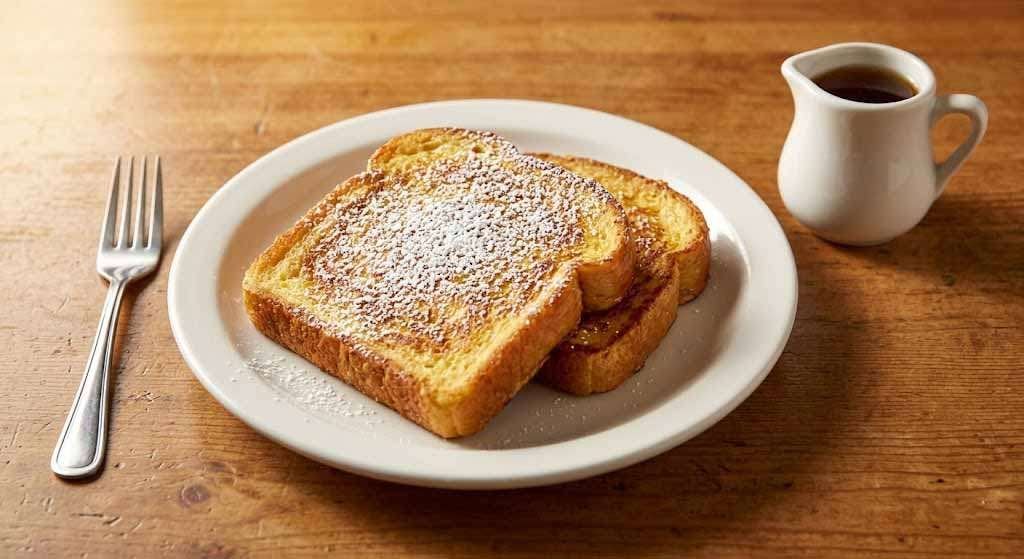
Serve immediately with maple syrup, fresh berries, or a dusting of powdered sugar. A Heritage Diner classic pairing is warm maple syrup with a side of thick-cut applewood smoked bacon — the salt cuts straight through the sweetness and brings everything into balance.
If you enjoy making classic diner-style breakfast recipes at home, take a look at The Yankee Bean Soup on the Heritage blog — another old-school comfort dish built on the same principle: simple technique, quality ingredients, and nothing wasted.
Pro Tips
Let the batter rest. After mixing, give the custard five minutes before you start dipping. This allows the cinnamon to hydrate and the ingredients to fully incorporate — the flavor is noticeably more cohesive than batter used straight off the whisk.
Go low and slow on the heat. Medium, not medium-high. French toast cooked too hot will brown on the outside while the center stays wet and eggy. A longer, gentler cook produces an even golden crust with a fully set interior.
Use a rack, not a plate, to hold finished slices. Resting them on a flat plate traps steam underneath and softens the crust you just worked to build. A wire rack in a 200°F oven keeps them crisp and warm for up to 20 minutes.
Salt the custard. A pinch of kosher salt in the batter isn’t optional — it brings out the sweetness of the cinnamon and vanilla and prevents the toast from tasting flat.
Day-old bread is better than fresh. If your bread is fresh, lay the slices out on a wire rack for 30 minutes before soaking to let them dry slightly. This dramatically improves absorption without making the bread stale.
Storage & Make-Ahead
Refrigerator: Cooled leftover French toast keeps well in an airtight container for up to 3 days.
Freezer: Lay cooled slices in a single layer on a baking sheet and freeze for 1 hour, then transfer to a zip-lock bag. They’ll keep for up to 2 months.
Reheating: The oven is your best option — 350°F on a rack for 8 to 10 minutes restores the crust without drying the interior. A toaster works in a pinch for thin slices. Avoid the microwave, which turns the exterior soft and the inside rubbery.
Make-Ahead Batter: The custard can be mixed the night before and stored covered in the refrigerator. Give it a quick whisk before using — the cinnamon will have settled overnight.
Frequently Asked Questions
What kind of bread makes the best French toast?
Day-old white sandwich bread cut at least ¾ inch thick is the classic choice. Brioche and challah are richer alternatives, but a standard white Pullman loaf produces an excellent result that stays true to the original diner style.
Can I use skim milk instead of whole milk?
You can, but the custard will be noticeably thinner and the finished toast less rich. Whole milk or half-and-half gives you a much better result. For a special occasion version, substitute half the milk with heavy cream.
Why is my French toast soggy in the middle?
Two likely causes: the bread soaked too long and became oversaturated, or the pan heat was too high, which browns the outside before the interior cooks through. Aim for 30 seconds per side in the custard, and cook on medium heat for a longer time rather than rushing it over high heat.
How do I know when it’s done without a thermometer?
The bread should be deeply golden on both sides and feel set — not liquid — when you press the center gently with your fingertips. The edges should pull away slightly from the pan and look dry rather than wet.
Can I make this dairy-free?
Yes. Substitute full-fat oat milk or coconut milk in equal measure for the whole milk. Use plant-based butter or a neutral oil for cooking. The flavor profile will differ slightly, but the texture holds up well.
Recipe: Old-Fashioned French Toast with White Bread and Cinnamon Custard
Prep Time: 10 minutes
Cook Time: 12 minutes
Total Time: 22 minutes
Servings: 4
Difficulty: Easy
Ingredients
- 8 slices day-old white sandwich bread, cut ¾ inch thick
- 3 large eggs
- 1 large egg yolk
- ¾ cup whole milk
- 1 tsp pure vanilla extract
- 1 tsp ground cinnamon
- ¼ tsp ground nutmeg
- Pinch of kosher salt
- 1 tbsp granulated sugar (optional, for a slightly sweeter batter)
- 3 tbsp unsalted butter, divided (for cooking)
For serving:
- Pure maple syrup
- Powdered sugar
- Fresh berries (optional)
Instructions
- In a wide, shallow bowl or baking dish, whisk together the eggs and egg yolk until fully blended. Add the milk, vanilla extract, cinnamon, nutmeg, sugar (if using), and salt. Whisk until smooth with no streaks of egg white visible. Let the batter rest for 5 minutes.
- Heat a large skillet or griddle over medium heat. Add 1 tablespoon of butter and swirl to coat the surface. Wait until the foam subsides before adding bread.
- Dip one slice of bread into the batter and press gently. Soak for 30 seconds per side, then lift and let the excess custard drip back into the bowl.
- Place the soaked bread into the buttered skillet. Cook undisturbed for 3 to 4 minutes until the underside is deep golden-brown. Flip with a wide spatula and cook the second side for 2 to 3 minutes until evenly golden.
- Transfer finished slices to a wire rack set in a 200°F oven to keep warm. Add a fresh pat of butter to the skillet before each new batch.
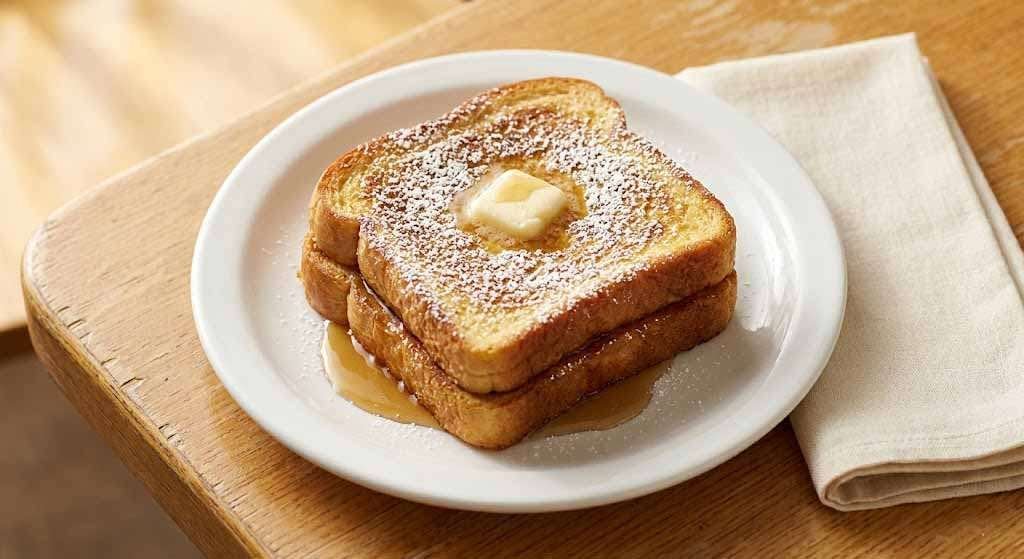
- Repeat with remaining slices, working in batches of two. Serve warm with maple syrup and a dusting of powdered sugar.
Notes
- Day-old bread gives significantly better results than fresh — the slightly dried interior absorbs the custard evenly without going mushy.
- Do not use medium-high heat. A lower, steady medium heat is the key to an evenly browned exterior with a fully cooked interior.
- The batter can be made the night before and refrigerated; whisk briefly before using.