Smash burgers have surged in popularity, captivating diners with their crisp edges and intense flavor. Classic burgers, on the other hand, have long been a staple, offering a familiar, hearty experience. Understanding the scientific differences behind these two styles reveals why each offers a distinct taste profile, and how you can choose the one that best suits your preferences.
🧪 Why Smash Burgers Taste So Good
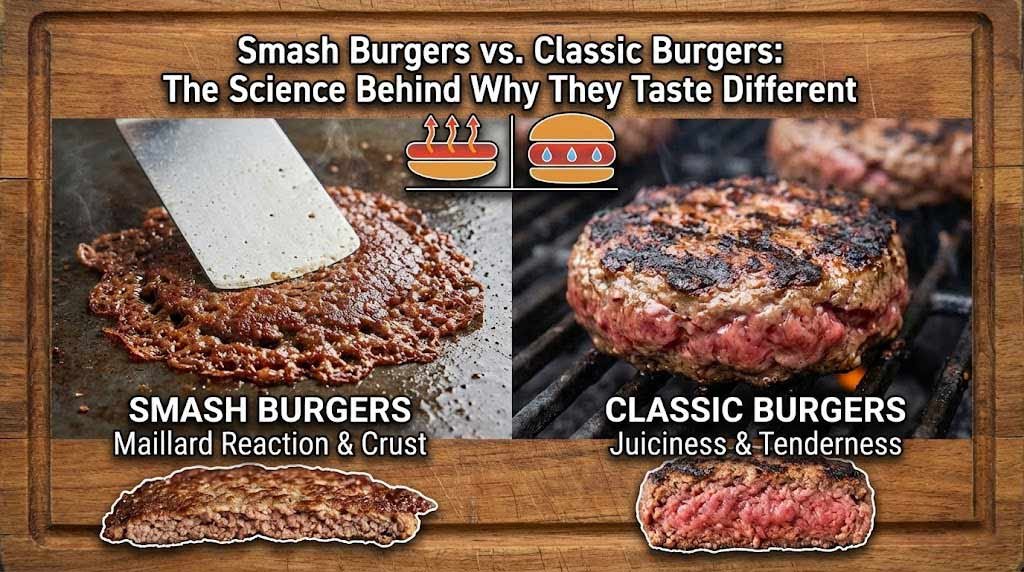
The secret to the smash burger’s flavor lies in the Maillard reaction, a chemical process where proteins and sugars interact at high heat to create hundreds of new flavor compounds. When a ball of ground beef is pressed onto a searing hot griddle, the increased surface area triggers this reaction, producing a deep, savory crust. This reaction is maximized in smash burgers, giving them a richer, more complex flavor profile than traditional patties, which rely on standard grilling or pan-frying methods. The resulting patty is both crispy on the outside and tender on the inside, creating a texture that is highly sought after in the culinary world. Additionally, the thinness of the patty allows for rapid cooking, ensuring the interior remains juicy while the exterior achieves that perfect sear. This combination of science and technique is why many consider the smash burger a superior culinary experience.
🥩 Classic Burgers: Familiar Flavor and Texture
Traditional burgers, often cooked on a grill or pan-fried, offer a more familiar and hearty experience. The thick patty typically cooks to a specific internal temperature, ensuring it reaches a safe temperature while retaining moisture. The flavor profile is dominated by the beef itself, with less emphasis on the crust. This style relies on the natural sugars and proteins of the meat reacting to create a browning effect, but the Maillard reaction is less pronounced compared to smash burgers. As a result, classic burgers tend to have a more moderate flavor intensity and a texture that is softer and less crisp. This style is popular for its simplicity and the comforting familiarity it offers diners, making it a timeless choice for many. Understanding these differences helps explain why each style appeals to different palates and preferences.
🔬 The Science of the Maillard Reaction
The Maillard reaction is a chemical reaction between amino acids and reducing sugars that occurs at high temperatures, typically between 140 °C and 165 °C. Named after French chemist Louis-Camille Maillard, this process creates a complex mixture of compounds responsible for the brown color and rich flavor of cooked foods. In burgers, this reaction is particularly important because it transforms the surface of the patty into a flavorful crust. The reaction is accelerated in an alkaline environment, making it more pronounced in smash burgers where the meat is pressed onto a hot surface, increasing contact and exposure to heat. This process is distinct from caramelization, which only involves sugars, and it produces hundreds of different flavor compounds depending on the cooking conditions. Understanding this reaction helps explain why smash burgers develop a deeper, more complex flavor compared to traditional patties. The intensity of the Maillard reaction is a key factor in the sensory experience of both burger styles.
🍳 Cooking Methods and Their Impact
The cooking method plays a crucial role in determining the texture and flavor of both burger styles. Smash burgers are typically cooked on a hot griddle or flat-top, where the patty is pressed to create a thin, crispy crust. This method maximizes surface contact, leading to intense browning and a rich flavor profile. Classic burgers, on the other hand, are often grilled or pan-fried, which results in a thicker patty with a more moderate sear. The difference in cooking methods influences the texture: smash burgers are crisp and thin, while classic burgers are softer and more substantial. Additionally, the cooking temperature affects moisture retention; high heat can cause moisture loss in classic burgers if not carefully monitored. Understanding these cooking nuances helps explain why each style offers a unique eating experience. The choice of method is essential for achieving the desired balance of flavor and texture in both burger types.
🧴 Fat Content and Its Role in Flavor and Texture
Fat content is a critical factor in both burger styles, influencing flavor, moisture, and texture. Classic burgers typically use a 80/20 fat-to-lean ratio, providing enough fat to keep the patty juicy without being overly greasy. This ratio allows the fat to render during cooking, basting the meat and creating a rich flavor. Smash burgers, however, benefit from higher fat content, often using a 75/25 or 70/30 ratio. The increased fat enhances the Maillard reaction, producing a deeper, more complex flavor and a crisper crust. Studies have shown that higher fat content improves cooking yield and moisture retention, while also reducing shrinkage. This difference in fat content explains why smash burgers often have a more intense flavor and a crispier texture compared to classic burgers. Understanding the role of fat helps explain the distinct sensory profiles of each burger style.
📊 Comparative Analysis: Flavor and Texture
| Aspect | Classic Burger | Smash Burger |
|---|---|---|
| Flavor | Moderate, beef-forward | Intense, complex, savory |
| Texture | Softer, less crispy | Crispy crust, tender interior |
| Cooking Method | Grilling, pan-frying | Griddle, flat-top |
| Fat Ratio | 80/20 (lean/fat) | 75/25 or 70/30 |
| Moisture Retention | Good, but can dry out if overcooked | Excellent due to higher fat content |
| Crispiness | Less pronounced | Highly pronounced |
The table highlights the key differences between classic and smash burgers, illustrating why each style offers a unique experience. Classic burgers provide a familiar, hearty flavor with a softer texture, while smash burgers deliver intense, complex flavors with a crisp crust and tender interior. Understanding these differences helps diners choose the style that best matches their preferences.
🍽️ Choosing the Right Burger for Your Palate
When deciding between classic and smash burgers, consider your flavor preferences and texture expectations. If you enjoy a moderate, familiar flavor with a softer texture, classic burgers are an excellent choice. They offer a comforting, hearty experience that is perfect for casual meals. On the other hand, if you crave intense, complex flavors with a crisp crust and tender interior, smash burgers are the way to go. Their higher fat content and cooking method maximize the Maillard reaction, delivering a richer taste profile. Experimenting with both styles allows you to discover which best suits your palate. By understanding the scientific and culinary differences, you can make an informed choice that enhances your dining experience.
📚 Resources for Further Exploration
- Internal Link: The Science Behind Burger Cooking
- Internal Link: Mastering the Maillard Reaction
- Internal Link: Fat Content in Burgers
These resources provide deeper insights into the science and techniques behind burger cooking, helping you explore the nuances of each style in more detail.