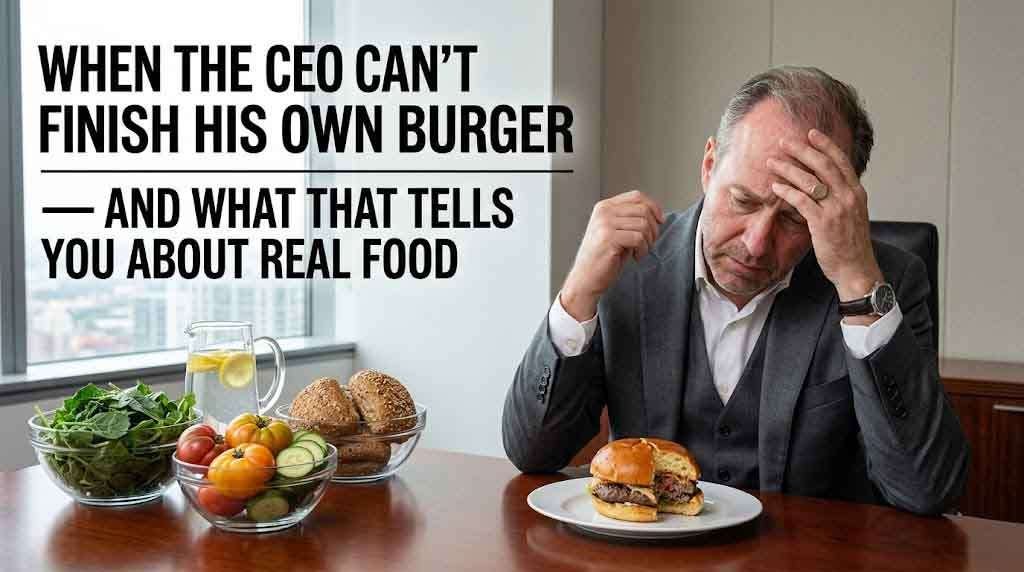
orty-five million people watched a man in a sweater vest pick up a hamburger like it was a piece of Murano glass and take a bite so small it would embarrass a sparrow. That man was Chris Kempczinski, CEO of McDonald’s — one of the largest food corporations on earth — and the hamburger was the company’s newly released Big Arch Burger, a towering stack of two quarter-pound patties, three slices of cheddar, crispy and slivered onions, lettuce, pickles, and a proprietary “tangy, creamy” sauce, all served on a toasted sesame and poppy seed bun. The internet did not let it go quietly.
The video — posted on Kempczinski’s Instagram on February 3, 2026 and later detonated across TikTok and Reddit — became something far more culturally significant than a fast-food promo gone sideways. It became a referendum on authenticity. On the relationship between a leader and what they actually believe in. And, if you’ll allow me to push the thought a step further, on what it means to build something you’re genuinely proud to put in front of another human being.
“I Love This Product”
Those four words — I love this product — are the ones that stung. Not because they’re dishonest necessarily, but because they reveal an entire philosophy of food hiding in plain sight. Not a meal. Not lunch. Not even a burger. A product. Something manufactured, stress-tested in focus groups, optimized for margin, and delivered to a CEO’s desk to be promoted with contractual enthusiasm.
Kempczinski had previously told Instagram followers he eats at McDonald’s three or four times a week. Months later, on camera, he stared at one of his own burgers as though encountering it for the first time on an anthropological expedition. The internet, with its uncanny gift for sniffing out inauthenticity, immediately clocked the distance. “This almost feels dystopian,” one commenter wrote. “He’s acting like he’s afraid of it.” Another summarized the moment with the precision of a poet: “Is this his first day being human?”
Burger King’s North America President Tom Curtis, sensing an opening with the grace of a veteran prizefighter, promptly posted his own video taking an enormous, unambiguous bite of a Whopper — mayonnaise on his face and no apologies. The internet loved him for it. Not because the Whopper is a better burger — that’s a different conversation — but because Curtis committed. And commitment, it turns out, is what people are actually hungry for.
The Architecture of a Real Burger
Let’s talk about what “commitment” actually looks like on a plate, because this is where the conversation gets interesting.
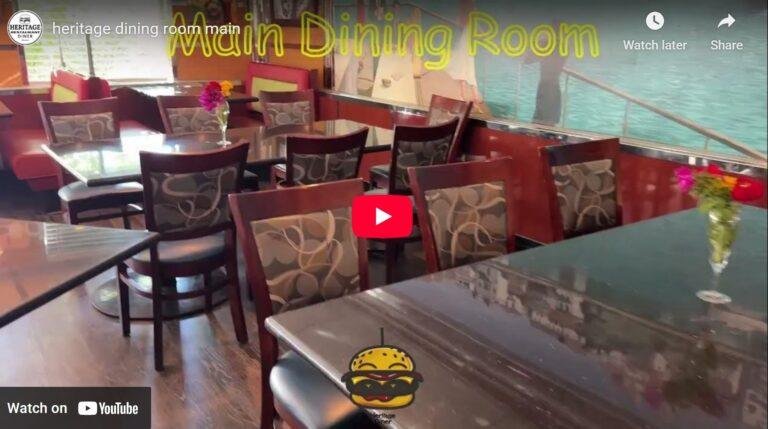
The Heritage Diner Steak Burger is not a product. It is a decision — one made in a kitchen in Mount Sinai, NY, that begins with the grind. We use an 80/20 blend of ribeye and chuck, a ratio chosen not by a corporate algorithm but because fat is flavor and chuck provides the structure. When that patty hits a seasoned flat-top and the edges begin to curl with the first rush of heat, you’re watching chemistry that no R&D department can replicate in a sterile test kitchen. That crust forms. The interior stays loose, pink, yielding.
The brioche bun is not incidental. Brioche has the tensile strength to hold without going soggy, the butterfat content to toast rather than simply brown, and a sweetness that frames — rather than fights — the mineral depth of the beef. We top it with an onion ring, not as a gimmick but as a textural decision: the crunch against the tenderness of the patty creates contrast that your palate reads as complexity. Lettuce and tomato follow, providing freshness and acid. Then the pickle — a single note of brightness that cuts through the fat and resets the palate for the next bite. Cole slaw and potato complete the plate.
It is served by someone who works at the Heritage Diner because they want to. That matters more than most food critics admit.
What Goes Into a Bite
The Big Arch’s viral moment is instructive beyond the memes. McDonald’s describes its signature sauce as engineered for balance — mustard, pickle, and sweet tomato in calculated harmony. There’s nothing wrong with that ambition. The problem is what gets lost when food is designed by committee rather than instinct, when flavor targets are set before anyone asks what does this want to be?
An 80/20 ribeye-and-chuck blend makes no appearance in that equation. McDonald’s patties are flash-frozen, shipped across a distribution network spanning 40,000 locations in 100 countries, and cooked to internal temperature specifications designed to protect against litigation as much as produce flavor. This is not a criticism of the logistics — feeding the world at scale is a genuine engineering achievement. It is simply an honest accounting of the trade-offs made when food becomes a product.
The Heritage Steak Burger is made from beef that was never frozen. It comes from a kitchen, not a supply chain. It has a cook, not a process. And it is eaten by people who lean over the table to take a bite large enough to mean something, who don’t need to hold it up to the camera and narrate what they’re experiencing because the burger does that work for them.
The Kale Salad Aura Problem
One commenter on the viral video noted that Kempczinski had an aura that “screams kale salad.” It’s a cruel joke, but it contains real insight. There is a particular kind of disconnection that occurs in large organizations when leadership becomes abstracted from the actual thing being made. When the decisions that shape a product are made in boardrooms, the people making those decisions stop tasting it as food and start evaluating it as data. The bite gets smaller. The language gets colder. The product gets called a product.
The antidote to that disconnection isn’t a better PR strategy. It’s genuine stakes. When you’ve spent 25 years building a diner from the ground up — when your name is on it, your family’s sweat is in it, and your neighbors eat in it every morning — you don’t pick up a burger like it’s evidence at a trial. You eat it because it’s good and you know it’s good because you helped make it good.
That’s the difference between a product and a plate of food. And it’s a difference people can taste, even when they can’t articulate why.
The Authenticity Market
The viral moment arrives at a peculiar cultural inflection point. Consumers, after years of corporate-speak and Instagram-optimized food presentation, are becoming increasingly sophisticated at detecting performance. They know when enthusiasm is scripted. They can feel the difference between a founder who eats their own cooking and an executive fulfilling a promotional obligation.
This is why small, owner-operated restaurants continue to hold cultural gravity even as fast-food chains expand their square footage. The Heritage Diner has survived 25 years not because of a sauce algorithm but because the people running it are invested in a way that doesn’t scale — and doesn’t need to. Authenticity, by its nature, resists mass production.
The Big Arch may move millions of units in its limited-time window. But it will not be remembered the way a meal is remembered when it’s made by someone who cared whether you liked it.
What the CEO Should Have Done
He should have taken a real bite.
Not for the optics — though the optics would have been better — but because committing to something, fully, in public, is the only honest form of endorsement. The Burger King president understood this intuitively. So does anyone who has ever served food to a table they built their reputation on.
At the Heritage Diner, when we added slow-fermented sourdough to the menu — baked fresh daily, sold by the loaf — we ate it first. We put it in front of our regulars before we put it on the menu. We committed to it. That’s not a marketing strategy. That’s just how you build something worth building.
The Heritage Steak Burger — brioche bun, onion ring, lettuce and tomato, potato, cole slaw, pickle, and a half-pound of 80/20 ribeye and chuck — is not a product. Come to 275 Route 25A in Mount Sinai and take a bite that leaves a mark.
That’s how it’s done.
Watch the McDonald’s CEO viral Big Arch video here: https://www.instagram.com/chriskempczinski/
Visit The Heritage Diner: 📍 275 Route 25A, Mount Sinai, NY 🌐 heritagediner.com
Sources:
- Fox News Food & Drink, March 2026
- Newsweek, March 2026
- HuffPost, March 2026
- NBC News, March 2026
- Kotaku, February 2026
- Parade, March 2026
- McDonald’s official website, Big Arch Burger product page