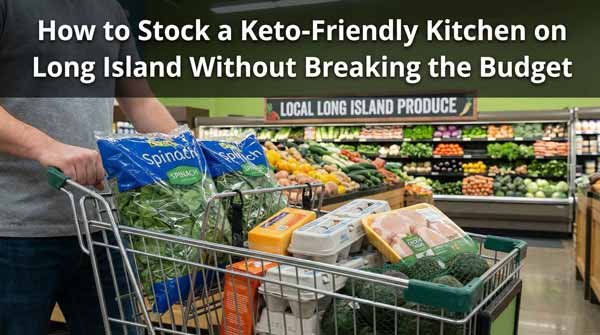
The cost of living on Long Island is no secret to anyone who has ever signed a lease in Nassau County or filled a shopping cart in Suffolk. According to the Bureau of Labor Statistics, the New York metropolitan area consistently ranks among the most expensive regions for groceries in the United States, with food-at-home costs running 15 to 20 percent above the national average. When you layer a specialized diet like keto on top of already elevated prices, the sticker shock can be enough to make you reconsider the whole endeavor.
But here is the thing: keto does not have to be expensive. In fact, the KetoConnect team has demonstrated that a complete keto meal plan can be executed for approximately five dollars per day per person — and that was calculated using mainstream grocery store prices, not bulk warehouse deals (KetoConnect, 2021). The key is strategy: knowing where to shop, what to buy, and how to get the most mileage out of every ingredient.
For Long Island residents specifically, the grocery landscape offers more options than you might think. From Costco in Melville to ALDI locations across Nassau and Suffolk, from farmers’ markets in Huntington to the ethnic grocery stores along Hempstead Turnpike, a well-stocked keto kitchen is entirely achievable on a real-world budget.
The Big Three: Eggs, Ground Beef, and Butter
Every budget keto kitchen is built on three pillars that are simultaneously nutritious, versatile, and affordable. KetoConnect identifies them as the holy trinity of budget keto: eggs, ground beef, and butter (KetoConnect, 2021). These three items alone can form the foundation of dozens of meals.
Eggs are arguably the most cost-effective food in the keto universe. At roughly $3 to $5 per dozen on Long Island (depending on the store and whether you choose conventional or cage-free), eggs deliver high-quality protein, healthy fats, and nearly every essential vitamin and mineral. They are also endlessly adaptable — scrambled, fried, baked into frittatas, hard-boiled for snacks, or used as a binder in keto baking.
Ground beef (80/20 is the ideal keto ratio for its fat content) is a workhorse protein that forms the base of taco skillets, stuffed peppers, burger patties, and casseroles. On Long Island, 80/20 ground beef typically runs $5 to $7 per pound at mainstream grocers, but drops to $4 or below per pound at Costco, BJ’s, or when purchased on sale.
Butter — real butter, not margarine — is both a cooking fat and a flavor enhancer that makes every keto meal taste restaurant-quality. A pound of store-brand butter costs roughly $4 on Long Island and lasts most households an entire week.
Where to Shop on Long Island: A Store-by-Store Breakdown
Costco (Melville, Commack, Holbrook, Lawrence): The undisputed champion for bulk keto shopping. Kirkland Signature organic eggs, grass-fed ground beef, kerrygold butter, avocado oil, bags of frozen broccoli and cauliflower, and massive containers of mixed nuts. The per-unit cost at Costco is consistently the lowest on Long Island for keto staples. Tip: split bulk purchases with a keto-friendly neighbor or friend to avoid waste.
ALDI (Multiple Long Island locations): ALDI has quietly become one of the best budget grocery stores for keto dieters. Their store-brand cheese, eggs, frozen vegetables, heavy cream, and ground beef are all priced 20 to 30 percent below comparable items at traditional supermarkets. The trade-off is a smaller selection, but for keto staples, the selection is more than adequate.
Trader Joe’s (Multiple locations): Excellent for specialty keto items like coconut oil, almond flour, cauliflower rice (fresh and frozen), ghee, and unique cheese selections. Trader Joe’s also carries several keto-friendly prepared foods, including their Cauliflower Thins and pre-made salads, that work well for busy weeknight dinners.
Local Farmers’ Markets (Huntington, Northport, Sayville, Port Jefferson): Seasonal vegetables, pasture-raised eggs, and locally produced meats. Prices can be higher than supermarket equivalents, but the quality — particularly for eggs and seasonal produce — is often noticeably superior. Shopping at the end of the market day can yield significant discounts as vendors look to sell remaining inventory.
Stop & Shop / King Kullen / Lidl: Standard Long Island supermarkets are perfectly adequate for keto shopping, especially when you use their weekly circulars and digital coupons. Focus on sale-priced meats, store-brand dairy products, and seasonal vegetables.
The Budget Keto Pantry: What to Stock and What to Skip
A well-stocked keto pantry eliminates the daily “what’s for dinner” decision and reduces impulse purchases. Here are the essentials, organized by category:
Fats and Oils: Olive oil (cooking and dressings), coconut oil (high-heat cooking and keto baking), butter, and avocado oil. These four cover every cooking application you will encounter. Skip specialty MCT oil until your budget allows — coconut oil contains MCTs naturally.
Proteins (freezer): Ground beef, chicken thighs (bone-in, skin-on for maximum flavor and fat), pork chops, canned tuna, and canned salmon. Frozen proteins purchased on sale and stored properly can save a keto household hundreds of dollars annually. As Healthline notes, buying in bulk and freezing is one of the most effective strategies for keeping keto affordable (Healthline, 2020).
Vegetables (fresh and frozen): Broccoli, cauliflower, spinach, zucchini, asparagus, mushrooms, and bell peppers. Frozen vegetables are nutritionally equivalent to fresh in most cases and cost significantly less. A bag of frozen broccoli florets at ALDI runs about $1.50 and provides four to six servings.
Dairy: Heavy cream, cream cheese, full-fat Greek yogurt (in small portions), shredded cheese, and sour cream. Always buy full-fat versions — the low-fat alternatives are typically higher in carbs due to added sugars and fillers.
Baking and Specialty: Almond flour, coconut flour, and a keto-friendly sweetener like erythritol or monk fruit. These enable keto baking for treats and bread substitutes but can be added gradually as your budget allows.
The Weekly Shopping Strategy That Saves Hundreds Per Year
The single most impactful budgeting strategy for keto on Long Island is meal planning. Sitting down on Sunday morning with a piece of paper and planning your meals for the week — then building your shopping list from that plan — eliminates impulse purchases, reduces food waste, and ensures you buy only what you will actually use.
Stephanie Laska, author of The DIRTY, LAZY, KETO Dirt Cheap Cookbook, offers a critical insight: the more time you spend in the grocery store, the more you are likely to spend (Laska, 2020). Every aisle, every display, every end cap is designed to trigger impulse purchases. Her advice is simple — get in, buy what is on your list, and get out.
Another powerful strategy is protein rotation. Do not buy the same protein every week. Instead, let the weekly sales dictate your menu. If chicken thighs are $1.49 per pound this week, buy four pounds and build your meals around chicken. If ground beef is on sale next week, shift your plan accordingly. This approach, combined with a chest freezer (a worthwhile investment for any Long Island keto household), can reduce your weekly protein costs by 30 to 40 percent.
Watch: Keto Budget Grocery Shopping — KetoConnect — A video walkthrough of an actual keto grocery haul designed for maximum value.
Making It Work: Keto on a Long Island Budget Is Not Just Possible — It Is Practical
The perception that keto is an expensive, elitist diet is one of the most persistent myths in the nutrition world. Yes, grass-fed ribeyes and organic avocado oil cost more than ramen noodles. But when you compare the cost of a well-planned keto kitchen to the average American’s spending on fast food, convenience meals, chips, soda, and sugary snacks, the numbers often come out surprisingly close — or even in keto’s favor.
For Long Island families, the key is leveraging the stores that are already in your neighborhood, buying in bulk when sales align with your needs, and building meals around the affordable staples that form the backbone of the ketogenic diet. With a little planning and a willingness to cook at home, a keto-friendly kitchen on Long Island is not just achievable — it is one of the smartest investments you can make in your family’s health.Related: Keto Meal Prep for the Week Using Nothing But a Cast Iron Pan | Keto at a Steakhouse: What to Order, What to Skip, and What to Ask the Kitchen