Every stretch of the Hamptons has its theater. The scene restaurants along Further Lane, the bottle-service beach clubs in Montauk, the velvet-roped steakhouses that cater to Manhattan hedge fund partners unwinding on a Friday night. But tucked behind The Mill Center in Water Mill — invisible from the highway unless you know exactly where to look — sits a restaurant that has quietly become the East End’s most personal dining room. Bistro Été does not compete for attention. It earns devotion. Chef Arie Pavlou, born in a Cypriot mountain village and trained in the classical kitchens of Paris and Provence, built this place with his wife Liz not as a seasonal spectacle but as something far rarer in the Hamptons: a restaurant with a soul. With a 4.8-star rating on OpenTable across more than 1,100 reviews, a 4.6 on Google, and a ranking as the number-one restaurant in Water Mill on TripAdvisor, the evidence is not anecdotal — it is overwhelming (OpenTable, 2026; TripAdvisor, 2026; Google Reviews, 2026). Bistro Été has proven that in a landscape defined by excess, restraint and mastery still win.
As someone who has spent twenty-five years running The Heritage Diner in Mount Sinai — watching the tides of Long Island’s restaurant industry rise and fall with trends, pandemics, and shifting consumer loyalties — I have developed a particular radar for the establishments that endure. Bistro Été is one of those places. And the reason it endures has nothing to do with marketing and everything to do with a philosophy that predates the modern restaurant entirely: source what is real, cook what you know, and treat every guest like they belong at your table.
From the Mountain Village of Vavla to Montauk Highway
Chef Arie Pavlou’s story reads like a Mediterranean picaresque. Born and raised in the village of Vavla, Cyprus — a place where the distinction between kitchen and landscape essentially does not exist — he grew up hunting, foraging, and fishing alongside his Sicilian mother and Cypriot father. The “farm-to-table” concept that American restaurants now market as revolutionary was simply how the Pavlou family ate (Bistro Été, Chef’s Bio, 2026). When his family relocated to the United States, Arie attended Massapequa High School on Long Island before returning to Europe to study at Le Cordon Bleu in Paris (27East, 2016). From there, he apprenticed under Two Michelin Star Chef Philippe Da Silva in Provence, where his natural talent as a saucier was first recognized (The Purist, 2024). That combination — Mediterranean instinct refined by French classical discipline — is the engine behind everything at Bistro Été.
Before opening his own doors, Arie sharpened his craft across some of New York’s most demanding kitchens, including a stint at the legendary Le Cirque in Manhattan (KDHamptons, 2021). He co-owned Coeur des Vignes, a French hotel and restaurant in Southold on the North Fork, with his family from 1998 to 2006 (27East, 2016). He also served as executive chef of the Bridgehampton Inn & Restaurant and general manager and chef at Comtesse Therese Bistro in Aquebogue (27East, 2016). Along the way, he taught culinary arts at Suffolk County Community College in Riverhead — which is where he met Liz. Their origin story is the stuff of romantic comedy: Liz, an event planner from the Westhampton Country Club, enrolled in one of Arie’s classes and was immediately struck by the man who arrived on a motorcycle wearing a fur coat and Viking helmet (The Purist, 2024). The stars aligned later, and they have been inseparable since.
The Cuisine: Coastal French Through a Cypriot Lens
The menu at Bistro Été operates at the intersection of classical French technique and the rustic, sun-drenched flavors of the Eastern Mediterranean. This is not fusion in the contemporary sense — it is the natural expression of a chef whose blood runs through both traditions. Arie’s signature dishes have become Hamptons institutions in their own right. The striped bass with champagne truffle sauce, the buttery escargot that Dan’s Papers once described as seductively irresistible, the house-made pellegrino pappardelle with braised short ribs, the duck paella, the tableside raclette melted by mini charcoal grill — these are not dishes designed to photograph well on Instagram. They are designed to be eaten slowly, with good wine, by people who understand that a great meal is an act of generosity from the kitchen to the table (Dan’s Papers, 2018; The Infatuation, 2024).
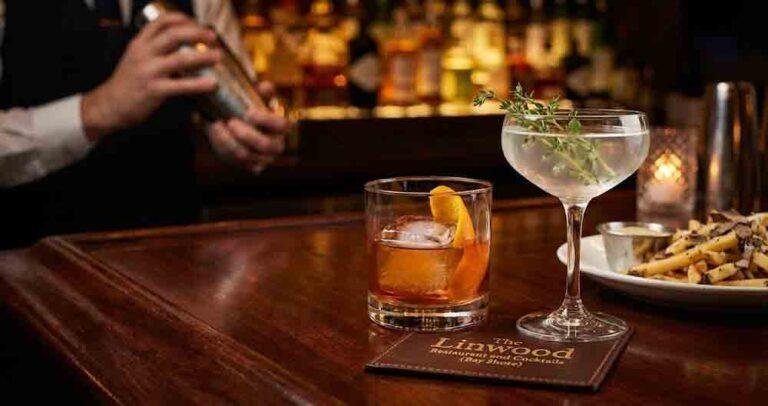
Arie ages his own beef on-site, and the dry-aging program at Bistro Été is unlike anything else on the East End. Guests can consult directly with the chef to select their cut, brand it with their initials using hot irons, and return to enjoy their personalized steak whenever they wish (The Purist, 2024). The homemade ice cream — crafted daily in the kitchen — has become its own legend, with unconventional flavors that rotate with the seasons. The cocktail program, also entirely Arie’s creation, uses only fresh-pressed juices including pineapple, strawberry, and cranberry. The truffle martini alone has inspired countless return visits (Bistro Été, 2026).
What makes the menu quietly revolutionary is its inclusivity. Liz Pavlou is a longtime vegetarian, and her dietary preferences have profoundly shaped the restaurant’s offerings. Arie has developed an extensive range of vegan and vegetarian dishes — not as afterthoughts, but as fully realized expressions of his culinary philosophy. The zucchini spaghetti, in Liz’s own estimation, is the most popular healthy option on the menu, described by regular guests as a lifesaving option during the Hamptons’ relentless summer social calendar (The Purist, 2024). Gluten-free options are also woven throughout the menu, accommodated with the same seriousness as any classical preparation.
The Foie Gras Controversy and a Chef Who Does Not Flinch
Chef Arie’s commitment to foie gras deserves its own chapter in the story of Bistro Été. The ingredient appears across the menu in multiple preparations, including the now-famous foie gras ice cream. “Foie Gras Friday” has become a weekly event — but its origins are rooted in defiance. While operating on the North Fork years earlier, Arie faced a boycott campaign from individuals posing as representatives of PETA. They had copied and pasted a mass letter originally targeting a California grocery chain, replacing the store’s name with his. Local media investigated and confirmed the letters were fraudulent (The Purist, 2024). Rather than capitulate, Arie doubled down. The result is a restaurant that treats foie gras not as a controversy but as one of gastronomy’s great traditions, served with the confidence of a chef who understands both the ingredient’s history and its place at the table.
The Space: Understated Chic on the Coast of France
When Bistro Été relocated to 760 Montauk Highway in Water Mill — a space formerly occupied by the Muse Restaurant — interior designer Karen Gorman transformed the rooms into something that feels less like a Hamptons restaurant and more like a seaside bistro somewhere between Nice and Marseille (Bistro Été, 2026). The aesthetic is understated and deliberate: light coastal tones, comfortable seating, a bar where Arie and Liz personally work during quieter weeknight evenings. Early in the restaurant’s history, front-of-house manager and partial owner Howard Kreiger decorated the walls with his award-winning photography from Southeast Asia, adding a layer of global texture to the Mediterranean atmosphere (Hamptons.com, 2016).
What began as a summer pop-up in 2016 at a different location on Montauk Highway has evolved into a permanent, year-round operation — a rarity for Hamptons restaurants that typically shutter after Labor Day (Yelp, 2026). The off-season at Bistro Été is, by many accounts, the best time to visit. The pace slows, the crowds thin, and the restaurant reveals its truest self: an intimate neighborhood gathering place where the chef emerges from the kitchen to talk with guests, override their menu choices if he thinks they are straying from their dietary needs, and pour a glass of something unexpected (Dan’s Papers, 2018). That kind of personal involvement — the owner-chef who knows your name, your preferences, and your doctor’s orders — cannot be manufactured. It can only be built over years of genuine care.
The Dog Menu That Became a Hamptons Legend
Perhaps no single detail captures the spirit of Bistro Été better than its dog menu. Not a novelty afterthought or a marketing gimmick, but a fully conceived “Paw Course” dining experience created by Chef Arie for the four-legged regulars who accompany their owners to the patio (Bistro Été, Dog Menu, 2026). The offerings have included bacon-wrapped chicken thigh stuffed with spinach and topped with veal sauce and fresh shaved summer truffles, served alongside a bottle of Evian spring water (The Infatuation, 2024; BringFido, 2024). The restaurant’s own Yorkie, Lola — adopted from a car mechanic and elevated to a life of truffles, caviar, and foie gras — has become the unofficial mascot (KDHamptons, 2021).
The dog-friendly philosophy extends beyond the menu. Bistro Été has hosted “Yappy Hour” events in partnership with Wags and Walks dog rescue, pairing glasses of rosé with meet-and-greets featuring adoptable dogs (KDHamptons, 2017). It is exactly the kind of community-minded hospitality that transforms a restaurant from a place where you eat into a place where you belong.
The Chef as Author, Teacher, and Renaissance Figure
Arie Pavlou is not merely a chef who writes menus. He is an author who writes books. His published works include a foie gras and soup cookbook and a trilogy of romance novels co-authored with Charlene Keel, beginning with The Congressman’s Wife — a Kirkus-reviewed novel about a sommelier who falls for a Cypriot-born chef against the backdrop of a Washington political campaign (Kirkus Reviews, 2015; Amazon, 2015). The book’s protagonist, Kaleb Stavros, is transparently autobiographical in his culinary roots and romantic intensity. Arie also served as an advisor on The Hamptons Kitchen by Sag Harbor author Stacy Dermont, contributing original recipes including an “instant mead” and a sticky-sweet slow-roasted curried rabbit adapted from a family recipe (27East, 2021). The book, which features a foreword by legendary food critic Gael Greene, became the top-selling regional cookbook in the mid-Atlantic states during the pandemic.
He is fluent in nearly half a dozen languages, a detail that Hamptons Magazine highlighted as emblematic of his range (Hamptons Magazine, 2024). He continues to teach. He continues to write. And he continues to ride motorcycles. The Viking helmet may or may not still make appearances.
Contact, Hours, and How to Get There
Address: 760 Montauk Highway, Water Mill, NY 11976
Phone: (631) 500-9085
Email: bistroete2016@gmail.com
Website: bistroete.com
Reservations: OpenTable — Bistro Été
Delivery: DoorDash — Bistro Été
Instagram: @chefariepavlou
Hours (Current): Thursday: 5:00 PM – 9:00 PM | Friday: 5:00 PM – 11:00 PM | Saturday: 5:00 PM – 11:00 PM | Sunday: 5:00 PM – 9:00 PM | Monday – Wednesday: Closed
Price Range: $$$ ($31–$60 per person)
Features: Full bar, outdoor patio dining, dog-friendly with dedicated dog menu, BYO wine (corkage fee), private dining room, vegan and vegetarian options, gluten-free options, wheelchair accessible, gender neutral restroom, takeout, delivery
Reservations are strongly recommended, particularly during summer weekends and peak Hamptons season. For the most intimate experience, visit on a Thursday evening during the off-season, when Arie and Liz often work the bar themselves.
Peter is the owner of The Heritage Diner in Mount Sinai, NY — a quarter-century neighborhood institution on Long Island’s North Shore. He holds a graduate degree in Philosophy from Long Island University and The New School in New York City.