The Material Comes First, the Mythology Comes Later
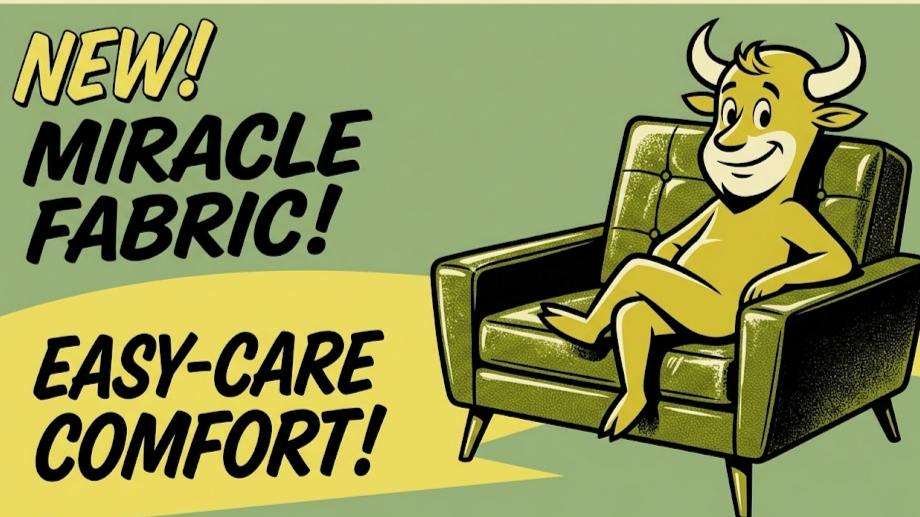
The Nauga doesn’t exist. It never did. Two horns, toothy grin, squat legs, supposedly native to Sumatra and willing to shed its skin once a year in the service of American furniture — complete fiction, cooked up in the mid-1960s by Madison Avenue adman George Lois and designer Kurt Weihs to sell a vinyl-coated fabric that had already been on the market for thirty years. The creature appeared in Life magazine, showed up on The Tonight Show with Johnny Carson, and inspired a “Save the Nauga” conservation campaign run by a comedian performing a character named Earl C. Watkins. Some people actually believed it was real. They wrote letters. They worried.
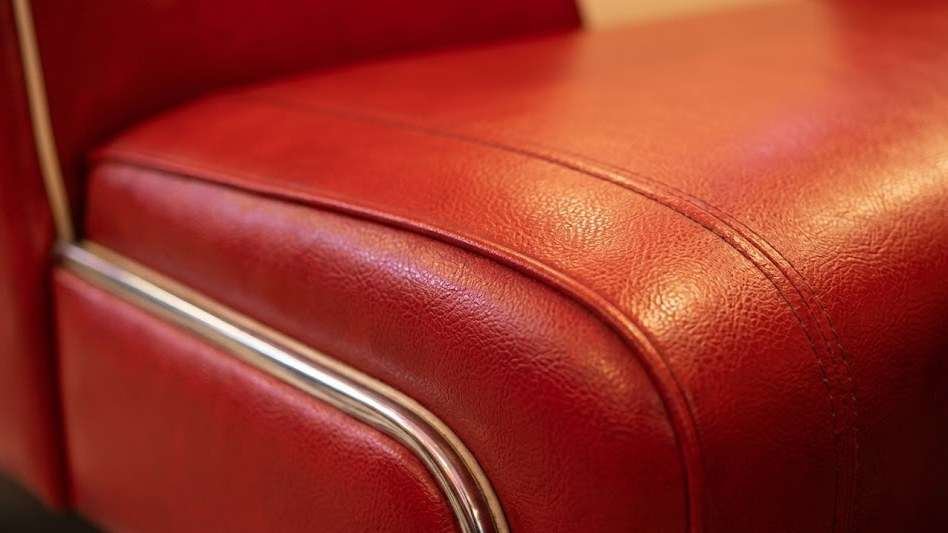
The product — Naugahyde — was a different story. That was entirely real. Developed by Byron A. Hunter, a senior chemist at the United States Rubber Company in Naugatuck, Connecticut, and first manufactured in 1914 (trademarked in 1936), Naugahyde is a composite knit fabric with an expanded polyvinyl chloride coating pressed onto its surface. It wipes clean, holds its seam, resists staining, and — in the postwar color explosion — came in everything from cherry red to turquoise to a brown so close to cognac leather that you’d need to touch it to know the difference. By the mid-1960s, America was producing roughly 142 million yards per year of vinyl-coated fabrics. Not all of it was genuine Naugahyde. Most of it was trying to be.
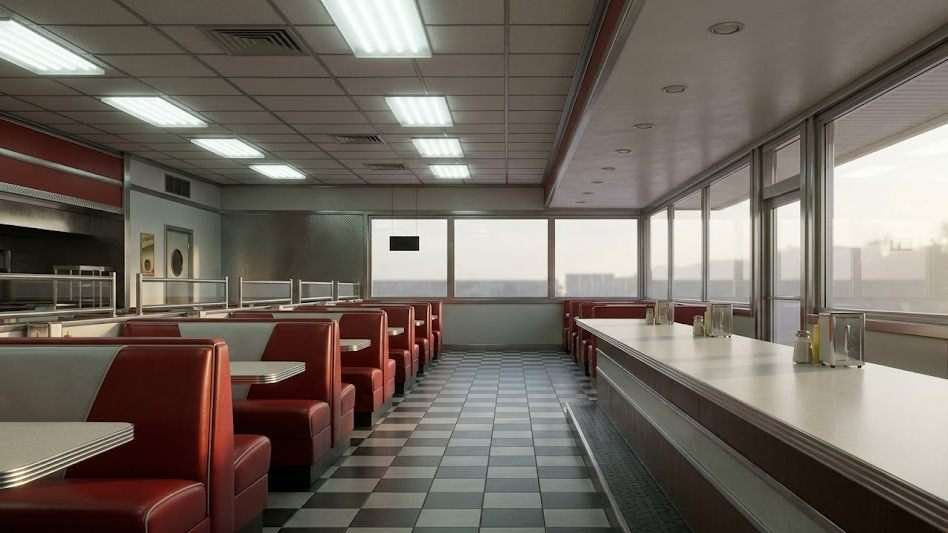
For the booths at every working-class diner across Long Island — including the one my father and I have run at Heritage Diner since 2000 — the mythology was beside the point. The booth didn’t care about the Nauga. It cared about ten thousand wipedowns a year and whether the seams held through a decade of shift workers and their elbows.
What It Actually Is
Strip away the advertising campaign and you have a technical achievement. U.S. Rubber spent the 1930s developing a synthetic material that could mimic leather’s surface behavior while improving on its weaknesses. Leather cracks. It stains. It’s porous in ways that make commercial cleaning a constant negotiation. Naugahyde solves all of that — the PVC coating is nonporous, heat-resistant enough for the demands of a commercial dining room, and flexible enough to stretch over curved booth frames without splitting at the joints.
During World War II, U.S. Rubber’s vinyl resin technology expanded beyond furniture into military applications — rain coats, tents, field bags, and upholstery for military vehicles including trucks, planes, tanks, ships, and Jeeps. The postwar diner boom that swept Long Island in the 1950s had an indirect beneficiary: all that wartime manufacturing expertise made Naugahyde more refined, cheaper to produce, and available in a palette that no prewar diner booth could have offered.
By the 1950s, Naugahyde had been adopted by the DIY craze of the era — top-end designers used it, even chairs in the United Nations building in New York carried it, and it was, as one historian put it, everywhere. Everywhere included every diner on Jericho Turnpike, every counter stool on Route 25A, every booth in every railroad-adjacent luncheonette from Mineola to Babylon.
Why Diner Owners Chose It
The choice wasn’t sentimental. It was economic and practical, and in that order.
Genuine leather — the kind used in the Gold Coast estates in Cold Spring Harbor or Lattingtown — required conditioning, careful cleaning, and periodic replacement. It aged beautifully in a library with controlled humidity and no coffee. In a diner running two seatings during the lunch rush with a counter guy who sprays down every surface with the same industrial cleaner he uses on the flat-top, leather was money burning slowly. Naugahyde could take a bleach wipe. It didn’t breathe, which meant it didn’t absorb. A booth seat that took a spilled milkshake in 1958 could still be in service in 1971 if the stitching was solid.
The stitching mattered. Diner supply catalogs of the period — which were the real purchasing infrastructure behind every new or refurbished diner on Long Island — specified Naugahyde by grade for booth seating, with upholstery contractors building frames from hardwood, covering them in foam batting, and finishing them in the vinyl. The color selection wasn’t random. The red booths you remember from any classic Long Island diner weren’t just aesthetic — red aged well under fluorescent lighting, covered staining patterns better than lighter colors, and photographed well in the promotional photographs that diner owners sent to trade publications. It was a practical choice dressed up as a style choice.
The Advertising Campaign That Made It Legendary
By the early 1960s, Naugahyde had competitors. By the mid-1960s, America was producing 142 million yards per year of vinyl-coated fabrics, but not all of it was actual Naugahyde. Uniroyal — the renamed U.S. Rubber Company — faced a brand problem. They’d essentially created a category and then watched it fill with imitators. The solution was George Lois, the same Madison Avenue figure said to have inspired the Don Draper character in Mad Men.
Uniroyal hired Lois and designer Kurt Weihs to craft an advertising campaign to differentiate their product from the competition. What they created was the Nauga — a humorous campaign featuring the creature engaged with the world: as the life of the party, as a child’s play companion, adorned in splattered paint from a craft gone awry, even as a vacationer readying for travel with golf clubs in hand.
The campaign ran in Life, Better Homes and Gardens, and McCall’s. Spokesmen for the campaign included Johnny Carson, and the Nauga character even appeared on The Tonight Show, as well as in the Madison Avenue Advertising Walk of Fame parade in New York City. Nauga dolls were produced and offered for $1 with the purchase of a Naugahyde-covered recliner chair. Teenagers formed Nauga fan clubs. Schools adopted it as a mascot. People wrote to Uniroyal demanding to know how many Naugas had to die for the furniture they were sitting on.
In one of the earliest examples of an urban myth springing up around an advertised product, George Lois’ Naugas entered the concerned public consciousness as a potentially endangered species. The company’s response was elegant: the Nauga didn’t need to be killed. It shed its skin willingly, making Naugahyde “The Cruelty-Free Fabric.” The campaign essentially invented a fictional ethical supply chain, decades before the phrase existed.
The Class Lens That Nobody Talks About
What the Nauga mythology obscured was something more revealing: the product it sold was explicitly class-coded in ways that American advertising almost never states directly.
Leather was aspirational. It was the material of the Gold Coast estates, the private clubs in Garden City, the executive furniture showrooms. It required care that implied staff. Naugahyde was for everyone else — the Greek diner owner on Hempstead Turnpike, the auto repair shop waiting room in Levittown, the pediatrician’s office in Massapequa. The Nauga campaign dressed up that reality in enough humor and warmth that nobody felt like they were settling. The fake creature made the fake leather feel like a choice rather than a compromise.
That reframing was the actual genius. By drawing attention to the essential imitation and fakery of the material and essentially celebrating it with a fake narrative wrapped in knowing, wry, winking humor, Naugahyde was vaulted into the collective consumer consciousness. You weren’t buying a substitute for leather. You were buying the hide of a Nauga. Specific. Storied. Arguably better than the alternative, since the Nauga didn’t crack.
The working-class diner never needed the mythology to make the sale. It bought Naugahyde because it worked. But the mythology mattered in the wider culture because it gave people a way to feel good about sitting in a booth that wasn’t covered in the same material as a Rolls-Royce. That’s not a small thing. Dignity in the materials you use every day is its own category of need.
The Booths Are Still Here
Today Naugahyde is manufactured in Stoughton, Wisconsin, still produced in hundreds of colors by Uniroyal Global Engineered Products. The original booth upholstery in most Long Island diners has been replaced multiple times over — vinyl doesn’t last forever, and the original postwar booths have been refurbished, rebuilt, or replaced wholesale during the remodeling cycles every diner goes through every decade or two. What hasn’t changed is the material specification. When a North Shore diner orders new booth seating today, vinyl-coated fabric is still the default.
The Nauga, meanwhile, remains available as a collectible doll. Original production models from the 1960s and 1970s — made from actual Naugahyde, obviously — sell for real money on secondary markets. The myth outlasted the manufacturing cycle that created it. Some advertising works that way: it invents something people didn’t know they needed and then makes it permanent.
What the diner invented was simpler. A place to sit for a while. A counter to lean on. A booth that could take whatever the lunch rush brought. The material that covered the seat didn’t need a story. But the story didn’t hurt.
You Might Also Like
- Rum Row and the Freeport Bootleggers: Long Island’s Clandestine War on the Water
- The Forgotten Montauk Surfman’s Chowder: Cooking with Seawater at the 1800s Life-Saving Stations
Sources
- Naugahyde and the Nauga — Snopes.com
- The Tale of the Nauga’s Hide — The Henry Ford
- Uniroyal Global’s Naugahyde Brand Celebrates 80 Years — Business Wire
- Naugahyde — Wikipedia
- How the Nauga and Its Fictional Friends Helped Make Synthetic Fabric Cuddly — Smithsonian Magazine
- The Nauga — Naugatuck Historical Society