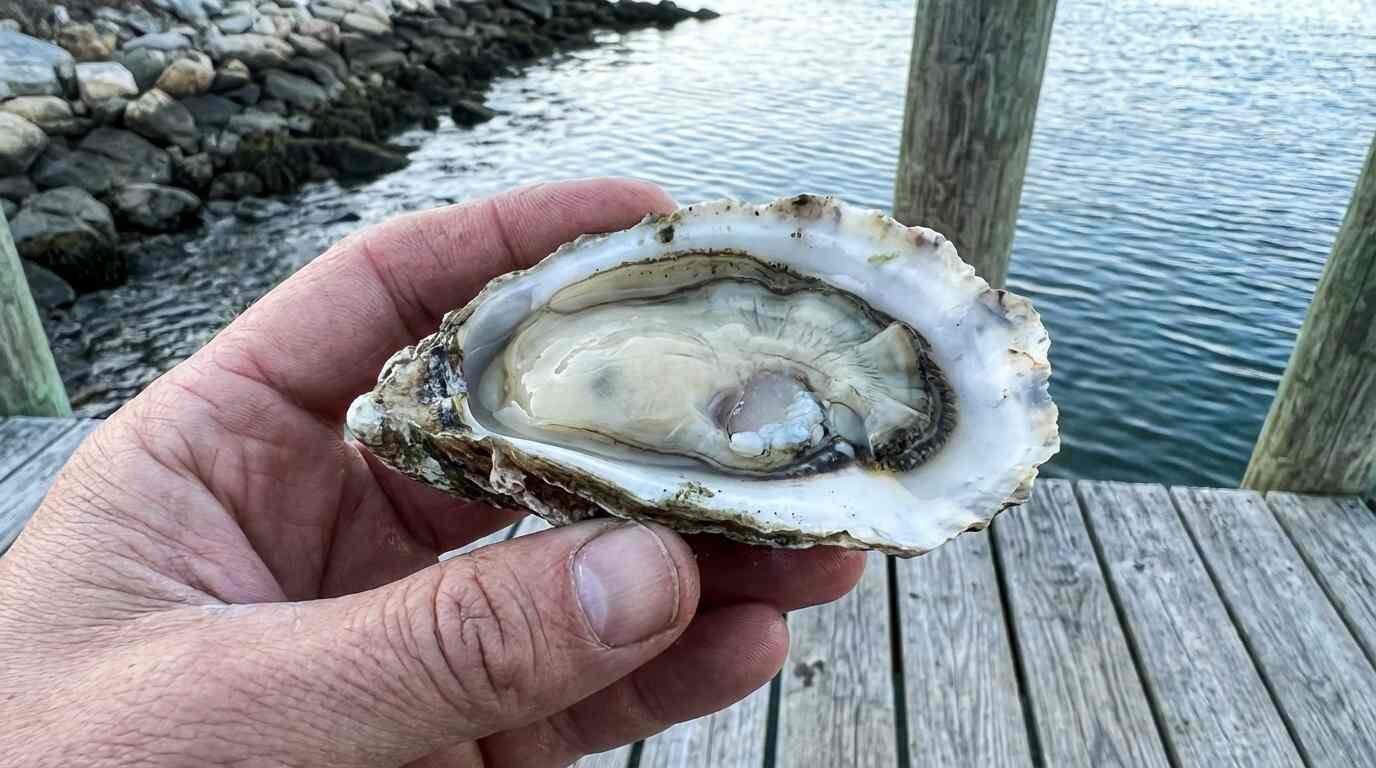
Long before the Hamptons became shorthand for a certain kind of conspicuous leisure, Cold Spring Harbor was a working harbor — and what it worked was shellfish. The water there, a brackish mix of freshwater springs meeting Long Island Sound, turned out to be extraordinary habitat for the eastern oyster. For most of the 19th century, that fact was the engine of an entire regional economy, and the dining culture it fed extended all the way to Manhattan’s oyster cellars and street carts.
That history is almost entirely gone from local memory. Which is why what’s happening on North Shore menus right now is more interesting than most people realize.
A Harbor That Worked for a Living
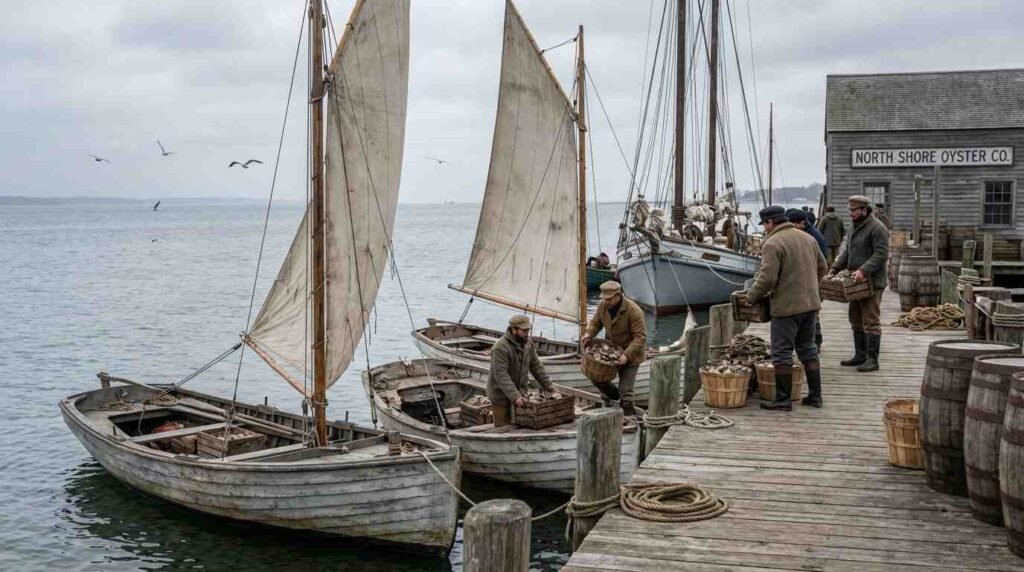
The Jones family of Cold Spring Harbor understood early what the water could move. In 1827, brothers John and Walter R. Jones incorporated the Cold Spring Steam Boat Company, built a dock on the harbor’s east side, and eventually acquired the steamboat American Eagle to ship their goods to New York City markets. The harbor was already producing wool, timber, and barrel staves — but it was the shellfish, plentiful in the cold, clean Sound, that turned into steady commerce for generations of baymen who worked the surrounding waters.
What Cold Spring Harbor contributed was part of a larger Long Island shellfish economy that stretched from Oyster Bay along the Sound’s North Shore and down through the Great South Bay. By the mid-19th century, New York City was consuming approximately one million oysters a day. That number is not a typo. The city was oyster-obsessed in a way that makes today’s raw bar culture look restrained. Oyster carts lined the streets the way food trucks do now. Oyster cellars served them raw, fried, stewed, and in pies to every economic class. The demand was insatiable — and Long Island was one of the primary suppliers.
When Demand Broke the Supply
The problem with insatiable demand is that biology has limits that commerce doesn’t acknowledge until it’s too late. The North Shore’s oyster beds were subject to the same pressure as every other accessible shellfish ground around New York. As the harbor-area beds closest to Manhattan were exhausted by the 1820s, the industry pushed further — to Long Island Sound, to the Great South Bay, to the growing operations in Oyster Bay that would eventually lease underwater shellfish lands from the town government. By the time the Long Island Railroad connected the South Shore to New York City in 1867, Blue Point oysters were flowing into the city by rail, but the harvest pressure had already been building for decades.
The depletion wasn’t instant. It happened the way most environmental collapses happen — gradually, then visibly. Sewage and industrial runoff compounded the overharvest. By the early 20th century, many of the beds that had produced for generations were either too contaminated to harvest or too depleted to bother. The Grand Central Oyster Bar, which opened in 1913, was already sourcing from waters well removed from New York Harbor proper, because the Harbor itself was effectively finished.
Cold Spring Harbor’s whaling industry, which had run from 1836 through 1862, was already gone by then — killed by petroleum. The shellfish economy followed, in slower motion. What the harbor had been for 200 years — a working place that fed a city — became something else: a resort destination for Gilded Age tourists arriving on those same steamers, now repurposed for leisure.
The 60-Year Gap
Here is the thing nobody talks about when they talk about Long Island food culture. There was a 60-to-80-year stretch, roughly from the 1920s through the 1980s, when local shellfish was simply not a meaningful part of how Long Islanders ate. The oyster culture that had defined the regional table for two centuries collapsed, and nothing replaced it at the local level. Supermarket seafood came from somewhere else. Restaurant menus defaulted to whatever was moving through the industrial distribution system. The connection between the water outside and the food on the plate was severed so completely that most people under 50 today have no frame of reference for it ever having existed.
This is not a Long Island-specific story. It happened everywhere that had a working seafood culture: the Chesapeake, the Gulf Coast, the Cape. But Long Island’s version is particularly striking because the waters — Long Island Sound, the North Shore bays, Peconic Bay — never went completely dead. The oysters were still there, in diminished numbers, in the right conditions. The knowledge had to be rebuilt, but the habitat, with work, could come back.
What’s Coming Back Now
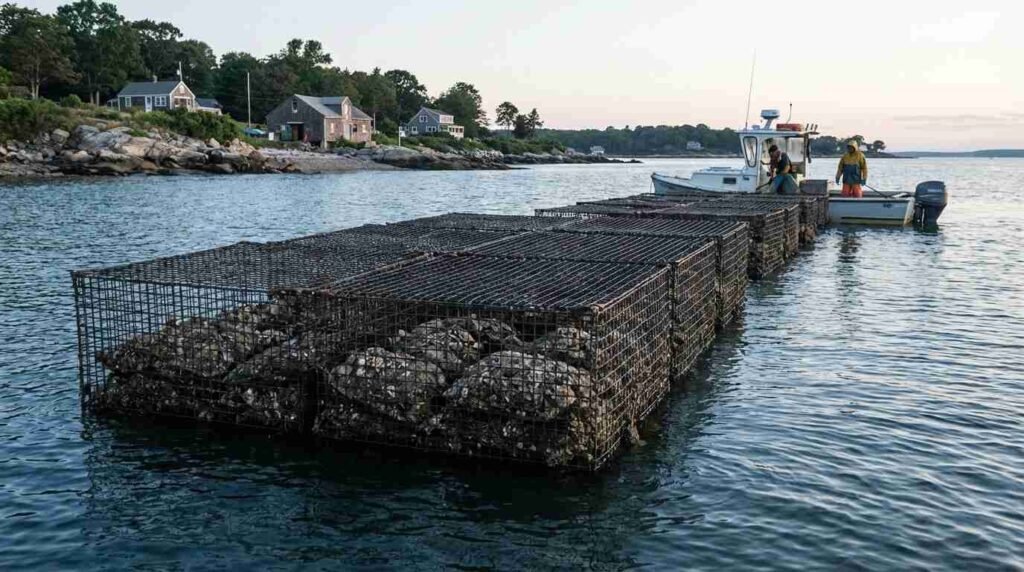
Suffolk County’s aquaculture industry has been quietly rebuilding for decades, and the numbers are real. According to the most recent USDA Census of Agriculture, Long Island now counts more than 170 aquaculture operations across Nassau and Suffolk counties, generating over $14.5 million in annual sales. On the North Shore, farms with names like North Fork Oyster Company and Founders Bay are seeding beds in Long Island Sound using modern aquaculture methods — cage-raised oysters that bring the animal to harvest in far less time than wild-bed production, with far more predictability.
The farms supplying Long Island Oyster Week — a regional promotion that now includes participation from Oysterponds Shellfish Co. in Orient, Founders Oyster Farm in Southold, and others — are producing shellfish that chefs describe in terms that would have sounded completely normal to a 19th-century bayman: clean brine, mineral finish, flavor shaped by the specific water they grew in. Chuck Westfall of the Long Island Oyster Growers Association put it directly: the growers have reestablished “in both quality and taste an oyster that hearkens back to Long Island’s rich oyster and shellfish industries.”
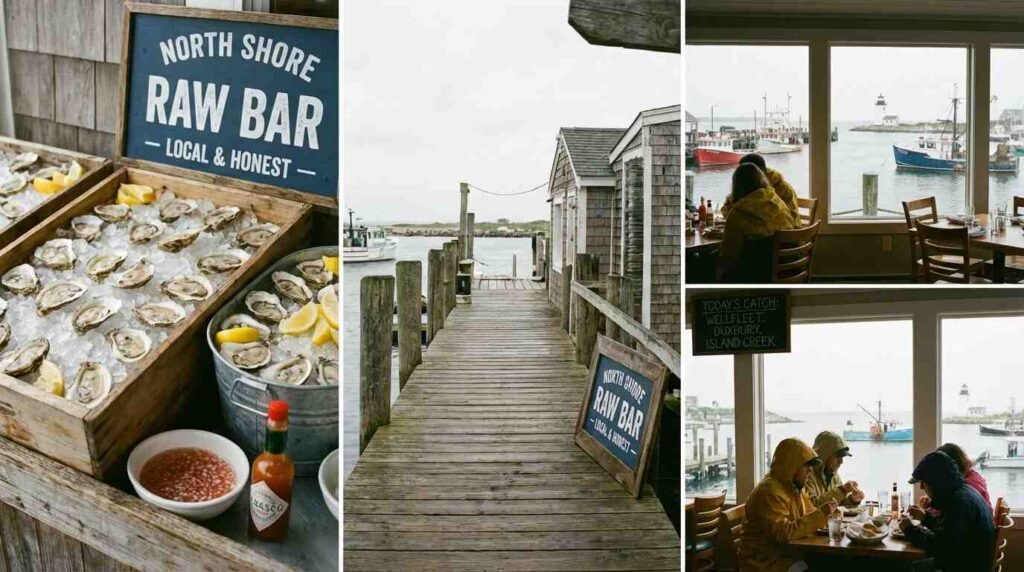
The Snapper Inn in Oakdale, which has been serving local seafood since 1929, was the site where New York State launched the Long Island Seafood Cuisine Trail in March 2025 — a digital guide connecting diners to restaurants sourcing from local aquaculture and wild fisheries. A North Shore trail, running from Oyster Bay to Greenport, was simultaneously in development. This is institutional acknowledgment, with funding behind it, that something worth recovering exists here.
Why This Matters for the Table
None of this is nostalgia for its own sake. The practical argument for eating a North Shore oyster today is the same argument it always was: the water is cold, the salinity is right, the mineral profile of Long Island Sound produces a bivalve with a flavor that’s genuinely distinct from what comes off the South Shore or out of Great South Bay. Phil Mastrangelo of Oysterponds Shellfish makes the comparison directly to wine: different waters, different flavors — Peconic Bay oysters taste different from ones grown on the South Shore.
That’s terroir. The word usually gets applied to grapes, but shellfish are hyperlocal in the same way. An oyster is its water. Change the water, you change the animal.
What Cold Spring Harbor contributed to New York’s table for 200 years was a specific product grown in specific conditions — briny, cold-finished, carrying the signature of Long Island Sound. That product essentially disappeared for two or three generations. It’s coming back, in new form, through a combination of ecological recovery and deliberate aquaculture. The restaurants connecting to those farms — on the North Shore and increasingly across the island — are reconnecting to a food identity that predates everything most locals associate with Long Island dining.
Before the steakhouses on the Jericho Turnpike. Before the chain pizza. Before the diner boom. Long Island was a place that fed New York City shellfish off its own shores. That’s worth knowing.
You Might Also Like
- Eel Spearing and Smoked Eel: A Lost Winter Survival Food of the Peconic Estuary
- Depression-Era Clam Pie: Foraging the Great South Bay When Meat Was Scarce
- Long Island’s Hidden Artisan Economy: From Leather Workers to Oyster Farmers
Sources
- Oyster Bay–Cold Spring Harbor Protection Committee, State of the Watershed Report: oysterbaycoldspringharbor.org
- Huntington Township, 19th Century Industry: huntingtonny.gov
- Gotham Center for NYC History, “Dutch Baymen, Blue Points, and Oyster Crazed New Yorkers”: gothamcenter.org
- Atlas Obscura, “How New York City Became the Oyster Capital of the World”: atlasobscura.com
- Cold Spring Harbor history: huntingtonhistory.com
- North Fork Oyster Company: northforkoystercompanyinc.com
- Governor Hochul launches Long Island Seafood Cuisine Trail, March 2025: governor.ny.gov
- North Fork Oyster Farmers, Northforker, October 2023: northforker.com