Few dishes in the canon of Western cooking demand as much patience for as much reward. French onion soup is not complicated — it is, at its core, onions, broth, bread, and cheese. But the margin between a forgettable bowl and a transcendent one comes down entirely to time, technique, and an unwillingness to rush what cannot be rushed.
This is that version.
The Recipe: The Caramelized French Onion Soup
Serves 4 | Prep: 15 min | Cook: 1 hr 45 min
Ingredients
The Onion Base
- 6 large yellow onions, thinly sliced
- 4 tbsp unsalted butter
- 2 tbsp olive oil
- 1 tsp kosher salt
- ½ tsp sugar
The Broth
- ½ cup dry sherry or cognac
- ½ cup dry white wine
- 6 cups high-quality beef broth
- 4 fresh thyme sprigs
- 1 bay leaf
- 1 tbsp Worcestershire sauce
- 1 tsp freshly cracked black pepper
The Crust
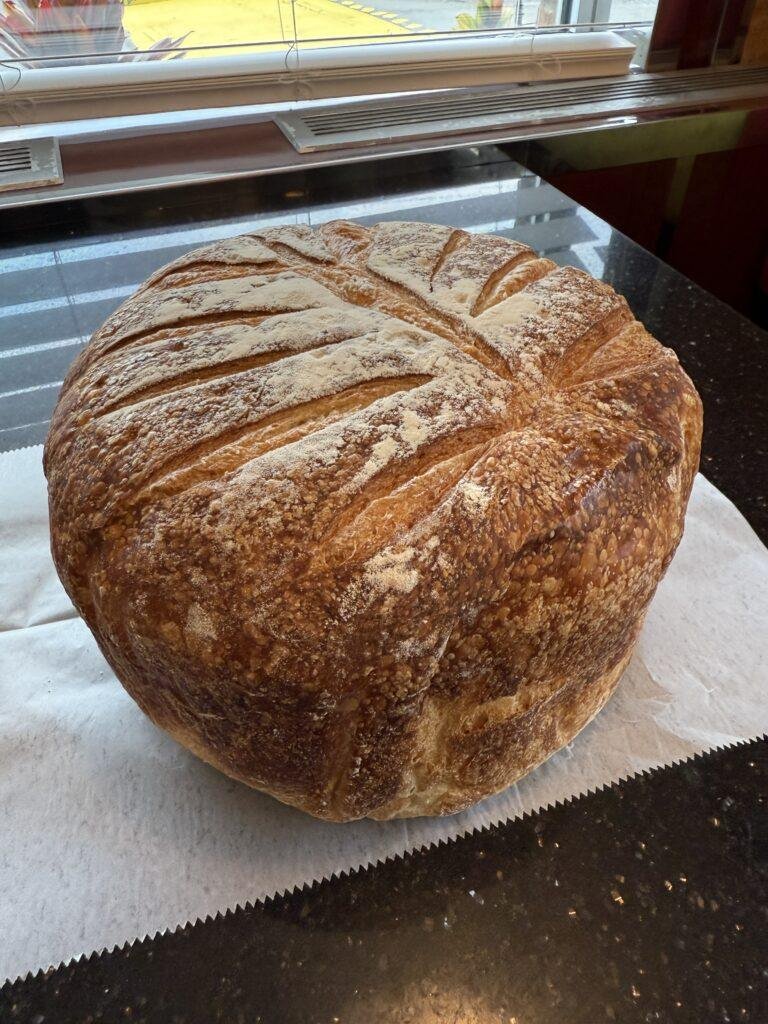
- 4 slices Heritage Diner sourdough (1″ thick), toasted
- 2 cups Gruyère cheese, freshly grated
- ¼ cup Parmesan, freshly grated
Instructions
Step 1 — Build the Onion Base
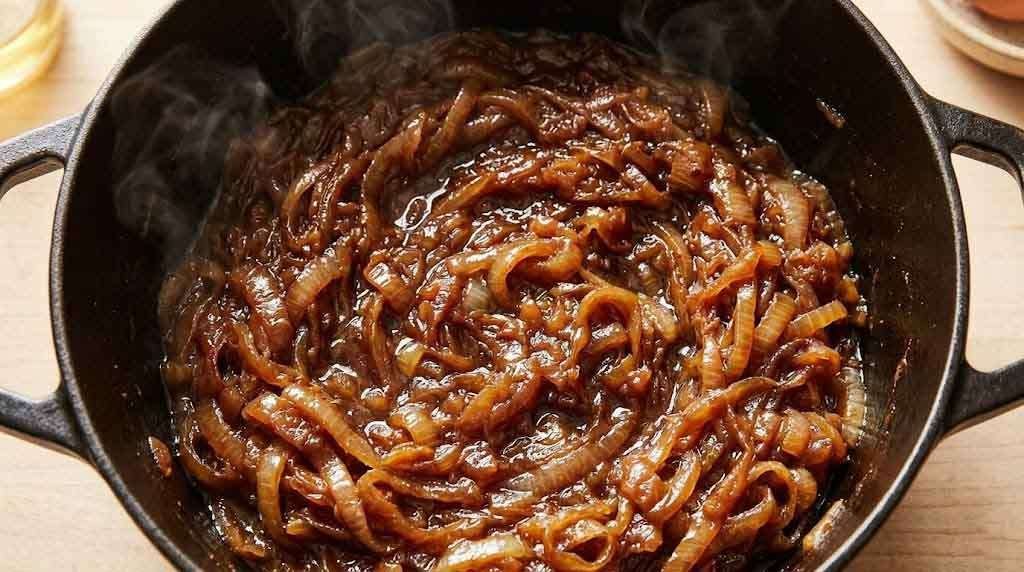
In a large, heavy-bottomed Dutch oven, melt the butter with the olive oil over medium heat. Add all the onions and toss to coat. Season with salt and sugar. Cook uncovered, stirring every 8–10 minutes, until the onions collapse and turn a deep amber-mahogany color. This takes 50–60 minutes minimum and cannot be rushed. The color should be the shade of dark caramel — not golden, not tan.
Step 2 — Deglaze & Build the Broth
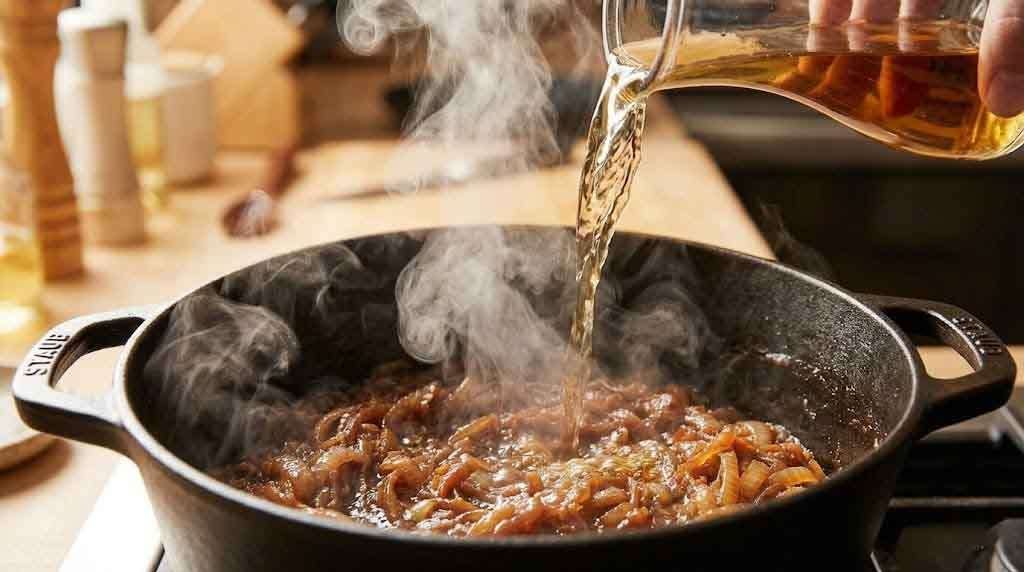
Pour in the sherry or cognac and scrape up all the fond from the bottom of the pot — this is where the flavor lives. Let the alcohol cook off for 3–4 minutes, then add the white wine. Once that reduces slightly, add the beef broth, thyme sprigs, bay leaf, Worcestershire, and black pepper. Bring to a gentle boil, then reduce to a low simmer.
Step 3 — Simmer to Depth
Simmer uncovered for 30–40 minutes, allowing the broth to concentrate and the flavors to fully marry. Remove the thyme sprigs and bay leaf. Taste and adjust salt and pepper. The broth should be rich, dark, and almost silky — not thin, not sharp. Balance is everything.
Step 4 — Assemble & Broil
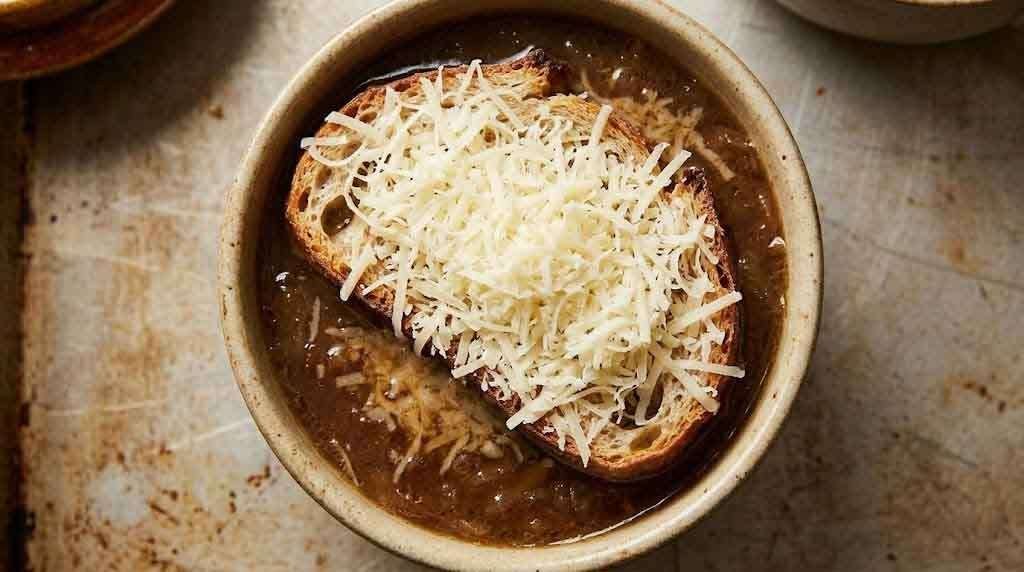
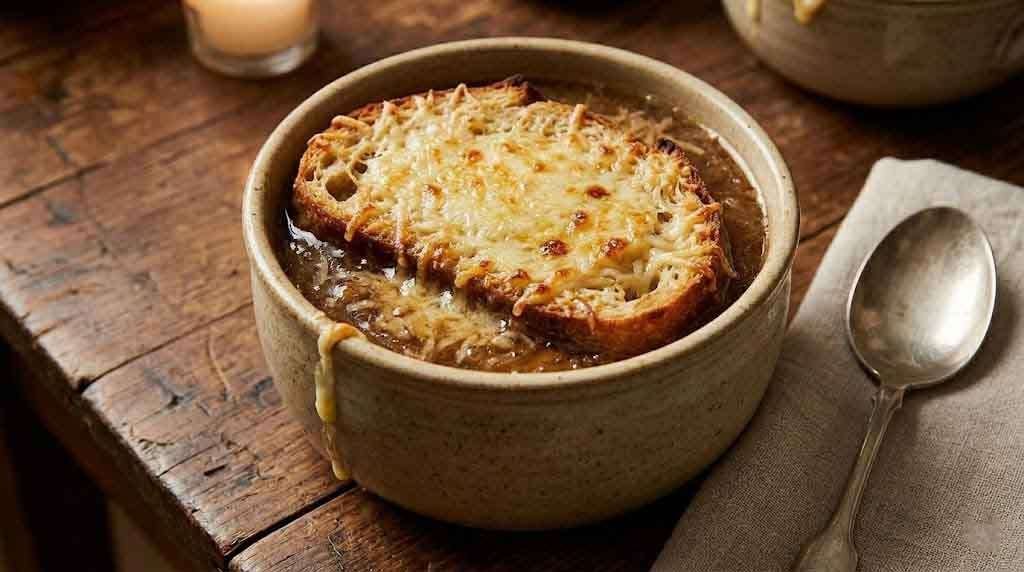
Preheat your broiler to high. Ladle the soup into oven-safe crocks or bowls set on a baking sheet. Float one slice of toasted sourdough on top of each bowl. Cover generously with Gruyère and finish with a pinch of Parmesan. Slide under the broiler 4–5 inches from the heat source and broil until the cheese is bubbling, golden, and beginning to blister at the edges — 3 to 5 minutes. Watch closely.
Notes
The caramelization phase is non-negotiable — anything under 45 minutes produces sweet onion soup, not French onion soup. The Heritage sourdough’s open crumb and mild tang hold up beautifully under the broth and cheese without turning to paste. For a richer result, substitute 1 cup of the beef broth with veal stock. Gruyère is the classic choice, but a blend with Comté or Fontina adds complexity.
Why Most French Onion Soup Falls Short
Walk into almost any restaurant and order French onion soup, and what you’ll likely receive is a bowl of pale, sweet onion broth topped with a crouton drowning under processed Swiss. It’s edible. It is not French onion soup — not really.
The problem is almost always the same: the onions were not caramelized long enough. True caramelization — the kind that produces a deep amber, jammy, almost marmalade-like result — takes a minimum of 45 to 60 minutes over medium-low heat with nothing but butter, oil, salt, and patience. The sugars in the onion don’t simply soften; they transform, building the complex, savory-sweet backbone that makes the finished soup so distinctly itself.
Shortcut that step and you’ve made onion-flavored broth. Honor it and you’ve made something worth sitting down for.
The Broth Is the Second Act
Once the onions are properly built, the broth phase is where depth compounds. A deglaze with dry sherry or cognac — never skip this — lifts the caramelized fond from the bottom of the pot and integrates weeks of flavor in a matter of seconds. Add dry white wine next, let the alcohol cook off, then build with a high-quality beef broth.
This is not the place for low-sodium carton broth with a forgettable label. The broth carries the entire structure of the soup once the cheese is pulled away. Use homemade if you have it. Use a quality store-bought if you don’t — but choose carefully.
Fresh thyme, a bay leaf, Worcestershire, and cracked black pepper round the pot. Then it simmers — uncovered — for another 30 to 40 minutes until the liquid concentrates into something rich, dark, and almost silky.
The Bread Makes or Breaks the Bowl
This is where a slow-fermented sourdough earns its place. The open crumb structure and mild tang of a proper sourdough — sliced thick and toasted before it goes into the bowl — holds up under the broth without collapsing into paste. Soft sandwich bread turns to mush. Baguette can work but lacks the substance. Sourdough, done right, creates a platform that absorbs flavor while maintaining enough integrity to carry the cheese.
If you’ve read our post on Meet “The Mother”: The Living Heart of The Heritage Diner’s Sourdough, you already know what goes into a slow-fermented loaf that’s built to hold up — this is exactly the application it was made for.
Toast the bread before assembly. This step is not optional.
The Gruyère Crust
Gruyère is the correct cheese for this soup — not Swiss, not mozzarella, not a blend-bag from the dairy aisle. Gruyère melts into a cohesive, deeply savory crust that blisters under the broiler and pulls at the edges of the crock in exactly the way French onion soup is supposed to. A small amount of freshly grated Parmesan over the top adds a sharp, salty edge that sharpens the whole composition.
Ladle the finished soup into oven-safe crocks. Float the toasted sourdough. Pile on the Gruyère. Finish with Parmesan. Broil at high heat, four to five inches from the element, and watch closely — the window between perfectly blistered and burned is narrow and unforgiving. Pull it when the crust is golden, bubbling, and beginning to char at the highest points. That char is not a mistake. It is the signature.
A Dish That Rewards Slowness
What makes French onion soup worth making at home is precisely what makes it difficult to find well-executed in most commercial kitchens: it cannot be rushed without visible consequence. The hour spent over the onions, the slow reduction of the broth, the care taken with the bread and the cheese — all of it is legible in the finished bowl.
This is a soup for a cold Sunday. For a dinner that deserves something more than the usual. For anyone willing to trade an afternoon for a result that genuinely earns its reputation.
Browse more recipes and kitchen craft in our Food Recipes and Food History sections.