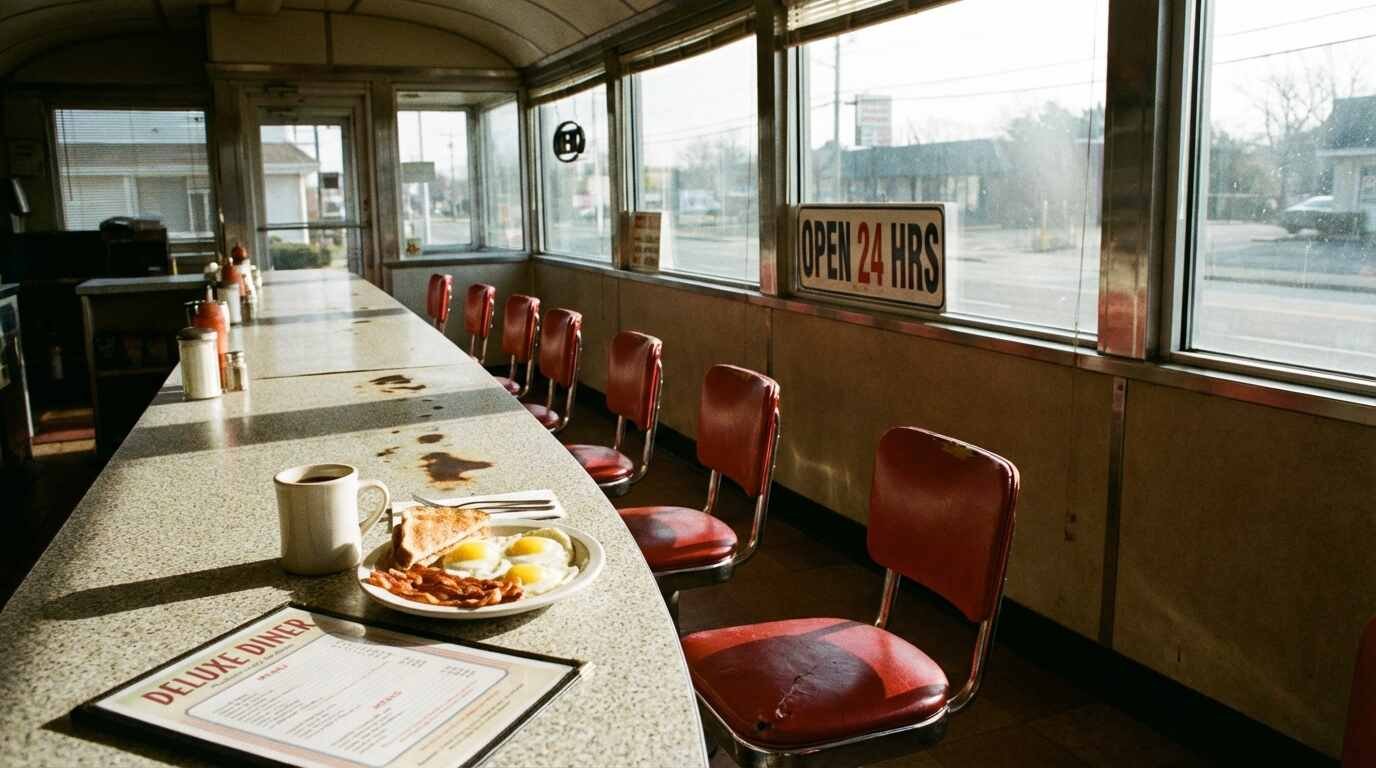
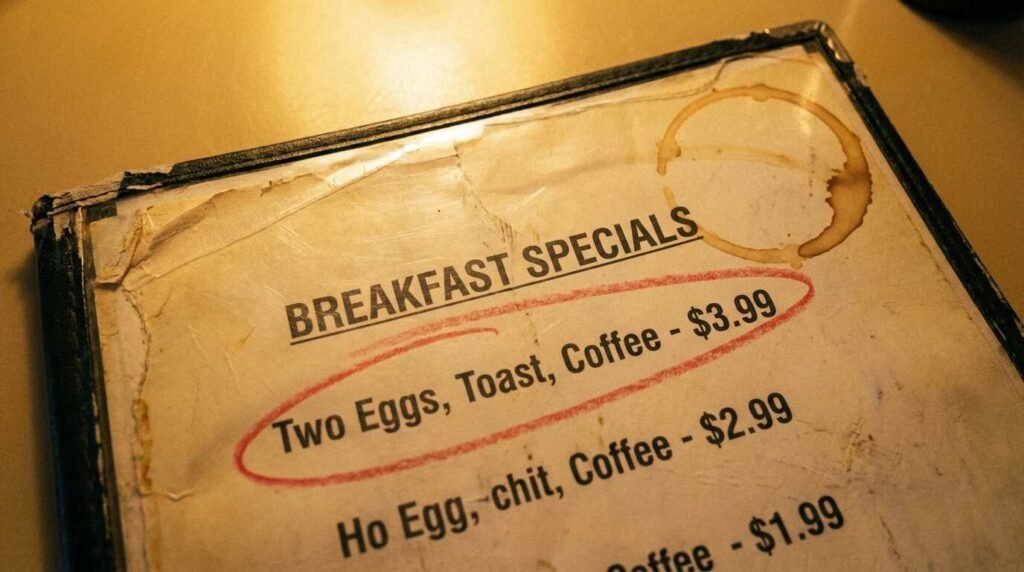
There’s a line item on South Shore diner menus — eggs, toast, coffee, maybe a cup of soup — that hasn’t tracked inflation in a way that makes rational economic sense. It sits there, priced the same or close to the same it was when Gerald Ford was still signing legislation. Every food cost has climbed. Rent has climbed. Labor has climbed. The eggs themselves have climbed. And yet this item holds.
The people who dismiss this as nostalgia have never run a restaurant.
The Mechanics of the Anchor
In behavioral economics, an anchor is the first number a buyer sees — the reference point that shapes how every subsequent number feels. Restaurant menu design has exploited this for decades: put a $95 lobster at the top of the menu and a $38 steak feels reasonable. The anchor makes the middle look like value.
Greek diner owners — whether they learned it from formal study or from 40 years of watching customers flinch at prices — have been running a more sophisticated version of this for most of the 20th century. The anchor isn’t a high-priced item designed to make everything else seem cheaper. The anchor is a low-priced item designed to make the whole establishment seem trustworthy.
The logic is different from what food consultants teach. It says: we are not trying to extract maximum value from you on every visit. We are here for the long term. We are your diner. And the proof is this egg plate that costs what it cost when your parents brought you here.
That proof is worth more than any loyalty card.
How Greek Immigrants Built the Diner Economy
Understanding why this strategy exists means understanding who built the American diner. Beginning in the 1960s, following the passage of the 1965 Immigration and Nationality Act, Greek immigrants became dominant in the diner business up and down the Eastern Seaboard. Greeks were a close-knit community, often preferring to work with family members and people from the old country — that’s how they were able to get a stronghold on the business, according to Richard Gutman, author of American Diner Then and Now.
The Greek-owned diner became a particular institution in the New York metro area and on Long Island. An estimated 500 of 800 diners in New York City are Greek-owned. On Long Island — with its strip of Route 110, Route 25A, Sunrise Highway — the pattern repeated: family-owned, family-operated, built around the idea that the diner is not just a restaurant but a neighborhood fixture.
That distinction matters for everything that follows. A chain restaurant optimizes for transaction. A Greek family diner optimizes for relationship. The egg plate that hasn’t moved in price isn’t a failure of accounting — it’s the relationship made legible on a laminated page.
What the South Shore Understood
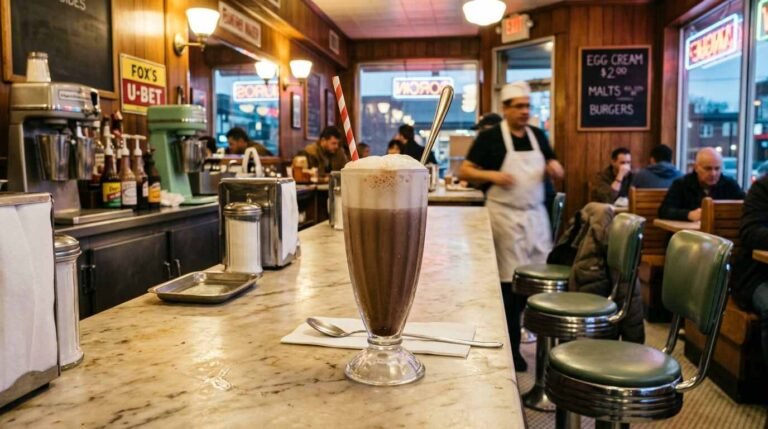
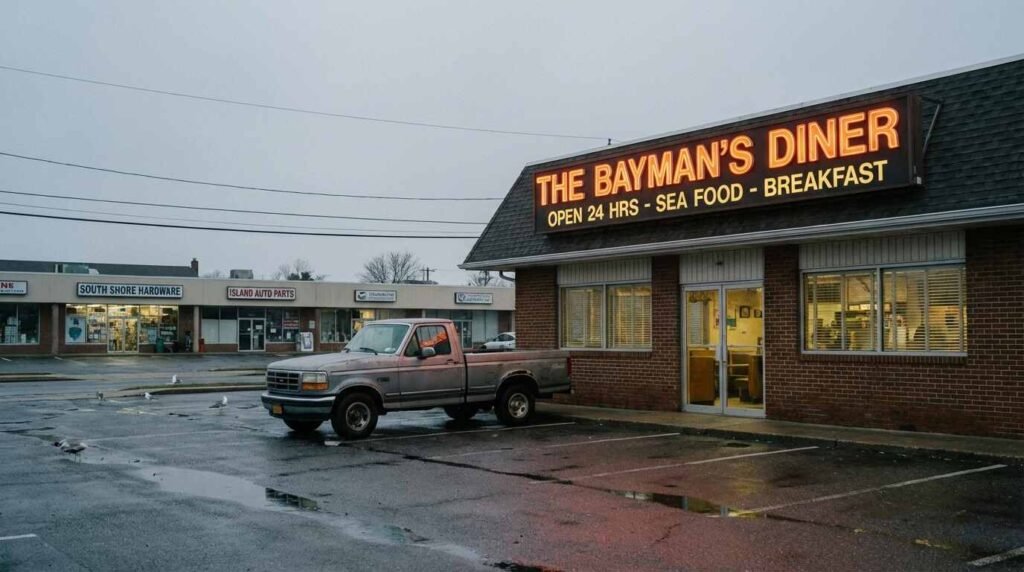
The South Shore of Long Island has a specific working-class dining identity that the North Shore doesn’t quite share. Bay Shore, Babylon, Amityville, Copiague — these are communities built around trades, water, the kind of work that requires you to be somewhere early in the morning. The diner was the institution that served that life. Not the bistro, not the farm-to-table concept — the diner, open at 5 AM, with coffee already made and a counter seat waiting.
For that customer — the contractor, the firefighter, the nurse coming off night shift — the diner’s relationship to price is personal. A menu that gouges signals something beyond economics. It signals that the owner doesn’t see you as a regular; he sees you as a transaction. Once that signal is received, it’s very hard to unsend.
South Shore diner operators understood this intuitively. Keeping a soup or egg plate priced near what it was a generation ago wasn’t a failure to raise prices — it was a deliberate statement about who they were. The Babylon Village Historical Society and the local archive of the South Bay’s Beacon newspaper carry traces of this identity in their coverage of the diners that anchored Main Street commerce for decades.
The Trust Economy in Practice
Here’s what the anchor item actually buys: it buys the customer’s benefit of the doubt on everything else. When you know the egg plate costs what it always cost, you don’t scrutinize the rest of the menu the same way. You order the special. You order the pastry. You order the second coffee. You don’t do the mental math that chain-restaurant customers do — the comparison, the Yelp check, the wondering whether you’re getting taken.
That’s not a small thing in a business with 4% net margins.
Behavioral economics literature, including menu design research from the Culinary Institute of America, documents the anchor effect in restaurant pricing — but usually from the direction of high-price anchors making mid-range items feel accessible. What Greek diner operators developed was the inverse: a low-price anchor that built enough trust to make the rest of the menu feel fair, without the customer ever consciously running the calculation.
The fact that this happened without any formal training in behavioral economics — that it emerged from the practical intelligence of immigrant families running tight operations on thin margins — says something about the kind of knowledge that doesn’t come from business school.
Why Chains Can’t Copy This
Every major fast-casual chain in America has a “value menu.” Every one of them has failed to replicate what the anchor item accomplishes in a Greek diner. The reason is simple: the anchor item only works when the customer believes the owner is sacrificing something to offer it.
At a Denny’s, nobody believes the corporation is taking a loss on the Grand Slam. At a South Shore diner where the owner has been behind the register since 1979 and his daughter takes orders on the weekend, you understand that the low-priced egg plate is a choice that costs someone something. That perceived sacrifice is the mechanism. Remove the human being from the equation and the mechanism collapses.
This is why, as Greek diner owners of the first and second generation retire, the anchor pricing often goes with them. A new owner with a different relationship to the neighborhood, a different cost structure, a different way of reading the regulars — they see the underpriced item and raise it immediately. Which is the rational move. And which is exactly when you start to see customers drift.
What Survives
Some South Shore diners are holding this line. Not all of them, not as a formal policy, but as a habit so deep it’s barely conscious anymore. You see it in the coffee price. You see it in the soup. You see it in the way the menu has one or two items that seem like they got left behind by time, except they didn’t — they were kept there on purpose.
I’ve seen this from the other side of the counter. The Heritage Diner has been on Route 25A in Mount Sinai since 2000. The pressure to raise every price all the time is constant and real. What keeps you from doing it everywhere is understanding that price isn’t just a number — it’s a signal, and the signal the anchor sends is: we see you, we haven’t forgotten what you’re worth to us, and we’re still here.
That’s a harder thing to manufacture than any loyalty program. It’s the kind of thing that only accumulates over time, in a business run by people who intend to be there for a very long time.
The South Shore’s working-class diners built that over decades. Some of them are still building it. The customers who’ve been eating at the same counter since their kids were small know it without being able to explain it. The price on the egg plate is the explanation.
You Might Also Like
- The Greek Diner Owners of Long Island: An Immigrant Story Told in Coffee and Eggs
- How a Jersey Joint Started Pulling in Numbers That Would Embarrass a Mid-Size Hotel
- The Forum Diner of Bay Shore: 52 Years, One Closing, and What Comes Next