Selecting Materials
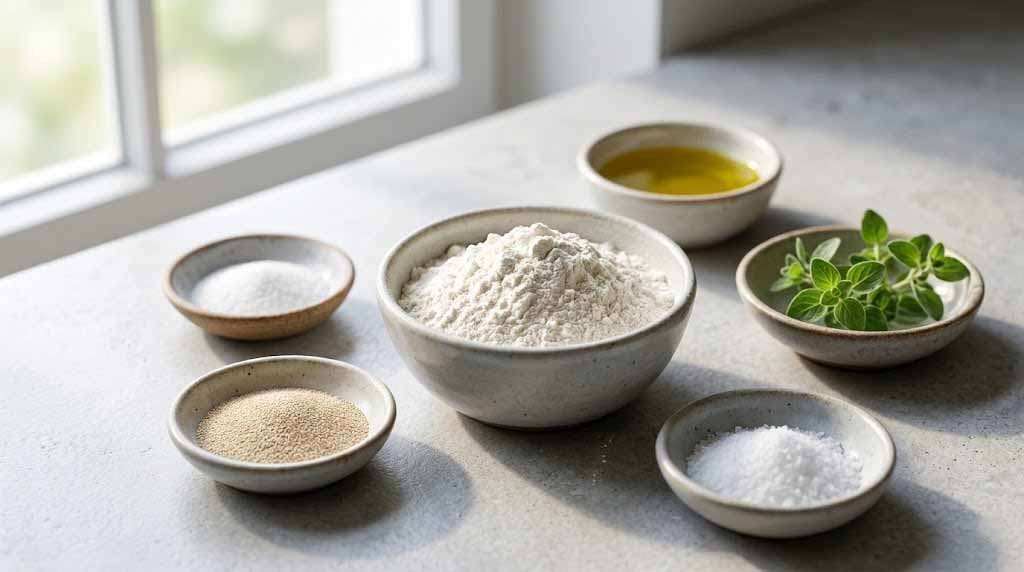
The foundation of any exceptional dish is its ingredients. For this premium pita, we select components that emphasize simplicity and purity. This visual index highlights the distinct textures we are working with: unbleached bread flour (for a strong, chewy structure), active dry yeast, flaky sea salt, a pour of premium golden extra virgin olive oil, and a sprig of fresh, aromatic oregano.
Note how the textures—the fine flour, the granular yeast, and the viscous oil—already tell a story of structure, fermentation, and flavor. We will keep this minimalist, clean aesthetic consistent throughout the entire cooking process.
Ingredients: (Yields 6-8 Pitas)
- Bread Flour: 3 1/4 cups (410g), plus extra for dusting (Use high-protein bread flour for that soft-yet-chewy texture).
- Active Dry Yeast: 2 1/4 teaspoons (7g, one sachet).
- Warm Water: 1 cup + 2 tablespoons (270ml, around 105°F / 40°C), slightly sweetened with 1 teaspoon of sugar.
- Extra Virgin Olive Oil: 3 tablespoons (45ml), plus more for brushing.
- Fine Sea Salt: 1 1/2 teaspoons (9g).
- To Finish (Optional): Flaky sea salt, dried Greek oregano, and a squeeze of fresh lemon.
Step 1: The Active Knead: Activating the Dough
The first transition is crucial: moving from those raw components into an active, breathing dough. The shaggy mixture you form by combining the activated yeast, the golden olive oil, the fine sea salt, and the bread flour must be transformed into a single, cohesive unit.
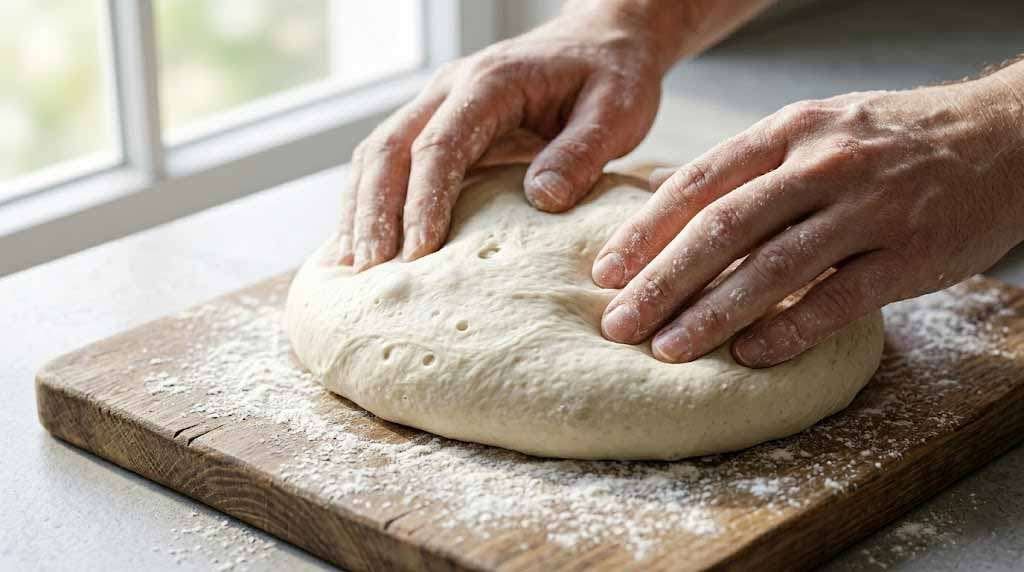
Kneading is not just about mixing; it’s about developing gluten. In this close-up capture, you see the active hands embedded in the mass. They are pressing, turning, and stretching. This specific motion creates the elastic network that defines the soft, pillowy crumb of the finished pita.
Notice the texture emerging: the developing dough is smooth, slightly tacky, and elastic, visibly absorbing the white flour dusted on the rustic wooden board. The composition emphasizes the interaction—the work—that elevates this simple bread.
Instructions (Step 1):
- Activate Yeast: In a large bowl, whisk the active dry yeast granules with the slightly sweetened warm water. Let stand for 10 minutes, until it becomes frothy and activated. (Use the warm water strictly around 105°F / 40°C for proper activation).
- Make Dough: Whisk in the 3 tablespoons of premium golden olive oil and the 1 ½ teaspoons of fine sea salt (as seen raw previously). Gradually add the 3 ¼ cups of unbleached bread flour, using a wooden spoon to form a shaggy cohesive shaggy cohesivedough mass.
- Active Knead: Turn the shaggy dough out onto a well-floured wooden surface (from our example). Knead for 8-10 minutes. The focused hands illustrated here show the active folding, stretching, and interaction that develops the precise gluten structure. (Check for that specific matte finish).
Step 2: Heat and Transformation: The Explosive Cook
Once the dough rests for 90 minutes and doubles, we divide it, roll each piece into a 6-inch (15cm) disc, and prepare for extreme temperature.
While we are used to cooling elements on a slate counter, for the perfect puff, we are overpowered by warm, orange glow and intense heat. This stage, and all subsequent stages, utilize the same natural light established in our ingredient shot, which now catches the fragrant steam.
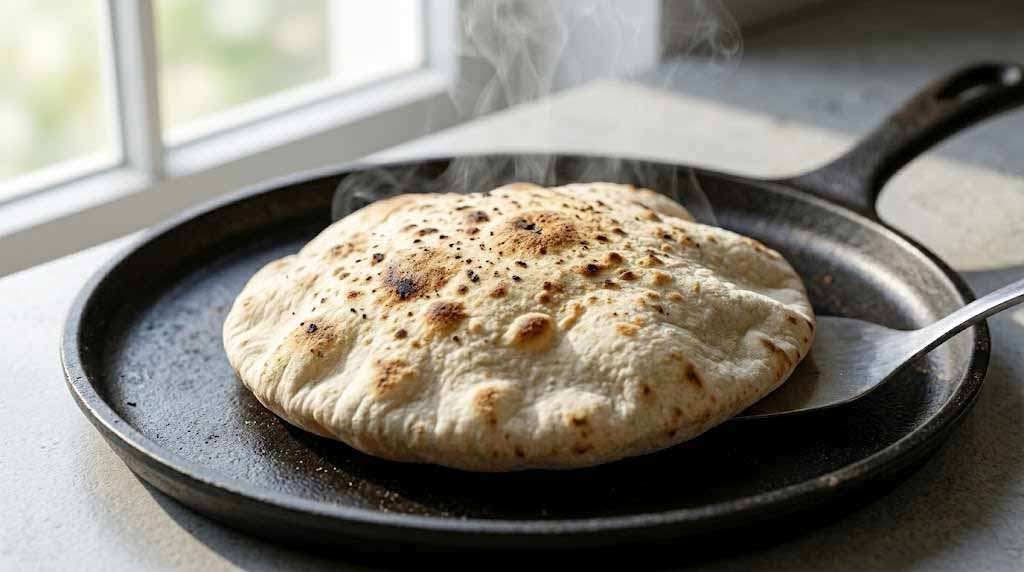
We have moved into a professional brick oven. We need you to observe: a single, perfectly formed, fully puffed pita is dramatically centered on the hot baking stone. It resembles a golden air balloon, illustrating the explosive leavening process. The surface shows light browning and specific char marks. This extreme environment is the core difference.
Instructions (Step 2):
- Rise and Divide: Let the kneaded dough (from our detailed example) rest for 1 ½ hours, until doubled in bulk. Punch it down, then divide it into 6-8 equal portions. Roll each piece into a neat ball and let rest on the clean slate counter (from our raw components) for 10 minutes.
- Roll Discs: Lightly flour your work surface. Roll each ball into a neat 6-inch (15cm) disc, 1/4 inch thick. (Keep the thickness uniform for an even cook).
- Baking (The Puff): Preheat your oven and baking stone completely at 500°F (260°C). Slide 2-3 discs directly onto the hot baking stone. (Check for that specific matte finish). Bake for exactly 3-4 minutes. Watch the single, perfectly formed, fully puffed pita bread (above)—its explosive leavening illustrated here on the baking stone is the core process of the perfect pocketless pita, with defined char spots and realistic steam.
Step 3: The Assembly: Presenting the Perfect Stack
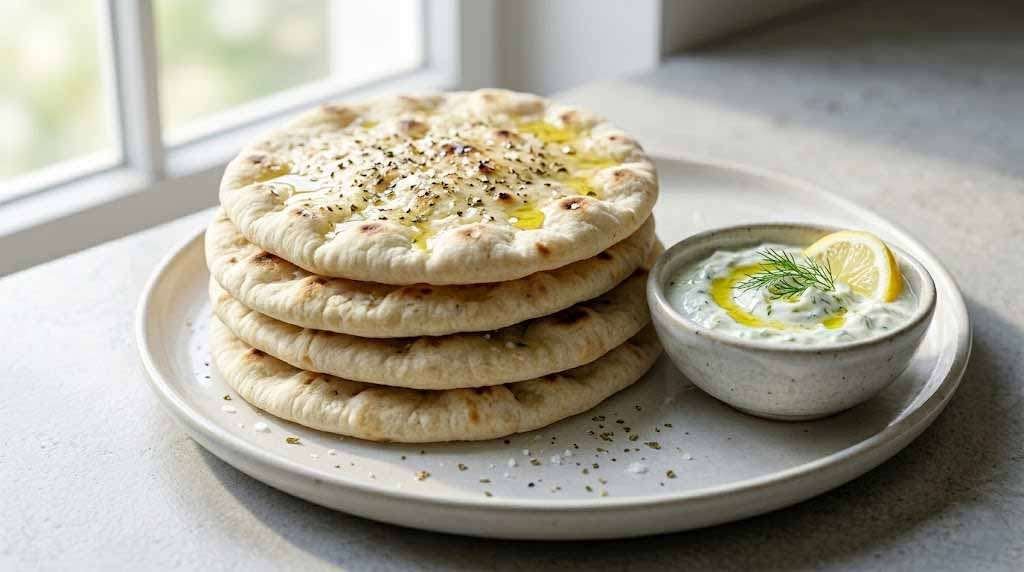
With the last pita removed from the griddle, our visual journey is complete. Here, we synthesize the textures of previous stages. The pitas, warm from the explosive cook, are stacked high on a modern off-white ceramic plate. We brush them with golden olive oil (from our initial index) and sprinkle with the coarse flaky sea salt and the vibrant dried Greek oregano.
Observe the perfect structure: a flawless, soft, pillow-like exterior that yields to a warm interior pocket. This structure and texture are the result of precise technique in every stage: the correct gluten development during kneading and the intense heat during the rapid cook. realistic shadows ground the platter, and droplets of the golden oil (derived from our original ingredient setup) are visibly applied with a fresh rosemary sprig.
The final dish, featuring the fresh tzatziki and the bright lemon wedge, looks not just appetizing, but premium—a Michelin-level take on the diner classic. Enjoy the soft symmetry.