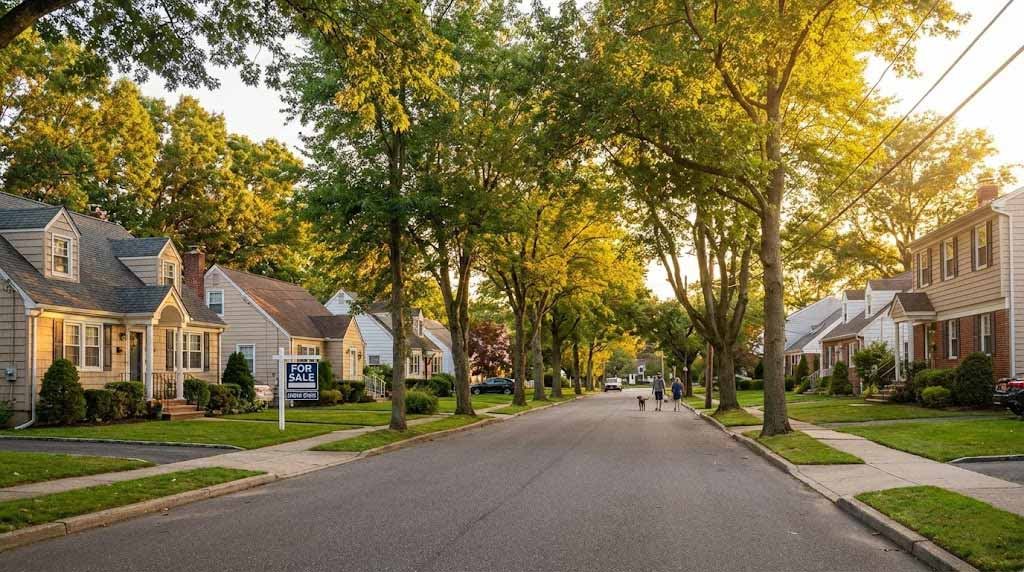
In a Long Island real estate market where Nassau County’s median home price sits at $831,000 and Suffolk County hovers around $725,000, finding a quality home under $500,000 feels like searching for buried treasure on Blackbeard’s lost island. Yet these neighborhoods exist—vibrant, improving, genuinely livable communities where your money stretches further, where $400,000 to $500,000 buys you an actual single-family house with a yard, not a cramped condo or a teardown project requiring another $150,000 in renovations.
These aren’t “cheap” areas because they’re dangerous, neglected, or undesirable. They’re affordable because they’ve been undervalued by mainstream buyers focused on brand-name towns, overlooked due to outdated stigmas from decades past, or simply located in Suffolk County rather than Nassau’s premium real estate territory. Like the best vintage wines that connoisseurs recognize before the market catches on, these hidden gem neighborhoods offer something increasingly rare in 2026 Long Island real estate: genuine opportunity.
If you’re a first-time homebuyer stretching to enter the market, a growing family seeking more space without sacrificing quality of life, or an investor with an eye for neighborhoods poised for appreciation, these communities represent your best chance to own a piece of Long Island without bankrupting your future. Here’s your comprehensive guide to Long Island’s hidden gem neighborhoods under $500,000—complete with data, insider knowledge, and the truth about what you’re really getting for your money.
What Actually Makes a “Hidden Gem” in 2026’s Market?
Not every affordable neighborhood deserves the “hidden gem” label. Some places are inexpensive for legitimate reasons: failing schools, rising crime, declining infrastructure, or economic stagnation. True hidden gems share specific characteristics that distinguish opportunity from simply “cheap.”
The Five Non-Negotiable Criteria for Hidden Gem Status
1. Demonstrable Improvement Trajectory (Not Decline)
Hidden gems aren’t perfect—they’re improving. Look for tangible evidence of upward movement:
- Property values trending up, even modestly (3-8% annual appreciation beats inflation)
- New businesses opening in downtown areas (coffee shops, restaurants, fitness studios)
- Municipal infrastructure investment (park renovations, street improvements, new rec centers)
- Crime rates declining year-over-year (check FBI Uniform Crime Reports)
- School district test scores rising (GreatSchools ratings improving, not stagnant)
Example: Patchogue’s median home price rose from ~$380,000 in 2015 to $550,000-$650,000 in 2026, driven by a successful 20-year downtown revitalization that transformed a struggling waterfront into a legitimate arts and entertainment district. That’s a hidden gem that’s been found—but similar transformations are beginning elsewhere.
2. Commuting Accessibility (The 90-Minute Rule)
No matter how affordable, a neighborhood fails if you can’t reach your job. Hidden gems must offer:
- LIRR station within 10-minute drive (or direct bus connection)
- Highway access to LIE, Northern State, Southern State, or Sunrise Highway
- Under 90 minutes door-to-door to Midtown Manhattan (the psychological breaking point)
- Flexibility for hybrid work schedules (not every day requires hellish commute)
Reality check: A 75-minute commute each way equals 12.5 hours per week, 650 hours per year. That’s 27 full days annually on trains. Factor this into quality of life calculations, not just monthly housing costs.
3. Genuine Community Identity (Not Just Suburban Sprawl)
The best hidden gems possess authentic community character:
- Active local events (farmers markets, street fairs, seasonal festivals)
- Established neighborhoods with long-term residents (not transient rental populations)
- Community organizations and volunteer groups
- Local businesses that create gathering spaces
- Identifiable “downtown” or commercial district, however modest
Why this matters: Communities with identity tend to be stable, self-improving, and attractive to families who’ll maintain properties and support schools. Anonymous bedroom communities with no center often stagnate.
4. Functional Schools (Even If Not Top-Rated)
You don’t need A+ school districts to have a hidden gem—you need schools that:
- Show improving trend in test scores and rankings (direction matters more than absolute standing)
- Have engaged parent communities and responsive administration
- Offer adequate facilities and extracurricular activities
- Graduate students prepared for college or careers
- Don’t actively destroy property values through persistent failure
Nassau County perspective: Many buyers overpay for A+ school districts when their kids would thrive in B+ schools. A home in Great Neck with top schools costs $900,000+. A comparable home in a B+ district costs $500,000. That’s $400,000 difference—enough to fund private tutoring, college savings, or actual college tuition.
5. Real Housing Stock Under $500K (Not Just Condos and Teardowns)
True hidden gems offer:
- Actual single-family detached homes, not just condos or townhouses
- Move-in ready options exist (not exclusively fixer-uppers)
- Lot sizes with actual yards (0.15+ acres typical)
- 3-4 bedrooms, 1-2 bathrooms (family-functional)
- Built after 1950 (or well-maintained older homes with updated systems)
Red flag: If every home under $500K needs $100,000+ in immediate repairs, it’s not affordable—it’s deferred cost.
The Eight Hidden Gem Neighborhoods Under $500K: 2026 Deep Dive
1. Brentwood: Long Island’s Most Undervalued Market Opportunity
Median Home Price: $450,000-$600,000 (many options $400,000-$500,000)
Location: Central Suffolk County
Population: 62,387 (15th largest community in New York)
Zip Code: 11717
Why It’s a Hidden Gem:
Brentwood represents the single best value proposition on Long Island for buyers willing to look past reputation and focus on reality. As Long Island’s largest hamlet with over 60,000 residents, Brentwood offers genuine suburban living at prices 30-40% below neighboring towns like Bay Shore ($550,000+ median), Deer Park ($575,000+ median), and Central Islip ($525,000+ median).
Current Market Data (February 2026):
- Median listing price: $598,000 (per Movoto)
- Median sold price: $450,000-$600,000 depending on condition
- Days on market: 39.5 days (per Redfin) to 46 days (per Movoto)
- Homes sell for 2% above list price on average
- “Hot” homes sell 6% above list in 17 days
- Very competitive market (68% of Redfin Compete Score)
- Year-over-year appreciation: 5-8% (outpacing Long Island average)
- 10-year appreciation: 138.82% (9.10% annually, top 10% nationally per NeighborhoodScout)
What You Actually Get:
- Large single-family homes: 3-6 bedrooms, 1-4 bathrooms typical
- Lot sizes: Quarter-acre to 10,000+ square feet yards
- Housing stock: Mix of post-war ranches, colonials, capes, split-levels
- Many homes: 1,500-2,500 square feet
- Entry point: 3BR/1BA homes starting ~$400,000-$450,000
- Move-up options: 4-5BR homes $500,000-$650,000
Transportation & Commuting:
- LIRR: Brentwood Station (Ronkonkoma Branch)
- To Penn Station: ~70 minutes peak, ~60 minutes off-peak
- To Grand Central Madison: ~65 minutes
- LIE access: 5-10 minutes via exits 52-53
- Sagtikos Parkway: Direct access
- Sunrise Highway: 5 minutes south
The Brentwood Reality Check:
Strengths:
- Genuine affordability: $400,000-$500,000 buys real single-family home
- Inventory availability: More options than surrounding towns
- Appreciation trajectory: 5-8% annually shows strong demand
- Central location: Access to both North and South shores
- Community diversity: Vibrant multicultural population
- Space: Larger lots and homes than comparable Nassau County prices
- New businesses: Downtown seeing investment and development
- Parks & recreation: Adjacent to major Suffolk parks (Connetquot River State Park, Southaven County Park)
Challenges:
- School ratings: Brentwood School District rates 3/10 on GreatSchools (below average)
- Reputation: Carries stigma from 1980s-1990s issues (outdated but persistent)
- Crime perception vs. reality: Not top-rated for safety but improving and comparable to other affordable LI towns
- Property taxes: $12,000-$16,000 annually typical (high even with lower home values)
- Commute length: 70 minutes to Manhattan is manageable but significant
- Walkability: Low Walk Score (37) – car necessary for errands
Who Thrives in Brentwood:
- First-time homebuyers: Entry-level prices allow market entry
- Growing families: Large homes, yards for kids and pets
- Immigrant communities: Established populations create cultural amenities and support networks
- Investors: Appreciation rates and rental demand create opportunity
- Remote/hybrid workers: Can tolerate occasional long commute for affordability
- Families prioritizing space over school rankings: Willing to supplement education or use private/charter options
Brentwood’s Best Neighborhoods Within Neighborhood:
Not all Brentwood is created equal. Focus your search on:
- Brentwood North: Highest appreciation in last 5 years, median $633,442
- Southeast Brentwood: Higher buyer demand, more established
- Mayflower Avenue area: Walkable, safe, community-oriented
- Avoid southwestern sections with older, less-maintained housing stock
The Historical Context:
Named after Brentwood, England (from the Old English “bærnet” meaning “a place cleared by burning”), Brentwood was established in 1851 and grew explosively post-WWII when returning veterans utilized GI Bill benefits to purchase affordable suburban homes. The hamlet exemplifies the American Dream’s promise: homeownership enabling middle-class stability and wealth building.
Investment Thesis:
Brentwood in 2026 mirrors Bay Shore in 2010 or Patchogue in 2000—an affordable community with solid fundamentals (central location, transit access, genuine housing stock) that’s poised for gradual but consistent appreciation as Long Island’s housing crisis forces buyers to expand their search parameters. At current prices, Brentwood offers 20-30% more square footage than comparable-distance towns, setting up favorable long-term returns.
2. Lindenhurst: South Shore Stability Under $500K
Median Home Price: $475,000-$550,000 (many $450,000-$500,000)
Location: South Shore Suffolk County
Population: ~27,000
Zip Code: 11757
Why It’s a Hidden Gem:
Lindenhurst delivers classic Long Island suburban living—tree-lined streets, single-family homes with yards, easy beach access—without the premium pricing of neighboring Babylon ($600,000+ median) or West Islip ($650,000+ median). It’s the quiet achiever that families discover when they realize they can’t afford “better-known” South Shore towns.
Current Market Reality (2026):
- Median home price: ~$500,000
- Typical homes: 3BR ranches and capes, 1,200-1,800 sq ft
- Lot sizes: 50×100 to 75×100 (0.11-0.17 acres typical)
- Days on market: 40-50 days
- Buyer activity: Steady demand from first-time and move-up buyers
- School district: Lindenhurst Union Free School District (GreatSchools rating 6/10—above average for affordable areas)
What Makes Lindenhurst Work:
Transportation:
- LIRR: Lindenhurst Station (Babylon Branch—one of LIRR’s most reliable)
- To Penn Station: ~60 minutes peak express
- To Grand Central Madison: ~55 minutes
- Sunrise Highway: Runs through town (Route 27A)
- Southern State Parkway: 5 minutes north
Lifestyle & Amenities:
- Beach access: 10 minutes to Gilgo Beach, 15 minutes to Jones Beach
- Venetian Shores: Waterfront community with canal homes (higher prices but stunning)
- Village Green: Central gathering space with seasonal events
- Restaurants & shops: Local Main Street commercial district
- Parks: Multiple village parks, sports fields, playgrounds
The Lindenhurst Character:
Unlike sprawling Brentwood or gentrifying Patchogue, Lindenhurst feels stable—neither declining nor rapidly transforming. It’s the definition of “solid suburban value”:
- 80%+ homeownership rate (community investment)
- Long-term residents (people stay)
- Active civic organizations
- Clean, well-maintained neighborhoods
- Mix of young families and aging empty-nesters
Who Should Buy in Lindenhurst:
- Families prioritizing beach access and South Shore lifestyle
- First-time buyers seeking move-in ready homes under $500K
- Commuters who value LIRR reliability (Babylon Branch has excellent on-time performance)
- Buyers wanting “normal” suburban life without drama or gentrification pricing
- People who don’t need A+ schools but want functional, adequate education
Challenges:
- Nothing spectacular (not a “destination” town like Huntington or Port Jefferson)
- Limited downtown nightlife/culture (quiet, family-oriented)
- Property taxes: $12,000-$15,000 annually typical
- Flood zones: Some areas near Great South Bay require flood insurance
Why Lindenhurst Stays Undervalued:
Lindenhurst lacks “story”—no exciting revitalization narrative, no trendy restaurants, no dramatic historical significance. It’s just… consistently decent. That’s precisely why savvy buyers find value here. You’re not paying for hype, trends, or brand-name appeal. You’re paying for functional suburban living.
3. West Babylon: The Overlooked Neighbor
Median Home Price: $450,000-$525,000
Location: South Shore Suffolk County
Population: ~43,000
Zip Code: 11704
Why It’s a Hidden Gem:
West Babylon sits adjacent to Babylon Village (median $600,000+) and North Babylon (median $550,000+), offering nearly identical housing stock and location advantages at 10-15% lower prices. The difference? Name perception. “Babylon” sounds prestigious. “West Babylon” sounds like the less-desirable cousin. The reality? Virtually identical communities with different price tags.
Market Snapshot (2026):
- Median home price: $475,000-$500,000
- Typical homes: Ranch and colonial styles, 1,400-2,000 sq ft
- Lot sizes: 0.15-0.25 acres common
- Days on market: 45-55 days
- Buyer demographic: First-time buyers, young families, downsizers
- School district: West Babylon Union Free School District (GreatSchools 6/10)
Location Advantages:
Transit & Highways:
- LIRR: No station in West Babylon proper (negative), but North Babylon Station 5 minutes away, Deer Park Station 5 minutes north
- LIE access: 10 minutes via Northern State or Route 109
- Southern State: Direct access
- To Penn Station: ~65 minutes via North Babylon LIRR
- To Manhattan via driving: ~60-70 minutes (traffic dependent)
Amenities & Lifestyle:
- Belmont Lake State Park: Beautiful 459-acre park directly adjacent (paddle boating, fishing, hiking, picnicking)
- Babylon Village proximity: 5-minute drive to upscale dining, shops, nightlife
- Tanger Outlets: Major shopping destination 10 minutes away
- Adventureland Amusement Park: 5 minutes (family entertainment)
- American Airpower Museum: Local cultural attraction
The West Babylon Value Proposition:
Here’s the math that savvy buyers understand:
West Babylon 3BR/2BA Colonial:
- Price: $475,000
- Property taxes: $13,000
- LIRR from North Babylon: 65 min to Penn Station
- To Babylon Village dining: 5 minutes
- To Belmont Lake State Park: 2 minutes
Babylon Village Comparable:
- Price: $625,000
- Property taxes: $14,500
- LIRR from Babylon: 50 min to Penn Station
- To dining: Walk
- To Belmont Lake State Park: 5 minutes
Savings: $150,000 purchase price for 15 extra minutes commuting and 3 fewer blocks to restaurants.
For many buyers—especially those working hybrid or fully remote—that’s rational choice economics.
Who Thrives in West Babylon:
- Value-conscious buyers: Understand you’re paying for house, not zip code prestige
- Families with young children: Parks, space, safe neighborhoods
- Remote/hybrid workers: Extra commute time less relevant
- Downsizers: Smaller homes, lower prices than North Shore equivalents
- Investors: Rental demand from people priced out of Babylon Village
Challenges:
- No direct LIRR station (must drive to North Babylon or Deer Park)
- Less walkable than Babylon Village
- Fewer trendy restaurants/bars locally
- Name perception (“West” anything sounds less desirable)
- Flood risk in southern sections near Great South Bay
Why West Babylon Remains Hidden:
Psychological pricing in real estate is powerful. Babylon carries cachet from its successful village revitalization and waterfront location. West Babylon, despite being 95% similar, lacks that narrative. For buyers focused on fundamentals over status, that’s opportunity.
4. Medford: The LIE Accessible Bargain
Median Home Price: $400,000-$500,000
Location: Central Suffolk County
Population: ~24,000
Zip Code: 11763
Why It’s a Hidden Gem:
Medford represents the absolute lowest-cost entry point to single-family homeownership in a central Long Island location with direct LIE access. While it lacks beach proximity or charming downtown, it delivers pure suburban value: houses with yards, good highway access, and genuine affordability.
Market Data (2026):
- Median home price: $450,000-$475,000
- Entry-level homes: $375,000-$425,000 (rare but available)
- Typical homes: Ranch, cape, split-level styles from 1960s-1980s
- Square footage: 1,200-1,800 sq ft common
- Lot sizes: 0.20-0.40 acres (larger than most Nassau options)
- Days on market: 50-60 days
- School district: Patchogue-Medford School District (GreatSchools 5-6/10)
Transportation & Access:
- LIE (I-495): Exit 64 provides direct access—critical for commuters
- LIRR: Medford Station (Ronkonkoma Branch) provides service, though infrequent
- To Penn Station: ~75-80 minutes via LIRR
- Driving to Queens border: ~45 minutes off-peak
- Many residents drive to Ronkonkoma LIRR (10 min) for better service
What You Get for Your Money:
Medford delivers space—something increasingly rare under $500K:
- Quarter-acre+ lots common
- Homes built primarily 1960s-1980s (requires maintenance but structurally sound)
- Three-bedroom, two-bathroom configurations standard
- Finished basements typical
- Attached garages common
- Actual yards (kids, dogs, gardens possible)
Local Amenities:
- County Fair Entertainment Park: Family entertainment complex with go-karts, mini golf, batting cages
- Medford Athletic Complex: Sports fields and recreation
- Big-box retail: Target, Sam’s Club, TJ Maxx, BJ’s Wholesale all located in Medford
- Restaurant options: Chain restaurants primarily, some local options
- Cathedral Pines County Park: 320 acres of nature preserve
The Medford Trade-Offs:
Strengths:
- Affordability: Genuine single-family homes $400,000-$475,000
- Space: Larger lots than most Long Island alternatives
- LIE access: Direct highway connection valuable for commuters
- Retail convenience: Major shopping without leaving town
- Central location: Equidistant to both shores, Hamptons, NYC
- Low property taxes relative to home values: ~$10,000-$13,000
Challenges:
- No downtown or walkable commercial district
- Limited dining/nightlife options
- School ratings below average (though improving)
- LIRR service infrequent from Medford Station
- Car absolutely necessary for everything
- No “there” there—lacks community identity
- Perception: Often overlooked in favor of Patchogue, Miller Place, other nearby towns
Who Should Buy in Medford:
- First-time buyers on tight budgets: Absolute lowest entry point in central Suffolk
- Growing families needing space: Bigger yards than $500K buys elsewhere
- Remote workers: LIE access valuable, commute irrelevant
- DIY buyers: Older housing stock means potential for sweat equity
- Practical buyers: Value space and location over trendy amenities
The Investment Case:
Medford won’t gentrify like Patchogue or develop waterfront appeal like Port Jefferson. But it offers inflation-beating appreciation through simple supply-demand: As Long Island prices escalate everywhere else, more buyers will accept Medford’s trade-offs for genuine affordability. Steady 3-5% annual appreciation likely, matching inflation plus slight population pressure.
5. Bay Shore: The Gritty Revitalization Play
Median Home Price: $475,000-$575,000 (find options under $500K with search effort)
Location: South Shore Suffolk County
Population: ~29,000
Zip Code: 11706
Why It’s a Hidden Gem:
Bay Shore represents the “Patchogue 10 years ago” opportunity—a waterfront South Shore town with genuine downtown, Fire Island ferry access, and active revitalization efforts that’s still affordable because the transformation isn’t complete. Buy now, benefit as others discover it.
Current Market (2026):
- Median home price: $525,000 (but $450,000-$500,000 options exist in less-revitalized sections)
- Typical homes: Mix of Victorian-era homes, post-war bungalows, newer construction
- Square footage: Wide range 1,000-2,500 sq ft
- Days on market: 35-45 days (faster in revitalized areas)
- Gentrification stage: Early-to-mid (prices rising but still accessible)
- School district: Bay Shore Union Free School District (GreatSchools 5-6/10)
The Bay Shore Advantage:
Location & Transit:
- LIRR: Bay Shore Station (Babylon/Montauk Branch)
- To Penn Station: ~65 minutes peak express, ~75 minutes regular
- To Grand Central Madison: ~60 minutes
- Fire Island Ferries: Direct access to Fire Island beaches and communities
- Sunrise Highway: Runs through town
- Southern State: 5 minutes north
Downtown Revitalization:
- Main Street: Active renovation with new restaurants, bars, shops
- Mixed-use development: New apartments above retail
- Arts & culture: Theatre Three, local galleries
- Nightlife: Developing bar and restaurant scene
- Waterfront access: Marinas, ferry terminal creates activity
The Bay Shore Opportunity:
Bay Shore’s transformation mirrors Patchogue’s 2005-2015 evolution. The bones are there:
- Historic downtown architecture
- Waterfront location (Great South Bay, Fire Island access)
- LIRR station creating walkability
- Diverse, engaged community
- Municipal investment in infrastructure
What’s still missing (but improving):
- Some sections remain rough/neglected
- School ratings lag
- Crime perception lingers (improving but present)
- Incomplete downtown transformation (gaps between renovated and rundown blocks)
This creates the opportunity:
Bay Shore Strategy for Value Buyers:
- Focus on blocks near renovated Main Street
- Look for recently updated homes in established neighborhoods
- Accept slightly higher crime statistics for significantly lower prices
- Bank on continued revitalization raising values
- Understand you’re buying the future, not the present
Homes to Target:
- $450,000-$500,000 range: Typically older homes needing cosmetic updates
- Neighborhoods east of Brentwood Road: Generally better-maintained
- Properties within 10-minute walk of LIRR: Highest appreciation potential
- Bungalows near waterfront: Teardown/rebuild potential long-term
Who Thrives in Bay Shore:
- Risk-tolerant buyers: Willing to bet on revitalization continuing
- Young professionals/couples: Attracted to developing nightlife, urban feel
- Investors: Rental demand strong, appreciation potential significant
- Commuters: LIRR Babylon Branch is reliable
- Beach lovers: Fire Island access unique value proposition
- Urban refugees: Want walkable downtown but can’t afford North Shore prices
Challenges:
- Gentrification incomplete: Some areas still struggling
- Crime rates: Higher than Long Island average (though declining)
- School ratings: Parents with school-age kids often choose elsewhere
- Mixed neighborhoods: Block-by-block quality varies dramatically
- Property taxes: $12,000-$16,000 typical
- Gentrification displacement: Long-term residents being priced out creates tension
The Historical Connection:
Bay Shore’s roots trace to 1708 when the area was part of the Town of Islip. The community thrived in the late 19th and early 20th centuries as a resort destination for wealthy New Yorkers seeking ocean breezes and Gilded Age grandeur. Many Victorian-era homes surviving today reflect that heritage. The current revitalization represents a return to Bay Shore’s historical identity as a destination, not merely a bedroom community.
6. Copiague: The Under-the-Radar Beach Community
Median Home Price: $425,000-$500,000
Location: South Shore Suffolk County
Population: ~23,000
Zip Code: 11726
Why It’s a Hidden Gem:
Copiague offers something almost impossible to find under $500,000 on Long Island: waterfront access, beach proximity, and South Shore lifestyle at below-average prices. Located between Lindenhurst and Babylon, Copiague delivers similar amenities at 10-20% lower cost because it carries less name recognition.
Market Overview (2026):
- Median home price: $450,000-$475,000
- Waterfront/canal homes: $500,000-$650,000 (higher but still below comparable areas)
- Typical homes: Ranch and cape styles, 1,200-1,600 sq ft
- Lot sizes: 0.10-0.20 acres
- Days on market: 45-50 days
- School district: Copiague Union Free School District (GreatSchools 4-5/10—below average but improving)
Location Strengths:
Beach & Water Access:
- Copiague Harbor: Direct Great South Bay access
- Canal communities: Homes with docks, boat access
- Gilgo Beach: 10 minutes
- Jones Beach: 15 minutes
- Robert Moses Beach: 20 minutes
Transportation:
- LIRR: Copiague Station (Babylon Branch)
- To Penn Station: ~65-70 minutes
- Sunrise Highway: Direct access
- Southern State: 5 minutes north
The Copiague Value Play:
What differentiates Copiague:
- Copiague Harbor community: Canal-front homes with boat docks often under $550,000 (comparable canal homes in Lindenhurst or Babylon: $700,000+)
- Beach proximity: Equal to expensive neighbors without premium pricing
- Tight-knit community: High percentage of long-term residents
- Improving infrastructure: Recent parks and recreation investments
Who Benefits Most:
- Boaters and water sports enthusiasts: Harbor access at accessible prices
- Beach-oriented families: Prioritize beach lifestyle over school rankings
- Budget-conscious South Shore buyers: Want lifestyle without paying Babylon/Lindenhurst premiums
- Retirees/empty nesters: Don’t need top schools, value water access
- Investors: Canal properties have rental appeal
Challenges:
- School ratings: Copiague schools underperform Long Island averages
- Flood zones: Waterfront areas require flood insurance, face climate risk
- Limited commercial district: No walkable downtown
- Name recognition: Often confused with Amityville or overlooked entirely
- Property taxes: $11,000-$14,000 despite lower home values
Investment Perspective:
Copiague waterfront properties represent constrained supply (limited canal frontage) with growing demand (Long Island water access increasingly unaffordable). As climate concerns rise, well-elevated canal homes with updated flood mitigation will appreciate faster than market average.
7. Holtsville: The Suffolk County Sleeper
Median Home Price: $400,000-$475,000
Location: North-Central Suffolk County
Population: ~19,000
Zip Code: 11742
Why It’s a Hidden Gem:
Holtsville delivers something rare: affordable single-family homes in a quiet, safe residential community with solid infrastructure and improving demographics—all without the compromises typical of Long Island’s cheapest markets. It’s the overlooked choice that practical buyers discover when they prioritize fundamentals over flash.
Market Snapshot (2026):
- Median home price: $450,000 (per historical data, likely $425,000-$475,000 currently)
- Entry-level homes: $375,000-$425,000 possible
- Typical homes: Ranch, cape, split-level from 1960s-1980s
- Square footage: 1,200-1,800 sq ft
- Lot sizes: 0.20-0.35 acres (spacious by LI standards)
- Days on market: 55-65 days
- School district: Sachem Central School District (GreatSchools 7-8/10—good ratings)
What Makes Holtsville Work:
Schools—The Critical Difference:
Unlike most sub-$500K Long Island neighborhoods with struggling school districts, Holtsville’s Sachem Central School District rates 8/10 on GreatSchools. This is transformative—decent schools at affordable prices create genuine value.
Sachem Central School District:
- 8/10 GreatSchools rating (above average)
- Multiple elementary schools serving Holtsville
- Sachem High School North and East (both solid performers)
- Active parent involvement
- Adequate facilities and resources
This school quality alone justifies Holtsville’s hidden gem status. Parents accepting B+ schools at half the price of A+ districts build equity faster, fund college better, and stress less about monthly budgets.
Transportation & Location:
- LIRR: Medford Station (10 minutes drive) or Ronkonkoma (15 minutes)—not ideal, but manageable
- LIE access: 10 minutes to multiple exits
- To Penn Station: ~75-80 minutes via LIRR from Medford
- Driving to Queens: ~50 minutes
- Many residents drive to Ronkonkoma LIRR (park-and-ride lot, excellent service)
Local Assets:
- Holtsville Ecology Site & Wildlife Sanctuary: 54-acre nature preserve, educational center, Christmas lights spectacular
- Parks: Multiple village parks, sports fields
- Library: Community gathering space with programs
- Retail: Nearby Target, major shopping in Medford (5 minutes)
Holtsville’s Character:
Quiet, stable, family-oriented. Holtsville isn’t trendy, dramatic, or exciting. It’s predictable in the best way:
- Homeownership rate: Very high (85%+)
- Crime: Low (safer than Suffolk County average)
- Neighborhoods: Well-maintained, pride of ownership evident
- Community events: Active civic associations, youth sports
Who Should Buy in Holtsville:
- Families with school-age children: Best school district among affordable options
- First-time buyers: Entry-level prices with room to grow
- Remote/hybrid workers: Commute trade-off acceptable for home value
- Practical buyers: Prioritize schools, safety, space over location prestige
- Long-term holders: Stable neighborhood suggests steady appreciation
Why Holtsville Stays Undervalued:
- No LIRR station in town (must drive to Medford or Ronkonkoma)
- No walkable downtown or nightlife
- Far from beaches (30+ minutes to either shore)
- Lacks “story”—no revitalization narrative, historical cachet, or cultural identity
- Simply overlooked by buyers focused on brand-name towns
The Holtsville Investment Case:
Holtsville won’t double in value overnight. But steady 3-5% appreciation combined with quality schools creates wealth-building opportunity. Families buying in 2026 for $450,000 likely sell in 2036 for $650,000-$750,000 (assuming historical Long Island appreciation), accumulate equity through principal paydown, and save thousands annually versus expensive school districts—all while kids receive adequate education.
That’s not exciting. It’s effective.
8. North Bay Shore / Brentwood Border Areas: The Micro-Market Opportunities
Median Home Price: $425,000-$525,000 (highly variable)
Location: Border areas between established towns
Why These Matter:
Some of Long Island’s best hidden values exist in border areas where municipal lines create pricing anomalies. A home technically in “less desirable” town might be across the street from “more desirable” town, share the same schools, enjoy identical location—but cost $50,000-$100,000 less due to address perception alone.
Key Micro-Markets to Explore:
Brentwood/Bay Shore Border (Brentwood Side):
- Homes near Bay Shore border sometimes in Brentwood school district but close to Bay Shore amenities
- Price: $425,000-$475,000
- Benefit: Bay Shore proximity without full Bay Shore prices
North Amityville/Farmingdale Border:
- North Amityville areas near Farmingdale share some services/amenities
- Price: $400,000-$475,000
- Schools vary (research specific addresses)
Mastic/Mastic Beach Inland Areas:
- Further east but waterfront-adjacent creates value
- Price: $350,000-$450,000 (lowest on list)
- Trade-off: 90+ minute NYC commute, but beach lifestyle
Strategy for Border Area Buyers:
- Research exact school district boundaries (don’t assume)
- Visit at different times (some borders mark demographic/economic divides)
- Check property taxes (sometimes identical houses have $2,000+ annual tax difference)
- Understand resale implications (some borders easier to overcome than others)
- Prioritize your priorities (save $75,000 for address stigma you can live with)
How to Actually Find These Hidden Gems: The 2026 Search Strategy
Finding undervalued neighborhoods requires different tactics than searching premium markets. Here’s the systematic approach that works:
Step 1: Define Your True Budget (Not Your Dream Budget)
Critical calculation:
- Maximum mortgage payment (28% of gross monthly income per traditional banking)
- Property taxes ($10,000-$16,000 annually = $833-$1,333 monthly on Long Island)
- Homeowners insurance ($1,500-$3,000 annually = $125-$250 monthly)
- Maintenance/repairs ($3,000-$6,000 annually = $250-$500 monthly)
- Utilities ($250-$400 monthly)
Reality check:
$500,000 home with 10% down, 6.15% mortgage rate:
- Principal & Interest: $2,758
- Property Taxes: $1,000
- Insurance: $200
- Maintenance: $350
- Total: $4,308/month minimum
Income required: $154,000 household minimum (more comfortable at $175,000+)
If those numbers work, proceed. If not, adjust price ceiling.
Step 2: Expand Your Geographic Search Parameters
The big mistake: Searching only “desirable” towns you’ve heard of.
Better approach:
- Start with Suffolk County (Nassau almost entirely above $600K)
- Draw 15-minute drive radius from any LIRR station
- Include towns you’ve never visited
- Research each town individually (don’t rely on reputation)
Search zones to prioritize:
- South Shore Suffolk: Lindenhurst to Mastic
- Central Suffolk: Medford, Holtsville, Lake Grove corridor
- Ronkonkoma LIRR corridor: Easy park-and-ride access
Step 3: Prioritize Your Non-Negotiables (Maximum Three)
You cannot have everything under $500K. Choose your priorities:
Common trade-offs:
- Great schools OR affordability (rarely both under $500K)
- Short commute OR large house/yard
- Walkable downtown OR low property taxes
- Beach proximity OR better schools
- Trendy neighborhood OR value pricing
Example priority sets:
Family with kids:
- Decent schools (B or better)
- Safe neighborhood
- Space (3BR, yard) Sacrifice: Commute length, trendy location
Young professional/couple:
- LIRR accessibility
- Some nightlife/restaurants
- Appreciation potential Sacrifice: Space, top schools
Retiree/empty nester:
- Low crime/safety
- Beach/water proximity
- Property taxes <$12,000 Sacrifice: Schools (irrelevant), nightlife
Work-from-home buyer:
- Maximum space/yard
- Absolute lowest price
- Good internet connectivity Sacrifice: Commute (irrelevant), walkability
Step 4: Partner with Local Expertise
Generic online searches miss hidden gems. You need local knowledge:
Work with agents who know affordable markets:
- Not all agents work in sub-$500K range (many focus on higher commissions)
- Seek agents specializing in first-time buyers, Suffolk County, specific towns
- Example: Paola Meyer, Associate Broker at Realty Connect USA, knows the Long Island market intimately and works with buyers across all price points. Experienced agents understand which neighborhoods offer genuine value versus which are cheap for legitimate reasons.
Ask specific questions:
- “Which blocks in [Town X] are safest/best-maintained?”
- “Where are first-time buyers successfully purchasing?”
- “What’s actually selling under $500K right now?”
- “Which areas have improving vs. declining trends?”
Local agents provide critical intelligence:
- Which listings are overpriced (skip)
- When to offer below asking (and how much)
- What repairs/issues to expect in specific housing stock
- Which school districts within larger town are actually decent
- Upcoming development that affects property values
Step 5: Visit at Different Times
Never judge a neighborhood from one daytime visit. Schedule:
Weekday morning (7-9am):
- Commute traffic (is it manageable?)
- School bus activity (families present?)
- General morning vibe (people care for properties?)
Weekday evening (5-7pm):
- Post-work traffic
- Kids playing outside (safe feeling?)
- Street parking situation (problem or fine?)
- Noise levels
Weekend afternoon:
- Community activity
- Property maintenance (lawns mowed, houses painted?)
- General upkeep standards
Weekend night (9pm-11pm):
- Safety feeling after dark
- Noise (parties, bars, traffic?)
- Parking situation
- Street lighting
Red flags:
- Boarded-up windows on multiple homes
- Overgrown lawns/abandoned properties
- Heavy police presence
- Groups loitering with no clear purpose
- Graffiti
- Bars on windows (more than just ground-floor)
Green flags:
- Kids playing unsupervised (parents feel safe)
- People walking dogs, jogging
- Well-maintained common areas
- Seasonal decorations (shows resident investment)
- Mix of ages (young families and retirees = stable)
Step 6: Research Schools Beyond Rankings
GreatSchools ratings matter but don’t tell full story.
Dig deeper:
- Visit school websites (read principal’s message, view programs offered)
- Check school district budgets (increasing or cutting?)
- Read local news about schools (scandals or achievements?)
- Attend board of education meetings if possible (get sense of parent engagement)
- Talk to parents in neighborhood (firsthand experience invaluable)
Questions to ask current parents:
- “Would you send your kids here again?”
- “What do you wish was better?”
- “How’s the administration respond to problems?”
- “Are class sizes manageable?”
- “What about bullying, safety?”
The 6/10 school district reality:
A 6/10 GreatSchools rating doesn’t mean “terrible education.” It means:
- Adequate instruction with engaged teachers
- Some students underperform (often socioeconomic factors, not teaching quality)
- Fewer Advanced Placement courses than 9/10 districts
- Lower test score averages (but motivated students still succeed)
- Often newer, better facilities than overcrowded 9/10 districts
Many successful adults graduated from “average” schools. Parent involvement matters more than district rating for individual student success.
Step 7: Calculate Total Cost of Ownership
Purchase price is just the beginning.
Full ownership cost calculation (annual):
$475,000 home example:
- Mortgage: $33,096 (Principal & Interest at 6.15%, 10% down)
- Property taxes: $13,000
- Insurance: $2,000
- Maintenance/repairs: $4,750 (1% of value guideline)
- Utilities: $3,600
- Total: $56,446 annually = $4,704/month
But also factor:
- Commuting costs: LIRR monthly pass ~$400 = $4,800 annual
- Total with commute: $61,246 annually
Income required:
If housing shouldn’t exceed 30% of gross income: $204,153 household income
If stretching to 35%: $175,274 household income
Reality: Many Long Island buyers at 40-45% housing cost ratio (risky but common)
Step 8: Understand Property Tax Assessment Appeals
Long Island property taxes are brutal—but appealable.
The process:
- Check your assessment: Homes often over-assessed relative to actual market value
- Compare to recent sales: If your assessment exceeds sale prices of comparable homes, you have a case
- File grievance: Nassau and Suffolk have different deadlines (usually January-March)
- Provide evidence: Recent sales data, appraisals, photos of defects
- Attend hearing or hire representation: Many lawyers work on contingency (pay only if taxes reduced)
Realistic outcomes:
- 10-15% assessment reduction achievable if overassessed
- $15,000 annual taxes could drop to $12,750-$13,500
- Savings: $1,250-$2,250 annually = $104-$188 monthly
Every hidden gem buyer should appeal in year one. Affordable neighborhoods often have assessment errors because fewer homeowners appeal (time, knowledge, resources).
The Mount Sinai Connection: Why Location Context Matters
For perspective on Long Island’s hidden value equation, consider Mount Sinai—a North Shore community that exemplifies what happens when location, schools, and lifestyle align. With median home prices around $850,000-$1,000,000 and some of Long Island’s highest homeownership rates (96.5%), Mount Sinai represents the opposite end of the spectrum from our hidden gem list.
Yet Mount Sinai’s value proposition illuminates why hidden gems matter. Not everyone can—or should—pay $850,000+ for North Shore living. Mount Sinai buyers get incredible schools (top 1% nationally), waterfront access, and established community stability. Hidden gem buyers get actual homeownership, wealth-building opportunity, and genuine suburban life—different benefits, equally valid.
The Heritage Diner in Mount Sinai serves as a community gathering spot where residents celebrate homeownership milestones, meet real estate agents over coffee, and discuss property values. It’s a tangible reminder that homeownership creates community connections regardless of price point. Buyers in Brentwood, Lindenhurst, or Medford build those same connections in their local diners, parks, and schools—just at more accessible price points.
The reality: Some families thrive in Mount Sinai’s premium environment. Others build equally successful lives in Holtsville’s practical suburbia or Lindenhurst’s beach-adjacent neighborhoods. The key is matching budget to goals, not aspiring to unaffordable prestige.
The 2026 Market Outlook for Hidden Gem Neighborhoods
Short-term forecast (2026-2027):
These affordable markets will likely see:
- Continued strong demand: Long Island’s overall housing crisis pushes more buyers into “affordable” category
- Moderate appreciation: 3-6% annually (below premium markets but above inflation)
- Inventory constraints: Even affordable homes sell quickly in competitive market
- First-time buyer competition: Down payment assistance programs ($25,000-$60,000 available) create new buyers
- Gentrification pressure: Bay Shore, Patchogue models show successful revitalization attracts investment
Threats to watch:
- Rising interest rates: If rates spike to 7-8%, affordability crisis intensifies
- Economic recession: Job losses disproportionately affect affordable markets
- School district budget cuts: Declining school quality destroys property values faster than any other factor
- Climate/flood risk: South Shore and waterfront properties face long-term insurance/flood challenges
Opportunities emerging:
- Remote work sustainability: If hybrid work remains standard, commute-length matters less
- Municipal investments: Some towns (Bay Shore, Brentwood) actively investing in infrastructure
- Demographic shifts: Growing diverse populations bring economic vitality and new businesses
The hidden gem play requires:
- 5-10 year minimum hold period (short-term flipping risky in affordable markets)
- Maintenance budget discipline (deferred maintenance destroys value)
- Community engagement (stable neighborhoods require resident investment)
- Realistic appreciation expectations (3-5% annually compounding, not 10-15% like pandemic era)
The Bottom Line: Making Hidden Gems Work for You
Long Island’s hidden gem neighborhoods under $500,000 aren’t perfect—they’re pragmatic. They represent the messy, human reality of balancing aspirations against budgets, dreams against compromises, ideal against possible.
You will sacrifice something:
- Shorter commute
- Top-rated schools
- Trendy restaurants
- Waterfront views
- Newer construction
- Walkable downtowns
- Name-brand prestige
You will gain something:
- Actual homeownership vs. endless renting
- Wealth building through equity accumulation
- Space for family, hobbies, life
- Stable housing costs (fixed mortgage vs. rising rent)
- Tax deductions (mortgage interest, property taxes)
- Community roots and long-term stability
- American Dream foundation: a home of your own
The choice isn’t between hidden gems and premium neighborhoods—most buyers reading this can’t afford premium anyway. The choice is between creative compromise (hidden gems) or continued renting/delaying.
For many Long Island families in 2026, a $475,000 home in Holtsville with good schools, safe streets, and genuine community beats a $3,000/month apartment in Queens with no equity, no yard, and no stability.
It’s not the Long Island dream advertised in glossy magazines or HGTV shows. It’s the Long Island reality—and for thousands of families, it’s absolutely enough.
Your Next Steps: From Research to Reality
1. Get pre-approved (not pre-qualified) for a mortgage. Know your true buying power before falling in love with houses you can’t afford.
2. Explore these neighborhoods in person. Drive around Brentwood, Lindenhurst, Medford. See if your gut reaction matches the data.
3. Connect with local real estate professionals who specialize in first-time buyers and affordable markets. Generic luxury-focused agents won’t understand your needs or these markets. Paola Meyer, Associate Broker at Realty Connect USA, works with buyers across all price ranges and understands Long Island’s affordable markets intimately.
4. Create your comparison spreadsheet. Track price, property taxes, commute time, schools, and total monthly cost for each area you’re seriously considering.
5. Visit open houses. Even if you’re not ready to buy immediately, attending open houses in these neighborhoods provides invaluable market intelligence and helps refine what you actually want versus what you thought you wanted.
6. Join local Facebook groups for towns you’re considering. Community discussion boards reveal what residents actually think about schools, safety, and quality of life—often more honest than official sources.
7. Run the 5-year cost calculation. Factor in appreciation, equity buildup, tax benefits, and opportunity cost of continued renting. Often the “expensive” mortgage is cheaper long-term than “cheaper” rent.
8. Trust your priorities, not others’ opinions. Friends living in Syosset or Garden City will question Brentwood. Your budget is your reality, not theirs. Make choices that work for your life.
Related Articles:
- Long Island Real Estate Market Update: Q1 2026
- First-Time Homebuyer’s Roadmap for Long Island
- How to Win a Bidding War in a Low-Inventory Market
- Understanding Property Taxes on Long Island (And How to Appeal Them)
- Best Commuter Towns on Long Island for NYC Professionals
- The Complete Guide to Down Payment Assistance Programs
- Should You Buy a Fixer-Upper? The Long Island Reality
- Long Island vs. Westchester: Where Should You Plant Roots?
Sources & Research:
- Redfin Long Island Market Data (February 2026)
- Movoto Brentwood, Lindenhurst Market Trends
- NeighborhoodScout Housing Market Analysis
- GreatSchools School District Ratings (2026)
- U.S. Census Bureau American Community Survey
- Long Island Association Research Institute
- EXIT Realty Premier Long Island Market Reports
- Behind the Hedges Long Island Market Forecasts
- PropertyShark Q4 2025 Suffolk County Data
- Zippboxx Long Island Affordability Analysis
- FREEandCLEAR Long Island Mortgage Data
Looking for personalized guidance on Long Island’s hidden gem neighborhoods? Contact Paola Meyer, Associate Broker at Realty Connect USA, for expert assistance finding your perfect home within your budget. Visit our comprehensive Long Island property listings to explore available homes in these affordable communities.
This article was researched and published February 2026. Market data, prices, and statistics current as of publication date. Real estate markets change constantly—consult with local professionals for most current information.