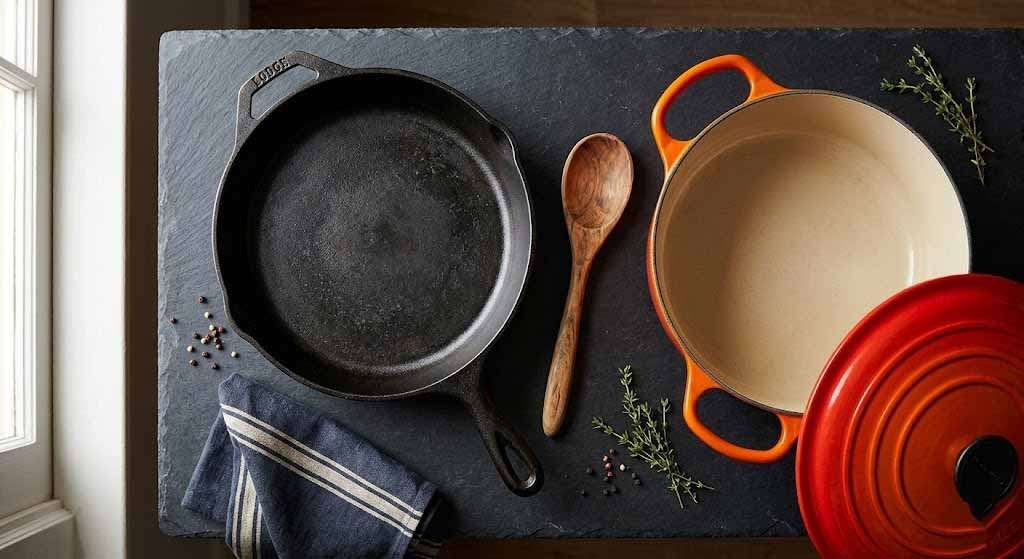
One is made in a foundry in South Pittsburg, Tennessee, a town of about 2,500 people that has been casting iron since 1896. The other is made in Fresnoy-le-Grand, France, in a facility that also dates to the late 19th century. One costs $34.90. The other costs $420. Both will outlast your kitchen, your house, and probably a few generations of the family that inherits them.
The Lodge versus Le Creuset debate looks like a cookware debate. It is actually a philosophy debate — about what you’re really buying when you buy a tool, and whether the premium on a beautiful object that performs identically to a plain one is rational, indulgent, or something else entirely.
What Cast Iron Actually Does
Before the philosophy, the physics.
Cast iron is iron with a carbon content above 2 percent, which makes it brittle compared to steel but gives it exceptional heat retention and distribution. When you heat a cast iron skillet, the heat disperses slowly and evenly through the mass of the metal. When you put food in, the pan doesn’t lose temperature the way a thin stainless skillet does. That retained heat is what gives you a proper crust on a burger, a clean sear on a duck breast, bread that bakes evenly from the bottom up.
Cast iron also improves with use. Every time you cook fat in it, a thin layer of polymerized oil bonds to the surface through a process called seasoning. The more you cook, the more layers build, and the better the surface performs. This is not a feature. It’s a behavior. The pan is training itself to your cooking.
The physics of this process are identical across Lodge, Le Creuset bare iron, Field Company, and any other cast iron pan. Carbon content, heat mass, seasoning chemistry — none of that changes based on what foundry made it. The difference is in the surface finish, the seasoning applied at the factory, the coating in the case of enameled iron, and the aesthetic of the object.
Lodge: 130 Years in a Tennessee Foundry
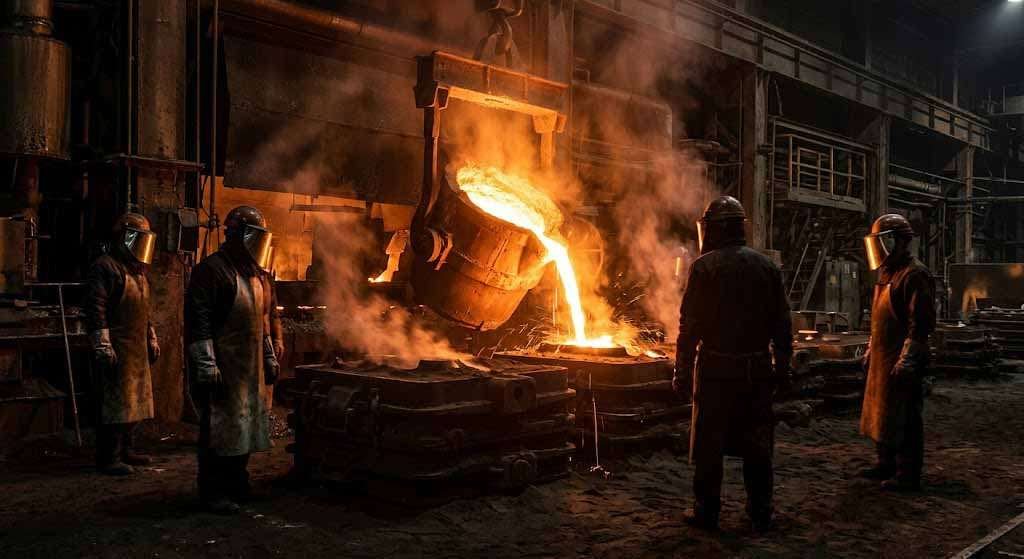
The Lodge Manufacturing Company started in 1896 when Joseph Lodge opened a foundry in South Pittsburg, Tennessee. The company has been family-connected ever since — the Lodge family’s descendants maintained ownership through the 20th century. The foundry is still in South Pittsburg. Every standard Lodge cast iron piece sold in the United States today is made there, in a facility that employs several hundred people in a community where that employment matters.
Lodge’s casting process runs molten iron at roughly 2,600 degrees Fahrenheit through sand molds. Each piece comes out raw, is shot-blasted to remove casting marks, pre-seasoned with vegetable oil sprayed and baked at high temperature, and boxed. The pre-seasoning is functional but thin — Lodge will tell you the pan gets better over time, which is true, and that you should use it immediately, which you should.
The standard 10.25-inch skillet weighs about 5 pounds and holds heat extremely well. The surface is slightly rougher than older vintage cast iron because Lodge (and every other modern foundry) uses sand casting rather than machining the cooking surface. Pre-World War II pans — Griswold, Wagner, old Lodge — were often polished smooth after casting. That smoother surface releases food more easily out of the box. Modern Lodge pans season to a similar smoothness after significant use, but it takes longer.
At $35, a Lodge skillet is one of the best value propositions in any kitchen. The only cookware that comes close on that calculus is a carbon steel pan, and that’s a different discussion.
Le Creuset: The Enamel, the Color, the Price
Le Creuset was founded in 1925 in northern France. The name translates literally to “the crucible.” They are best known for their enameled cast iron Dutch ovens — the round and oval braising vessels that come in signature colors like Flame, Marseille, and Cerise and sit on kitchen counters as much as status objects as cooking tools. They also make bare iron skillets, but the enameled Dutch oven is the flagship.
Enameled cast iron is a fundamentally different product from bare iron, which matters when you’re comparing these brands. The enamel coating — a layer of glass fused to the iron at high temperature — changes the cooking surface completely. Enamel is nonreactive, so you can cook acidic foods like tomatoes, wine braises, and citrus in it without the metallic flavor interaction you get with bare iron. You don’t need to season it. You can wash it with soap. And it comes in beautiful colors.
What you lose: you cannot heat enameled cast iron empty to extremely high temperatures without risking thermal shock to the enamel. You cannot use metal utensils aggressively without risking chipping. And you cannot develop the traditional seasoning that makes bare iron a lifetime object — enamel either chips or it doesn’t, and chipped enamel means the piece is functionally compromised even if it’s still structurally sound.
Le Creuset’s enamel is excellent. It is thick, well-fused, and significantly more resistant to chipping than cheaper enameled competitors. But there are direct competitors at half the price — Staub, made in Alsace, France, is widely considered equal or superior in terms of enamel durability and runs about 20-30 percent less. Lodge itself makes an enameled Dutch oven for around $80 that performs almost identically to a Le Creuset in cooking tests. The enamel is thinner. The color range is smaller. The longevity is somewhat shorter. But “somewhat shorter” here means decades rather than generations.
The Price Premium — What Are You Actually Buying?
At the Dutch oven level — the most direct Le Creuset versus Lodge comparison — the price ratio is roughly 5:1. A 5.5-quart Le Creuset runs about $400. A comparable Lodge enameled Dutch oven runs $80–$90. Both cook a braise. Both go oven to table. Both seal tight.
The Le Creuset is heavier-walled, which means better heat retention at the margins — relevant for a six-hour short rib braise, negligible for a weeknight chicken. The Le Creuset lid has a tighter fit. The color will hold better over 20 years of dishwasher use, though neither should ideally go in a dishwasher. The handle design on Le Creuset is better — wider, more secure, easier to grip with oven mitts. These are real differences. They are not $320 differences.
What makes up the rest of the gap? Partly raw materials and manufacturing cost in France versus Tennessee. Partly brand equity. And partly the object itself — the Le Creuset Dutch oven in Flame orange, sitting on a stovetop, is genuinely beautiful in a way that an enameled Lodge is not. The Le Creuset looks like a French grandmother made it for her kitchen and you inherited it. The Lodge looks like a competent American product, which it is.
This is the honest version of the comparison: if you are buying a braise pot to cook in, buy the Lodge. If you are buying a braise pot to cook in and to feel something when you look at it on your stove, and $320 is not meaningful money for you, buy the Le Creuset. Both are correct decisions. Neither one is irrational.
The Bare Iron Question
Here’s where Lodge wins outright and it isn’t close.
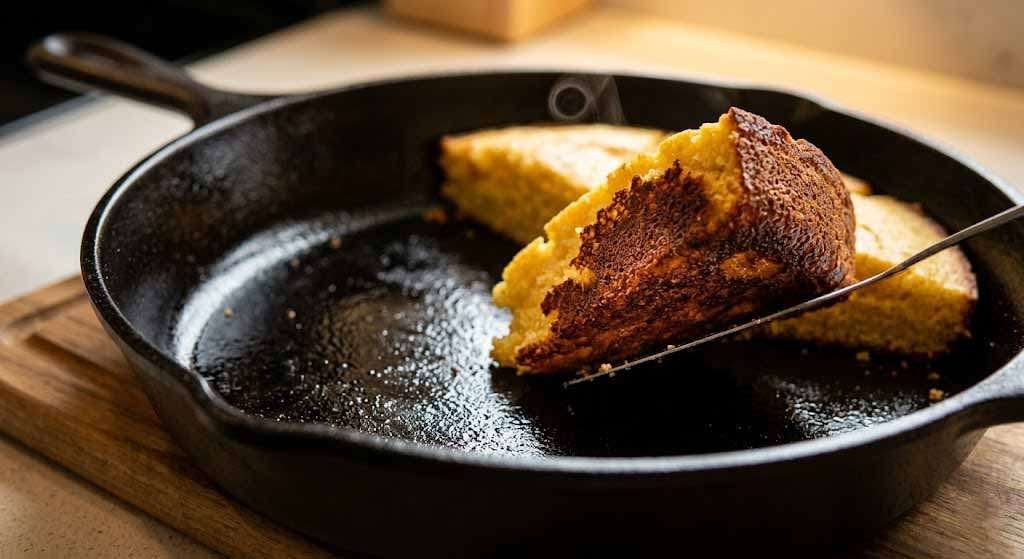
For a bare iron skillet — the fundamental cast iron cooking surface — Lodge is the answer at every price point below about $150. The bare iron skillet from Le Creuset (which they do make) costs around $200 for the same size and has no functional advantage over a $35 Lodge. The cooking surface is iron. The seasoning develops the same way. The heat retention is determined by the mass of the metal.
If you want a machined-smooth bare iron pan that arrives with a surface like a Griswold from 1940, look at Field Company or Stargazer — American brands making premium bare iron with machined-smooth surfaces that run $100–$175. Those are genuinely different pans with surfaces that outperform Lodge out of the box. But for the price of one Le Creuset bare iron skillet, you could buy five Lodge pans and equip an entire kitchen.
There is also a strong argument for vintage cast iron if you’re willing to put in the effort of restoration. A Griswold or Wagner from an estate sale or flea market, properly stripped and re-seasoned, is a superior bare iron pan to anything currently manufactured — smoother, better proportioned, lighter for its size. And it costs $20–$60 if you find it right. The keto meal prep approach using nothing but a cast iron pan works best in a well-seasoned bare iron pan regardless of brand.
The American-Made Case for Lodge
There’s a broader argument worth making for Lodge beyond price.
Lodge is the last major American cast iron manufacturer. Every other household cast iron brand sold in the US at volume — Cuisinart, Tramontina, numerous no-name Amazon brands — is made in China. Lodge is made in Tennessee, by American workers, in a facility that has operated continuously for 130 years. That continuity represents accumulated manufacturing knowledge in the same way that any long-running craft operation does — the same way Sedgwick’s tannery in England matters to the leather world, not because their product is the only good leather but because what they’ve kept alive is irreplaceable once it’s gone.
Lodge isn’t precious about this. They don’t market it heavily. The pan is $35 and the foundry is open and the workers show up. There’s something straightforward about that which the luxury kitchenware market doesn’t always reward.
The Verdict That Isn’t Really a Verdict
If you own one cast iron piece and you do a lot of braising, acidic cooking, and oven-to-table service — and you want something beautiful — the Le Creuset Dutch oven is a legitimate purchase. It is a great object and it will perform exactly as advertised for as long as you own it.
If you cook everything else — searing, pan sauce, baking cornbread, frying, cooking over campfire — buy Lodge. Buy two Lodges. Season them well and use them constantly and in two years you’ll have pans that work better than anything on the market at any price.
The philosophy question underneath all of this is whether beauty in a tool is a legitimate thing to pay for. I think it is. I also think it has to be bought with clear eyes. You’re not buying better cooking with a Le Creuset. You’re buying a more beautiful experience of cooking — the color, the heft, the aesthetic continuity of placing a French pot on a fire. That’s real. It’s just not the same thing as performance. Know which one you’re paying for.
Sources:
– Lodge Manufacturing Company: lodgecastiron.com – Le Creuset: lecreuset.com – Serious Eats: The Best Dutch Ovens Tested and Reviewed – Cook’s Illustrated: Cast Iron Skillets — Ratings and Reviews – Staub: staub-online.com – Field Company: fieldcompany.com – Stargazer Cast Iron: stargazercastiron.com
You Might Also Like: – Keto Meal Prep for the Week Using Nothing But a Cast Iron Pan – English Bridle Leather: Sedgwick Tannery and the Last of the Old World Tanners – Why American-Made Leather Goods Cost More (And Why It’s Worth It)