Silence, it turns out, is its own kind of language.
Fashion has spent decades learning to whisper. After generations of logos screaming across lapels and monograms stamped into every surface imaginable, the industry pivoted — loudly, ironically — toward what it now calls “quiet luxury.” Understated palettes. Clean lines. The expensive item that only another expensive person would recognize. Bottega Veneta became the patron saint of that movement: a house whose signature weave, the Intrecciato, is so globally recognized that wearing it communicates wealth without ever printing the word. Their motto — “When your own initials are enough” — was a masterclass in reverse psychology. The absence of a logo became the logo.
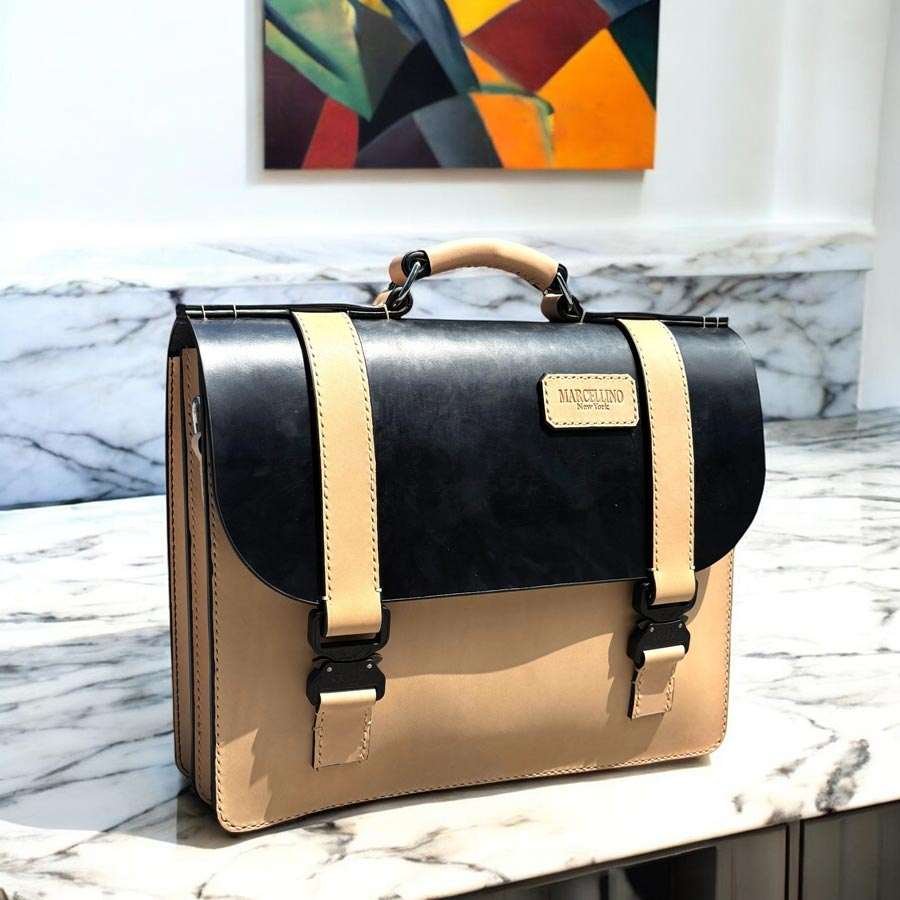
Then there is Marcellino NY, which has no motto, no weave, no monogram, and no interest in being recognized at all.
That distinction — between quiet luxury and what we might call silent luxury — is not a matter of degree. It is a matter of philosophy. And understanding it requires going further back than fashion cycles, further back than trend reports, to ask a more uncomfortable question: Why does a person buy something expensive in the first place?
The Bottega Doctrine: Recognition Without Vulgarity
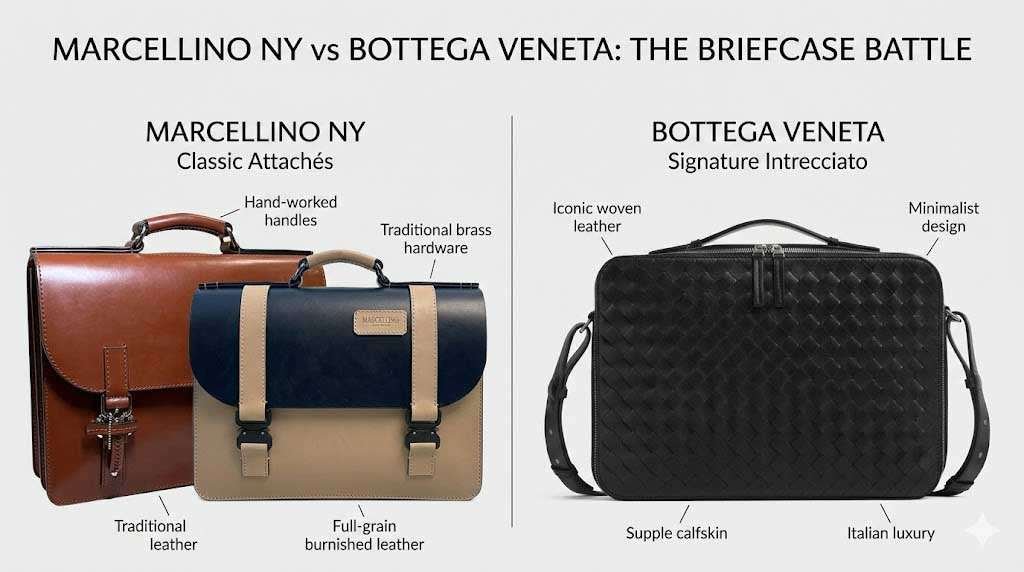
Bottega Veneta was founded in Vicenza, Italy in 1966, during a period when Italian craftsmanship was asserting itself against French dominance in high fashion. The house built its reputation on the Intrecciato — a hand-woven leather technique in which long strips of leather are interlaced at precise intervals, creating a supple, textured surface that no machine could replicate at the time. It was a technical achievement before it was a status symbol.
The “initials” motto arrived later, a positioning statement that doubled as a critique of logo culture. Bottega was telling its clientele: You don’t need to announce yourself. Your taste does it for you. This was radical in the 1970s and 80s. It remains compelling today.
But here is what that motto actually does: it creates a new form of recognition. The Intrecciato weave is, at this point, one of the most identifiable signatures in global luxury. A Bottega bag does not carry the house’s name on its exterior — but it carries something more powerful than a name. It carries a visual code that has been absorbed by enough people worldwide that the recognition still happens, instantly, in the right rooms. Quiet luxury is legible. It speaks to those who speak the language.
That is not a flaw. It is, in fact, Bottega’s genius. The house democratized exclusivity — you had to know to know. And millions of people wanted very much to be among those who knew.
The Marcellino Position: An Object With No Audience
Marcellino NY operates from a different premise entirely.
There is no Intrecciato. There is no external stamp, no signature hardware, no proprietary weave that would allow a stranger across a conference table to identify the maker. A Marcellino briefcase — built from English bridle leather, stitched by hand, requiring six or more months from commission to delivery — offers no social signal to anyone who has not already been told what they are looking at. And even then, the person who was told would need to care deeply about leather to understand why it matters.
This is not an oversight. It is a position.
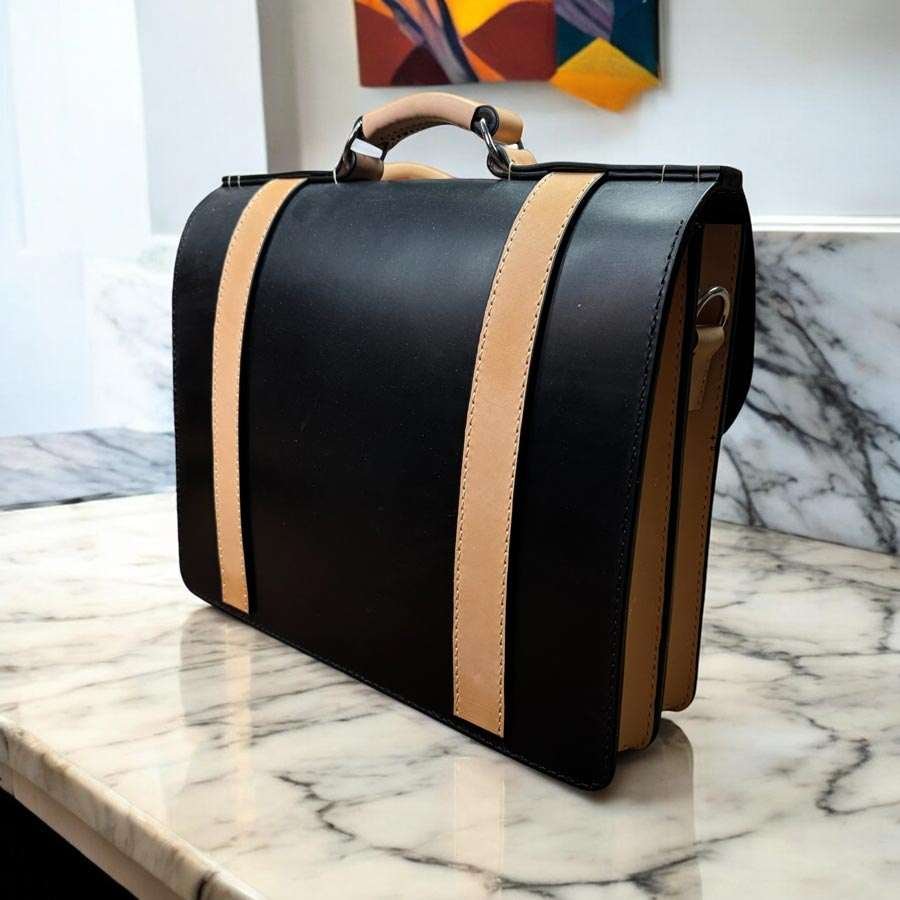
English bridle leather is itself a choice that signals nothing to 99% of the population. It is a centuries-old tannage developed for British equestrian use — dense, firm, slow-absorbing, built to resist weather and weight and decades of hard use. It does not look flashy when new. What it does is develop — slowly, over years — a patina that is entirely personal. The leather remembers you: your habits, your climate, the angle at which you carry it, the way you set it down on a courtroom table or a boardroom desk. A Marcellino briefcase a decade into its life looks nothing like it did on delivery day, and nothing like another client’s briefcase of the same model. It has become specific to its owner in a way that no logo could ever achieve.
Who buys a $4,000 briefcase that nobody will recognize? A person who has already finished the conversation luxury was designed to start.
Status Theory and Its Discontents
Thorstein Veblen named it in 1899: conspicuous consumption, the use of goods to signal social position. His observation was not a critique so much as an anthropological finding — humans are social animals, and objects have always been proxies for standing. Luxury brands, at their core, have always been in the business of manufacturing those proxies at a premium.
Quiet luxury did not disrupt this system. It refined it. The Bottega client is still legible to the right audience; the audience simply became more curated. The signal became more sophisticated, but it remained a signal.
Silent luxury — the Marcellino position — breaks from that system in a more fundamental way. The object is not a proxy for anything. It does not communicate to an audience because it was never designed with an audience in mind. The briefcase exists in a closed loop: craftsman and client. The quality is not performed. It is simply present.
This is, in philosophical terms, the difference between an instrumental object and an intrinsic one. An instrumental luxury item serves the purpose of signaling; its value is relational, dependent on observers. An intrinsic luxury item serves the person holding it, regardless of whether anyone else is watching. The satisfaction is not social. It is private.
The Craft Comparison: What Six Months Buys You
Both Bottega Veneta and Marcellino NY are built on genuine craft traditions, and it is worth examining those traditions honestly rather than treating “handmade” as a universal virtue.
Bottega’s Intrecciato weave — at the atelier level — involves artisans trained for years in the specific technique. The leather is soft, often lambskin or calf, selected for pliability. The weaving is labor-intensive and produces a final object of real beauty. Bottega’s current creative direction has expanded the house’s vocabulary beyond the weave, but the craftsmanship standard at the high end remains legitimate.
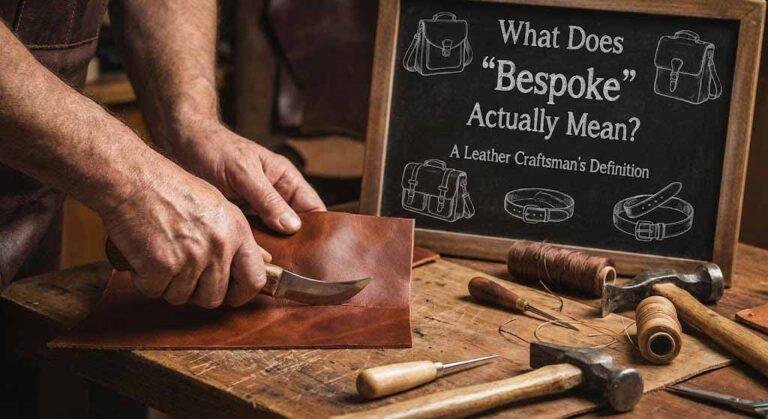
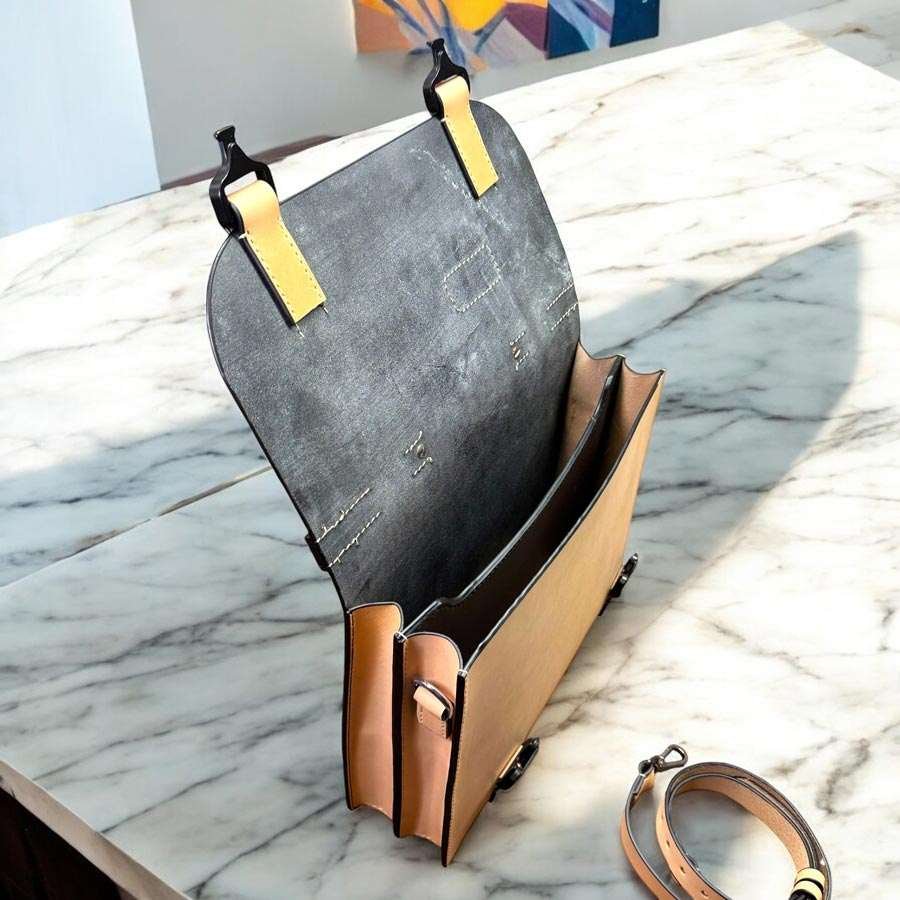
English bridle leather work operates on a different timescale and with different materials. Bridle leather is tanned using traditional pit methods — a process that can take months before the hide is even cut. The leather is then stuffed with tallows and waxes during tanning, creating a material that is firm, self-conditioning, and structurally dense in a way that soft luxury leathers are not designed to be. Working with it requires different tools, different thread — typically linen, waxed — and saddle-stitch technique, in which two needles pass through each hole from opposite sides, creating a seam that will not unravel if a single thread breaks, unlike machine stitching.
The six-month lead time at Marcellino NY is not marketing. It is the actual time required when the work is done at that pace, by hand, without a production line.
What “Quiet Luxury” Actually Solved (and What It Left Behind)
The quiet luxury movement that dominated fashion media in the early 2020s — accelerated by the cultural phenomenon of Succession and its grey cashmere costuming — was a legitimate corrective to logo fatigue. After decades of visible branding, consumers who could afford not to advertise for a brand chose not to. Bottega’s moment was a natural culmination of that shift.
But quiet luxury still operates within the framework of fashion: seasons, collections, creative directors, depreciation. A Bottega piece from several years ago reads as “vintage Bottega” — which is a defined category, with defined value, within a defined market. The object’s meaning is still partly extrinsic, still connected to a cultural conversation larger than the object itself.
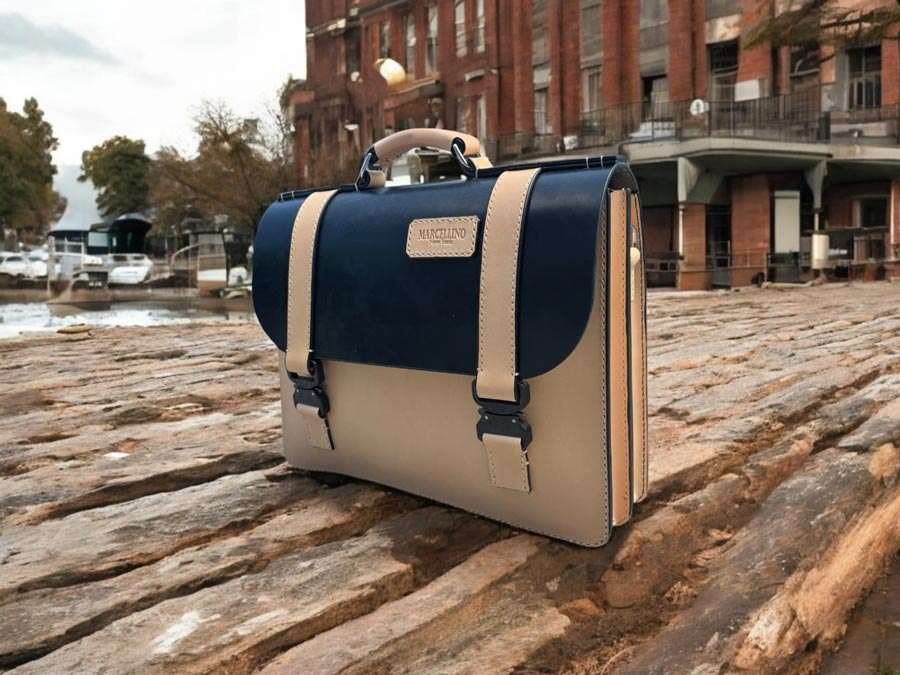
A Marcellino briefcase has no such conversation to be connected to. What it will be is what it has always been: a piece of bridle leather that has aged exceptionally well, belonging to someone who chose it because they understood what they were choosing.
The Client Profile: Who Arrives at the End of the Conversation
The overlap between Bottega Veneta clients and Marcellino NY clients is real but partial. Both populations include people with significant means and genuine aesthetic intelligence. But the divergence is instructive.
The Bottega client values beauty, craft, and the pleasure of being understood by those in the know. The Marcellino client has typically moved past the pleasure of being understood. They are often people who have spent decades building expertise in a field — law, medicine, finance, architecture — and who have reached a point where external validation has become less interesting than personal precision. They know what they want, they know why, and they are willing to wait six months for it without requiring the wait to confer status.
This is not a moral hierarchy. Bottega Veneta makes beautiful objects, and the desire for social recognition is a perfectly human motivation. The point is that they serve different psychological needs — and that Marcellino’s position aligns with a specific life stage and a specific disposition rather than with a demographic or an income bracket.
The Case Without One
Strip away the branding conversation entirely, and what remains is a question of objects: what do we want the things we carry to do for us, beyond their function?
A Bottega Veneta briefcase tells a story outward. The Intrecciato weave speaks to anyone fluent in the language of contemporary luxury. It is a beautiful object that participates in a cultural conversation, and that participation is part of its value.
A Marcellino briefcase tells a story inward — or rather, it accumulates one. The patina that develops over years of use is not a brand’s signature. It is the owner’s. The leather records a working life: the travel, the pressure, the daily ritual of carrying something that was made specifically for you and that will outlast most of the decisions you will make in the years you carry it.
Quiet luxury learned to whisper. Silent luxury never learned to speak at all. It simply endures — without a logo, without a season, without an audience — and lets the work be the only argument it needs to make.
—
Sources
Veblen, T. (1899). The Theory of the Leisure Class. Macmillan.
Bottega Veneta — bottegaveneta.com
Marcellino NY — marcellinony.com
The Business of Fashion: “The Quiet Luxury Takeover” (2023) — businessoffashion.comVogue Business: “Why Bottega Veneta Keeps Winning” (2023) — voguebusiness.com