Most market headlines land somewhere between alarming and forgettable. But the number that came out of Albany on March 20th deserves your full attention — especially if you’re actively searching for a home on Long Island’s North Shore.
In February 2026, available homes across New York State dropped to just 22,366 — a 3.9 percent decline from February 2025. That alone wouldn’t be news. What makes it a record is the timeline: this is the lowest number of homes for sale since the New York State Association of REALTORS® began tracking data in 1997. Nearly thirty years of data, and February 2026 is the floor.
The inventory wasn’t just low. It set a new bottom.
The Numbers Behind the Record
The context matters as much as the headline figure. In March 2024, New York’s statewide inventory stood at just under 24,000 homes — itself a record low at the time. By February 2025, it had slipped further to 22,518. And now, February 2026 has pushed it down again to 22,366. Three consecutive years of new floors, each one lower than the last.
Meanwhile, the statewide median sales price in February held at $425,000 — flat year-over-year, which is notable in its own right. Prices aren’t surging, but they’re not retreating either. Mortgage rates dropped slightly to 6.05 percent, down from 6.84 percent a year ago according to Freddie Mac, which offered some modest relief for buyers. And yet closed sales declined compared to a year ago. Fewer homes for sale means fewer deals getting done, regardless of what rates are doing.
NYSAR President Ron Garafalo said it plainly: “The latest data makes clear that the shortage isn’t improving fast enough and demands more immediate action.” That call for urgency was directed at Governor Hochul and the Legislature — a push to accelerate housing production and remove regulatory barriers. It’s an admission, in polite institutional language, that no one currently has a fast solution.
What’s Keeping Inventory So Low
The data tells you what is happening. Understanding why requires looking at the mechanics underneath.
The most significant force is what analysts call the lock-in effect. Millions of New York homeowners refinanced during 2020 and 2021 when 30-year fixed rates dipped below three percent. Some locked in at 2.75. Others at 2.5. Moving today means surrendering that rate and stepping into something closer to six percent — which, on a typical Long Island purchase, could translate to an additional $1,500 to $2,000 per month in carrying costs. For many homeowners, the math simply doesn’t work. They’d rather stay put, even if their home no longer fits their life, than trade away a mortgage that felt almost free.
This isn’t inertia. It’s rational financial behavior. But the cumulative effect across hundreds of thousands of households is a market where supply is structurally constrained in a way that has nothing to do with demand. Buyers are ready. Sellers are frozen — not by fear, but by arithmetic.
A second factor is the persistent lag in new construction. Nassau County’s land is essentially fully developed, and permitting in Suffolk has moved slowly against a backdrop of community resistance, infrastructure limitations, and rising construction costs. The multi-family housing that typically softens tight markets in other metros doesn’t have room to take hold here the way it does in, say, northern New Jersey or the outer boroughs. Long Island’s structural scarcity isn’t a temporary condition. It’s baked into the geography.
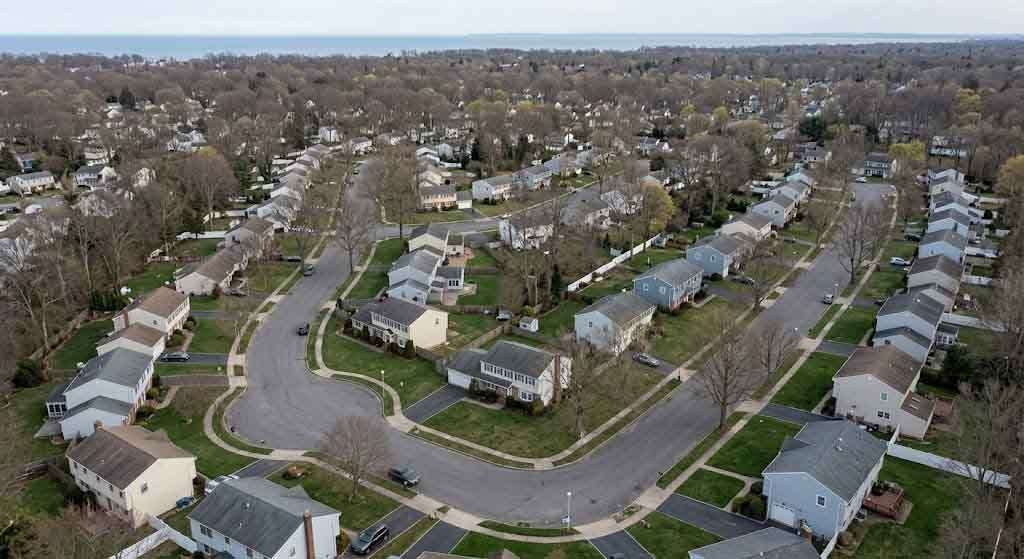
On the Ground in Mount Sinai and Surrounding Towns
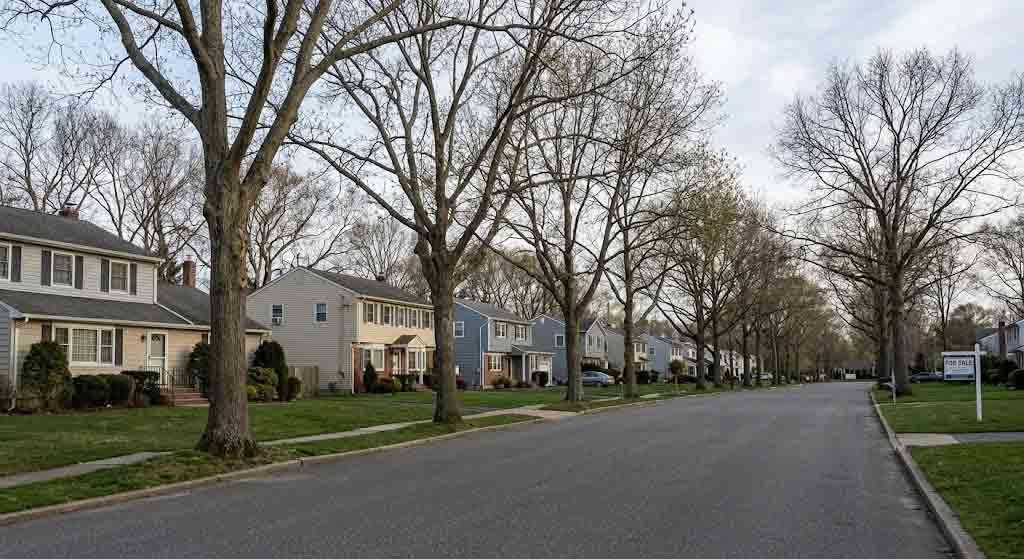
Statewide numbers create a frame, but they don’t capture what a buyer actually experiences when they search for a three-bedroom colonial with a yard in Miller Place, or a four-bedroom center hall in Sound Beach, or a move-in-ready cape in Port Jefferson Station.
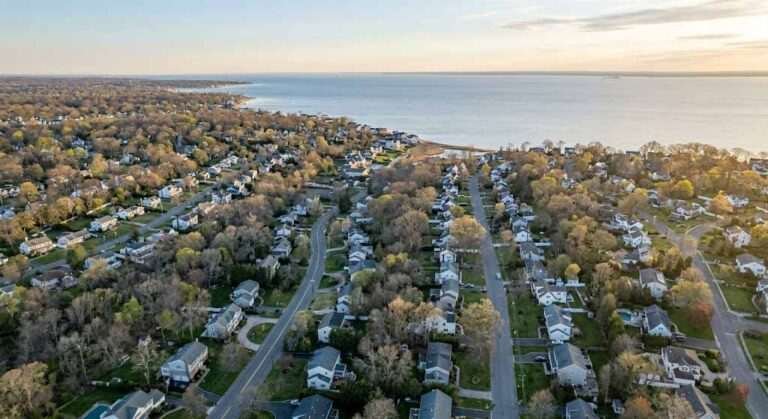
On the North Shore specifically, the inventory problem is compressed further by the area’s particular appeal. Buyers who left Queens, Brooklyn, and the Bronx over the past four years didn’t leave Long Island — they came here, to the stretch of towns along 25A where the trees thicken, the lots have space, and the school districts hold their reputation. That influx raised the demand baseline without a corresponding increase in supply. The result is a market where turnkey homes — priced correctly, presented well, in desirable school zones — frequently move within days and attract multiple offers. As noted in What Never Hits Zillow: The Hidden Inventory Problem on Long Island’s North Shore, much of what’s actually available never makes it to a public listing at all. The official numbers already undercount the real scarcity.
At the same time, Long Island agents are reporting a split market. Properties that need renovation are sitting longer than they were two years ago. High borrowing costs and elevated labor rates make a fixer-upper far less attractive to buyers who would need to finance both the purchase and the renovation. So buyers are competing intensely for a narrow slice of truly ready inventory while a separate population of dated homes waits on the sidelines for price reductions or different market conditions. It’s two markets overlapping, creating the misleading impression of more inventory than actually exists for the buyer who doesn’t want a project.
For context on how this plays out by price point, What $600K Buys You on Long Island Right Now in 2026 remains a useful benchmark — and the picture it painted earlier this year has only gotten tighter since.
What 2026 Is Likely to Look Like
Agents who have been working Long Island for years are describing 2026 as smarter, not softer. The bidding wars of 2021 and 2022 — fifteen offers in a weekend, waived inspections, appraisal gaps written in as line items — have mostly given way to a more deliberate dynamic. Buyers are doing the work. They’re pre-approved before they look at a single house. They’re studying comps, not chasing momentum. Sellers who price with intention are still rewarded. Sellers who anchor to 2022 peak numbers are sitting.
What that means practically: the buyers who are succeeding right now are the ones who have removed every possible obstacle between themselves and an accepted offer. Financing locked. Flexibility on closing timeline. Willingness to move quickly when the right property lands. As covered in How to Win a Bidding War in a Low-Inventory Market, the fundamentals of competitive offers haven’t changed — only the frequency with which buyers need to deploy them.
There’s also a question of what’s coming. NYSAR is pressuring state government to increase housing production, and there is genuine legislative momentum around accessory dwelling units, transit-oriented development, and reducing local zoning barriers. Whether those policy changes translate into meaningful new inventory on the North Shore within the next twelve to twenty-four months is uncertain. The machinery of municipal planning and permitting moves on its own schedule, and it doesn’t typically move quickly.
For buyers who have been sitting on the sidelines waiting for the market to correct, the record set in February should recalibrate that thinking. Rates have eased modestly from a year ago. Prices are stable. And the inventory pressure that has defined this market for three consecutive years shows no structural sign of reversal.
The Advice That Actually Helps
If you’re buying on the North Shore in 2026, a few things matter more than anything else right now.
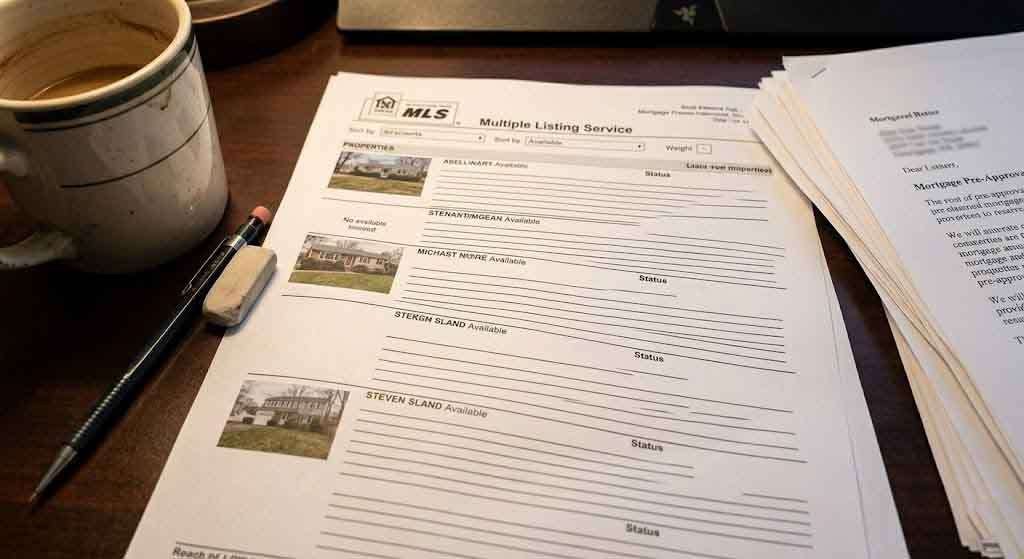
First: get pre-approved before you’re ready, not when you are. The gap between “I’m thinking about buying” and “I’m ready to act on something today” should be zero. By the time a well-priced listing in Setauket or Stony Brook or Mount Sinai hits the MLS, the competition is already watching.
Second: be honest about what you actually need versus what you’d prefer. In a market this constrained, the buyers who win are often the ones who can separate must-haves from wishful thinking. Three bedrooms and a good school district. A commute to the Long Island Rail Road station that works. Everything else is negotiable.
Third: work with someone who knows this market by feel, not just by data. The North Shore has its own rhythms — which neighborhoods are cooling slightly, where values are holding firm, which micro-markets are attracting city buyers, where a longer-tenured listing signals a motivated seller rather than a problem property. That local intelligence is the difference between a search that takes six months and one that takes six weeks.
The Long Island Real Estate Market Update: Q1 2026 provides a broader regional context, and for those weighing the North Shore against surrounding markets, The Great Normalization: Why Long Island’s Market Is Shifting (and What It Means for You) puts the current environment in useful historical perspective.
Twenty-two thousand homes for all of New York State. That number sits underneath everything happening in this market. Understanding it is the first step to navigating it.
For listings on the North Shore and throughout Long Island, visit Maisonpawli Properties Search. For questions about buying or selling in Mount Sinai and surrounding communities, reach out to Paola Meyer, Associate Broker, Realty Connect USA.
Sources
- New York State Association of REALTORS®, February 2026 Housing Report — nysar.com/news/market-data
- GlobeNewswire: “New York housing inventory reaches lowest level on record in February” — globenewswire.com
- GlobeNewswire: “Record-low inventory and rising prices slow New York home sales” (February 2025) — globenewswire.com
- National Association of REALTORS®, Existing-Home Sales, February 2026 — nar.realtor
- EXIT Realty Premier: Long Island Housing Market Report, November 2025 — exitpremiersells.com
- Freddie Mac, Primary Mortgage Market Survey, February 2026 (via NYSAR report)