Revolutions rarely announce themselves. They accumulate quietly — in margin notes, in dissenting lectures, in the uncomfortable silence that follows a paper nobody quite knows how to refute. In 1972, two paleontologists named Stephen Jay Gould and Niles Eldredge walked into one of biology’s most venerated rooms and rearranged all the furniture. They called their idea punctuated equilibrium, and the fight it ignited has never fully ended.
To understand why, you have to understand what they were pushing against.
The Darwinian Consensus and the Slow Burn of Change
Charles Darwin built his theory of natural selection on a foundation of deep time and imperceptible gradients. In On the Origin of Species (1859), he wrote explicitly that natura non facit saltum — nature does not make leaps. Evolution, in his view, was a patient, unbroken river of small modifications, each generation nudging the next slightly closer to fitness. He called this phyletic gradualism: the idea that species transform incrementally, continuously, and almost invisibly across vast stretches of geological time.
The model was elegant, and for over a century it dominated biology. The fossil record, Darwin admitted, seemed frustratingly incomplete — full of gaps where transitional forms should have been. He attributed this to the imperfection of preservation. Bones don’t often become fossils. The record, he argued, was sampling a continuous process at random intervals (Darwin, On the Origin of Species, 1859).
Paleontologists largely accepted this framing. The gaps weren’t evidence of anything. They were just gaps.
Gould and Eldredge Break the Consensus
Stephen Jay Gould was a paleontologist at Harvard. Niles Eldredge worked at the American Museum of Natural History in New York. In 1972, they co-authored a paper titled Punctuated Equilibria: An Alternative to Phyletic Gradualism, published in Models in Paleobiology (Eldredge & Gould, 1972). The paper was not a minor amendment. It was a structural challenge to one of biology’s foundational assumptions.
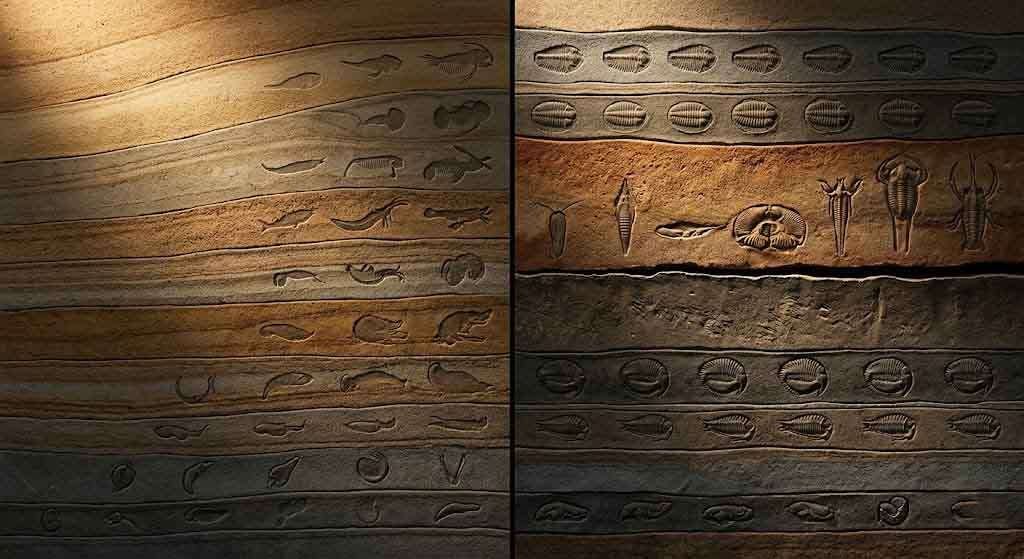
Their argument was grounded in the actual fossil record — not as Darwin had interpreted it, but as it actually presented itself to working paleontologists. What the record consistently showed was not gradual transformation. Species appeared in the fossil record abruptly, persisted for millions of years in essentially unchanged form (stasis), and then disappeared — often just as abruptly. The transitional forms weren’t missing because of poor preservation. They were rare because the transitions themselves were rapid, geologically speaking.
Gould and Eldredge proposed that most evolutionary change happens in short, intense bursts — concentrated in small, isolated peripheral populations undergoing what biologist Ernst Mayr had called allopatric speciation: geographic separation leading to rapid divergence. A species could remain stable for ten million years, then transform dramatically in perhaps ten thousand — a geological blink — before the new form spread and itself stabilized (Eldredge & Gould, 1972; Gould & Eldredge, Paleobiology, 1977).
Ten thousand years sounds like a long time. In the rock record, it leaves almost no trace.

The Thomas Kuhn Connection
It is no accident that Gould and Eldredge’s paper appeared in 1972 — a decade after Thomas Kuhn published The Structure of Scientific Revolutions (1962). Gould was explicit about the intellectual debt. Kuhn had argued that science does not progress through smooth accumulation of knowledge but through periodic paradigm shifts — long periods of “normal science” punctuated by revolutionary ruptures when anomalies can no longer be explained away.
The parallel was deliberate and pointed. Gould saw gradualism itself as a kind of paradigm — a conceptual lens so deeply embedded in biological thinking that contradictory evidence had simply been reinterpreted to fit the model. The fossil gaps weren’t data to be explained; they were noise to be dismissed. Punctuated equilibrium, in Kuhnian terms, wasn’t just a new theory about fossils. It was a challenge to the cognitive framework through which fossils were being read (Gould, The Structure of Evolutionary Theory, 2002).
This is what made the response so fierce.
The Counterattack: Dawkins, Dennett, and the Defense of Gradualism
The pushback was substantial and came from serious quarters. Richard Dawkins, in The Blind Watchmaker (1986), argued that punctuated equilibrium was largely a matter of timescale perception. What looks abrupt in geological time — ten thousand years — is still an enormous span for natural selection to operate. Dawkins accused Gould of inflating the novelty of his theory, suggesting that “rapid” change in the fossil record was still entirely consistent with standard neo-Darwinian gradualism, just compressed into smaller time windows (Dawkins, The Blind Watchmaker, 1986).
Philosopher Daniel Dennett was sharper in his criticism. In Darwin’s Dangerous Idea (1995), he accused Gould of what he called “sky-hook” thinking — a recurring tendency to reach for mechanisms that transcended ordinary natural selection. Dennett argued that Gould had spent his career constructing a false opposition between gradualism and punctuationism, when in reality they were not incompatible frameworks but points on a continuum (Dennett, Darwin’s Dangerous Idea, 1995).
Gould returned fire. He argued in The Structure of Evolutionary Theory — his 1,400-page magnum opus published the year he died, 2002 — that his critics had misread him, that selection operating at multiple levels (genes, organisms, species) was not the same as Dawkins’s gene-centric model, and that stasis itself was a phenomenon demanding explanation, not a null result to be ignored (Gould, 2002).
The debate was rarely polite. At times it descended into something closer to a public feud, conducted through book reviews, academic journals, and popular science magazines, with Gould’s expansive, literary style clashing sharply against Dawkins’s precise, mechanistic prose.
What the Evidence Actually Shows
Decades of subsequent research have produced a nuanced picture that vindicates elements of both positions without fully resolving the debate.
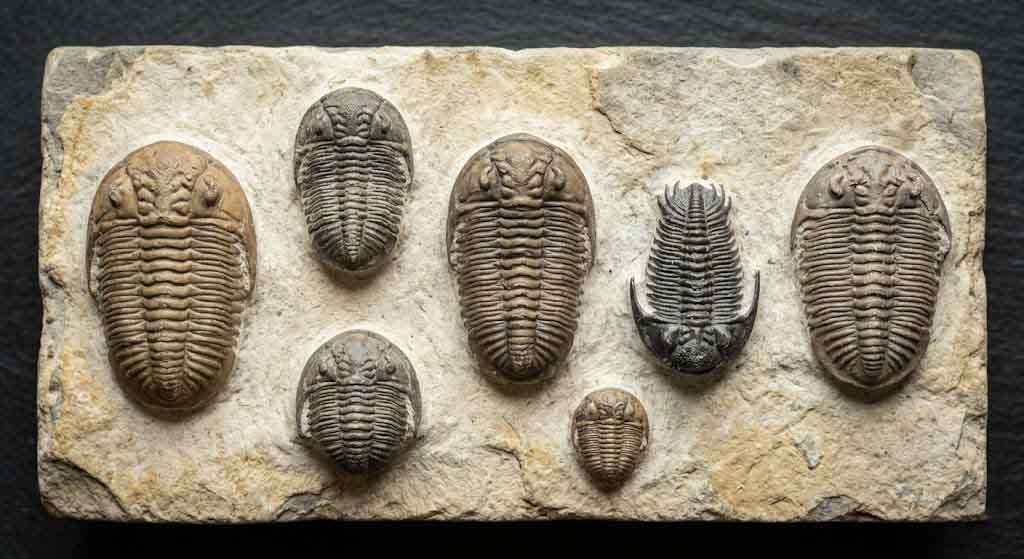
The fossil record continues to document stasis and abrupt transitions. Studies of marine invertebrates, particularly foraminifera and trilobites, show long periods of morphological stability interrupted by rapid change — patterns consistent with punctuated equilibrium (Sepkoski, Paleobiology, 1998; Jablonski, Annual Review of Ecology and Systematics, 2000).
At the molecular level, however, the picture is more complicated. Genetic studies of living populations often reveal gradual, continuous change in allele frequencies — consistent with standard gradualism. The neutral theory of molecular evolution, developed by Motoo Kimura, suggests that most genetic change is indeed slow and steady at the molecular level, even when morphology appears to jump (Kimura, The Neutral Theory of Molecular Evolution, 1983).
The current synthesis holds that both patterns are real — and that they operate at different levels of biological organization. Morphology can be highly buffered, remaining stable even as underlying genetic variation accumulates, then shifting rapidly when developmental constraints are relaxed or environmental pressure intensifies. Evolution is neither purely gradual nor purely punctuated. It is both, depending on what you are measuring and at what scale (Eldredge, Reinventing Darwin, 1995).
Why This Argument Still Matters
The Gould–Eldredge thesis carries implications that extend well beyond paleontology.
In medicine, the punctuated model has influenced thinking about tumor evolution. Cancers do not always evolve through steady accumulation of mutations. Some tumors undergo rapid, dramatic genetic reorganization — what researchers have called “chromothripsis” — in which large sections of the genome are shattered and reassembled in a single catastrophic event (Stephens et al., Cell, 2011). The pattern is strikingly punctuational.
In technology and innovation, punctuated equilibrium has become a framework for understanding industrial change. Clayton Christensen’s theory of disruptive innovation, developed in The Innovator’s Dilemma (1997), describes industries that remain stable for long periods, then collapse and reconstitute themselves rapidly under competitive pressure — a pattern that maps closely onto Eldredge and Gould’s model.
In philosophy of science, the debate revived fundamental questions about the relationship between theory and evidence. How much should a dominant paradigm be allowed to absorb contradictory data before it is revised? Gould, drawing on Kuhn, argued that gradualism had absorbed too much — that the gaps in the fossil record had been rationalized rather than confronted.
Gould’s Deeper Argument: Contingency and the Arrow of Time
Beneath the technical debate about evolutionary tempo lay a more fundamental disagreement about the nature of life itself.
Darwin’s gradualism carried an implicit directionality. Slow, continuous selection implied progress — incremental optimization toward greater complexity, greater fitness, greater adaptability. Gould rejected this framing. His broader body of work, from Wonderful Life (1989) — his account of the Burgess Shale and the Cambrian explosion — to Full House (1996), argued repeatedly that evolution has no direction. It is radically contingent. Replay the tape of life and you get something entirely different.
Punctuated equilibrium was part of this larger argument. If most evolutionary change happens in short bursts driven by geographic accident and environmental crisis, then life’s history is less a smooth optimization curve and more a series of lucky breaks and catastrophic interruptions. There is no escalator. There is only the path actually taken — and it could easily have gone another way (Gould, Wonderful Life, 1989).
This was not a comfortable message. It sat uneasily with both the teleological instincts of religious thinking and the progressive assumptions embedded in mainstream evolutionary biology. Gould was arguing, in effect, that Homo sapiens was not the destination of a billion-year journey — just one of many possible branches that happened to survive.
The War That Made Both Sides Sharper
Stephen Jay Gould died in 2002. Niles Eldredge continues to write and lecture. Richard Dawkins and Daniel Dennett are both in their eighties and still intellectually active. The debate they conducted for three decades did not produce a final victor — but it produced something more valuable: a richer, more honest account of how evolution actually works.
Gradualism without stasis is incomplete. Punctuationism without molecular genetics is incomplete. The synthesis that has emerged from fifty years of argument acknowledges that biological change operates on multiple timescales simultaneously, that stability and transformation are not opposites but phases, and that the history of life is more complicated — and more interesting — than either camp initially wanted to admit.
It also serves as a lesson in how science actually advances. Not through steady accumulation, but in arguments. In paradigm challenges and fierce defenses. In the productive friction between people who are wrong in complementary ways.
Kuhn would have recognized the pattern immediately.
For anyone who wants to go deeper on the evolutionary theory side of this conversation, the Heritage Diner blog’s piece on Horizontal Gene Transfer and the Tangled Web of Life explores another challenge to classical Darwinian thinking — one that has, if anything, proved even more disruptive to the tree-of-life metaphor than punctuated equilibrium.
The questions, as always, are better than the answers.

You Might Also Like
- The Fermi Paradox and the Great Filter
- Horizontal Gene Transfer: Why Darwin’s Tree of Life Is Actually a Tangled Web
Sources
- Darwin, C. (1859). On the Origin of Species. John Murray.
- Eldredge, N. & Gould, S. J. (1972). Punctuated equilibria: An alternative to phyletic gradualism. In T.J.M. Schopf (Ed.), Models in Paleobiology (pp. 82–115). Freeman, Cooper & Co.
- Gould, S. J. & Eldredge, N. (1977). Punctuated equilibria: The tempo and mode of evolution reconsidered. Paleobiology, 3(2), 115–151.
- Gould, S. J. (1989). Wonderful Life: The Burgess Shale and the Nature of History. W. W. Norton.
- Gould, S. J. (2002). The Structure of Evolutionary Theory. Harvard University Press.
- Dawkins, R. (1986). The Blind Watchmaker. W. W. Norton.
- Dennett, D. (1995). Darwin’s Dangerous Idea. Simon & Schuster.
- Kimura, M. (1983). The Neutral Theory of Molecular Evolution. Cambridge University Press.
- Eldredge, N. (1995). Reinventing Darwin: The Great Debate at the High Table of Evolutionary Theory. Wiley.
- Kuhn, T. S. (1962). The Structure of Scientific Revolutions. University of Chicago Press.
- Stephens, P. J., et al. (2011). Massive genomic rearrangement acquired in a single catastrophic event during cancer development. Cell, 144(1), 27–40.
- Jablonski, D. (2000). Micro- and macroevolution: Scale and hierarchy in evolutionary biology and paleobiology. Paleobiology, 26(S4), 15–52.
- Kimura, M. (1983). The neutral theory of molecular evolution. Nature Reviews Genetics. https://www.nature.com/articles/s41576-018-0004-9