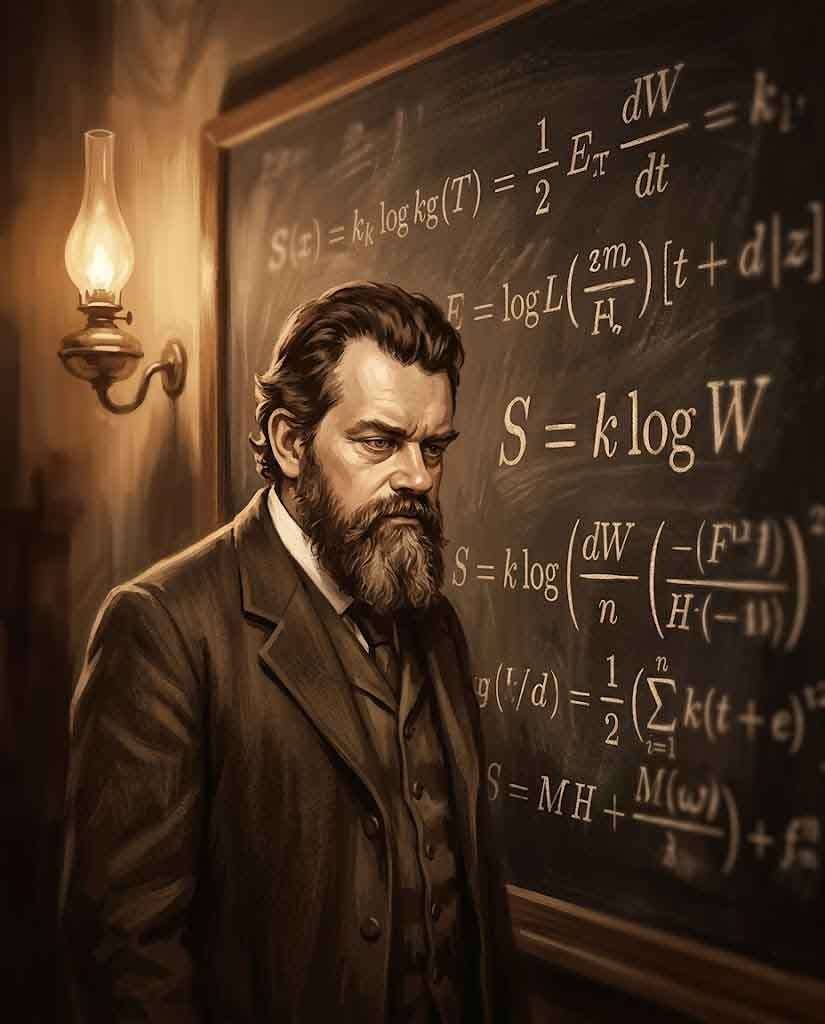
Ludwig Boltzmann never intended to erase reality. The Austrian physicist spent the second half of the nineteenth century defending a statistical interpretation of thermodynamics that most of his contemporaries considered heretical — the notion that the irreversible march of entropy, the tendency of all things to slide toward disorder, was not an iron law but a matter of overwhelming probability. He won the argument, eventually. But the logical endpoint of his reasoning produced something far stranger than a revised understanding of heat and gas: it produced the unsettling possibility that you, right now, reading these words on a screen you trust is real, are more likely to be a momentary hallucination of the void than a genuine human being shaped by 13.8 billion years of cosmic evolution.
This is the Boltzmann Brain Paradox. And unlike most thought experiments in physics, it does not stay safely contained inside the mathematics. It leaks into philosophy, into identity, into the very question of whether trusting your own memory constitutes a rational act.
The Second Law and the Problem of the Past
To understand the paradox, you have to start where Boltzmann started: with entropy. The Second Law of Thermodynamics tells us that the disorder of a closed system will increase over time — or, more precisely, that the system will tend toward the most probable arrangement of its components. A shattered glass does not reassemble. A cup of hot coffee in a cold room does not spontaneously reheat. The arrow of time, as far as we can perceive it, points in one direction.
Boltzmann’s genius was to reframe this law in terms of statistical mechanics. Entropy increases not because the universe follows some metaphysical rule but because there are vastly more disordered configurations of matter than ordered ones. A deck of cards shuffled once might, in principle, land in perfect sequential order — but the odds are so catastrophically small that no one expects it. The same logic applies to every atom in the observable universe.
The trouble begins when you extend this reasoning backward in time. If entropy tends to increase, then the early universe must have been in a state of extraordinarily low entropy — a condition so improbable that it demands explanation. Why did the cosmos begin in such an unlikely configuration? Boltzmann’s own answer, offered in 1896, was startling: perhaps it didn’t. Perhaps the low-entropy state we observe is itself a random fluctuation in an otherwise high-entropy, thermally dead universe. Given infinite time, even the most improbable arrangement of matter will eventually occur.
The Brain in the Void
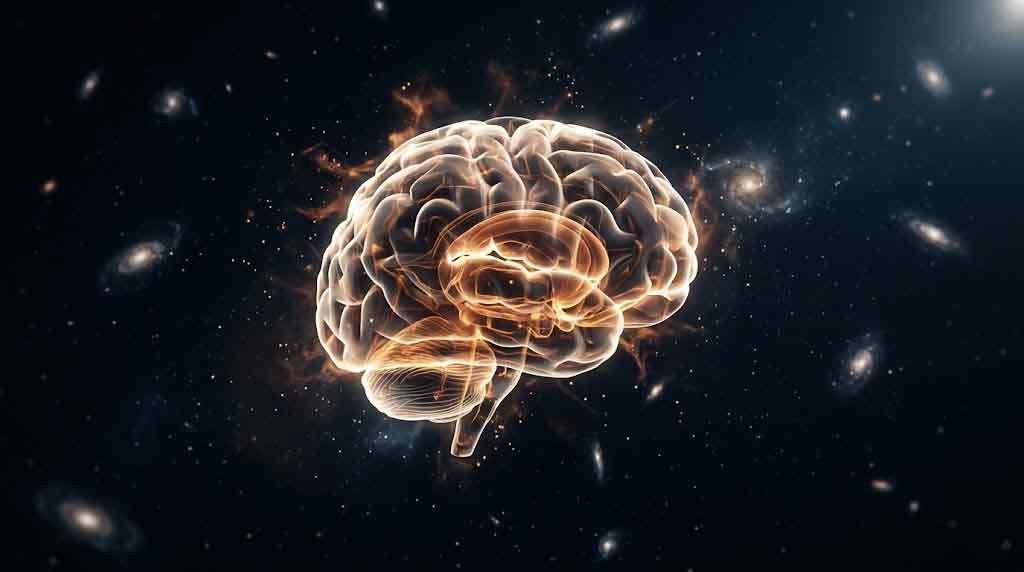
Here is where the paradox bites. If random thermal fluctuations can produce a low-entropy region as vast as the observable universe — with its galaxies, stars, planets, and living organisms — they can far more easily produce something much smaller. A single conscious brain, complete with false memories of a life never lived, a planet never walked, a sun never seen. The mathematics of statistical mechanics says this smaller fluctuation is overwhelmingly more probable than the grand fluctuation that would create an entire functioning cosmos.
Physicists Andreas Albrecht and Lorenzo Sorbo formalized this implication in a 2004 paper, giving these hypothetical observers a name: Boltzmann Brains. The concept had existed in embryonic form since the late nineteenth century, but Albrecht and Sorbo showed that certain modern cosmological models — particularly those involving eternal inflation and a positive cosmological constant — made the problem far worse than anyone had previously appreciated. In these models, the number of Boltzmann Brains produced over the lifetime of the universe dwarfs the number of “ordinary” observers like us by an almost incomprehensible margin.
The implication is vertigo-inducing. If you accept these models, then you should conclude, statistically, that you are almost certainly a Boltzmann Brain. Your childhood, your education, the meal you ate an hour ago, the history of your civilization — all of it fabricated, imprinted on a clump of particles that flickered into existence a fraction of a nanosecond ago and will dissolve back into the thermal bath before you finish this sentence.

Descartes Had No Idea
René Descartes famously doubted everything except his own capacity to doubt. His Meditations stripped reality down to the bare minimum — an evil demon could be faking the world, but the act of thinking proved a thinker existed. “I think, therefore I am” became the bedrock of Western epistemology.
The Boltzmann Brain makes Descartes look like an optimist.
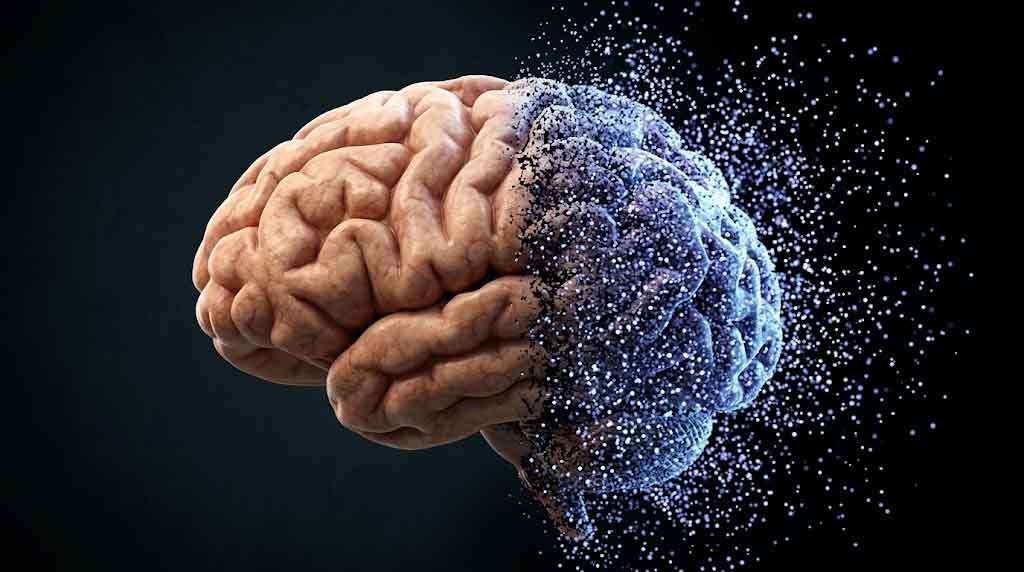
Even the “I think” part is contaminated. A Boltzmann Brain does not think in any sustained sense — it experiences a single coherent moment of apparent consciousness before dissolving. The memory of having been thinking a moment ago is itself part of the false imprint. There is no persistent thinker, no continuity of experience, no cogito — just a particle arrangement that mimics the final frame of a movie that was never filmed. Descartes trusted the thread of thought; the Boltzmann Brain cuts the thread entirely.
Martin Heidegger’s concept of Dasein — “being-there,” the situated, temporal, thrown-into-the-world quality of human existence — takes an even harder hit. For Heidegger, we are fundamentally defined by our relationship to time. We project ourselves toward future possibilities and carry our past as a constitutive part of who we are. A Boltzmann Brain has no genuine past and no genuine future. It exists without thrownness, without a world, without the temporal horizon that Heidegger considered the foundation of meaning itself. It is being without Being.
Why Cosmologists Take This Seriously
It would be tempting to dismiss the whole thing as a clever philosophical parlor trick. But the paradox has real teeth in theoretical physics, precisely because it serves as a diagnostic tool. Sean Carroll, the Caltech physicist who has written more accessibly about Boltzmann Brains than perhaps anyone else, frames the issue not as a prediction to be taken at face value but as a reductio ad absurdum — a test that reveals flaws in cosmological models. If your theory of the universe predicts that most observers are disembodied brains hallucinating their entire existence, your theory has a problem.
This is exactly the role the paradox has played in recent years. Cosmological models that produce too many Boltzmann Brains are now considered suspect. The paradox has been used to constrain theories of dark energy, eternal inflation, and the cosmological constant. In December 2025, a paper by David Wolpert, Carlo Rovelli, and Jordan Scharnhorst at the Santa Fe Institute took the analysis further, arguing that many standard arguments for and against Boltzmann Brains involve subtle circular reasoning — particularly around how we treat the relationship between memory, entropy, and the direction of time.
Their insight cuts deep: even the way we frame the problem assumes something about the arrow of time that the problem itself calls into question. If your argument against Boltzmann Brains relies on the reliability of memory, and the paradox suggests memory cannot be trusted, you have not resolved the paradox — you have restated it.
The Anthropic Tightrope
The Fermi Paradox asks why we have found no evidence of intelligent life in a universe that seems built for it. The Boltzmann Brain Paradox inverts the question entirely: given the statistical mechanics of entropy, why should any observer exist in the way we believe we do?
The anthropic principle — the idea that we observe the universe to have certain properties because only a universe with those properties could produce observers — offers little comfort here. If Boltzmann Brains outnumber real observers, then the anthropic principle actually works against us. Selection bias, in this framework, selects for the cheapest observer, not the most complex. A lone brain with fake memories is anthropically cheaper than an entire universe.
Some physicists have argued that the many-worlds interpretation of quantum mechanics dissolves the problem. Carroll and his collaborators have suggested that a quiescent de Sitter space — the kind of empty, expanding vacuum that current models predict for the far future of our universe — does not actually produce the quantum fluctuations necessary for Boltzmann Brains to nucleate. But this resolution depends on adopting a specific interpretation of quantum mechanics, and the debate is far from settled.
What Entropy Tells Us About Trust
There is something philosophically beautiful about the fact that the deepest challenge to the reliability of human experience comes not from psychology or neuroscience but from thermodynamics — from the same branch of physics that governs the cooling of coffee and the rusting of iron.
The paradox also illuminates something about the nature of knowledge itself. We build our understanding of the universe on the premise that observation is meaningful — that the data we collect reflects a genuine history. Adrian Tchaikovsky explored a version of this tension in Shroud, where characters confront extreme thermodynamic environments that distort the relationship between energy, structure, and survival. The Boltzmann Brain Paradox does something similar, but at the most fundamental scale: it asks whether the very act of building a model of the universe is self-undermining.
The Paradox as a Mirror
Perhaps the most productive way to think about Boltzmann Brains is not as a genuine existential threat but as a mirror held up to our assumptions. Every scientific model rests on a foundation of priors — assumptions about the regularity of nature, the reliability of induction, the meaningfulness of probability. The Boltzmann Brain Paradox exposes these priors and forces us to defend them.
Brian Greene has said that while he is confident he is not a Boltzmann Brain, our cosmological theories have proved surprisingly resistant to agreeing with him. That gap between intuition and formalism is where the paradox lives. It does not prove that reality is an illusion. It proves that we do not yet fully understand why reality isn’t.
For a paradox born in the dry mathematics of nineteenth-century kinetic theory, that is an extraordinary reach — from the statistical behavior of gas molecules to the question of whether the universe owes you an explanation for your own existence. Boltzmann himself, who struggled with depression and eventually took his own life in 1906, never saw his ideas taken this far. But the thread he pulled has not stopped unraveling. Every time a cosmologist builds a new model of inflation, every time a philosopher revisits the problem of induction, every time anyone trusts a memory, the Boltzmann Brain sits quietly in the mathematics, asking the same question: are you sure?
You Might Also Like
- The Fermi Paradox and the Great Filter: Why the Silence of the Cosmos Might Be the Loudest Warning We’ll Ever Receive
- The Extreme Thermodynamics of Adrian Tchaikovsky’s Shroud: Surviving a High-Gravity Moon
- How to Run an AI Model Locally on Your Own Computer
Sources
- Albrecht, A. and Sorbo, L. “Can the Universe Afford Inflation?” Physical Review D 70 (2004) 063528.
- Carroll, S. “Boltzmann’s Universe.” Preposterous Universe (blog), 2008.
- Wolpert, D., Rovelli, C., and Scharnhorst, J. “Disentangling Boltzmann Brains, the Time-Asymmetry of Memory, and the Second Law.” Entropy (MDPI), December 2025.
- Greene, B. Until the End of Time: Mind, Matter, and Our Search for Meaning in an Evolving Universe. Knopf, 2020.
- Norton, J. “Boltzmann Brain.” Department of History and Philosophy of Science, University of Pittsburgh.
- Boltzmann, L. Lectures on Gas Theory. 1896.