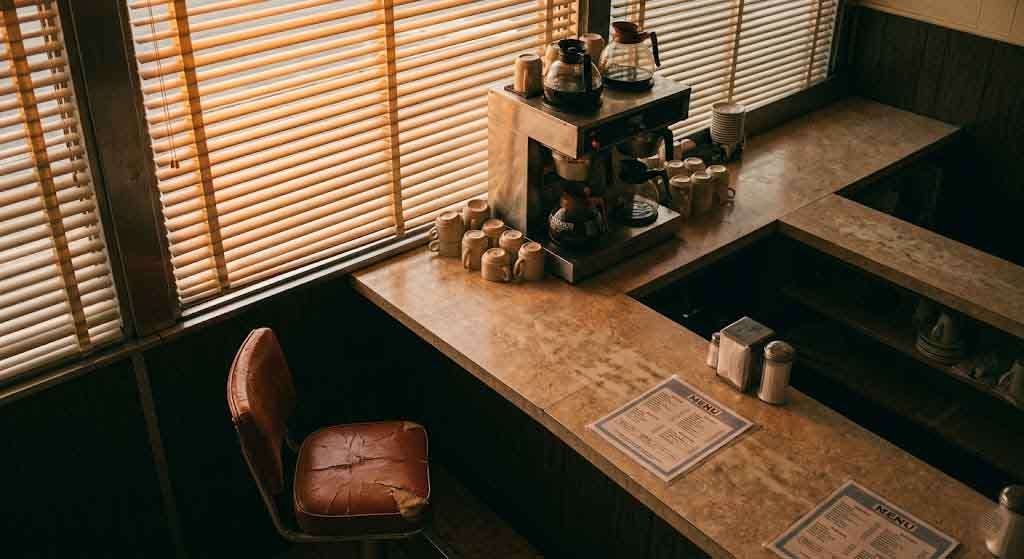
Every town on Long Island used to have one. You knew it by the neon sign that hummed in the dark, by the chrome trim catching headlights on Sunrise Highway, by the smell of coffee that hit you before you even opened the door. The diner wasn’t just where you ate. It was where you marked time — the late-night plate after the graduation party, the booth where your father read the paper every Sunday, the counter where the waitress knew what you wanted before you sat down.
They’re gone now. A lot of them. And what replaced them says more about us than anything we’d care to admit.
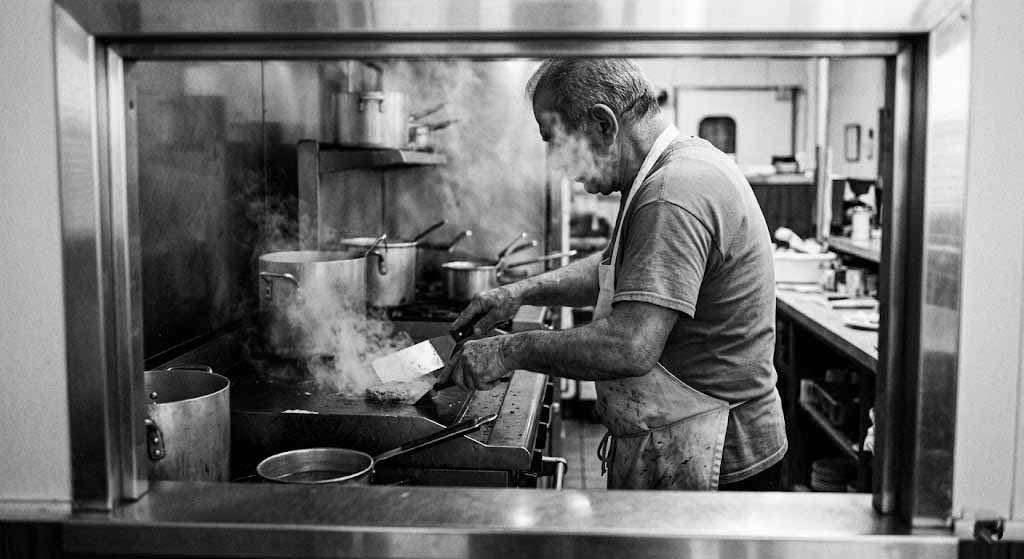
Baldwin Coach Diner, 790 Sunrise Highway, Baldwin — Closed April 2025
The Baldwin Coach Diner, at the corner of Sunrise Highway and Central Avenue, had been in the community since 1938. Originally owned by another Greek family, it changed hands in 1964, when Peter Kanaras and two partners, Tommy Mathews and George Tsotos, took ownership.
Three generations worked that corner. When Peter Kanaras got sick in 2016, his son John stepped up. John’s wife, Penny, confirmed his death in early 2025, writing on Facebook: “I am absolutely broken. How do I breathe.” The diner closed six weeks later.
What’s left behind is a ledger of the lives it held. “My wife and I first date was bowling, walking to the diner and walking her home. She was 17. Married 60 years in May,” wrote one customer. Another recalled: “After my mom got partial Alzheimer’s and couldn’t cook anymore, my dad would walk with her the short distance from the house where I grew up to the Baldwin Coach Diner for dinner every night.”
That’s what a diner is. A place you can get to on foot when everything else has become too far away.
At the time of this writing, the building’s future is unannounced. But if history is any guide, the sign will come down, and something with a logo will go up.
Sayville Modern Diner, 136 Main Street, Sayville — Closed 2015
The Modern Diner opened in March 1930. It moved across the street. It got a new building in 1949. It added a dining room in 1961. It served three generations of Sayville without ever pretending to be anything other than what it was — a diner on Main Street where you could get an omelet and a toasted bagel at midnight and nobody would ask any questions.
The Monday before its closure was announced, the Sayville Modern Diner served its last meal. The owner decided to sell, and the diner was turned into a sushi and Asian fusion restaurant.
With the subsequent closure of the Sea Crest Diner, Sayville has no diners left. For decades, this hamlet on the bay had two diners along its main street district. “We actually had to Google to find out where the nearest diner is,” said one longtime resident. They settled on Atlantis Diner in West Islip — a 20-minute drive away.
A town that can’t feed you at 10 o’clock at night without a 20-minute drive has already lost something important. The question is whether anyone in the planning office noticed.
The Plainview Diner — Closed in Recent Years
The Plainview Diner didn’t close because the food got bad or because the parking lot emptied out. It closed because of long-term leases that came due tied to what one surviving diner owner called “ridiculous rentals.” His advice to anyone entering the business: buy your building. “If you own the building, you’re not paying rent.”
That’s the plain arithmetic behind most of these closures. The diner runs on thin margins — it always has. Eggs, coffee, gas to heat the grill, wages for the overnight crew. When a landlord doubles the rent on a lease renewal, the math stops working. The food doesn’t change. The neighborhood doesn’t change. The numbers just stop adding up.
What replaced the Plainview Diner’s footprint is consistent with what’s replaced dozens of others across Nassau and Suffolk: strip mall retail, a chain, a bank, a parking lot. The suburb consuming itself.
Pancake Cottage — Centereach, 1965–Closed
The first Pancake Cottage opened in Centereach in 1965 and grew across Long Island — Hampton Bays, North Babylon, Riverhead, Shirley, Lake Ronkonkoma. People still talk about going there for breakfast or as their first jobs.
That last part matters. The Pancake Cottage was a first paycheck for a generation of Long Island teenagers. Stack of pancakes, a coffee, a bus table, a schedule on the wall. For a lot of kids, it was the first place that showed them what work actually looked and felt like. Those memories don’t get replaced. The building does.
The Hamburger Choo Choo, Huntington — Burned, Early 1980s
Some diners don’t get the slow fade. The Hamburger Choo Choo in Huntington delivered burgers by toy train. It burned down in the early 1980s and is still talked about fondly.
A toy train. Burgers on a track coming down the counter. Before the internet, before every kid had a screen in their pocket, the Choo Choo was the kind of thing a child remembered for their entire life. The fire took the building, but it couldn’t take the story. Some institutions are more durable as memory than they ever were as wood and chrome.
The 56th Fighter Group, Republic Airport, Farmingdale — Demolished 2023
Not a diner in the chrome-and-vinyl sense, but a Long Island roadside institution by any other measure. Located on the grounds of Republic Airport, this WWII-themed restaurant served Long Islanders for nearly 30 years with Big Band music and historic atmosphere. It closed in 2012 and was demolished in 2023.
For decades it sat next to the runway, surrounded by the sounds of small aircraft coming and going, its interior full of photographs and memorabilia and the kind of deliberate nostalgia that actually worked because the building itself was the real thing. Then it stood empty for eleven years — long enough for a generation to grow up without ever eating there — before the wrecking crew came. Nobody replaced it with anything worth talking about.
What the Numbers Say
Between 2009 and 2019, seventeen diners closed across Nassau and Suffolk County. In the four years following the pandemic, twelve more were forced to shut their doors.
Lynbrook Diner, Sunny’s Riverhead Diner and Grill, the Plainview Diner, the Golden Coach Diner in Huntington, the Lindencrest Diner in Lindenhurst, the Lantern Diner in West Hempstead, the Hampton Bays Diner, the Seven Seas Diner in Great Neck, the Park City Diner in New Hyde Park, and the Franklin Square Diner — some of these institutions had been open for nearly half a century. One for 90 years.
That’s not attrition. That’s an industry in collapse.
Dennis Pavlatos, owner of East Bay Diner in Seaford and Infinity Diner in West Babylon, put it plainly: “The diner industry on Long Island is dying.”
The People Who Built Them
It’s worth saying who actually built these places, because the obituaries usually leave it out.
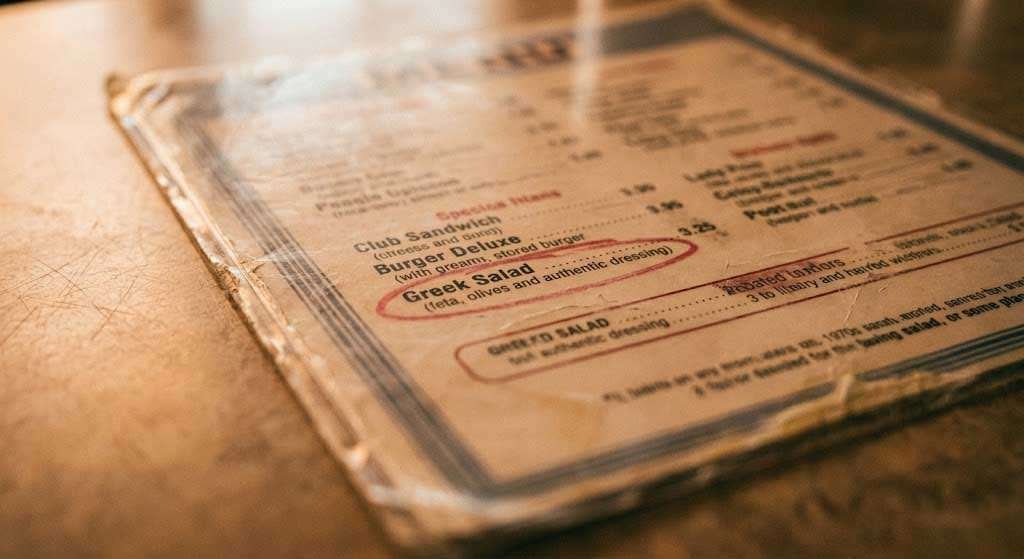
Most diners on Long Island were owned by Greek immigrants, whose ties to the industry began as they arrived from Greece in the 1960s alongside the growth of the restaurant business. Alexander Kitroeff, a history professor writing about the Greek connection to diners in America, cites the concept of “philoxenia” — Greek hospitality — as central to why the business came naturally to these families.
“They saw being an entrepreneur by owning your own business as their American dream,” said Larry Samuel, author of Making Long Island: A History of Growth and the American Dream. “Not having to work for somebody else.”
They arrived speaking little English, took jobs washing dishes and busing tables, worked their way to the front of the house, and eventually bought the place. Since the 1940s, most diners in New York City and the surrounding area have been owned by people of Greek descent. On Long Island, you saw this pattern repeated from Montauk to Mineola — the same arc, the same work ethic, the same philosophy that if you owned the building, you owned your future.
Long Island’s diners were, in many ways, the same story as Long Island itself: immigrants who arrived with nothing, built something from scratch, and handed it down. When that chain breaks — when the lease doubles, when the owner dies and nobody’s left to run it — the building doesn’t just close. The story stops.
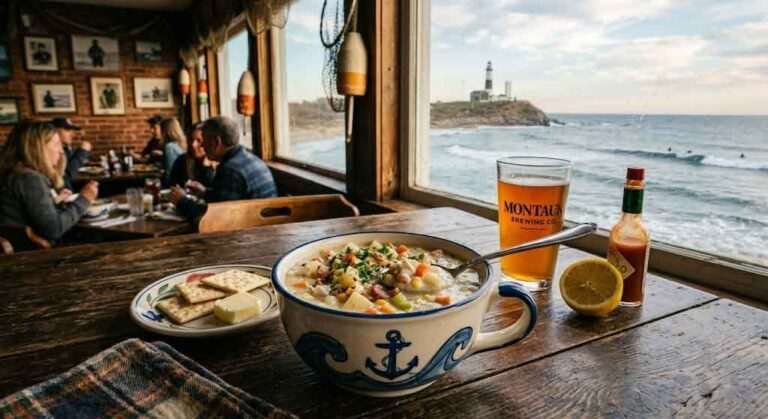
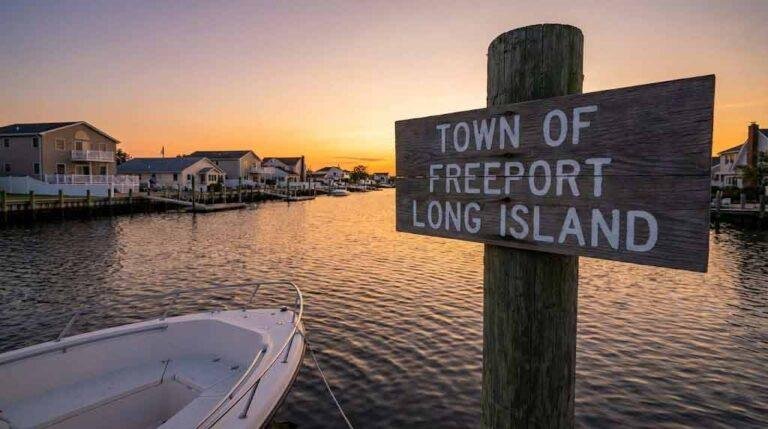
If you want a deeper look at how immigrant labor and commerce shaped this island, my piece on Rum Row and the Freeport Bootleggers covers another chapter of that history. And for a sense of how food on Long Island was always tied to the people working closest to the land and water, The Forgotten Montauk Surfman’s Chowder is worth the read.
What We Got Instead
Here’s the ledger, as best as anyone can reconstruct it:
The Sayville Modern Diner became a sushi restaurant. The Baldwin Coach Diner’s fate is unknown but unlikely to involve a 4 AM omelet. The Pancake Cottage locations became whatever was next in the strip mall rotation. The Hamburger Choo Choo burned and was never rebuilt. The 56th Fighter Group stood empty for eleven years and was then rubbled.
Some closures aren’t replacements — they’re just subtractions. An empty lot. A blank storefront. A parking space where a booth used to be.
The towns that lost their diners didn’t become more interesting. They became more convenient for chains and less human for everyone else. A great diner breakfast is still one of the best meals you can eat in America — but you have to be able to get to one first.
A Note on What Survives
Not every diner is gone. There are still operations on Long Island that open early, stay late, and run on the idea that a short stack and a cup of coffee is a perfectly complete meal. The ones that survive mostly own their buildings. They have owners who work the floor and know their regulars. They didn’t try to become something else.
The model still works. It just requires the kind of commitment that doesn’t show up on a lease renewal notice or a quarterly profit report. It requires somebody who decided, a long time ago, that this was worth doing for its own sake.
The ones that closed weren’t failures. They were institutions that ran their full course and then ran into something the food couldn’t fix: a rent increase, a death in the family, a pandemic, a town that stopped protecting the things that made it worth living in.
The neon goes dark. The sign comes down. The booth cushions end up in a dumpster. And somewhere on Sunrise Highway, a lease gets signed for something with a logo and a drive-through.
That’s the story. Most Long Islanders already know it. They just haven’t had time to sit down and say it out loud.
You Might Also Like:
Rum Row and the Freeport Bootleggers: Long Island’s Clandestine War on the Water
The Forgotten Montauk Surfman’s Chowder: Cooking with Seawater at the 1800s Life-Saving Stations
What Never Hits Zillow: The Hidden Inventory Problem on Long Island’s North Shore
Sources
- Baldwin Coach Diner Closing — LI Herald
- Baldwin Coach Diner Set to Close — Daily Voice
- Diner Industry on Long Island Is Dying — Patch/Huntington
- These Long Island Diners Survived Covid-19 — Marie Lolis/Substack
- Beloved Long Island Restaurants That Are No Longer Around — SciFIsland
- Long Island Restaurants We Want to Come Back — LongIsland.com
- Sayville Modern Diner Closes — Pop Culture Affidavit
- The Greek Connection to New York Diners — Estiator
- Dark Times for Diners — Crain’s New York Business