Everyone watches the spring market. Smart agents watch what doesn’t sell in August. Here’s what the off-season reveals about the real state of North Shore real estate.
The Myth of the Spring Window
March arrives on the North Shore and something predictable happens. Sellers dust off listing photos. Agents flood their email lists with projections. Buyers come in hot off winter, convinced that this is the moment — that some biological clock for home purchasing syncs with the forsythia blooming on Route 25A. The spring market is real. I won’t argue that. But the crowd that floods in during spring is also the crowd least likely to get the deal.
Here’s the problem with consensus behavior: everyone doing the same thing at the same time drives prices up and patience down. Competing offers appear inside 48 hours. Inspection contingencies get waived. People pay above ask on properties that have been sitting on someone’s spreadsheet since October. The frenzy obscures the truth of a house. And in real estate, the truth of a house — its structural history, its pricing logic, the seller’s actual situation — is the only thing that matters.
What I find more useful, and what Paola has refined into a working philosophy after years of watching this market, is the calendar no one talks about: August and December. The ghost months. The periods when the serious buyers go on vacation, the casual browsers stop refreshing Zillow, and what remains on the market is exactly the inventory you want to know about.
What August Reveals
August on the North Shore has its own rhythm. The beaches are full. The farm stands on Sound Avenue are doing their best business of the year. Families are in the Hamptons or on Cape Cod. The real estate market goes quiet — or appears to. But quiet is relative. What August actually does is strip the noise.
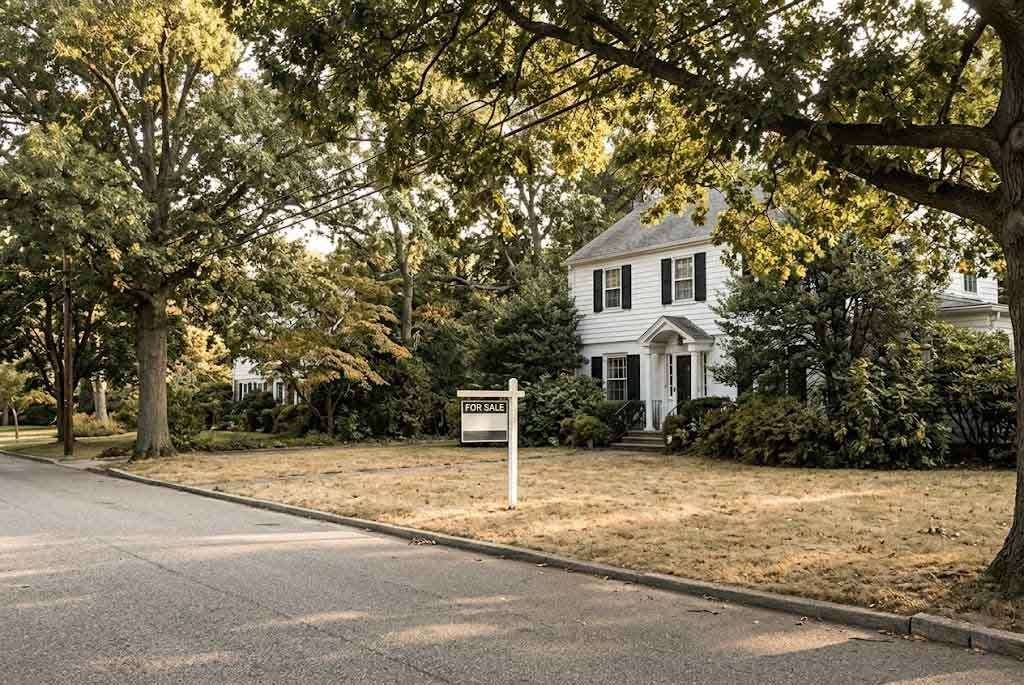
A home that hit the market in May and is still listed in August has already failed its first test. It missed the spring rush. That’s not nothing. It means the property didn’t move when conditions were most favorable to sellers, when buyers were most numerous and most motivated. Now ask the honest question: why?
Sometimes the answer is price. The seller anchored to a number the market didn’t validate, and rather than adjust, they waited. That’s a negotiation waiting to happen. Sometimes the answer is condition — the house needs work that didn’t photograph away, and buyers who toured it in May kept moving. Sometimes it’s something harder to quantify: a floor plan that doesn’t work, a lot that borders commercial, a school district boundary that lands on the wrong side of the line.
But here’s what August also surfaces: the motivated seller who listed too late, missed spring entirely, and now has carrying costs ticking every month. The estate property that came to market in June from an executor who needs to close. The relocation listing where the owners already moved to Dallas and are making two mortgage payments. These sellers exist in every August. They are not advertising their urgency. But it’s there, and it’s readable if you know what to look for.
Over the last five years of North Shore listing data, August consistently shows 30 to 40 percent lower listing volume than April or May — but the ratio of price reductions to total active listings climbs sharply. Properties that entered the market in the prior 90 days and sit through August without a contract routinely see first reductions in the range of 3 to 7 percent, with a meaningful portion taking a second reduction before Labor Day. That’s not a soft market across the board. That’s a motivated subset operating inside a quiet one.

December and the Psychology of Listing in Winter
December is more extreme. The logic that keeps sellers from listing in winter — “nobody buys in December” — is also the logic that keeps most buyers away. These two assumptions feed each other. But they don’t apply equally to everyone.
The seller who lists in December is not listing out of choice. Or rather, if they are listing by choice in December, they have a reason that overrides the conventional wisdom. In either case, you want to know that reason. It tells you something about leverage.
Consider the range: divorce decrees with compliance deadlines. Estate settlements timed to tax years. Corporate relocations triggered by fourth-quarter employment decisions. Sellers who have already gone into contract on their next property and need to close. Developers sitting on spec inventory that wasn’t absorbed in fall. None of these people are casual. All of them have an external clock running.
The buyer in December is also self-selected. Casual buyers don’t tour houses in the cold. The person walking through a North Shore colonial the week before Christmas is not browsing — they’re ready. Two motivated parties, stripped of the crowd, in a market where there’s no bidding war overhead, no spring frenzy driving price distortions. That’s actually the cleanest possible transaction environment. The price discovery is more honest. There’s nowhere to hide.
Five-Year Patterns That Tell the Story
Pull the last five years of active listing and closed sale data for the North Shore corridor — rough geography from Northport east through Miller Place and south of the Sound — and certain seasonal patterns hold consistently regardless of broader rate environment.
Median days on market peaks in August and December. That’s not a surprise on its own. What matters is the subset that is sitting 60 or more days in those windows. These are not abandoned listings or properties with fundamental problems (those get pulled). These are active sellers, receiving showings, not yet in contract — and their price behavior tells the story. In four of the last five years, properties that sat 60-plus days in August or December closed at an average of 5 to 9 percent below their most recent asking price. Compared to spring closings in the same zip codes, where final sale prices landed much closer to or above ask, that gap is substantial.
The flip side of that data is this: buyers who were active in those ghost months and wrote offers on motivated listings captured real value. Not discount-rack value. Not distressed-property value. Market value — or slightly below it — on houses in neighborhoods they actually wanted to live in, without competing offers creating artificial price pressure.
This is what Paola means when she talks about off-season inventory as a diagnostic tool. The ghost months don’t just reveal motivated sellers. They reveal the true clearing price of the North Shore market, uncontaminated by seasonal psychology. If you want to understand what a neighborhood is actually worth — not what a spring bidding war says it’s worth — watch what trades in August and December.
The Motivated Seller Is Not Always Distressed
One clarification worth making: motivated doesn’t mean desperate. The seller carrying two mortgages through August is not the same as a foreclosure listing. The December executor is not a distressed asset. These are ordinary people in circumstances that create a negotiating context buyers rarely get in spring.
I’ve watched properties in Mount Sinai, Stony Brook, and Miller Place trade quietly in winter for prices that would have drawn multiple offers four months earlier. Not because the houses were worse. Because the buyers who were present were outnumbered by the houses available, the sellers needed to close, and the deal got done cleanly. That’s not exploitation. That’s market function operating without the distortions that seasonal crowding creates.
It’s also worth noting what I wrote in What Never Hits Zillow: The Hidden Inventory Problem on Long Island’s North Shore — the on-market listing is only part of the picture. The off-market pocket listings, the word-of-mouth transfers, the pre-market conversations that agents have in January before anything publicly lists: these also happen in the ghost months. The buyer who is active in December is not just accessing the public MLS. They’re in conversation with agents who know what’s coming. That early access is itself a form of inventory advantage.
How to Use the Ghost Months Strategically
If you’re a buyer on the North Shore, the practical application is straightforward, even if it cuts against instinct. Don’t go dormant in August. Don’t wait for spring. Use August to watch the listings that have been sitting since May — identify the ones that have taken price reductions, request showing history, understand the seller’s timeline. You’re not committing. You’re doing reconnaissance on motivated inventory that most buyers aren’t watching.
In December, narrow your focus. Don’t browse 40 listings. Identify five to ten properties that match your actual criteria, that have been on market long enough to signal seller flexibility, and make contact. The negotiating environment will not be better than it is in December. It almost never is. As I covered in How to Win a Bidding War in a Low-Inventory Market, the buyer who avoids the bidding war entirely — by operating in a window where multiple offers simply aren’t happening — doesn’t need the escalation strategy at all.
If you’re a seller and you have flexibility on timing, this analysis cuts the other way. Don’t list in August unless you have to. Don’t list in December if you can list in February or March instead. The data on who wins in ghost month negotiations is clear: it’s generally the buyer. But if life circumstances require a winter listing, price it to move. A sharp initial price in December beats a slow reduction into January every time.
The Crowd Is Almost Always Wrong About When to Act
Spring has brand power in real estate. It photographs well. It feels like momentum. Everyone else is doing it. These are exactly the conditions under which the most rational thing to do is slow down and ask what everyone else is missing.
The North Shore is not a market that rewards passivity. Properties in Setauket, Old Field, and Sound Beach hold their value across cycles precisely because demand is structural — school districts, Long Island Sound access, commute geometry to the city. But within that structural demand, there are windows of real price advantage, and those windows are not in April. They are in the months when the Instagram-worthy listing photos show dead leaves and gray skies, when fewer buyers are looking, and when the sellers who remain active have very good reasons to close.
Watch what doesn’t sell in August. It tells you more about this market than any spring weekend open house ever will.
You Might Also Like
- What Never Hits Zillow: The Hidden Inventory Problem on Long Island’s North Shore
- Buying Your First Home on Long Island: The Neighborhoods Nobody Talks About
- How to Win a Bidding War in a Low-Inventory Market
Sources
- OneKey MLS — Long Island North Shore active listing and closed sale data, 2021–2025: https://www.onekeymls.com
- New York State Association of Realtors — Seasonal housing market statistics: https://www.nysar.com/industry-resources/market-data/
- Realtor.com Research — Seasonal listing trends and days-on-market patterns: https://www.realtor.com/research/
- Zillow Research — Price reduction and days-on-market data by season: https://www.zillow.com/research/
- National Association of Realtors — Existing Home Sales seasonal data: https://www.nar.realtor/research-and-statistics