
Serves 6 | Prep: 15 min (plus overnight soak) | Cook: 2 hrs 15 min
Ingredients
The Base
- 1 lb dried navy beans, soaked overnight and drained
- 2 smoked ham hocks
- 1 yellow onion, diced
- 3 celery stalks, diced
- 2 carrots, diced
- 4 garlic cloves, minced
- 2 tbsp unsalted butter
The Broth
- 8 cups chicken or ham stock
- 2 bay leaves
- 3 fresh thyme sprigs
- 1 tsp smoked paprika
- 1 tsp freshly cracked black pepper
- 1 tsp kosher salt (added at the end)
The Finish
- 1 tbsp apple cider vinegar
- ¼ cup flat-leaf parsley, chopped
- Freshly cracked black pepper to serve
Instructions
Step 1 — Build the Aromatic Base
In a large Dutch oven or heavy stockpot, melt the butter over medium heat. Add the onion, celery, and carrots. Cook, stirring occasionally, until the vegetables soften and the onion turns translucent — about 8 minutes. Add the garlic and cook another 2 minutes until fragrant.

Step 2 — Add Beans, Hocks & Stock
Nestle the ham hocks into the pot. Add the drained navy beans, pour in the stock, and add the bay leaves, thyme, smoked paprika, and black pepper. Do not add salt yet — the hocks will release their own. Bring to a boil over high heat, then reduce immediately to a low, steady simmer. Skim any foam that rises in the first 15 minutes.
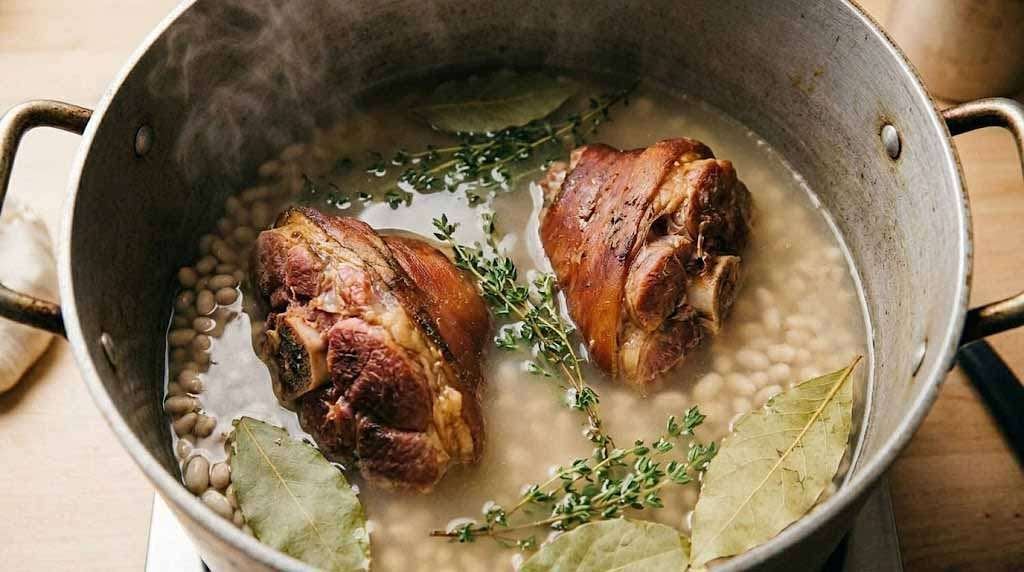
Step 3 — Simmer Low & Slow
Cover partially and simmer for 1 hour 45 minutes to 2 hours, until the beans are fully tender and the broth has turned silky and opaque. The hock meat should be visibly pulling away from the bone. Remove the ham hocks and set aside to cool slightly. Discard the bay leaves and thyme stems.
Step 4 — Shred the Ham & Finish the Soup
Once cool enough to handle, pull the meat from the hocks, discarding the skin and bone. Shred into rough pieces and return to the pot. For a thicker consistency, use the back of a spoon or a ladle to crush 1–2 cups of beans against the side of the pot — this thickens the broth naturally without flour or cream. Stir in the apple cider vinegar, then taste and adjust with salt and more cracked pepper as needed.
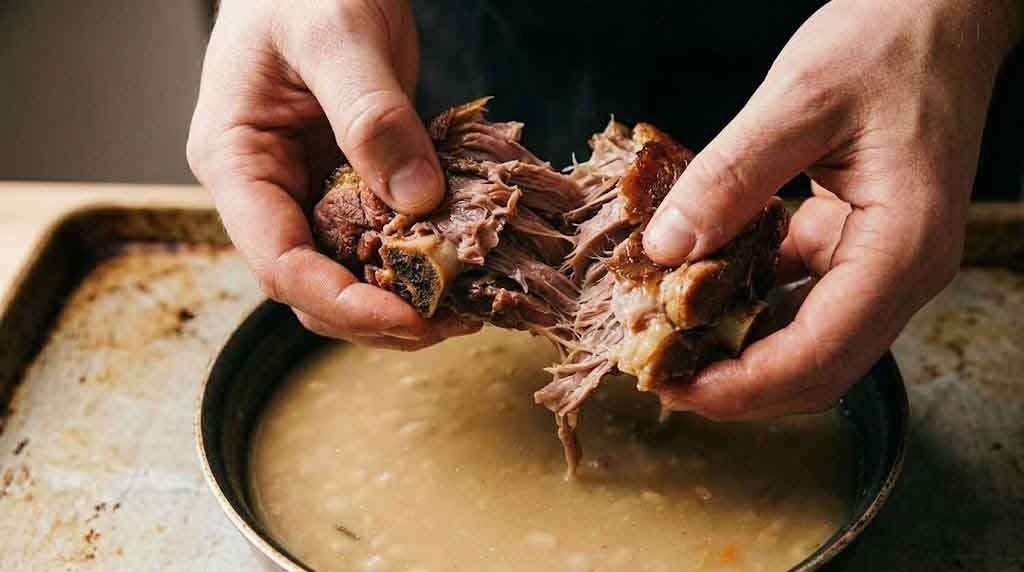
Step 5 — Rest & Serve
Let the soup rest off the heat for 10 minutes before serving — this is when everything knits together. Ladle into deep bowls, finish each with a generous pinch of flat-leaf parsley and a crack of black pepper. Serve alongside toasted Heritage sourdough.
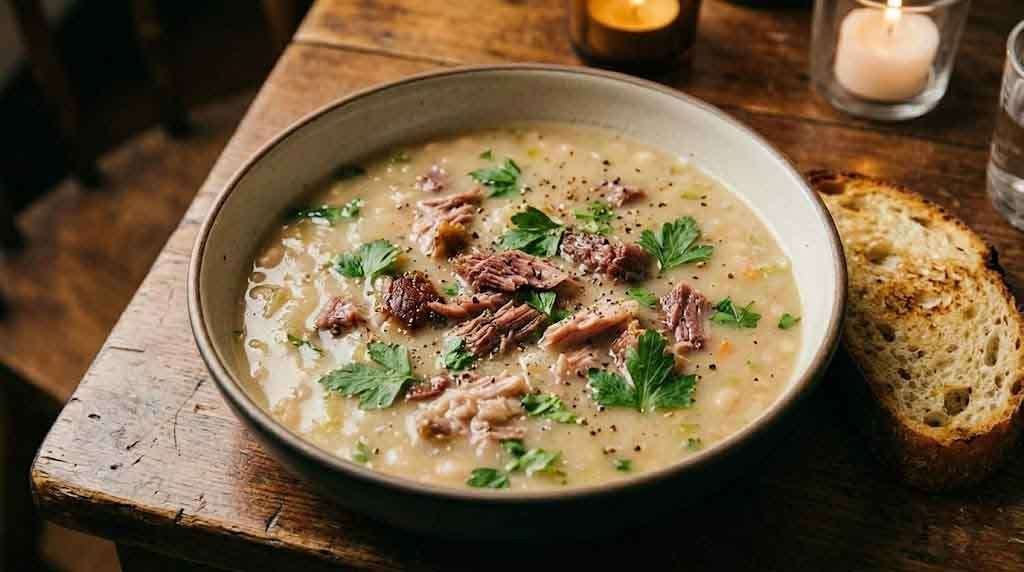
Notes
Soaking the beans overnight is non-negotiable for even cooking and a creamier texture. If you’re short on time, use the quick-soak method: cover beans with cold water, bring to a boil for 2 minutes, remove from heat, and soak 1 hour. Ham hocks are the soul of this soup — don’t substitute bacon or sausage, they won’t render the same depth. The apple cider vinegar at the finish is the move most home cooks skip; it cuts through the richness and makes the whole pot taste more alive. This soup improves significantly the next day.
The Yankee Bean Soup Worth Making on a Cold Sunday
Navy bean soup doesn’t try to impress you. It makes no promises of refinement, no bid for elegance. What it offers instead is something harder to find on most menus — a bowl of food that feels genuinely earned, built from humble ingredients over a long, unhurried afternoon on the stove. Done right, it is one of the most satisfying things you can put in front of someone on a cold day.
Yankee bean soup has roots that go back centuries in American cooking. It’s the kind of dish that fed farmhands and fishermen, that stretched across a whole week of lunches, that got better every time it was reheated. The Senate Bean Soup — the version that’s been served in the U.S. Senate dining room reportedly every single day since the early 1900s — is a direct descendant of this tradition. Simple, reliable, nourishing. The kind of dish that outlasts trends because it doesn’t need them.
The Case for Navy Beans
The navy bean — small, white, mild — is the correct bean for this soup, and it’s not a close call. Great Northern beans are too large and lose their structure. Cannellini go creamy too fast. Navy beans hold their shape through a long simmer while still releasing enough starch to thicken the broth naturally, giving you a pot that’s neither watery nor heavy. They are also remarkably good at absorbing whatever they’re cooked alongside — and in this soup, that means smoked ham hock.
Dried beans, soaked overnight. Not canned. The difference in texture and depth is significant enough that it changes the nature of the finished soup entirely.
The Ham Hock Is Non-Negotiable
Smoked ham hock is the backbone of this recipe. It does something that no other cut quite replicates — it slowly releases collagen and fat into the broth as it simmers, transforming what starts as a pale, thin stock into something silky and substantial. The smoke works its way through every bean, every spoonful, without overwhelming the pot.
This is not a place for shortcuts. Bacon adds smokiness but not depth. Sausage changes the character of the soup entirely. The hock, given enough time, essentially dissolves into the broth — you pull the meat off at the end, shred it back in, and what remains in the pot is something greater than the sum of its parts.
Low Heat, Long Time
The simmer is where this soup is either made or lost. Two hours at a low, steady bubble — not a rolling boil, which turns the beans to mush and clouds the broth — produces the right result. The pot should barely move. Steam should rise. The kitchen should smell like something worth sitting down for.
Partial coverage is key. Leaving the lid slightly ajar lets some liquid evaporate and the broth concentrate without scorching. By the time the hock is pulling away from the bone, the beans will be tender and the broth will have thickened on its own without a drop of cream or flour.
The Finish That Most People Skip
Apple cider vinegar — just a tablespoon — stirred in at the very end. It sounds minor. It isn’t. Bean soups can sit heavy on the palate; the acidity cuts through the richness and makes the whole pot taste more alert, more alive. It doesn’t make the soup taste sour. It makes it taste like itself, only more so.
Flat-leaf parsley, a crack of black pepper, and a thick slice of toasted sourdough alongside — that’s the finish. If you’ve spent time with our post on Meet “The Mother”: The Living Heart of The Heritage Diner’s Sourdough, you already know why the bread matters as much as the bowl.
A Soup That Gets Better Overnight
Reheat it the next day and you’ll understand why this dish has survived for centuries. The beans continue to absorb the broth, the smoke deepens, and everything settles into a more cohesive whole. Make a full pot. Plan for leftovers. This is one of those recipes that improves with patience — at every stage, not just during the cook.
Browse more recipes and kitchen craft in our Food Recipes and Food History sections.