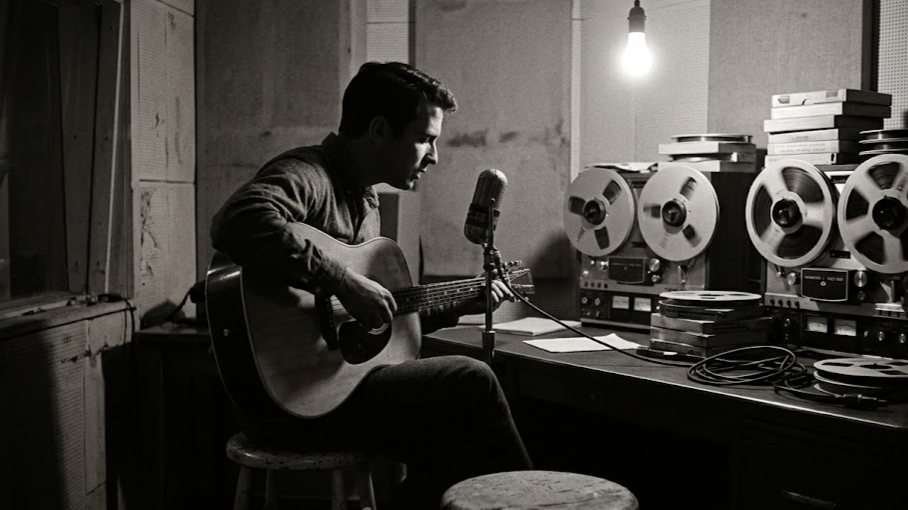
The first thing to understand about WBAI is that it was given away.
Louis Schweitzer, a Russian-born American paper industrialist and committed eccentric, had purchased the commercial FM station for thirty-four thousand dollars in 1957. He ran it as a personal obsession — broadcasting music, ideas, and what he described as art, in a period when FM radio in New York was still a marginal medium that most Americans received on sets they didn’t own. Schweitzer was, by the accounts that survive him, a genuine idealist about what radio could do. He was also, by those same accounts, increasingly disillusioned with the compromises commercial operation required.
In 1959, he read about the Pacifica Foundation — a Berkeley-based nonprofit that had founded KPFA in 1949 on the premise that listener-supported radio, without commercial sponsors and without advertiser pressure, could broadcast things that mattered. On January 10, 1960, Schweitzer donated WBAI — by then valued at roughly two hundred thousand dollars — to Pacifica. He gave it away.
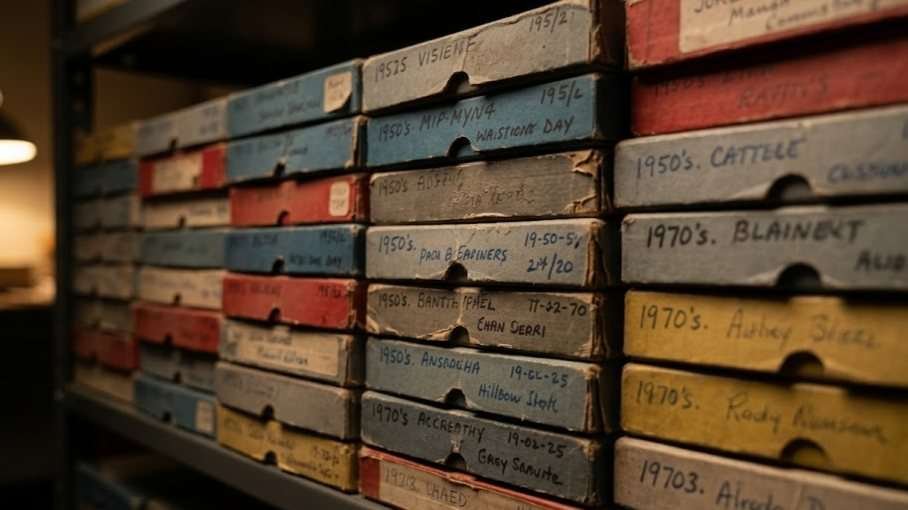
What he gave away was a frequency. What the Pacifica Foundation did with it, in the decade that followed, was something that commercial broadcasters would not and could not have done: they pointed their microphones at the margins of American musical culture, at the performers and traditions that the record industry had either missed or declined to invest in, and they let the tape run.
What the FCC Records Show
The Federal Communications Commission’s licensing records for WBAI tell one part of the story: call sign history, frequency assignments, ownership transfers. The public record documents the station’s commercial origins — it had first gone on the air in 1941 as W75NY, a Metropolitan Television operation — and the transfer to Pacifica in 1960. What the FCC records cannot tell you is what happened in the studios once the mics were live.
For that, you go to the Pacifica Foundation’s own archives, now held at the University of California, Santa Barbara, and to the Pacifica Radio Archives facility in Los Angeles — which has been working, systematically and with chronic underfunding, to digitize a collection that includes material from WBAI, KPFA, KPFK, and WPFW dating back to the 1970s, and in some cases earlier. The first ten thousand tapes from that collection have been sent to George Blood Audio in Philadelphia for professional digitization. The cataloging of unprocessed tapes from offsite storage continues.
What the archive holds, and what hasn’t yet been heard, is the question.
The Station and Its Moment
To understand what WBAI was doing in the 1960s, you need to understand the folk revival it was operating inside — and the specific geography of that revival in New York City.
By 1960, the Greenwich Village folk scene was already in motion. The coffeehouses on MacDougal Street and Bleecker were presenting performers who would, within a few years, be commercially famous. The Newport Folk Festival, founded in 1959, was drawing crowds and generating press. The record industry had noticed; Folkways, Vanguard, and Prestige-Bluesville were all active, and larger labels were beginning to pay attention.
But the commercial folk revival of the early 1960s had a particular shape. It favored certain performers, certain sounds, certain presentations. The young white singer-songwriters who would become household names — the Dylan model — were accessible in a way that older Black performers from the Deep South or the Piedmont tradition were not. Not inaccessible in terms of talent or substance, but inaccessible in terms of what commercial radio would program and what major labels would invest in.
WBAI did not have those constraints. Listener-supported, operating under Pacifica’s explicit mandate to broadcast what commercial stations wouldn’t, the station could — and did — present performers who existed at the edges of what the market was willing to amplify.
The Reverend at the Microphone
Gary Davis had been in New York since the 1940s. Born in Laurens, South Carolina in 1896, blind since infancy, Davis had built one of the most technically extraordinary guitar vocabularies in the history of American string music — a fingerpicking style rooted in the Piedmont blues tradition that could move between ragtime, gospel, blues, and old dance tunes in a single performance, using what amounted to three independent voices on one instrument. Stefan Grossman, who studied with Davis extensively, described it in his liner notes as a guitar approach of almost impossible sophistication executed with two fingers and a thumb.
Davis converted to Christianity in the 1930s and moved to New York, where he spent years as a street preacher and street musician in Harlem, acquiring the moniker “Harlem Street Singer.” For much of the 1940s and early 1950s, he was essentially unknown outside the neighborhoods where he played. In 1951, a young folk enthusiast named Ellen Stekert recorded him in a Bronx apartment on home equipment — a recording that surfaced only in 2025, now believed to be the earliest surviving recorded document of Davis’s playing.
It was the folk revival that brought Davis back to visibility. By the early 1960s, young guitarists — Grossman, Dave Van Ronk, Bob Weir, David Bromberg, eventually Bob Dylan — were seeking him out in the Bronx and in Queens for lessons that could run all day and into the night. Davis was performing at the Newport Folk Festival by 1965 to what witnesses describe as a transformed reception compared to his 1960s appearances. He was recording for Prestige-Bluesville, for Folkways. He was, finally, documented.
WBAI was part of that documentation. The station’s music programming under directors John Corigliano, Ann McMillan, and later Eric Salzman included live studio performances, and the folk and blues performers who were moving through New York in those years moved through WBAI as well. David Bromberg — who had learned his fingerpicking technique directly from Reverend Gary Davis — appeared on WBAI in 1970 in an early broadcast with Emmylou Harris that survives in the Internet Archive, one of the earliest recordings of Harris in circulation. The station was running tape on performances that commercial radio had no mechanism to air and no financial incentive to preserve.
Matthew Lasar’s Pacifica Radio: The Rise of an Alternative Network (Temple University Press, 1999) — the most thorough scholarly account of Pacifica’s history — documents the station’s programming philosophy in this period as deliberately counter-programmatic: the station aired what the rest of the dial wasn’t airing, specifically because the rest of the dial wasn’t airing it.
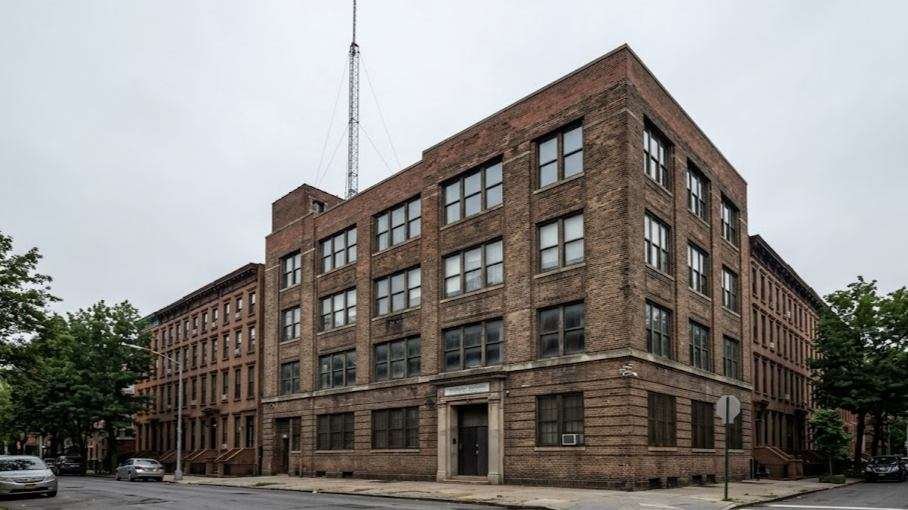
Bob Fass and Radio Unnameable
The vessel for much of this programming was Bob Fass’s Radio Unnameable, a freeform overnight show that Fass had been running on WBAI since the early 1960s. Fass operated without a playlist. He took calls. He played what arrived and what he chose. The show documented, in an almost archival way, the musical and cultural life of the New York counterculture through the decade — and the performers who came through reflected the full range of what that culture contained.
Arlo Guthrie’s “Alice’s Restaurant” was first broadcast on Radio Unnameable in 1967. Bob Dylan appeared on the show in March 1963, before the commercial breakthrough that would define him. The show drew, by estimates from the late 1960s, roughly six hundred thousand weekly listeners — a substantial audience for an FM station in a period when FM was still secondary to AM in most households.
What Fass’s show created, as a byproduct of its programming approach, was a running tape archive of American musical culture that no commercial network would have produced and no academic institution was planning to. The archive was accidental. The preservation was not systematic. And the question of what survived — what made it from tape to storage to eventual digitization — is one the Pacifica Radio Archives has been trying to answer for decades.
The Archive Problem
The FCC licensing records are complete. The station’s history is documented in Lasar’s book and in the Wikipedia entry that references it. What is not complete, and what remains the central question for anyone trying to understand what WBAI actually preserved, is the physical archive.
The Pacifica Radio Archives in Los Angeles holds a collection that is significant, documented, and partially digitized. The problem it faces is the problem every analog tape archive of its era faces: the materials degrade, the playback equipment becomes obsolete, and the funding to address either problem arrives, when it arrives at all, in amounts smaller than the scale of the challenge.
The first ten thousand tapes in the collection have been sent to professional digitizers. The catalog of what’s in the unprocessed portion of the collection — the tapes from offsite storage that haven’t yet been fully inventoried — remains incomplete. There are performances in that collection that no one alive knows exist. There are broadcasts of artists who are now dead, recordings that may be the only documentation of a particular performance or, in some cases, of a particular performer at a particular moment in their development.
The WBAI tape archive was the subject of institutional disputes — the kind of disputes that Pacifica, an organization with a long history of internal conflict, generates with some regularity — that complicated and in some cases endangered the preservation work. The “Christmas Coup” of December 2000, when a factional dispute at the station led to a padlocking of the building and a multi-year internal war, interrupted operations in ways that had downstream effects on the archive. Material from this period is not fully accounted for.
What Was Heard, What Was Kept
The pieces of the WBAI archive that have survived and been made accessible tell you something about the whole. The 1970 Emmylou Harris and David Bromberg session on WBAI is on the Internet Archive — documented, dateable, accessible. It exists because someone preserved the tape and someone eventually digitized it.
What you can’t know, from the accessible material, is what proportion of the original output it represents. WBAI was on air continuously from 1960 forward, broadcasting music, performance, and live studio sessions that commercial radio wasn’t touching. The ratio of what’s documented to what was recorded is not known. The ratio of what was recorded to what survives on physical tape is not known. And the ratio of what survives to what will eventually be digitized and made accessible depends on funding and time that have not yet been committed.
The station that first broadcast Arlo Guthrie’s “Alice’s Restaurant” — that ran live performances of folk and blues artists who had no commercial radio outlet — ceased local programming in October 2019, when the Pacifica Foundation, financially exhausted, shuttered the Brooklyn operation. The frequency that Louis Schweitzer gave away in 1960, with the intention that it would broadcast things that mattered, went quiet at the local production level.
The tapes from the years when it wasn’t quiet are in Los Angeles. Some of them have been heard by the archivists who are working through the collection. Most of them haven’t been heard by anyone in decades. What’s on them is not fully known.
What the Archive Is For
I grew up in Brooklyn. I spent a lot of time with the radio as a kid — AM stations mostly, because that’s what the cars ran. But I also absorbed, somewhere along the way, the idea that culture that doesn’t get preserved is culture that disappears. The philosophy degree I eventually got, the graduate work I did in new media and sociology, both pointed me toward the same conclusion: documentation is not passive. It’s a decision. And the decision not to document — or to preserve inadequately, or to let disputes delay digitization until the tapes degrade — has consequences that are permanent.
WBAI pointed its microphones at Reverend Gary Davis. At David Bromberg. At the young Emmylou Harris before she was famous. At hundreds of performers who moved through New York in the 1960s and 1970s and whose music existed at the margins of what commercial culture was willing to amplify. The station did this not because it had a preservation mandate, but because it had a programming philosophy: broadcast what matters, regardless of whether the market agrees.
The archive that resulted from that philosophy is real, significant, and incompletely accessible. Somewhere in those tapes in Los Angeles there are performances that have not been heard since they were broadcast, by artists who are now dead, in a city that was different then.
That is the archive. Whether it gets heard depends on decisions being made right now, by people trying to find the funding to let the machines run.
Sources: Matthew Lasar, Pacifica Radio: The Rise of an Alternative Network (Temple University Press, 1999); Wikipedia, “WBAI” (en.wikipedia.org/wiki/WBAI); Wikipedia, “Louis Schweitzer (philanthropist)”; Wikipedia, “Reverend Gary Davis”; KPFA, “History” (kpfa.org/about/history); Pacifica Radio Archives (pacificaradioarchives.org); WBAI Mission statement (wbai.org/mission.html); Association for Cultural Equity, “Reverend Gary Davis” (culturalequity.org); Ellen Stekert Archives, “Earliest known home recording of Reverend Gary Davis unearthed” (ellenstekert.com, 2025); Internet Archive, “Emmylou Harris & David Bromberg WBAI NY 1970” (archive.org); Internet Archive, “Bob Dylan 1962 Montreal Canada Finjan Club WBAI” (archive.org); FCC licensing records for WBAI available via fcc.gov public database.