
Ultra-processed foods are the quiet saboteur of the modern diet. They are the frozen meals, flavored yogurts, breakfast cereals, packaged snacks, and soft drinks that now account for nearly 60 percent of average American caloric intake, according to Stanford Medicine’s Dalia Perelman (Stanford Medicine, 2025). Among children, the figure is closer to 70 percent. As The Lancet put it in their landmark 2025 three-part series, ultra-processed food patterns are globally displacing long-established diets centered on whole foods and culinary preparation (Monteiro et al., The Lancet, 2025).
The health consequences are well-documented. A sweeping 2024 umbrella review published in the BMJ by Melissa Lane and colleagues at Deakin University analyzed meta-analyses encompassing nearly ten million participants and found convincing evidence linking higher ultra-processed food intake to increased risk of cardiovascular disease-related mortality, Type 2 diabetes, anxiety, and combined common mental disorders (Lane et al., BMJ, 2024). The review also found highly suggestive evidence connecting these foods to all-cause mortality, depression, and obesity.
The 30-Day Experiment
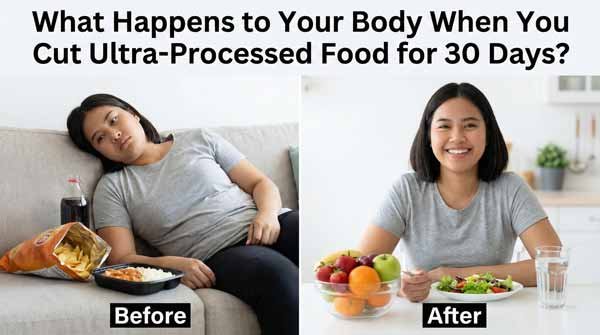
What actually changes when you eliminate these foods? A 2024 pilot study at Drexel University followed 14 adults through an 8-week intervention designed to reduce ultra-processed food consumption. Participants reported reduced swelling in their hands and ankles, improved energy levels, better mood, and a notable decrease in cravings for processed snacks and sweets. Multiple participants described feeling less angry and more emotionally stable (Hagerman et al., Obesity Science & Practice, 2024).
In a more controlled setting, a groundbreaking 2025 randomized crossover trial published in Nature Medicine by researchers at University College London provided 55 adults with two 8-week diets: one based on minimally processed foods and one based on ultra-processed foods, both following UK dietary guidelines. The minimally processed diet led to roughly double the weight loss, with participants losing about 2 percent of body weight in just eight weeks without actively trying to reduce intake (Dicken et al., Nature Medicine, 2025). The study’s lead author, Dr. Samuel Dicken, noted that even though a 2 percent reduction might sound small, it was achieved passively over just two months.
The mechanisms behind these changes are becoming clearer. National Geographic reported in 2025 that diets heavy in ultra-processed food were linked to a 44 percent greater risk of depression, a 48 percent higher risk of anxiety, and a 25 percent increase in dementia risk for every 10 percent increase in ultra-processed food consumption (National Geographic, 2025). Ashley Gearhardt, a psychology professor at the University of Michigan, described ultra-processed foods as having more in common with cigarettes than with foods found in nature, citing their engineered hyperpalatability.
For Long Islanders, the practical shift is straightforward: swap packaged breakfast bars for overnight oats, replace frozen dinners with sheet-pan meals, and trade sugary drinks for water or unsweetened tea. The first week is the hardest. But as the Drexel participants discovered, cravings for processed food actually diminish over time as your palate recalibrates.
Watch: Dr. Chris van Tulleken, author and ultra-processed food researcher, shares practical tips for reducing UPF consumption:
5 Tips to Eat Fewer Ultra-Processed Foods — CBC The Nature of Things (YouTube)Related: Long Island Market Trends: How Community Lifestyle Drives Home Values