
Out here on the East End, men and women measure their seasons in catches and crossings. The striped bass run off Montauk Point. The quiet morning run across Peconic Bay before the summer crowds wake. The drag of a fluke rod as the current pushes hard through Gardiners Bay, your forearms burning, your fingers locked around braided line that doesn’t care how tired you are. This is a life measured in saltwater miles — and like any vessel worth its hull, the body that navigates it demands maintenance most people overlook until something breaks.
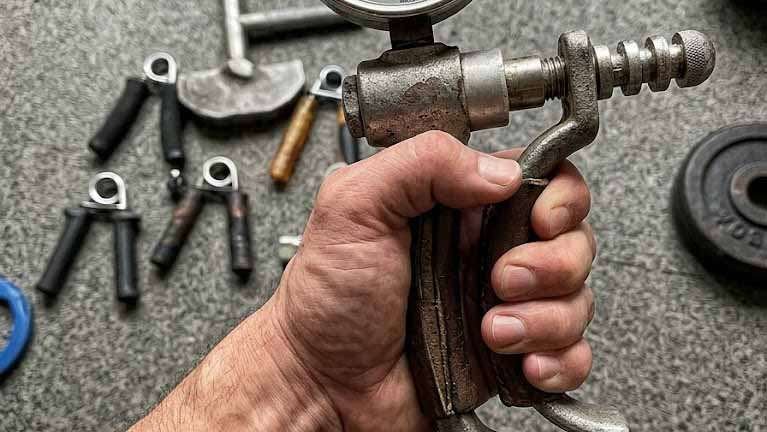
Grip strength is not a gym metric. It is not a bodybuilding vanity. For anyone who spends serious time on the water off Long Island’s East End — from the bay fishermen working the North Fork out of Southold and Greenport to the offshore captains launching out of Montauk’s Star Island — it is a fundamental indicator of how many more seasons you have in you, and how capable you’ll be when you’re out there. A 2015 study published in The Lancet that followed more than 140,000 adults across 17 countries found that grip strength predicted cardiovascular mortality more reliably than systolic blood pressure. For every 5-kilogram decline in grip strength, researchers identified a 16% increase in all-cause mortality risk. Your handshake, quite literally, tells the story of your biological age.
That should matter deeply to anyone who takes their time on the water seriously.
The Physiology Behind the Pull
When you’re fighting a 40-pound striped bass in a running tide, what you feel in your hands is only the surface of a much deeper mechanical event. The grip is the output; the muscular and neurological chain running from your fingers through your forearms, shoulders, and rotator cuff is the system. Grip strength functions as what researchers call a proxy measure — a readable number that reflects the integrity of your entire upper-body musculature, neuromuscular coordination, and systemic health.
Sarcopenia, the age-related loss of muscle mass, begins earlier than most people realize — often in the early 40s — and accelerates without targeted resistance training. The fishing and boating population of Long Island’s East End skews toward middle age and beyond. These are experienced people: they’ve learned the tides, they know the species, they’ve logged the years. But logged years on the water don’t preserve the tissue that makes those years possible. Weak grip strength is associated with increased risk of cardiovascular disease, frailty, and early mortality — and a decline in grip often signals broader issues including muscle loss, reduced neuromuscular function, and metabolic decline.
The connection runs deeper than muscle. Grip strength has been shown to correlate with cognitive function, depression, sleep problems, diabetes, bone mineral density, and quality of life — making it one of the most information-dense single measurements available in clinical and functional health assessment. Think of it the way you’d think about the hull of a working boat: what you see above the waterline tells you something essential about what’s happening below it.
Why Boaters and Anglers Are at Unique Risk
Repetitive motion is the silent enemy of the working angler. The repeated cast, the crank of a conventional reel, the sustained grip on a tiller in chop — these movements build muscular endurance in narrow, isolated patterns while neglecting the antagonist muscles that stabilize the joints. Over years, this creates imbalances: tight flexors, weakened extensors, overworked forearm tendons that become inflamed with use and stiff without it. Lateral epicondylitis — what most people call tennis elbow, but what anglers know as the dull ache that shows up after a long day of jigging — is among the most common repetitive-strain injuries in recreational fishing populations.
Boaters face a parallel set of demands. Docking in a crosswind requires explosive grip and shoulder stability. Hauling anchor in a running sea puts extraordinary load on the wrists and forearms. Climbing aboard in rough water, securing lines, adjusting rigging — these are not passive activities. They require functional strength that doesn’t degrade gracefully without training. The Peconic Bay, Three Mile Harbor, Shinnecock, Gardiners Bay — these are beautiful waters, but they are also demanding ones. They do not reward the underprepared.
The trap many serious watermen fall into is conflating activity with training. Being on the water is not a substitute for purposeful functional conditioning. The body adapts to the specific demands placed upon it — and spending 200 days a year on a boat trains you to do boat things at a gradually declining physical baseline, unless you’re doing the off-water work to push that baseline upward.
Functional Training: Building the Grip That Lasts
The philosophy here is not complicated. You don’t need a gym membership or a coach. What you need is a consistent, targeted practice that addresses the full kinetic chain from fingertip to shoulder — and that builds the kind of strength that transfers directly to life on the water.
Farmer’s Carries. Load a pair of heavy dumbbells or kettlebells and walk. Fifty feet out, fifty feet back. This is the single most functional grip training exercise available, and it mirrors exactly the sustained-tension demands of holding a rod against a running fish or carrying gear down a dock in rolling conditions. The load forces your entire posterior chain to stabilize while your hands maintain an isometric crush grip under fatigue. Do this three times a week and you will feel the difference on the water within six weeks.
Dead Hangs. A pull-up bar costs less than a new reel. Hang from it with a full grip — not a hook grip, a full wrap — for time. Start with 20 seconds. Build toward two minutes over months. Dead hangs decompress the spine, build extraordinary grip endurance, and develop the shoulder stability that prevents the rotator cuff injuries that end careers on and off the water. They are also a direct simulation of what it feels like to hold a tight line against a fish that wants to go deep.
Wrist Roller and Reverse Curls. The flexors — the underside of your forearm — are heavily trained by every act of gripping. The extensors, on the top of the forearm, are almost never intentionally trained. This imbalance is the source of most repetitive-strain injuries in the fishing population. Wrist rollers and reverse curls directly address the extensors, restoring balance to the forearm and dramatically reducing injury risk.
Pinch Grip Work. Take two 10-pound plates, press the flat sides together, and hold them at your side with your fingers and thumb — no wrap, just pinch. This trains the thumb musculature and the smaller intrinsic hand muscles that are directly engaged when you’re palming a reel, gripping a fish, or managing line in wind. It is brutally effective and requires nothing but two plates.
Kettlebell Swings. The swing is a full-body power exercise that demands explosive hip drive and sustained grip tension through hundreds of repetitions. It builds the posterior chain, trains grip endurance under cardiovascular fatigue, and develops the rotational stability that every angler and boater needs to stay upright and functional in moving conditions. Start with a 35-pound bell. Build to a 53. Do not rush the progression.
The Longevity Equation: What Marcus Aurelius Would Tell Your Hands
There is a passage in Meditations where Marcus Aurelius writes about the obligation to use the body as it was designed — not to coddle it or abuse it, but to maintain it as a working instrument of the self. The Stoics were not passive in their relationship with the physical world. They understood that the body’s decay, while inevitable, could be slowed through discipline and intention.
A large-scale study published in JAMA followed over 6,000 healthy men between the ages of 45 and 68. It found that those with weaker grip strength were significantly more likely to become disabled 25 years later compared to those with stronger grips. Twenty-five years is not an abstraction. For a 50-year-old angler on the North Fork today, that is the difference between being on the water at 75 and watching it from a chair on the porch. The study is not a warning — it is a roadmap.
I think about this every time I pull thread through English bridle leather at the Marcellino bench. The repetitive tension of hand-stitching — the same movement executed hundreds of times, the pull and the lock, the wax and the set — keeps a certain deliberateness in the hands that I believe transfers to everything else. There is a reason traditional craftsmen who work with their hands through their entire careers tend to maintain remarkable physical capability well into their later years. The hands are not a peripheral system. They are the body’s primary interface with the material world, and they respond to use with extraordinary fidelity.
The bridle leather I work with, sourced from J&E Sedgwick in England, requires patience and consistent pressure. So does the training that keeps you capable of using it at 70. The principle is identical across domains: do the work steadily, resist the shortcuts, trust the process.
Recovery and Nutrition: The Work You Do Off the Dock
Training without recovery is a diminishing return. The hands, wrists, and forearms are dense with small joints, tendons, and connective tissue that recover more slowly than large muscle groups. Any serious functional training program for the angling and boating population needs to include intentional recovery protocols.
Collagen supplementation has emerged as a credible nutritional strategy for connective tissue health. Unlike protein, which goes to muscle repair, collagen provides the amino acid profile specifically used by tendons, ligaments, and joint cartilage. For a population that places repeated stress on the forearm tendons and wrist joints, this is not a marginal consideration.
Protein intake is non-negotiable. Sarcopenia accelerates in individuals with chronically low protein consumption, and most people over 50 undereat protein significantly. The target for an active individual should be close to one gram per pound of body weight — distributed across meals rather than concentrated in one. The proteins most readily available to the East End community — fresh striped bass, fluke, bluefish, local eggs from the farm stands scattered across Route 48 and the North Fork — happen to be among the most bioavailable sources available anywhere.
Sleep, predictably, is where most people abandon the program. Research has demonstrated a correlation between sleep duration and grip strength, which means the late nights and early tides of the hardcore fishing life can work against the physical resilience that makes those mornings possible over the long run. Eight hours is not a luxury. For the working angler who wants to be on the water at 5 a.m. without compromise, it is a performance requirement.
Reading the East End Through the Lens of Functional Age
The boating and fishing communities spread across Montauk, Sag Harbor, Shelter Island, Southold, Greenport, and the broader Peconic Bay region represent something worth preserving — a way of life rooted in saltwater competence, seasonal knowledge, and physical capability that no app or automation can replicate. The captain who reads a tide, the angler who knows the structure under Gardiners Island, the boater who can dock a 28-foot center console single-handed in a 15-knot crosswind — these are skills accumulated over decades that exist entirely in the body and the mind working together.
Preserving that way of life requires preserving the body that makes it possible. Not through obsession or vanity, but through the kind of quiet, consistent maintenance that any serious craftsman applies to the tools of his trade. A Marcellino briefcase gets conditioned with neatsfoot oil because the leather needs care to remain supple and strong through decades of use. The hands that made it — and the hands that carry it — require the same attention.
The East End is not a place for the passive. It never has been. Its maritime history runs from the whalers of Sag Harbor through the commercial fishermen of Montauk to the sport fishing culture that fills Three Mile Harbor and Shinnecock Inlet every season. That tradition is a physical one, and it asks something of the people who claim it.
Your grip strength is a number. More importantly, it is a story — about how you’ve lived, how consistently you’ve cared for the machine that carries you through this life, and how many more seasons you’re likely to have on the water. It is both a measure of raw capability and a quiet predictor of how well your body is holding up against the stresses of time.
The Peconic is still out there. The bass are running. The question is how long you’ll be running with them — and that answer begins in your hands.