The home inspection is the single most important thing standing between you and buying a money pit disguised as a dream home. On Long Island, where the median home was built in 1970, where coastal weather accelerates deterioration, where termites are a fact of life, and where “charming vintage” often means “deferred maintenance nightmare,” the inspection isn’t optional—it’s survival.
You’re about to spend $700,000-$900,000 on a house. The $600 inspection is the best money you’ll ever spend—or the $600 you’ll regret skipping for the next 30 years.
Here’s what every Long Island homebuyer needs to know about inspections, what’s unique about Long Island homes, and how to use your inspection report to avoid disaster.
Why Long Island Homes Need Extra Scrutiny
Long Island isn’t like other markets. Your inspector needs to understand five critical factors that make Long Island unique:
Factor 1: Age of Housing Stock
The numbers:
- Median year built (Nassau County): 1969
- Median year built (Suffolk County): 1973
- Homes built before 1980: 68% of Nassau, 62% of Suffolk
What this means:
- Electrical systems designed for 1970s usage (no central AC, minimal outlets)
- Plumbing with materials no longer used (galvanized steel, cast iron)
- Insulation standards inadequate by modern codes
- HVAC systems nearing or past end of life
- Foundation settling over 50+ years
Example: A 1955 Cape Cod in Levittown might have:
- 60-amp electrical service (modern homes need 200-amp)
- Galvanized steel pipes (lifespan: 40-50 years—already exceeded)
- Original boiler (well past normal 20-25 year lifespan)
- Single-pane windows (massive energy loss)
- Aluminum wiring (fire hazard)
All of this looks “fine” superficially but represents $50,000-$100,000+ in deferred replacement costs.
Factor 2: Coastal Environment
The challenges:
- Saltwater air accelerates metal corrosion
- High humidity creates mold conditions
- Nor’easters stress roofs, siding, foundations
- Proximity to water increases flood risk
- Wind exposure damages exterior components
What inspectors must check:
- Rust on HVAC condensers, electrical panels, fasteners
- Mold in basements, crawl spaces, attics
- Roof damage from coastal storms
- Siding deterioration from salt air
- Deck/porch structural integrity (wood rot from moisture)
Waterfront properties: Add another layer of scrutiny:
- Seawalls, bulkheads (expensive to repair)
- Dock structures
- Elevation relative to flood zones
- Evidence of prior flooding
- Saltwater infiltration in foundation
Factor 3: High Water Table
The problem: Long Island sits on an aquifer. Groundwater is close to surface.
The result:
- Basement flooding common
- Foundation cracks from hydrostatic pressure
- Sump pump failures = flooded basements
- Mold growth in below-grade spaces
- Septic system issues (if applicable)
Critical inspection items:
- Sump pump operational? Backup system?
- Evidence of water intrusion (staining, efflorescence, musty smell)
- Grading around foundation (does it slope AWAY from house?)
- Gutter/downspout functionality
- Basement waterproofing measures
- French drains, drain tile systems
Red flag: Any home on Long Island without a sump pump. If the current owner hasn’t needed one yet, you will.
Factor 4: Termites and Wood-Destroying Insects
The statistics:
- Long Island has one of highest termite activity rates in New York State
- Subterranean termites most common
- Carpenter ants also prevalent
- Estimated 1 in 5 Long Island homes has active or prior termite damage
What makes Long Island hospitable to termites:
- Coastal humidity
- Wood-frame construction
- Older homes with wood-to-ground contact
- Mulch beds against foundations
- Firewood storage near homes
Inspection requirements:
- NYS requires separate termite inspection for most mortgages
- Uses NPMA-33 form (Wood-Destroying Insect Inspection Report)
- Must be performed by licensed pest control operator
- Good for 90 days
What inspectors look for:
- Mud tubes (pencil-width tunnels termites build)
- Wood damage (hollowed-out wood, frass/sawdust)
- Live insects or swarmers
- Prior treatment evidence
- Conducive conditions (wood-soil contact, moisture)
Cost: Typically included in general home inspection or $75-$150 separate
Critical: Even if current inspection is clear, ask for records of prior treatments. Prior termite damage should be disclosed.
Factor 5: Varied Construction Types
Long Island has everything:
- Post-WWII Cape Cods (Levittown model homes)
- 1960s-70s colonials and split-levels
- 1980s-90s contemporaries
- Pre-war historic homes (1800s-1930s)
- Modern construction (2000+)
- Waterfront elevated homes
- Condos and co-ops (different inspection needs)
Each type has unique issues:
- Post-WWII homes: Small, outdated systems, minimal insulation
- 1960s-70s homes: Aluminum wiring, asbestos, lead paint
- 1980s-90s homes: Polybutylene plumbing (time bomb), EIFS siding problems
- Pre-war homes: Knob-and-tube wiring, settlement issues, outdated everything
- Modern homes: Newer but sometimes built cheaply, warranty issues
Your inspector must have experience with your home’s era and construction type.
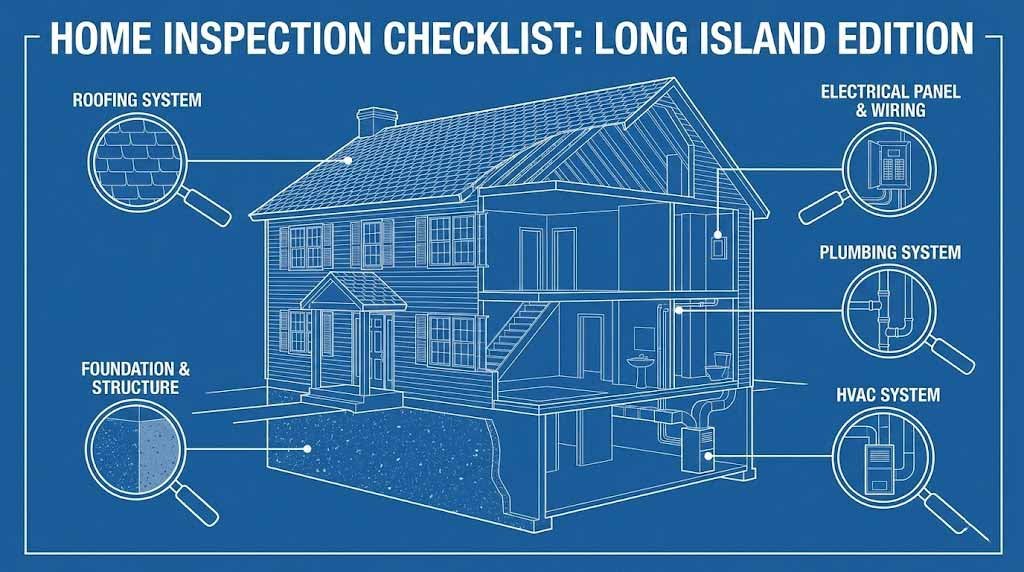
The Complete Long Island Home Inspection Checklist
Structural Components
Foundation:
- Material type (poured concrete, block, stone)
- Cracks (vertical, horizontal, stair-step patterns)
- Bowing, shifting, or settlement
- Water intrusion signs
- Efflorescence (white chalky deposits = moisture)
- Drainage around perimeter
Long Island specific:
- Settlement cracks common in homes 50+ years old
- Minor cracks normal, significant cracks = structural engineer needed
- Horizontal or stair-step cracks = serious
- Look for prior repairs (was foundation issue addressed properly?)
Framing:
- Floor joists (sagging, rot, termite damage)
- Load-bearing walls (alterations, removed walls)
- Roof framing (rafters, trusses)
- Signs of prior structural work
- Proper support for additions
Long Island specific:
- Many homes have been renovated/added onto without permits
- Look for amateur work (notched joists, removed supports)
- Additions often have separate foundations that settle differently
Roof System
Roof covering:
- Material (asphalt shingle, metal, tile, slate)
- Age and remaining lifespan
- Missing, damaged, curling shingles
- Granule loss (shingles deteriorating)
- Moss, algae growth
- Flashing condition (chimney, valleys, penetrations)
Long Island specific:
- Coastal wind damages shingles faster
- Salt air accelerates metal flashing corrosion
- Normal lifespan: 20-25 years for asphalt shingles
- Coastal Long Island: 15-20 years (accelerated deterioration)
Gutters and downspouts:
- Secure attachment
- Proper slope
- Clogs, debris
- Extensions directing water away from foundation
Critical on Long Island: With high water table, inadequate drainage = basement flooding
Chimney:
- Brick/stone condition
- Mortar deterioration
- Cap present and intact
- Flashing sealed
- Interior flue liner
Long Island specific:
- Many homes have unused chimneys (converted from oil to gas heat)
- Unmaintained chimneys deteriorate rapidly
- Falling bricks = major liability
- Chimney rebuilds: $5,000-$15,000+
Exterior
Siding:
- Material (vinyl, wood, aluminum, fiber cement, stucco)
- Damage, holes, cracks
- Proper installation and flashing
- Paint condition (wood siding)
- Evidence of water infiltration behind siding
Long Island specific:
- Vinyl siding hides problems (can’t see what’s behind)
- Wood siding common on older homes (expensive to maintain)
- Aluminum siding on 1960s-70s homes (dents, fades)
- EIFS (synthetic stucco) on 1980s-90s homes (moisture problems common)
Windows and doors:
- Age and condition
- Single vs. double pane
- Operation (open, close, lock properly)
- Seals intact (condensation between panes = seal failure)
- Frames (wood rot, deterioration)
- Screens present
Long Island specific:
- Original single-pane windows = massive energy loss
- Window replacement: $500-$1,500 per window
- 20-window home = $10,000-$30,000 project
- Check for lead paint on pre-1978 homes
Grading and drainage:
- Soil slopes away from foundation (minimum 6 inches over 10 feet)
- Downspout extensions (4-6 feet minimum)
- Evidence of ponding water
- Retaining walls (bowing, failing)
Decks, porches, balconies:
- Structural integrity
- Proper attachment to house
- Rot, deterioration
- Railing strength
- Stairs (rise/run code compliance)
Long Island specific:
- Wood decks rot fast in coastal humidity
- Look for improper DIY construction
- Many decks built without permits
- Check ledger board attachment (most critical connection)
Electrical System
Service panel:
- Amp rating (100, 150, 200 amp)
- Age of panel
- Proper labeling
- No double-tapped breakers
- No corrosion (water entry)
- Arc-fault and GFCI breakers where required
Long Island specific:
- Homes built before 1980: Often 60-100 amp service
- Modern needs: 200 amp minimum (with central AC, electric car charging)
- Panel upgrade: $2,000-$5,000
Wiring:
- Type (copper, aluminum, knob-and-tube)
- Condition of visible wiring
- GFCI outlets in bathrooms, kitchen, garage, exterior
- Grounded outlets (3-prong)
- Sufficient outlets per room
Major red flags:
- Aluminum wiring (1960s-1970s): Fire hazard, remediation $8,000-$15,000+
- Knob-and-tube (pre-1950): Uninsurable, replacement $10,000-$20,000+
- Federal Pacific or Zinsco panels: Known defects, replacement recommended
Long Island specific:
- Many 1960s-70s homes have aluminum wiring
- Insurance companies often refuse coverage or charge extra
- Don’t buy a home with aluminum wiring without factoring in replacement cost
Plumbing System
Water supply:
- Material (copper, PEX, galvanized steel, polybutylene)
- Age and condition
- Leaks, corrosion
- Water pressure (test at multiple fixtures)
Long Island specific concerns:
- Galvanized steel pipes (pre-1960s homes): Lifespan 40-50 years
- Corrode internally, reduce water pressure
- Replacement: $5,000-$12,000+ for whole house
- Polybutylene (1980s-1990s homes): Known to fail
- Class-action settlement (system failures)
- Replacement recommended
- Cost: $4,000-$10,000+
Drain/waste/vent system:
- Material (PVC, cast iron, ABS)
- Signs of leaks, corrosion
- Proper venting
- Functional drainage
Long Island specific:
- Cast iron drains in older homes (50-100 year lifespan)
- Interior corrosion not visible until failure
- Main line replacement: $3,000-$8,000+
Water heater:
- Type (tank, tankless)
- Fuel (gas, electric, oil)
- Age (check serial number)
- Capacity
- Proper venting (gas/oil units)
- Temperature/pressure relief valve
- Signs of leaks, corrosion
Normal lifespan: 8-12 years
Replacement cost: $1,200-$2,500 (tank), $2,500-$4,500 (tankless)
Fixtures:
- Faucets (leaks, operation)
- Toilets (flush, leaks, loose)
- Showers/tubs (drainage, water pressure, evidence of leaks)
Heating, Ventilation, Air Conditioning (HVAC)
Heating system:
- Type (forced air furnace, boiler, heat pump)
- Fuel (natural gas, oil, propane, electric)
- Age (check serial number)
- Condition
- Proper operation
- Evidence of maintenance
- Ductwork condition (if forced air)
- Distribution (radiators, baseboard)
Long Island specific:
- Oil heat common in older homes (expensive, being phased out)
- Conversion to natural gas: $3,000-$8,000
- Many towns offering incentives for oil-to-gas conversion
System lifespans:
- Gas furnace: 15-20 years
- Oil furnace: 15-20 years
- Boiler: 20-30 years
- Heat pump: 10-15 years
Replacement costs:
- Furnace: $3,000-$7,000
- Boiler: $5,000-$10,000
- Heat pump: $5,000-$10,000+
Cooling system:
- Central AC, window units, none
- Age and condition
- Proper operation
- Adequate capacity for home size
- Refrigerant type (R-22 being phased out)
Lifespan: 10-15 years
Replacement: $4,000-$8,000 (central AC)
Long Island specific:
- Many older homes have no central AC (window units only)
- Adding central AC: $8,000-$15,000+
- Coastal homes: AC units rust faster from salt air
Ventilation:
- Attic ventilation (ridge vents, gable vents, soffit vents)
- Bathroom exhaust fans (vent outside, not into attic)
- Kitchen exhaust (ducted outside vs. recirculating)
- Dryer vent (proper material, short run, clean)
Interior
Walls and ceilings:
- Cracks, holes, damage
- Evidence of water damage (stains, soft spots)
- Proper drywall installation
Long Island specific:
- Water stains could indicate roof leaks or plumbing issues
- Settlement cracks normal in old homes
- Large cracks = structural concern
Floors:
- Material (hardwood, carpet, tile, vinyl)
- Condition (damage, wear, squeaking)
- Levelness (significant slopes = structural issue)
Windows and doors (interior):
- Operation
- Locks functional
- Weather-stripping
- Hardware condition
Stairs:
- Handrails secure
- Balusters (no gaps wider than 4 inches)
- Treads secure
- Rise and run consistent
Fireplace:
- Damper operation
- Interior condition
- Glass doors (if present)
- Hearth extension adequate
Attic
Insulation:
- Type (fiberglass, cellulose, spray foam)
- Depth (R-value)
- Coverage (gaps, missing areas)
- Condition (compressed, wet, damaged)
Long Island standard: R-38 to R-49 recommended
Many older homes: R-11 to R-19 (inadequate)
Ventilation:
- Adequate intake and exhaust
- Ridge vents, soffit vents, gable vents
- No insulation blocking vents
- No signs of condensation/frost (winter)
Structural:
- Roof framing condition
- Evidence of leaks
- Proper bracing
- No sagging rafters
Electrical:
- Proper wiring (no exposed splices)
- Adequate lighting for attic access
- Junction boxes covered
Long Island specific:
- Look for evidence of ice dams (water stains near eaves)
- Check for proper ventilation (prevents winter condensation, summer heat)
- Many older homes have inadequate attic ventilation
Basement/Crawl Space
This is where Long Island homes often hide their problems.
Water intrusion evidence:
- Critical: Musty smell (indicates moisture even if not visible)
- Staining on walls/floor
- Efflorescence (white chalky deposits)
- Mold growth
- Rust on metal (water heater, furnace base)
- Cardboard boxes deteriorating
Waterproofing systems:
- Sump pump (MUST be functional)
- Battery backup sump pump (strongly recommended)
- Perimeter drainage
- Vapor barrier (crawl space)
- Dehumidifier
Long Island reality:
- If house doesn’t have sump pump, you’ll need one: $1,500-$3,000 installed
- Basement waterproofing (if needed): $5,000-$15,000+
- French drain installation: $3,000-$10,000
Structural:
- Foundation cracks (see Foundation section)
- Floor joists condition
- Beams and posts
- Moisture damage to wood
Mechanicals:
- Easy access to water heater, furnace/boiler
- Proper clearances
- Emergency shutoffs accessible
Specialized Long Island Inspections
Beyond the standard inspection, Long Island buyers should consider:
1. Termite/WDI Inspection
- Required for most mortgages
- Cost: $75-$150
- Licensed pest control operator
- NPMA-33 form
2. Radon Testing
- Highly recommended
- Radon present in ~15% of Long Island homes
- Cost: $150-$300
- Mitigation (if needed): $1,200-$2,500
3. Mold Testing
- If musty smell detected
- If visible mold present
- If prior water damage
- Cost: $300-$700
- Remediation (if needed): $1,500-$10,000+ depending on severity
4. Septic Inspection
- Required if not on public sewer
- Pump and inspect tank
- Dye test leach field
- Cost: $300-$500
- Replacement (if failing): $10,000-$30,000+
5. Well Inspection
- If not on public water
- Water quality testing
- Flow rate
- Well equipment condition
- Cost: $300-$600
- Well replacement (if needed): $8,000-$15,000+
6. Oil Tank Inspection/Decommissioning
- Underground oil tanks (common in older homes)
- Leaking underground tanks = environmental disaster
- Removal/decommissioning: $1,500-$3,000
- Soil remediation (if leaked): $10,000-$50,000+
7. Chimney Inspection
- Level 2 inspection (if buying home with chimney)
- Video scope of flue
- Cost: $200-$400
- Rebuild/repairs: Varies widely
8. Pool/Spa Inspection
- Equipment condition
- Heater, pump, filter
- Electrical safety
- Structural integrity
- Cost: $200-$400
- Major repairs: $1,000-$10,000+
Understanding Your Inspection Report
You’ll receive:
- Written report (20-50 pages typical)
- Photos of issues found
- Summary of major concerns
- Recommendations for further evaluation
How to read it:
1. Safety Issues (Address Immediately):
- Electrical hazards
- Carbon monoxide risks
- Structural instability
- Active termites
Action: Require seller to fix or walk away
2. Major Defects (Expensive to Fix):
- Roof replacement needed
- HVAC system failing
- Foundation issues
- Plumbing replacement needed
Action: Negotiate repair credit, price reduction, or seller fixes
3. Maintenance Items (Normal Wear):
- Caulking needed
- Minor cracks
- Cosmetic issues
- Filter replacements
Action: Factor into budget, don’t renegotiate over minor items
4. Safety Upgrades (Not Defects But Recommended):
- Add GFCI outlets
- Install carbon monoxide detectors
- Improve handrails
- Add smoke detectors
Action: Do yourself after closing
Negotiating After Inspection
Your options:
1. Request Repairs:
- Seller fixes issues before closing
- Pros: Issues resolved
- Cons: Seller may do cheap repairs, you don’t control quality
2. Request Credit:
- Seller gives you money at closing to make repairs
- Pros: You control repairs, choose contractors
- Cons: You have to deal with it post-closing
3. Request Price Reduction:
- Lower purchase price to account for issues
- Pros: Reduces your loan amount
- Cons: Seller may refuse, you still need to fix issues
4. Walk Away:
- Exercise inspection contingency
- Get earnest money back
- Use when: Issues are deal-breakers
Negotiation strategy:
Pick your battles:
- Focus on big-ticket items ($2,000+)
- Don’t nickel-and-dime over $200 repairs
- Prioritize safety issues
Be reasonable:
- Don’t expect perfection on 50-year-old home
- Normal wear vs. serious defects
- Seller’s market = less negotiation leverage
Get estimates:
- For major repairs, get contractor quotes
- Strengthens your negotiation position
- Shows seller it’s not hypothetical
Example negotiation:
Inspection reveals:
- Roof needs replacement: $12,000
- HVAC system end-of-life: $6,000
- Minor plumbing leaks: $500
- Cosmetic items: $1,000
Your approach:
- Request $15,000 credit (roof + HVAC, excluding minor items)
- Seller counters at $10,000
- You settle at $12,000 credit
- You handle cosmetic items yourself
Win-win: Seller saves face, you get major issues funded.
Red Flags That Should Make You Walk
Some inspection findings are deal-breakers:
1. Major Foundation Failure:
- Severe horizontal cracks
- Significant bowing walls
- Evidence of active movement
- Cost to fix: $20,000-$100,000+
- Risk: House may be unsellable later
2. Active Termite Infestation with Extensive Damage:
- Structural framing compromised
- Multiple areas affected
- Prior treatment failed
- Cost: $10,000-$50,000+ for repairs + treatment
3. Knob-and-Tube or Severely Deficient Electrical:
- Uninsurable
- Fire hazard
- Cost: $15,000-$30,000+ for rewire
4. Mold Throughout House:
- Indicates systemic moisture problem
- Health hazard
- Cost: $10,000-$50,000+ remediation + source repair
5. Failing Septic System:
- Leach field collapsed
- Tank deteriorated
- Cost: $15,000-$30,000+ replacement
6. Underground Oil Tank Leaking:
- Environmental contamination
- Soil remediation required
- Cost: $20,000-$100,000+ (potentially more)
- Risk: May prevent sale later
7. Severe Roof Damage with Interior Water Damage:
- Multiple leaks
- Structural rot from water
- Cost: $15,000-$40,000+ (roof + interior repairs)
When to walk:
- Total repair costs exceed 10-15% of purchase price
- Seller refuses to address major safety issues
- Structural engineer recommends against purchase
- Issues will make home difficult to sell later
- Your gut says “this is wrong”
Choosing the Right Inspector
Not all inspectors are equal. On Long Island, you need:
1. Experience with Long Island homes:
- Understanding of local construction types
- Knowledge of regional issues (termites, moisture, coastal)
- Familiar with local building codes
2. Proper certifications:
- NYS Licensed Home Inspector (required)
- Additional certifications: ASHI, InterNACHI
- Specialized training (mold, radon, etc.)
3. Comprehensive inspection:
- Follows NYS Standards of Practice
- 300+ inspection points
- Detailed photo documentation
- Same-day or next-day report
4. Good communication:
- Lets you attend inspection (walk through with them)
- Explains findings clearly
- Available for follow-up questions
- No pressure or scare tactics
Red flags in inspectors:
- Recommends specific contractors (conflict of interest)
- Rushes through inspection (should take 2-4 hours)
- Discourages you from attending
- Provides vague or incomplete report
- Charges based on home value (should be flat fee)
Cost: $400-$800 depending on home size and age
Do NOT:
- Use your agent’s recommended inspector without research
- Choose based solely on price
- Skip inspection to save money
- Waive inspection to win bidding war
The best $600 you’ll spend:
A thorough inspection can:
- Reveal $50,000+ in hidden problems
- Give you negotiation leverage
- Provide peace of mind
- Create repair/maintenance roadmap
- Potentially save you from buying wrong house
Post-Inspection: Your Action Plan
Within 24 hours:
- Review report thoroughly
- Make list of major concerns
- Consult with your agent
- Decide negotiation strategy
Within 3-5 days (per contract timeline):
- Submit requests to seller (repairs/credits/price reduction)
- Get contractor estimates for major items if needed
- Be prepared to negotiate
If seller agrees to repairs:
- Get written scope of work
- Licensed contractors required
- Right to re-inspect after repairs
- Certificates of completion
Before closing:
- Final walk-through
- Verify agreed repairs completed
- Check nothing new has broken
- Test all systems one last time
After closing:
- Keep inspection report (valuable reference)
- Create maintenance schedule based on findings
- Address deferred items within first year
- Save for future replacements (roof, HVAC, etc.)
The Bottom Line
The Long Island home inspection isn’t just a formality—it’s your financial and physical safety net.
Every year on Long Island:
- Buyers discover $20,000+ in issues after inspection
- Sellers make $10,000+ in concessions based on findings
- Deals fall apart over major defects found during inspection
- Buyers wish they’d done more thorough inspections
With 68% of Long Island homes built before 1980:
- Aging systems are the norm
- Deferred maintenance is common
- Coastal environment accelerates deterioration
- Termites and moisture are ongoing concerns
Your $600 inspection:
- Reveals the truth about your $700,000 investment
- Provides negotiation leverage worth $5,000-$20,000
- Identifies safety hazards before you move in
- Creates maintenance roadmap for future
Never, ever waive the home inspection. Even in the hottest seller’s market, even with multiple offers, even when your dream home is on the line.
Instead, offer an information-only inspection—you inspect, but you only walk away if something catastrophic is found. This protects you while showing the seller you’re serious.
The Long Island home you’re buying might look perfect. The inspection will show you what it actually is.
And that truth is worth every penny.
Related Articles:
- How to Read Your Home Inspection Report
- Top 10 Deal-Breakers Found in Long Island Home Inspections
- Negotiating Repairs vs. Credits: What Works Better?
- The Complete Long Island Home Maintenance Schedule
- When to Walk Away: Red Flags Every Buyer Should Know
Resources:
- NY State Licensed Home Inspector Database: www.dos.ny.gov
- American Society of Home Inspectors (ASHI): www.homeinspector.org
- International Association of Certified Home Inspectors (InterNACHI): www.nachi.org
Local Long Island Inspection Companies (Examples):
- WIN Home Inspection (Multiple LI offices)
- Jason Home Inspections
- Long Island House Inspections (LIHI)
- Meticulous Home Inspection
- Modern Insight Home Inspections