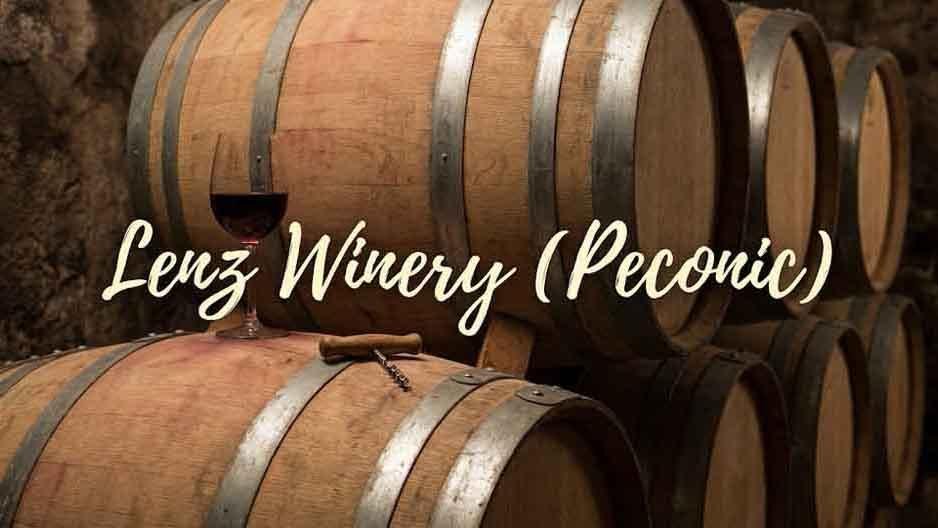
Forty-seven years before most Americans could locate the North Fork on a map, Patricia and Peter Lenz were hauling grapevine cuttings down a dirt road in Peconic, planting Gewürztraminer and Merlot into soil that had only ever known potatoes. It was 1978. Just five years earlier, Louisa and Alex Hargrave had broken ground on Long Island’s first commercial vineyard a mile down the road in Cutchogue, and the Lenzes—both already accomplished restaurateurs who had earned a four-star New York Times review for their Westhampton restaurant, A Moveable Feast—saw in those early vines something beyond agriculture. They saw a philosophical wager: that this narrow maritime peninsula, buffered by the Long Island Sound to the north and the Peconic Bay to the south, could produce wines that belonged in the same conversation as Bordeaux. Nearly half a century later, Lenz Winery stands as living proof that the wager paid off. Today, the 70-acre estate is one of the oldest and most critically respected producers on the East Coast, a place where patience is not a marketing slogan but an operational principle, and where the wines routinely outperform prestigious French bottlings in blind tastings conducted by master sommeliers (Long Island Wine Country, 2024). For anyone who drives Route 25 through the North Fork, Lenz is not merely a stop on a tasting tour—it is the foundation stone of an entire American wine region.
From Potato Warehouse to Pioneer Vineyard
The story of Lenz begins not with winemaking but with cooking. Patricia Lenz was a celebrated chef, a woman whose French-classical technique and herb-forward sensibility the New York Times once described with the highest praise available to a restaurant at the time. Peter Lenz was the business mind, the builder, the person who could take a creative vision and give it structural integrity. When they pivoted from restaurant life to viticulture, they brought that same duality with them. Pat bought “his and hers” tractors. They raised a goat named Julia Child. And they planted Gewürztraminer, Cabernet Sauvignon, Merlot, and Pinot Noir into ground that Long Island’s agricultural establishment considered suitable only for root vegetables (Northforker, 2013).
The Lenzes worked closely with the Hargraves to establish the Long Island Wine Council, creating the institutional framework that would allow a nascent wine region to develop standards, share knowledge, and present a unified identity to a skeptical world. For a decade, they poured everything into the estate—building the tasting room from a converted potato warehouse, expanding plantings, and producing some of the North Fork’s earliest serious varietal wines. By 1988, ready for a new creative chapter, they sold the winery to Peter and Deborah Carroll, a Manhattan-based couple who had already planted their own grapes at nearby Dorset Farms in Cutchogue. The Lenzes relocated to California, where they eventually opened a Syrah-focused winery and the avant-garde Duchamp Hotel in Healdsburg, Sonoma—each project named for Pat’s artistic muse, Marcel Duchamp (Wine Spectator, 2010).
The Carroll Era and the Pursuit of Uncompromising Quality
When the Carrolls took ownership of Lenz, the Long Island wine community comprised fewer than ten established wineries. The region was still an experiment. The Carrolls could have chased volume and quick revenue. Instead, they did something that would define Lenz’s identity for the next four decades: they hired Eric Fry.
Fry arrived in April 1989, a winemaker whose career arc reads like a novel. He had earned dual degrees in microbiology and psychology from Indiana University before walking into the Robert Mondavi Winery in 1976 and being hired on the spot when he mentioned he was a microbiologist. After five years in Mondavi’s lab, he spent a formative year wandering Europe—gathering oysters in Arcachon on the Atlantic coast of Bordeaux, developing the patience and taste for briny, mineral-driven flavors that would later characterize his Long Island wines. He then worked with the legendary Dr. Konstantin Frank in the Finger Lakes, championing European vinifera grape varieties against an entrenched agricultural establishment that insisted such grapes could not thrive in New York (Northforker, 2014).
When Peter Carroll called looking for a winemaker, Fry famously recommended himself. It was a decision that transformed both the estate and the region. Fry was joined almost immediately by vineyard manager Sam McCullough and sales manager Tom Morgan, and together this trio spent thirty years building Lenz into what the New York Cork Report would describe as the producer of the most consistent, traditionally styled wines on the North Fork (New York Cork Report, 2018).
A Philosophy Built on Patience and Acidity
Eric Fry’s first instruction to the Carrolls became the winery’s unofficial motto: do not practice “Château Cashflow.” That phrase—Fry’s own coinage—described the temptation that destroys young wineries: rushing bottles out of the cellar too early to generate revenue, at the expense of the wine’s development. The Carrolls listened. Today, Lenz typically holds its red wines four to five years before release. The estate maintains a “Lenz Library” of reserve bottles stretching back to vintages from 1988 and 1993, a collection that functions as both a living archive and a testament to the aging potential of North Fork fruit (Lenz Winery, 2025).
Fry described himself as an “acid head”—not a countercultural reference, but a declaration of winemaking philosophy. He championed high natural acidity as the structural backbone that gives wine longevity, complexity, and the ability to pair beautifully with food. Where other producers chased ripeness and fruit-forward extraction, Fry moved in the opposite direction—toward restraint, minerality, and what European winemakers call transparency of terroir, though Fry himself was characteristically irreverent about that particular term. His approach meant lower yields, longer aging, and a willingness to declassify entire vintages if the wine did not meet his standard. When a wine fell short, he simply labeled it at a lower price point rather than compromise the top tier (Wine, Seriously, 2017).
This philosophy extended into the vineyard, where McCullough practiced sustainable, dry-farmed viticulture across three separate plots totaling roughly 70 acres. Without permanent irrigation lines threaded through the rows—McCullough only irrigated once every three to four seasons during genuine drought—the vines were forced to develop deep root systems, producing more concentrated and expressive fruit. The estate harvested using a tractor-towed mechanical harvester outfitted with a hand-sorting table, a hybrid approach that kept costs manageable while ensuring the same selectivity as full hand-picking. For the precious Old Vine Cabernet Sauvignon—vines now approaching fifty years of age—the grapes were always picked entirely by hand (Wine, Seriously, 2017).
Blind Tastings That Challenged the Wine Establishment
In 1996, Lenz made a bold move that would cement its reputation far beyond eastern Long Island. The winery organized a formal blind tasting, assembling an expert panel of master sommeliers, masters of wine, wine writers, and educators, and asked them to compare Lenz wines head-to-head with bottles from internationally renowned French producers. The panelists were told which varieties and regions were represented in each flight—but not which bottle was which.
The results stunned the wine world. Across five flights of four wines each, the Lenz wines placed first and second in three of the five flights. The average score for the Lenz wines was 90 points; the French wines averaged 89. Subsequent blind tastings produced similarly remarkable results, with Lenz bottles consistently competing with and frequently outscoring super-premium wines from both France and California (Wine Trail Traveler, 2020). The tastings echoed the legendary 1976 Judgment of Paris, where California wines shocked the French establishment—except in this case, the challenger came from a narrow strip of former farmland on Long Island’s North Fork.
Peter Carroll, reflecting on the experience, offered a candid assessment of the wine industry’s resistance to newcomers. He observed that the establishment was powerful and fundamentally conservative—not in the business of welcoming upstarts, but of maintaining hierarchies. Despite the accolades, selling Long Island wine remained difficult. Most wine shops, Carroll noted, cared primarily about price (27east, 2013). Nevertheless, Carroll maintained that the experience of building Lenz in an emerging wine region was a profound pleasure, describing the entire endeavor with characteristic understatement as a delight.
The Wines: Nine Varietals, One Estate, Zero Shortcuts
Lenz produces exclusively from estate-grown, European vinifera grapes—a commitment to provenance that fewer wineries than you might expect actually honor. The 70 acres are planted to nine varieties: Chardonnay, Gewürztraminer, Merlot, Cabernet Sauvignon, Cabernet Franc, Malbec, Petit Verdot, Pinot Gris, and Pinot Noir. Annual production hovers around 10,000 cases, including approximately 500 cases of méthode traditionnelle sparkling wine—a Champagne-method cuvée of roughly 70% Pinot Noir and 30% Chardonnay, riddled in hand-turned gyropalettes and aged five to seven years on the lees (Wine Trail Traveler, 2020).
The flagship wines include the Old Vines Merlot and Old Vines Cabernet Sauvignon, produced from some of the most mature vines on Long Island. On Vivino, the Old Vines Merlot carries the winery’s highest rating at 4.2, reflecting broad consumer appreciation for its complexity and aging potential (Vivino, 2025). The Gewürztraminer has been called Long Island’s benchmark expression of that variety year after year by critics—aromatic, dry, concentrated, and priced accessibly enough that it represents extraordinary value (New York Cork Report, 2018). The Gold Label and Old Vines Chardonnays offer two expressions of the grape: the former in a white Burgundy style with barrel fermentation and French oak aging, the latter a deeper, more concentrated bottling available primarily through the wine club.
When Eric Fry stepped back from his role in recent years—he had presided over thirty vintages—his successor, Thomas Spotteck, assumed the winemaker position after three years as Fry’s assistant. Wine critics noted the transition was seamless, with Spotteck maintaining the house style while bringing his own sensibility to newer additions like the Estate Selection Sauvignon Blanc, which immediately drew enthusiastic praise (Hungry Travelers, 2019). Jerol Bailey took over sales responsibilities from the retired Tom Morgan, and visitors frequently note Bailey’s warmth and depth of knowledge as a hallmark of the tasting room experience.
Visiting Lenz: The Tasting Room, the Courtyard, and the Light Tunnel
The Lenz tasting experience is deliberately different from the high-volume, party-atmosphere model that has overtaken parts of the North Fork. The converted potato warehouse that serves as the tasting room retains a rustic, agricultural gravitas—thick timbers, barrel-lined walls, an ambiance that signals seriousness without pretension. During warmer months, the courtyard and terrace areas offer table-side tastings amid the vineyard rows, and the property’s photogenic “Shedding Light Tunnel” has become an iconic visual landmark for visitors and social media alike.
Lenz is dog-friendly—leashed pets are welcome on the grounds—and the winery has embraced complementary experiences including food trucks, live music, local art exhibitions (recent shows have featured Jen Moore Smith’s Vineyard Vibes collection), and seasonal events like the Pup-Parade costume walk, wine club pick-up parties, and the annual Barrel Lighting ceremony. The wine club offers two membership tiers with customizable selections, privileged access to library wines dating back to 1993, and quarterly events with the winemaking team (Lenz Winery, 2025).
Throughout the year, educational programming deepens the visitor experience: barrel tastings with the winemaker, guided vineyard tours, vertical tastings that trace a single varietal across multiple vintages, and library tastings that pull bottles from the estate’s remarkable cellared reserve. For those interested in wine as a subject of serious study rather than casual consumption, Lenz is among the few North Fork producers where that depth of engagement is genuinely available.
A Living Monument to What Long Island Wine Can Be
Lenz Winery occupies a singular position in the narrative of American wine. It is not the oldest vineyard on the North Fork—that distinction belongs to the former Hargrave property, now Castello di Borghese. It is not the largest—Pindar Vineyards dwarfs it in production volume. But Lenz may be the most philosophically coherent winery on Long Island: a place where every decision, from dry farming to extended aging to estate-only fruit, serves a single governing idea—that wine made with patience and intellectual rigor on this particular stretch of maritime soil can stand alongside the finest bottles in the world.
As someone who has spent a quarter-century running The Heritage Diner in Mount Sinai, just a forty-minute drive from Lenz’s front door, I understand the weight of that kind of commitment. Twenty-five years of showing up, of refusing shortcuts, of trusting that time and consistency will compound into something irreplaceable—that is the same philosophy that governs the best of what Long Island’s North Shore has to offer. The Lenzes planted it. The Carrolls nurtured it. Eric Fry perfected it. And Thomas Spotteck is carrying it forward. Lenz is not chasing the next trend. It never has been. It is building something meant to outlast all of them.
Address: 38355 Route 25 (Main Road), Peconic, NY 11958
Phone: (631) 734-6010 | Toll-Free: (800) 974-9899
Website: lenzwine.com
Instagram: @lenzwine
Hours: Monday–Friday 11:00 AM – 6:00 PM | Saturday 10:00 AM – 7:00 PM | Sunday 11:00 AM – 6:00 PM
Reservations: Walk-ins welcome; reservations available via website
Wine Club: Two tiers with customizable selections — lenzwine.com/wine-club
Dog-Friendly: Yes (leashed at all times)
Private Events: Available — contact winery for details
Peter — The Heritage Diner, Mount Sinai, NY | Philosophy graduate, Long Island University & The New School