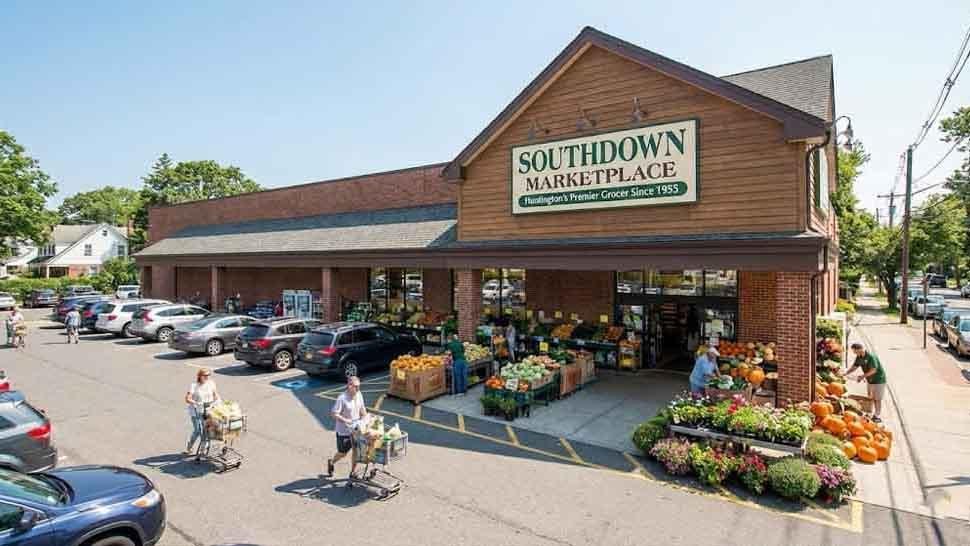
Six decades is not an accident. Long Island is littered with gourmet concepts that opened with fanfare and folded within three years, casualties of overconfidence, thin margins, and the brutal indifference of the suburban consumer. Southdown Marketplace, quietly anchored at 205 Wall Street in Huntington, has been defying that obituary since 1965. That’s the year the Beatles played Shea Stadium and the Vietnam War was escalating — and somewhere in that same cultural upheaval, a family decided that Long Island deserved a food market built not around volume and velocity, but around quality and personal relationship. They were right. And they have been right every year since.
Running The Heritage Diner in Mount Sinai for over 25 years has given me a particular fluency in reading an operation’s soul from the inside out — the sourcing decisions, the staffing philosophy, the invisible signals that tell a trained eye whether ownership is present or absent. When I walk into Southdown Marketplace, I feel the ownership. It’s in the produce stacking, the counter service pace, the fact that someone who shares the family name is almost certainly within 50 feet of you at any given moment. That kind of institutional attentiveness is rarer than any imported cheese on their shelves.
A Legacy Built on the Gourmet Standard
The origin story matters here. Since 1965, this family-run operation has been serving neighborhoods in both Manhattan and Long Island with what it describes simply as “the highest quality gourmet and specialty food products.” That sentence looks modest on a webpage, but execute it faithfully for 60 years across multiple market cycles, economic recessions, a global pandemic, and the relentless disruption of big-box grocery chains — and modest becomes monumental.
Southdown Marketplace now operates two locations: the flagship at 205 Wall Street in Huntington, and a second store at 460 Montauk Highway in West Islip. The expansion to West Islip wasn’t a franchise play or a private equity maneuver. It was the organic extension of a family that had earned the trust to do so — a distinction that separates genuine growth from opportunistic sprawl.
Huntington itself is precisely the right home for this kind of market. The village has long maintained one of the more discerning dining and food cultures on Long Island’s North Shore, a community that notices the difference between a vine-ripened tomato and a commodity hothouse imitation. Southdown understood that customer before the language of “farm-to-table” was ever invented.
The Department Architecture: A Market Built for the Serious Home Cook
Walking through Southdown’s Huntington location is an exercise in mercantile discipline. Nothing feels accidental. The department layout reads like a well-composed menu — each section earns its place and speaks to a specific culinary need. The full roster includes a Butcher, Bakery, Deli, Cheese Counter, Prepared Foods, Produce, Salads, Soups, Dips and Spreads, Olives, Oils and Dressings, Coffee and Tea, Dairy, Organic, Frozen Foods, Gift Baskets, and a full Grocery section.
What this architecture reveals is an operator who understands that the modern home cook does not shop in a single category. They come in for the rotisserie chicken, leave with an imported Manchego, pick up a house-made soup on the way to the register, and grab a gift basket for a dinner party they’re attending on Saturday. The market accommodates that entire ecosystem under one roof, but does so with specialty-store curation rather than supermarket volume logic.
The Butcher department, in particular, signals commitment. A serious butcher counter — properly staffed, properly stocked — is among the most operationally demanding departments a food market can run. Custom cuts, quality sourcing, skilled labor: these are not casual investments. That Southdown has maintained this department across six decades speaks to a founding principle that was never negotiated away for margin convenience.
The prepared foods section carries its own authority. Using only “the finest all-natural ingredients,” according to the market’s own standard, the prepared offerings extend from everyday grab-and-go through full holiday meal packages — Thanksgiving, Christmas, Hanukkah, Rosh Hashanah, Passover, Easter. This seasonal cadence, maintained year after year, is what transforms a market visit into a household ritual. Families don’t return out of habit; they return out of trust.
The Holiday Institution: When Long Island Calls, Southdown Answers
Ask around Huntington about where the discerning household goes for Thanksgiving, and Southdown’s name surfaces with the kind of consistency that can’t be manufactured through marketing. This reputation was built order by order, year by year, in the most demanding culinary theater a food market faces: the American holiday table, where expectations are high, stakes are emotional, and there is no margin for a dry turkey or a flavorless gravy.
Southdown’s holiday program runs across the full liturgical and secular calendar — Thanksgiving, the winter holidays, Rosh Hashanah and Yom Kippur, Easter, Passover. Each menu is developed in-house, using the market’s established ingredient standards, and accompanied by reheating and cooking instructions that treat the customer as a partner rather than a passive consumer. That collaborative approach — the market does the labor, the family does the gathering — reflects an understanding of what the holidays actually cost people: not money, but time and energy.
The breadth of this program also tells a story about Southdown’s customer base. A market that fluently navigates a Passover Seder menu alongside a Christmas prime rib roast is a market that understands and respects the full demographic complexity of the communities it serves. That kind of cultural fluency is not taught in a business school classroom. It is built through decades of paying attention.
The Digital Evolution: Tradition Meets Technology
Long-standing institutions often approach technological change with the caution of someone trying on a new pair of shoes in a formal setting — tentatively, and usually too late. Southdown has handled it differently. The Huntington location operates a fully functional online store, home to over 5,000 products with inventory expanding daily. Curbside pickup — a model that became existentially important during the 2020 pandemic — was not improvised; it was integrated. A dedicated iOS app (available via the Apple App Store) makes the shopping experience genuinely mobile-first for customers who have folded Southdown into their weekly routine.
There is a useful analogy in leather working here. When I build a briefcase at Marcellino NY in Huntington using traditional saddle-stitching techniques, the tools have evolved — better awls, more precise thread tensions — but the underlying philosophy has not. The method is ancient; the execution is refined. Southdown’s digital infrastructure operates the same way. The family-owned ethos, the personal service standard, the quality commitment — none of that has been coded away. Technology became a delivery mechanism for an unchanged value system.
This matters because the alternative — the gourmet market that adopted digital convenience and used it to mask a deterioration in quality or personal engagement — is a well-documented failure mode in the specialty food industry (National Restaurant Association, 2023). Southdown avoided that trap by treating technology as a service amplifier rather than a service substitute.
Catering for Every Occasion: Corporate, Celebration, and Community
The catering program at Southdown Marketplace extends the market’s core proposition into event space, and it does so with the same department-level thoroughness that characterizes the in-store experience. From finger sandwiches and sandwich platters to corporate event spreads and full celebration menus, the offering scales from intimate to institutional without apparent strain.
The language on the catering page — “We can accommodate any gathering, from small parties to corporate events” — is a phrase most food businesses use with a certain casualness. But for Southdown to make that claim credibly across 60 years of operation requires a catering infrastructure that is genuinely elastic: variable production capacity, reliable logistics, and the kind of recipe consistency that ensures the brie en croûte tastes the same at a 12-person dinner party as it does at a 200-person corporate reception.
For inquiries, the dedicated catering contact is Catering@SouthdownMarketplace.com — a detail that suggests the program is handled with sufficient volume to warrant its own channel. Businesses built around quality, as Paola and I are finding with the upcoming launch of Maison Pawli in 2026, don’t leave the customer acquisition experience to chance. Every contact point is a brand expression.
What Six Decades Teaches You About Community
The most instructive thing about Southdown Marketplace is not what it sells, but what its survival proves. The specialty grocery landscape has been shaped and reshaped by forces that should, by conventional logic, have eliminated operations like this one: the rise of Whole Foods, the emergence of Amazon Fresh, the steady gravitational pull of Trader Joe’s, the algorithmic efficiency of Instacart and DoorDash. Independent family-run gourmet markets were supposed to be disrupted out of existence.
They weren’t — not the good ones, anyway.
The distinction between the survivors and the casualties comes down to something that cannot be replicated by a distribution algorithm or an app interface: institutional memory. Southdown knows what its customers bought for the holidays in 1998. It knows which neighborhoods are loyal and which need re-engagement. It knows its staff by name, because in a family business there is always at least one family member on the floor, and that presence — visible, accountable, personal — is the competitive advantage that no venture-backed competitor has ever successfully imported.
Running a diner for 25 years teaches you the same thing in a different language. Longevity in the food business is not about being the best in any particular week. It is about being reliably excellent across thousands of weeks, earning the right to be someone’s default, their ritual, their answer when a guest asks where to pick something up for dinner. Southdown has earned that standing in Huntington. The 60-year record is the proof.
Essential Information
Southdown Marketplace — Huntington 205 Wall Street Huntington, NY 11743 Phone: 631-351-9660 Hours: Monday–Sunday, 8:00 AM – 8:00 PM Website: southdownmarketplace.com Online Store: store.southdownmarketplace.com Instagram: @southdownmarketplace General Inquiries: Info@SouthdownMarketplace.com Catering: Catering@SouthdownMarketplace.com
Southdown Marketplace — West Islip 460 Montauk Highway West Islip, NY 11795 Phone: 631-620-3744 Hours: Monday–Sunday, 8:00 AM – 8:00 PM
What Southdown has built is less a food market and more a civic institution — one that measures its value not in quarterly revenue reports, but in the Sunday morning rhythms of a community that knows exactly where it is going and why it keeps going back. Sixty years of that is worth more than any award, any review, any algorithm can confer. It is the irreplaceable currency of earned trust, compounded daily across six decades on Wall Street, Huntington — a very different Wall Street from the one that makes the news, and, arguably, the more important one.