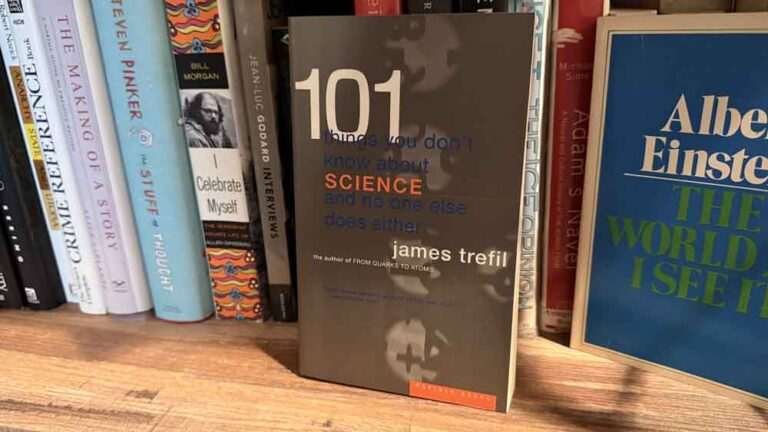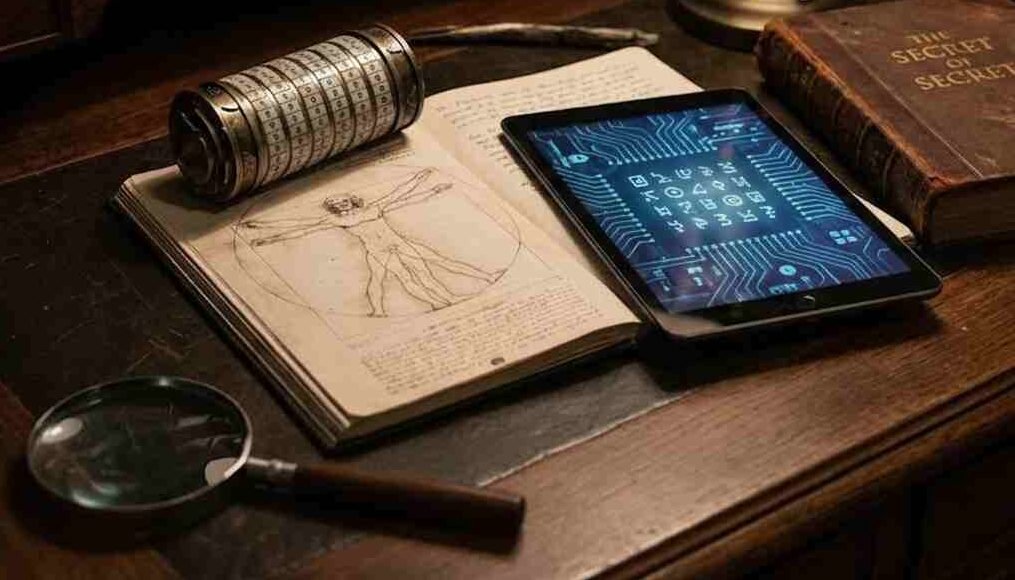
Centuries before we called it a data breach, Prague was already a city built on the theft of forbidden knowledge. Emperor Rudolf II assembled alchemists, astronomers, and mystics behind the walls of his castle not because he believed in superstition, but because he believed — with the conviction of a man who controlled an empire — that some knowledge was too powerful to leave in the open air. Dan Brown understood this when he chose Prague as the stage for The Secret of Secrets, his sixth Robert Langdon novel released in September 2025. It was not an arbitrary choice. It was a thesis statement. Because what Brown has constructed in nearly 700 pages is not simply a thriller. It is an extended meditation on what happens when the oldest human questions — about consciousness, about the soul, about what persists after death — collide head-on with the most dangerous technologies of our present moment.
Brown spent eight years writing this book. That time investment shows, not only in the intricate plotting but in the depth of its central argument: that art, symbols, and the codes embedded within them are not decorative remnants of pre-scientific civilization. They are, as noetic scientist Katherine Solomon frames it across the novel’s breathless opening lecture in Prague Castle’s Vladislav Hall, compressed transmissions of human experience that our instruments are only now learning to decode.
Prague as Palimpsest: The City That Reads Like a Code
Every Dan Brown novel treats its setting as a character, but Prague earns that designation more fully than Paris, Rome, or Florence ever did. Brown has described the city as the “mystical capital of Europe since the 1500s,” a place where Rudolf II quite literally paid scholars to interrogate the boundary between the material and the immaterial world. That history saturates every cobblestone Langdon crosses, and Brown uses it with the precision of a cartographer.
The novel’s central metaphor — that Prague is a palimpsest, its stones layered with centuries of overwritten meaning — functions simultaneously as a piece of art criticism, an architectural observation, and a clue. Ancient passages beneath Folimanka Park. The seven locks on a door at Crucifix Bastion. The Gothic ribbing of St. Vitus Cathedral, which Brown treats not merely as backdrop but as visual argument: that human beings have always tried to encode their deepest beliefs into durable form. If you know how to read the architecture, you already know the story. Langdon’s genius, and by extension Brown’s literary methodology, is the insistence that nothing in human-built space is accidental.
This approach to setting gives the novel a philosophical density that separates it from conventional thriller fiction. Brown is essentially arguing that art history and cryptography are the same discipline practiced at different scales — a claim that is less provocative than it first appears when you consider that the medieval stonemasons who built Prague’s cathedrals embedded numerological, alchemical, and theological codes into their structures as deliberately as any NSA analyst encodes a transmission today.
The Halo as Data: Brown’s Unified Theory of Symbolic Encoding
One of the novel’s most intellectually striking passages involves Katherine’s analysis of the halo — that gold disc or radiant crown familiar from centuries of Christian iconography. Her reading does not treat it as a devotional convention. She argues that it encodes something precise: the phenomenon of aura perception reported universally across mystical traditions, compressed into a visual shorthand transmissible across illiterate populations, cultural borders, and centuries of doctrinal change.
“A radiant crown,” she tells her audience in Vladislav Hall, “is pain.” The halo, she suggests, began as an attempt to represent the visible luminosity reported by individuals during states of extreme altered consciousness — moments of near-death, deep meditation, or the neurological events that mystics across every tradition have described as divine encounter. The church did not invent the halo. It inherited it from a much older observational tradition and standardized it as institutional iconography.
This is where Brown’s research most rewards attentive readers. The claim is not simply metaphorical. Noetic science — the actual discipline, not the fictional version — includes serious academic inquiry into phenomena like biophoton emission from human tissue, the electromagnetic fields generated by neural activity, and the documented cross-cultural consistency of near-death experience reports. Brown draws on work from the Institute of Noetic Sciences (IONS), which he references directly in interviews, where researchers have conducted what are called presentiment studies: experiments demonstrating that human physiology responds to randomly selected stimuli before those stimuli are presented. The body, in other words, knows what it has not yet been told.
The fictional Katherine Solomon sits in direct dialogue with this real research. Her thesis — that the brain is not the generator of consciousness but rather its receiver, more smartphone than hard drive, accessing something that exists as a field external to any individual skull — is Brown’s way of framing the novel’s deepest question in terms that bridge ancient metaphysics and contemporary neuroscience.
The Golem and the Algorithm: Ancient Technology, Modern Dread
The antagonist Brown conjures from Prague’s mythology is the Golem: a creature of Jewish folklore, animated clay given life and purpose by a rabbi who inscribed the Hebrew word emet (truth) on its forehead. Remove one letter, and you get met (death). The code, in other words, is the life source. The symbol is the on/off switch.
Brown’s use of the Golem is more sophisticated than mere local color. The creature becomes a mirror held up to the novel’s contemporary technology — Threshold, the underground CIA-affiliated facility beneath Folimanka Park, where neuroscientist Brigita Gessner has been developing artificial neurons capable of complete human-to-machine brain interfacing. The Golem is handmade consciousness, crude and lethal. Threshold is its successor: consciousness engineering at cellular resolution, built from designs stolen from Katherine’s graduate thesis by the CIA more than two decades earlier.
The parallel is deliberately unsettling. Both the Golem and Threshold represent the attempt to manufacture, capture, and weaponize human inner life. The Golem’s creator tried to solve the mystery of animating matter through sacred language — through code. The scientists at Threshold try to solve it through synthetic neurons and electromagnetic induction. The method changes across six centuries. The ambition does not.
This is Brown doing what he has always done best: collapsing the apparent distance between antiquity and the present until you can no longer confidently locate the boundary. The Golem legend originated in 16th-century Prague. The Threshold project’s artificial neurons are, in the novel’s timeline, a decade ahead of what mainstream science has publicly achieved. Brown places them in the same city, the same story, and ultimately the same conceptual category.
In-Q-Tel, Artificial Neurons, and the Real Architecture of Covert Science
The novel’s antagonist organization bears the name In-Q-Tel, which is, in reality, a non-profit venture capital firm established by the CIA in 1999 to fund technology companies developing tools of intelligence value. Its actual portfolio includes data analytics, machine learning, and materials science firms. Brown transforms it into the controlling entity behind Threshold, giving his thriller a provenance that grounds its paranoia in institutional fact.
The Threshold project centers on artificial neurons — synthetic analogues to biological nerve cells that can interface directly with living brain tissue. Katherine discovers that the breakthrough Gessner and her team achieved was not built from independent research but from designs Katherine herself had theorized in a postgraduate thesis, subsequently stolen by the CIA and developed in classified conditions for more than two decades. The legal and philosophical implications Brown draws out of this theft are considerable: if the architecture of your consciousness was patented by a government agency without your knowledge, who owns the resulting technology?
The brain implant subplot — introduced through Sasha Vesna, a young Russian woman whose severe epilepsy Gessner treated with an experimental device before recruiting her as a research subject — carries the technological argument into its most ethically charged territory. The implant suppresses Sasha’s seizures. It also, potentially, carries a kill switch. The same technology that restored her neurological function may be capable of terminating it on command. This is not science fiction extrapolation. Deep brain stimulation devices are currently FDA-approved for treatment-resistant epilepsy, Parkinson’s disease, and obsessive-compulsive disorder. The distance between therapeutic implant and remotely controlled neurological weapon is, in Brown’s framing, a matter of software permission settings.
The Manuscript as Object: Code, Art, and the Future of the Printed Word
The New York Times, reviewing The Secret of Secrets, called it “a wistful testament to the power of the printed word.” The description is apt, though it perhaps undersells Brown’s self-awareness. The novel’s central MacGuffin — the manuscript Katherine has written, which everyone is trying to possess, suppress, or destroy — is not simply a thriller device. It functions as Brown’s argument for what books, as a technology, are uniquely capable of.
The manuscript contains Katherine’s proof that consciousness is non-local — that what we experience as the self extends beyond the boundaries of the skull and the skin. The CIA wants it suppressed because its implications would destabilize established scientific frameworks. A shadowy intelligence apparatus is willing to commit murder to prevent publication. Katherine’s publisher is kidnapped in New York. The book, in other words, is the weapon.
Brown has said in interviews that one of his animating preoccupations during the eight years he spent writing this novel was the question of what happens to knowledge when institutions decide it is too dangerous for public consumption. The encrypted digital vault at Penguin Random House, the multiple backup copies, Langdon’s decision at the novel’s end to burn only the bibliography while hiding the rest of the manuscript — these are not thriller plot mechanics. They are a meditation on how ideas survive institutional suppression, and what responsibility authors bear to protect work that challenges consensus reality.
The coded structure of the manuscript itself — and the parallel structure of the codes and symbols Langdon decodes throughout Prague — suggests that Brown views the act of writing as inherently cryptographic. Every author encodes; every reader decodes. The question is whether the transmission survives the interference.
Consciousness as the Final Frontier: Noetic Science and the New Spirituality
Brown spent eight years trying to get his arms around the subject of consciousness because, as he has described it, the topic resisted the kind of clean, verifiable factual architecture he requires before he can write about something convincingly. He wanted to know not merely that the science existed, but that specific experiments had been conducted, specific results recorded, specific dates attached to specific findings. The presentiment research he references in the novel is real. The IONS studies are real. The anomalies they document — bodies responding to stimuli before stimuli are selected by genuinely random processes — are real anomalies, not settled science but not easily dismissed either.
What Brown does with this material is craft a fictional framework in which the quantitative edge of consciousness research meets the qualitative traditions of mysticism, and discovers that they have been, for centuries, attempting to describe the same phenomena from opposite ends of the same room. Katherine’s claim that “your consciousness is not created by your brain” is heretical to materialist neuroscience. It is commonplace to every major contemplative tradition in human history. The novel’s argument is that the distance between those two positions is smaller than either side is currently comfortable admitting.
In Brown’s framing, art was always doing this work. The cathedral, the halo, the Golem, the alchemist’s diagram, the coded text in a marginalia — these were humanity’s earliest instruments for mapping the territory of inner life. They encoded observations too subtle for the crude measuring tools of their time. The technology of the 21st century is catching up to the observations, not the other way around. The symbols were there first.
The Novel as Mirror: What The Secret of Secrets Reveals About Its Moment
The Secret of Secrets landed on September 9, 2025, and spent more than seventeen consecutive weeks on the New York Times bestseller list. Netflix has ordered a straight-to-series adaptation. By any commercial measure, it is a significant cultural event. But what makes it worth reading carefully — worth treating as something other than a pleasurable sprint through Prague’s cobblestone streets — is what it reflects back about the anxieties of its historical moment.
We are living through the most aggressive period of brain-computer interface development in human history. Neuralink’s first human patient demonstrated cursor control via thought in early 2024. Deep brain stimulation is routine. Neural dust — microscopic wireless sensors implanted in brain tissue — is moving from laboratory to clinical trial. The distance between Threshold’s fictional artificial neurons and the actual capabilities of existing implant technology is measured in degrees, not in kind. Brown’s thriller is, in the end, a thought experiment conducted in real time about what happens when the tools we have built to measure consciousness become capable of editing it.
The codes and symbols embedded in Prague’s Gothic architecture were built to last a thousand years. They have. The RFID card with its encoded symbolic pattern that Langdon decodes, the encrypted digital vault in a Manhattan publisher’s server room, the kill-switch protocol in a young woman’s brain implant — these are their contemporary equivalents. Durable storage of human meaning in forms that outlast any individual life.
Brown’s deepest argument, the one that justifies the eight years he spent constructing it, is that the human impulse to encode, to hide in plain sight, to compress truth into forms that require decoding — this impulse is not primitive. It is adaptive. It is what consciousness does when it realizes it is fragile. Prague figured that out in the sixteenth century. The rest of us are still catching up.