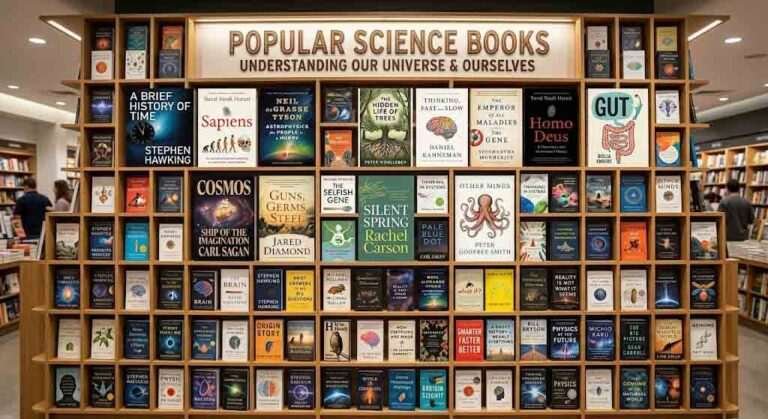

The list has authority because it sounds like data. It isn’t. It’s a curated signal dressed in the language of a scoreboard.
Every week the New York Times publishes its bestseller list, and every week a large number of people treat it as a reliable measure of which books are selling most and selling best. That assumption is understandable. It is also largely wrong, and the gap between what the list appears to be and what it actually is matters more than most readers realize.
This isn’t a conspiracy argument. It’s a mechanics argument. Understanding how the list is actually compiled — what it measures, what it ignores, and where editorial judgment enters — doesn’t make the list useless. It makes it legible. There’s a difference.
What the List Actually Measures — and What It Doesn’t
The New York Times pulls weekly sales data from a proprietary network of reporting retailers: bookstores, online vendors, specialty stores. The specific stores in that network are guarded carefully. The Times won’t publish the list. This is by design — revealing which stores report to the list would allow authors and publishers to concentrate purchases there, gaming the system more efficiently than it already gets gamed.
The New York Times’ official statement on how the list is created reads: “Rankings reflect unit sales reported on a confidential basis by vendors offering a wide range of general interest titles published in the United States.” That’s the statement. It tells you very little.
What it doesn’t tell you: the list is not a comprehensive tally of all book sales in the country. It’s a weighted sample. Amazon sales — where the majority of book purchases in America now occur — don’t necessarily carry the same weight as sales at independent bookstores or brick-and-mortar chains. A book that sells 12,000 copies through Amazon might not appear on the list. A book that sells 7,000 copies distributed across a diverse range of the Times’ reporting stores might. This is not a flaw in the system so much as a feature — the list was always designed to reflect a specific retail ecosystem, not total market activity.
There’s a further wrinkle: the list’s data doesn’t always align with BookScan, the publishing industry’s primary sales-tracking database. Books appear higher on the Times list than their BookScan numbers would suggest. Books appear lower. No one outside the Times knows exactly why.

Why Bulk Purchases and Coordinated Campaigns Move the Needle
The gaming of bestseller lists is not new. Jacqueline Susann, whose 1966 novel Valley of the Dolls became a number-one bestseller, was reportedly the first author to systematically map which bookstores reported to the Times and concentrate her promotional energy — and her own purchases — on those stores. She developed the modern book tour partly as a mechanism to generate first-week sales in the right locations. It worked.
The technique has since been institutionalized at scale. Coordinated bulk purchase campaigns — in which an author, publisher, or supporting organization buys thousands of copies at launch through reporting retailers — can drive a book onto the list regardless of whether organic reader demand exists. The Times employs investigators specifically to identify and discount suspicious purchase patterns. The investigators catch some of it. Not all of it.
The cost of a coordinated bulk-purchase campaign sufficient to land a book on the list has been estimated at $100,000 to $250,000, routed through third parties who distribute the purchases across multiple reporting bookstores. This is not illegal. It is, by general consensus, not in the spirit of what the list is supposed to represent. The Times calls it out when they identify it. Publishers and publicists call it a marketing strategy. Both things are true simultaneously.
The Categories Nobody Talks About
The bestseller list is not one list. It’s a system of lists, segmented by format (hardcover, paperback, combined) and genre. The weekly genres include combined fiction, combined nonfiction, hardcover fiction, hardcover nonfiction, paperback trade fiction, paperback mass market fiction, and several others. Monthly lists cover children’s, graphic novels, business, and additional categories.
The segmentation matters for a reason most readers never think about: a book that sells 6,000 copies in a category with less competition can reach number one more easily than a book that sells 9,000 copies in a crowded week. Debut authors and publishers who understand the calendar pick release weeks accordingly — a book published in a traditionally slow period faces a smaller field. Summer weeks before school starts, post-holiday Januaries, and the stretch between Thanksgiving and Christmas all have different competitive dynamics.
Certain categories are historically underrepresented on the lists that get the most attention. Cookbooks, game books, and some categories of religious publishing have been excluded from the main lists or appeared only in subcategories. This has generated periodic controversy and at least one notable lawsuit. In 1983, author William Peter Blatty sued the Times after his novel Legion — which he argued had sold enough copies to remain on the list — was dropped after one week. The Times defended itself in court on the grounds that the list “did not purport to be an objective compilation of information but instead was an editorial product.” The court sided with the Times.
That phrase — editorial product — is the key to understanding the list. The Times has never claimed it is purely algorithmic. The claim of objectivity comes from readers, not from the Times itself.
What a Debut at Number One Actually Tells You
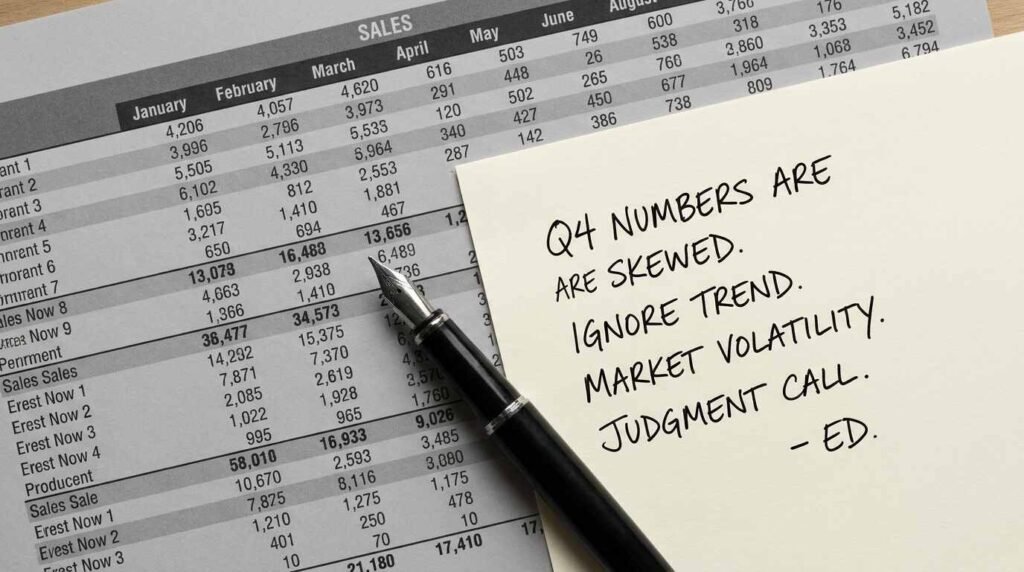
A debut novel hitting number one on the Times list tells you several things with reasonable certainty: the publisher was large and well-resourced; the launch campaign was extensively coordinated; pre-orders were built up over an extended period (the list counts pre-orders as first-week sales); and the book was positioned in a category and release week calibrated for the best possible outcome.
It tells you almost nothing reliable about the book’s quality, its long-term sales trajectory, or whether readers who bought it in week one will recommend it to anyone.
The interesting exceptions are books that reach the list slowly, or that appear lower and stay there for years. The Body Keeps the Score, the trauma and body therapy book by Bessel van der Kolk, spent 354 weeks on the paperback nonfiction list. The Glass Castle by Jeannette Walls has logged over 500 weeks. Those numbers reflect something different from a launch campaign — they reflect a book finding its readers continuously over years, generating word-of-mouth in the specific, durable way that can’t be engineered in a single coordinated week.
Longevity on the list, in other words, is a more trustworthy signal than debut position. Temple University professor Laura McGrath, who researches the history of bestseller lists, has described the self-reinforcing dynamic accurately: being named to a bestseller list creates a “rich-gets-richer effect” — the sticker on the cover generates additional sales, making the distinction partly self-fulfilling. That’s true whether the original ranking was engineered or organic.
How to Use the List Without Being Used by It
None of this means the list is worthless. It means the list is a particular kind of tool, useful for specific purposes and misleading when applied to others.
As a signal of what traditional publishers are betting on in a given season, it’s reliable. Major houses don’t throw $100,000 launch campaigns behind books they don’t believe in, at least not routinely. The list reflects institutional confidence.
As a guide to literary quality, it’s unreliable. The causal relationship between commercial publication success and literary merit has never been clean, and the mechanics of the list add a layer of distortion that makes the signal even noisier.
As a starting point for discovery — particularly for readers who don’t follow the publishing industry closely — it’s useful with appropriate skepticism. A book that appears week after week, in a category, over months, is worth investigating. A book that debuted at number one last Tuesday and hasn’t been discussed since is worth investigating less urgently.
The deeper habit worth developing is reading the list the way you’d read any piece of institutional data: with the question of what is this actually measuring always in the foreground. The New York Times itself, when pressed in court, acknowledged that the list is an editorial product. That’s the honest description. An editorial product made by skilled, serious people, subject to gaming, reflective of a specific retail ecosystem, useful as one signal among many.
Start there. It’s already more honest than the sticker on the cover.
You Might Also Like:
- Thus Spoke Zarathustra by Friedrich Nietzsche — The Book That Rewired My Understanding of Everything
- Technopoly by Neil Postman — The Prophet Nobody Wanted to Hear
- Understanding Media: The Extensions of Man — Marshall McLuhan
Sources
- New York Times official statement on list methodology, as cited in Ooligan Press: ooliganpress.com
- Eagar, Rob. “An Insider’s Guide to Become a New York Times Bestseller.” StartAWildfire.com. startawildfire.com
- Matesic, Alyssa. “How Does the New York Times Bestseller List Work? 4 Surprising Secrets.” alyssamatesic.com
- NPR/Planet Money: “Here’s How the NYT Crafts Bestseller Lists — and How Authors Try to Game Them.” WNMU-FM. wnmufm.org — includes Temple University professor Laura McGrath’s “rich-gets-richer” characterization.
- Blatty v. New York Times Co., 728 F.2d 1177 (9th Cir. 1984). Court’s ruling on the editorial nature of the bestseller list.
- The Body Keeps the Score and The Glass Castle longevity data via Accio/NYT tracking: accio.com