Darkness, when it is deliberate, becomes a language. Matt Reeves understands this. When The Batman arrived in March 2022, it didn’t announce itself the way superhero films usually do — no gleaming primary colors, no stadium-rock fanfare, no quip-softened stakes. It arrived the way a cold front does: quietly, completely, until you realize the temperature has dropped and the streets are wet and the whole city smells like consequence. Greig Fraser’s cinematography, shaped by the chiaroscuro grammar of Chinatown, All the President’s Men, and The Godfather, gave Gotham City not just a look but a psychology. Now, with The Batman Part II locked for an October 1, 2027 release — filming set to begin in May 2026 at Warner Bros. Studios Leavesden and on location in Liverpool and Glasgow — the question isn’t whether Matt Reeves can recapture that atmosphere. It’s whether he can deepen it.
Everything we know suggests the answer is yes, and then some.
A City as Character, Not Canvas
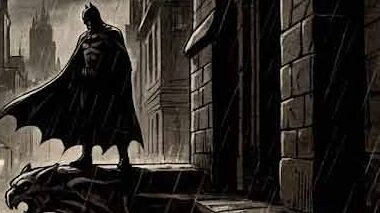
What separated The Batman from every prior entry in the franchise was its refusal to treat Gotham as backdrop. Reeves and production designer James Chinlund conceived a city that was literally rotting from within — its architecture a graveyard of broken civic ambition, its streets perpetually slick with rain that never quite washes anything clean. Fraser described his visual philosophy as “urban noir,” insisting that darkness not be a blunt instrument. “I wanted to make sure that there were pockets of light in every frame,” he told The Wrap. The result was a Gotham that felt less like a fictional city and more like the spiritual intersection of 1970s New York and the rain-soaked outer boroughs of London — a place where corruption didn’t lurk in shadows so much as it was the atmosphere itself.
For Part II, Reeves has confirmed that the city’s moral condition will grow more complex, not less. “There’s a lot of unrest,” he told Collider, “and a lot of clamoring because of the revelations of what we find out at the end of the first movie.” The flooding of Gotham in the first film’s climax wasn’t just spectacle — it was a symbolic reset, a baptism in disaster that left the city’s wounds raw and visible. Part II picks up in that aftermath: a Gotham in political turmoil, its citizens demanding answers about how deeply the corruption extended, its hero grappling with a burden that goes beyond vigilantism.
Robert Pattinson and the Weight of Bruce Wayne
Much has been written about Pattinson’s portrayal of Batman, and most of it undersells the performance by framing it primarily as a departure from convention. The truth is more interesting. What Pattinson gave audiences in 2022 was a Bruce Wayne who hadn’t yet figured out what Bruce Wayne was for. He was vengeance without direction — a man who had turned grief into a costume and called it purpose. The film ends with a pivot, a vow to be something more than punishment, but the sequel begins with the weight of that vow already straining under circumstance.
Reeves has been deliberate in revealing how Bruce will be different in Part II, while keeping the specifics guarded. The script — completed June 27, 2025, and delivered to DC Studios and Warner Bros. — is being protected with the secrecy one usually reserves for legal proceedings. Pattinson reportedly received it in a high-security locked pouch. Reeves told The Hollywood Reporter that the mystery-thriller DNA of the story makes spoiler prevention especially critical: “It’s a detective story. You want the audience to have the fun experience of being surprised.” What he has confirmed is that Part II will show “aspects of the character you never got to see” and will place a far greater emphasis on Bruce Wayne as a person, not just the Dark Knight as an icon. The film focuses on Batman’s Bruce Wayne alter ego more than previous Batman films, as he investigates another case that explores further corruption and division within Gotham City.
Colin Farrell described the script with unusual candor: “a contemporary genre masterwork.” For an actor who earned Emmy recognition for his transformation into Oz Cobb across The Penguin, that’s not promotional noise. It’s a statement of artistic confidence.
The New Rogue’s Gallery
Casting for Part II has unfolded with the slow deliberateness of a good mystery. Robert Pattinson, Jeffrey Wright (Jim Gordon), Andy Serkis (Alfred), and Colin Farrell (Penguin) are all confirmed returning. Farrell, who signed a three-picture deal, has been candid that the Penguin’s role in Part II will be meaningful but not dominant — his arc having been thoroughly explored across eight HBO episodes that earned The Penguin Golden Globe wins for Best Actor, Best Actress, and Best Limited Series.
The significant new additions are still resolving into clarity. Sebastian Stan — Marvel’s Winter Soldier, now crossing franchise lines — is in negotiations for a prominent role widely believed to be Harvey Dent, the district attorney whose tragedy has made Two-Face one of Batman’s most philosophically resonant antagonists. Sebastian Stan will join the long list of actors who’ve appeared in both Marvel and DC, with a prominent role in The Batman: Part II. What Reeves will do with Dent in his grounded, noir-inflected universe is one of the sequel’s most tantalizing open questions. The Nolan films already produced a definitive cinematic Two-Face in Aaron Eckhart’s portrayal. Reeves will need to find a different angle, and given his track record — he made the Penguin genuinely tragic — there’s every reason to trust he will.
Scarlett Johansson, fresh from her extended tenure as Black Widow in the MCU, is reportedly in final negotiations. According to The Hollywood Reporter, Johansson is in final negotiations to star in The Batman Part II, with her reportedly being eyed to play Gilda Gold, the wife of Harvey Dent. Gilda Gold’s role in Batman comics is brief but structurally significant — her loyalty to Harvey, even in the face of his transformation, adds a layer of civilian tragedy to the Two-Face narrative that rarely gets fully explored on screen. Barry Keoghan’s Joker, who appeared in an extended deleted scene from the first film alongside Pattinson in one of the most quietly devastating exchanges in recent comic book cinema, is widely expected to return in some capacity.
Greig Fraser, Light, and the Language of Dread
Any serious discussion of this franchise’s aesthetic must return to Greig Fraser. His work on The Batman was not simply accomplished cinematography — it was an argument about what superhero films could look like when they stopped trying to look like superhero films. Drawing on anamorphic ALFA lenses built to his specifications, Fraser created a Gotham that felt textured and lived-in, where every rain-slicked surface told a story about neglect and where even Bruce Wayne’s luxurious isolation looked like imprisonment.
The visual philosophy he articulated in interviews is worth sitting with. Fraser has confirmed he is in discussions to return for Part II, and Reeves teased as much publicly. Their shared approach — what Fraser called “point-of-view-driven noir,” where every shot was motivated by Bruce Wayne’s perspective rather than omniscient spectacle — gave the first film an intimacy unusual for its budget and ambition. Reeves hit upon the idea early that this would be a “point-of-view-driven noir,” which speaks to the intimate and character-rich nature of the film. “Everything has to have a base from Bruce Wayne or Batman,” Fraser said.
If that visual grammar carries into Part II — and there’s every indication it will — audiences should expect Gotham’s evolution to be rendered with the same chiaroscuro discipline: pockets of light in frames otherwise governed by shadow, the camera staying close to eyes and texture rather than pulling back into the reassuring wide shots that make violence feel distant and heroism feel inevitable.
The Penguin and the Architecture of the Sequel
Understanding where Part II begins requires reckoning with where The Penguin left off. The HBO series — which Reeves produced alongside showrunner Lauren LeFranc — wasn’t merely a spinoff. It was a structural bridge, establishing Oz Cobb as the criminal kingpin of a Gotham still flooded and fractured, while Sofia Falcone’s defeat and imprisonment placed her in Arkham alongside Paul Dano’s Riddler and Barry Keoghan’s Joker. The finale’s closing image — the Bat-Signal burning against the Gotham skyline — was a deliberate announcement: the detective is coming back.
Reeves has been specific about Batman’s emotional arc entering the sequel. Bruce blames himself for what the Riddler’s actions unleashed. His absence from the events of The Penguin wasn’t narrative convenience — it was character logic. A man recalibrating his approach, carrying guilt for unintended consequences, retreating before returning with something harder than vengeance and more measured than hope. “[Batman’s] out there trying to grapple with the aftermath of everything that happened, which to some degree he blames himself for,” Reeves told Digital Spy.
That psychological architecture — a hero re-entering a city that has continued to change without him — is rich dramatic territory. Reeves has promised the corruption revealed in Part II goes “into places [Bruce Wayne] couldn’t even anticipate in the first one.” Given that the first film implicated the Wayne family itself in Gotham’s foundational rot, the direction of that deeper excavation is both intriguing and, for Bruce, personally devastating.
Why the Delays Were Worth It
The Batman Part II has been delayed more times than most filmmakers would survive professionally. Originally slated for October 2025, then pushed to October 2026, it now lands October 1, 2027 — five full years after the original film. The 2023 Hollywood writers’ and actors’ strikes contributed to the timeline. But the more fundamental cause was Reeves refusing to begin production without a script he believed in completely. James Gunn, co-CEO of DC Studios and one of the sequel’s most vocal champions, defended this approach publicly and repeatedly, pushing back against cancellation rumors and leaked reports of behind-the-scenes turbulence with characteristic directness.
The script was completed June 27, 2025. Gunn confirmed receipt and enthusiasm shortly after. Filming begins May 2026. The discipline Reeves applied to the writing process — a process that stretched years past anyone’s initial expectations — is the same discipline that made The Batman what it was. Masterworks rarely arrive on schedule. They arrive when they’re ready.
What Colin Farrell called “a contemporary genre masterwork” isn’t promotional language inflated by goodwill. It’s the read of an actor who has now spent years inside this universe, who watched his own extended performance earn industry-wide recognition, and who knows what Reeves is capable of when given the time to get it right.
A Meditation, Not a Spectacle
The clearest signal that The Batman Part II will be something genuinely worth the wait comes from Reeves’s own framing of the larger project. He has described the Crime Saga — spanning the films, The Penguin, and planned extensions — as “a meditation on the way Gotham is the way it is. It’s such a brutal place, and we’re digging for the answers as to why these people’s lives are this way.”
That’s not the language of franchise architecture. That’s the language of literature. Of Chinatown, where understanding the system doesn’t grant you power over it. Of The Wire, where institutions corrupt individuals who then corrupt institutions in a cycle that resists heroic resolution. Reeves has built a Batman universe with that kind of moral gravity at its center — a Gotham where the darkness is systemic, where the detective can solve a case but cannot solve the city, and where the choice to keep trying anyway is the only meaningful act available.
October 1, 2027 is still more than a year away. The cameras don’t roll until May 2026. But the framework is in place, the script is locked, and the vision is intact. Gotham’s next chapter isn’t just a sequel — it’s the deeper layer of a story that was always asking harder questions than it appeared to be. In noir, the city always wins. The question is what kind of person you become in the losing.