
Walk into any supermarket today and count the seconds it takes to find something marketed as “fast,” “instant,” or “ready in minutes.” You won’t need both hands. The American food system spent the better part of a century engineering time out of the equation — pressing convenience into every corner of the kitchen, stripping fermentation from bread, pulling culture out of yogurt, and replacing the slow biology of aging with industrial shortcuts designed to satisfy shareholders rather than digestive systems. It worked, for a while. Then people started getting sick, getting bored, and quietly looking for the door.
What’s happened since is one of the more compelling reversals in recent food history. Not a trend, exactly — more like a reckoning. Slow food, fermentation, and time-honored culinary techniques are not simply making a comeback. They are winning, methodically and measurably, in a way that suggests the pendulum has swung for good.
The Fast Food Fracture
The numbers from the quick-service restaurant world tell a story that no press release has been able to spin into good news. Fast-food visits in the United States declined 2.3% in the second quarter of 2025 alone (Newsweek, 2025). McDonald’s reported its worst same-store sales drop since the pandemic lockdowns of 2020. Between January and March of this year, Americans ate one billion fewer restaurant meals than during the same period last year, according to market research firm Circana (Newsweek, 2025). KFC’s customer satisfaction score in the American Consumer Satisfaction Index fell from 81 to 77 out of 100, the steepest decline of any chain tracked in 2025 (The Daily Meal, 2025).
The fast-food model is not collapsing under one weight — it is buckkling under several simultaneously. Rising menu prices have pushed value-conscious consumers toward grocery stores. Ingredient quality has degraded as chains stretch margins. Portion sizes have shrunk while receipts have grown. One consumer on Reddit’s r/fastfood put it plainly: “There’s no reason why a fast food meal should be 12 to 15 bucks.” When the core promise of fast food — cheap, consistent, satisfying — begins to erode on all three fronts at once, what’s left is neither cheap nor consistent nor satisfying.
The model was always built on speed. And speed, it turns out, has a cost you eventually pay one way or another.
The Science of Slow: What Fermentation Actually Does
Set aside the marketing language of “artisanal” and “small batch” for a moment, because the case for fermentation is rooted in biology, not branding.
Fermentation is one of the oldest food practices in human history — dating back roughly 10,000 years (PMC/University College Cork, 2022). But only in the last decade or so has science been able to articulate precisely why fermented foods exert such a powerful effect on the human body. The answer lies largely in the gut microbiome, the vast and still poorly understood ecosystem of microorganisms that inhabits the digestive tract and influences everything from immune response to inflammation to cognitive health.
A 2025 review published in the journal Foods (MDPI) describes fermented foods as “an intricate ecosystem that delivers live microbes and numerous metabolites, influencing gut health.” When consumed, these foods produce short-chain fatty acids, bioactive peptides, and exopolysaccharides — compounds that support microbial diversity, reduce inflammation, and strengthen the intestinal barrier. A study cited in Cell Metabolism found that fermented food consumers in the American Gut Project showed significant shifts in microbiome composition compared to non-consumers, including increased production of conjugated linoleic acid, a fatty acid associated with reduced risk of inflammatory bowel disease and type 2 diabetes (Cell Metabolism, 2024).
A separate body of research is now exploring the microbiota-gut-brain axis, suggesting that fermented food consumption may have measurable effects on mood, anxiety, and cognitive function — not through mysticism, but through the biochemical communication networks that run between the gut and the brain (ScienceDirect, 2024).
None of this required a laboratory to discover. Cultures across the world — Bulgarian peasant communities in the early 1900s, Korean households with kimchi, Japanese kitchens with miso and natto — had already observed the relationship between fermented foods and longevity. Modern science is, in many ways, simply catching up to what grandmothers already knew.
The Sourdough Surge and What It Signals
Of all the fermented foods experiencing a renaissance, sourdough bread has become the most visible barometer of the shift. The global sourdough market was valued at approximately $3.87 billion in 2024 and is projected to reach $8.53 billion by 2035, growing at a compound annual rate of roughly 7.45% (MetaTech Insights, 2025). In the United States alone, the sourdough market is projected to reach $8.6 billion in 2025 (Future Market Insights, 2025).
These numbers are significant not just in scale but in what they represent. True slow-fermented sourdough — the kind made with a live starter culture, allowed to ferment over 24 to 48 hours, with no commercial yeast or chemical leavening — is inherently incompatible with industrial mass production. It cannot be rushed without destroying what makes it valuable. Its long fermentation reduces the glycemic index of the bread, improves protein digestibility, and breaks down phytic acid in a way that increases the bioavailability of minerals like zinc and magnesium. It also produces the characteristic tang, open crumb, and crackling crust that no factory loaf has ever convincingly replicated.
The pandemic accelerated the home-baking movement as consumers found themselves home-bound and unusually contemplative about what they were eating. A 2024 survey by the UK’s Agriculture and Horticulture Development Board found that 11% of people now bake at least once a week and 20% at least once a month (AHDB, 2024). Many of those bakers became consumers who expected the same quality from commercial bakeries. They are now knowledgeable enough to ask about fermentation time, starter age, and flour sourcing — questions that would have been unusual five years ago.
Traditional sourdough currently holds a 40% share of the global sourdough market, driven by consumer demand for what the research simply calls “authentic, naturally leavened bread” (Future Market Insights, 2025). The market is not being driven by hipsters alone. It is being driven by a well-informed consumer class that has learned to read labels, distrust ingredient lists longer than five items, and associate the taste of real bread with what bread is supposed to taste like.
From Kimchi to Kefir: The Broader Fermentation Economy
Sourdough is the headline act, but the fermentation economy is considerably wider. Kimchi, kefir, kombucha, miso, tempeh, sauerkraut, and traditionally aged cheeses are all experiencing sustained growth globally as consumers gravitate toward what nutritionists increasingly describe as “clean-label” foods — products whose ingredient lists require no decoder ring.
The Slow Food movement, originally founded in Italy in 1989 as a direct protest against the opening of a McDonald’s near the Spanish Steps in Rome, now counts members in over 150 countries across 1,300-plus local chapters. It was never an anti-progress movement. It was, and remains, a pro-quality movement — one built on the conviction that the speed at which food is produced should not be divorced from the care with which it is made.
That philosophy has found a receptive audience precisely because the industrial food system made its failures legible. Ultra-processed foods now account for more than half of American caloric intake, according to research cited in multiple nutritional epidemiological studies. The health consequences of that shift — rising rates of obesity, metabolic syndrome, gut dysbiosis, and inflammatory disease — have been documented extensively enough that the conversation has moved from the margins into mainstream clinical medicine. Researchers at the University of College Cork’s APC Microbiome Institute now argue that fermented foods should be incorporated into official dietary guidelines, not merely recommended as supplemental wellness products (PMC, 2022).
The Craft Kitchen and the Restaurant Reckoning
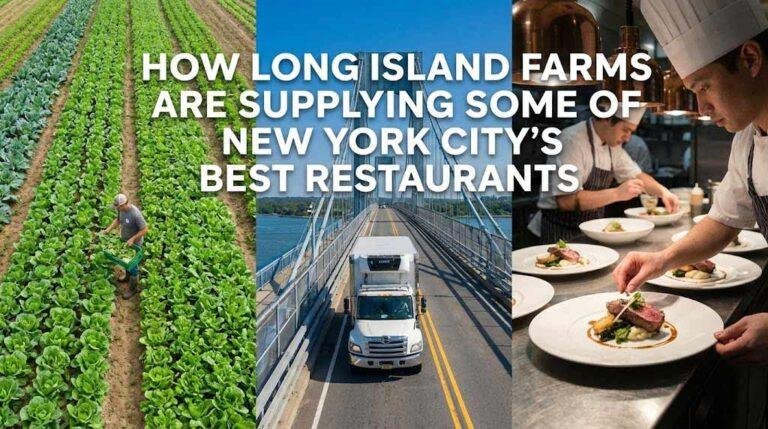
The restaurant industry is absorbing these shifts in real time, and the establishments that are flourishing tend to be those that leaned into quality rather than cost-cutting. Casual dining chains that built their recovery around real, recognizable food have outperformed their fast-food counterparts for two consecutive years (Restaurant Business Online, 2025). The data from Restaurant Dive shows that casual dining outperformed quick-service restaurants throughout 2024 and 2025, with brands that emphasized quality ingredients seeing the strongest traffic gains.
The independent restaurant and local diner — the kind with a kitchen that starts prep the night before, that buys from local farms when possible, that makes its own sauces from scratch — occupies a structural advantage the chains cannot easily replicate. The chains optimized for uniformity and speed. The independents optimized for flavor and trust. As consumers grow more sophisticated and more skeptical, trust and flavor are becoming the dominant competitive variables.
The slow fermentation of bread, for instance, is not something a centralized industrial bakery can credibly perform and then distribute across thousands of locations. The microbiological activity that gives a real sourdough loaf its character begins degrading almost immediately after baking. It belongs in the kitchen that made it, on the table closest to the oven.
Time as the Final Luxury Ingredient
There is something philosophically telling about the fact that the foods most valued today are the ones that cannot be produced quickly. The market for genuine aged cheeses, slow-fermented bread, miso that has been fermenting for two or more years, traditionally cured meats — all of them require patience as a core ingredient. And patience, in an economy engineered for instantaneous gratification, has become genuinely scarce.
The food industry is beginning to understand what craft industries have long known: that quality is not only a matter of inputs, but of time. You cannot abbreviate fermentation without destroying its chemistry. You cannot rush the development of a sourdough starter without losing the wild yeast populations responsible for its flavor. You cannot age a cheese in a laboratory chamber for four weeks and expect the result to taste like something aged in a cave for four months.
This understanding is reshaping how thoughtful operators and producers approach their work. The standard of “good, clean, and fair” food — the phrase Slow Food has used since its founding — is no longer a niche principle. It is, increasingly, what a growing segment of the market demands. The sourdough market is projected to nearly double in size within the next decade. The fermented food category continues to expand across product types and geographies. The fast-food sector is shedding traffic year over year as consumers recalibrate what a meal is worth and what it should contain.
The lesson embedded in all of this is quiet but durable: time, patience, and biological honesty are not inefficiencies to be engineered out of food production. They are the production. The cultures in a well-tended sourdough starter, left undisturbed to work through the night, are not waiting. They are doing exactly what they were always meant to do. The question was always whether we were willing to let them.
Sources:
- Newsweek. (2025). What the Fast Food Industry Is Telling Us About the Economy. https://www.newsweek.com/fast-food-bowls-mcdonalds-cava-chipotle-2113752
- Restaurant Business Online. (2025). The fast-food market is tanking. https://www.restaurantbusinessonline.com/financing/fast-food-market-tanking
- The Daily Meal. (2025). Customers Say These 10 Fast Food Chains Have Seriously Dipped in Quality in 2025. https://www.thedailymeal.com/1968343/fast-food-chains-dipped-in-quality-2025/
- MetaTech Insights. (2025). Sourdough Bread Market Size, Market Share & Trends 2025–2035. https://www.metatechinsights.com/industry-insights/sourdough-bread-market-1354
- Future Market Insights. (2025). USA Sourdough Market Size & Demand 2025–2035. https://www.futuremarketinsights.com/reports/united-states-sourdough-market
- Grand View Research. (2024). Sourdough Market Size, Share, Growth Analysis Report 2030. https://www.grandviewresearch.com/industry-analysis/sourdough-market
- PMC / University College Cork. (2022). Fermented Foods, Health and the Gut Microbiome. https://pmc.ncbi.nlm.nih.gov/articles/PMC9003261/
- MDPI Foods. (2025). Fermented Foods as Functional Systems: Microbial Communities and Metabolites Influencing Gut Health. https://www.mdpi.com/2304-8158/14/13/2292
- Cell Metabolism. (2024). Our Extended Microbiome: The Human-Relevant Metabolites and Biology of Fermented Foods. https://www.cell.com/cell-metabolism/fulltext/S1550-4131(24)00086-X
- ScienceDirect. (2024). Fermented Foods: Harnessing Their Potential to Modulate the Microbiota-Gut-Brain Axis for Mental Health. https://www.sciencedirect.com/science/article/pii/S0149763424000307
- AHDB. (2024). Baking Trends in 2024: To Bake or to Buy, That Is the Question. https://ahdb.org.uk
- Slow Food International. (2024). Impact and Innovation: Inside the Slow Food Annual Report 2024. https://www.slowfood.com/blog-and-news/impact-and-innovation-inside-the-slow-food-annual-report-2024/