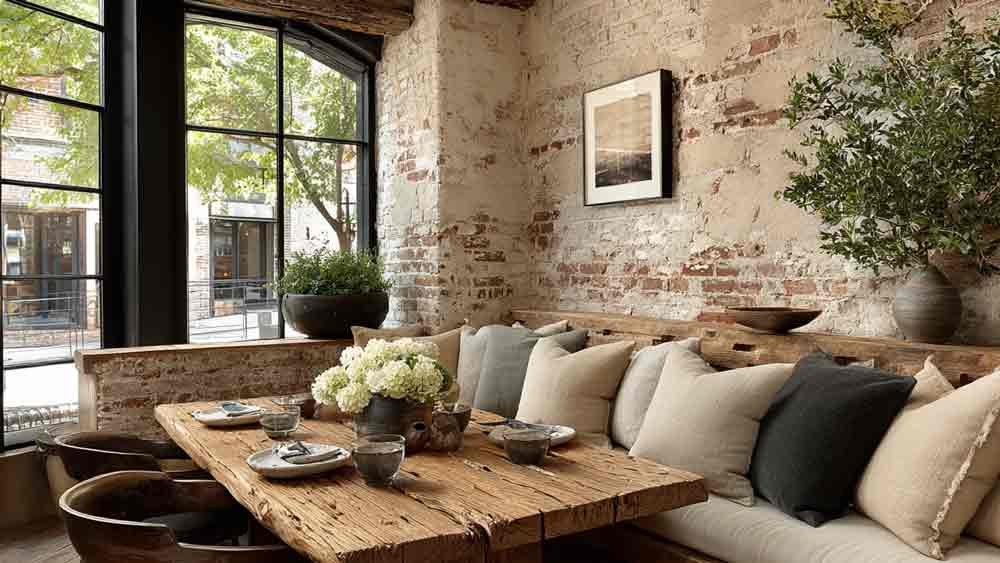
Raw-edged live oak. Hand-blown glass pendants. Arched steel casement windows flooding the room with afternoon light. Abstract art hung with the quiet confidence of someone who doesn’t need to explain their choices. The moment you walk into a space like this, something shifts — and that shift has a number attached to it.
High-end residential design has always been part aesthetics, part argument. The argument being: permanence is worth paying for.
Finish Quality as a Valuation Driver
Real estate professionals talk about “finish quality” the way leather craftsmen talk about hide grade — it’s the thing that separates a transaction from an investment. And the gap between a well-finished home and a beautifully designed one is larger than most buyers realize until they’re standing inside the latter.
The materials in a room like this aren’t just attractive. They’re durable in the way that only natural, sourced-with-intention materials can be. Solid wood with visible grain variation gets better with age. Hand-thrown ceramics don’t date. Stone floors that cost three times the porcelain alternative will outlast the mortgage. These aren’t decorating decisions — they’re compounding decisions.
When appraisers assess finish quality, they’re making a prediction about long-term value retention. The question isn’t how much it cost to build, but how much it will cost to replace — and whether anyone would want to. A room that is irreplaceable holds value differently than one that can be replicated with a weekend at a big-box home store.
The Warmth Premium
What separates the image above from a generic luxury interior is its warmth. The built-in bench seating with loose linen cushions. The fiddle-leaf fig given enough room to actually breathe. The live-edge communal table that invites you to sit, not admire. The abstract art at a human scale, not an institutional one.
There’s a distinction buyers feel immediately but struggle to articulate: the difference between a home that photographs beautifully and one that feels like home the moment the door opens. The warmth premium is real, and it shows up in how quickly a property moves and how little it negotiates.
Paola and I have watched this pattern repeatedly while preparing to launch Maison Pawli along the North Shore — the homes that sell fastest and hold value longest are rarely the ones with the most square footage. They’re the ones with the most considered atmosphere. Buyers at this level aren’t purchasing rooms. They’re purchasing a feeling they want to wake up inside every day.
Natural Light as a Non-Negotiable
Those arched steel casement windows aren’t a design flourish — they’re a structural commitment to natural light, and natural light is the single most consistent driver of residential desirability across every market segment. Studies from the Urban Land Institute consistently show that homes with superior daylighting sell at a meaningful premium and spend fewer days on market.
The architectural decision to use arched openings rather than standard frames does something beyond aesthetics. It signals permanence. These windows were not spec’d to minimize cost. They were chosen because the owner of this space decided that the way light enters a room every morning for the next thirty years was worth the investment. That’s a mindset that buyers recognize and pay for — even when they can’t fully articulate why.
The North Shore Lens
On Long Island’s North Shore, the inventory of homes designed with this level of intentionality is genuinely limited. What exists tends to hold value through cycles that flatten everything else. When the broader market softened in late 2022 and through 2023, properties with superior design DNA — real materials, considered light, spaces that breathe — retained their prices and their buyers in ways that standard luxury inventory did not.
For buyers entering this market, the lesson is straightforward: the premium you pay for a room like this on the front end is the discount you avoid on the back end. Design quality doesn’t depreciate the way finishes chosen for photographs depreciate. A live-edge oak table doesn’t go out of style. Steel casement windows will outlast two generations of owners. The patina that develops over decades in a space built with real materials is not something you can replicate — and the market knows it.
Built to Last
The philosophy behind a room like this is the same one that drives any long-term investment: build it right the first time, and time works for you instead of against you. Whether that’s a 25-year-old diner still serving the same community that opened its doors on day one, or a home designed with enough integrity to still feel alive thirty years from now — the principle is identical.
Buy for permanence. Everything else is just renting space inside a depreciating story.
Sources: Urban Land Institute, “Daylighting and Real Estate Value” (2023); National Association of Realtors, Luxury Market Report (2024); Architectural Digest, Residential Design Trend Analysis.