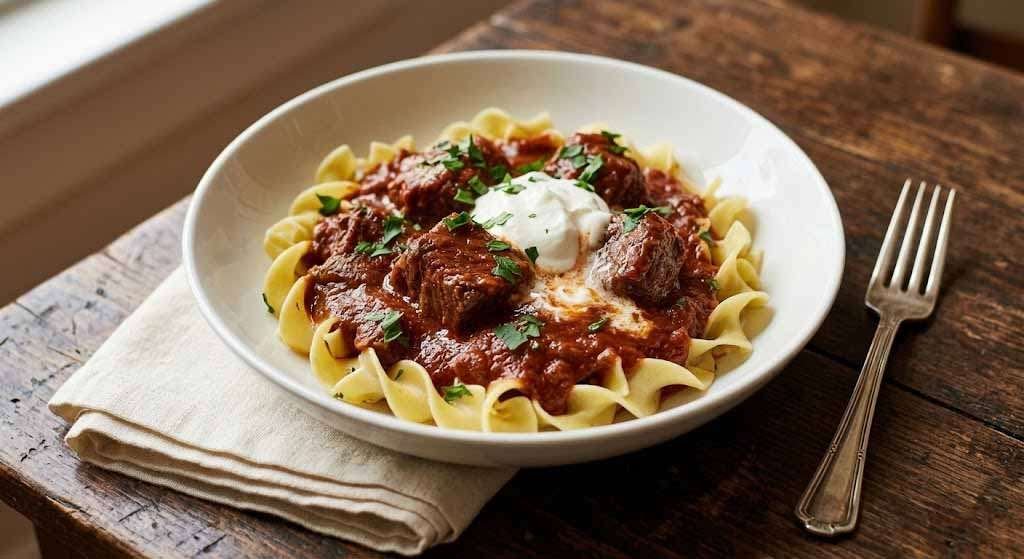
Hungarian beef goulash — thick with sweet paprika, slow-cooked beef, and a broth that has simmered long enough to become something close to a sauce — ladled over wide, buttered egg noodles. This is cold-weather food at its most honest: hearty, deeply flavored, and better the next day. Approachable for any home cook, with an active prep time under 30 minutes and a reward that tastes like it took all day.
Prep Time: 25 minutes Cook Time: 2 hours 15 minutes Total Time: 2 hours 40 minutes Servings: 6 Difficulty: Medium
Key Ingredients
Beef Chuck (2.5 lbs): The cut matters. Chuck has enough intramuscular fat and connective tissue to break down into something silky over a long braise. Avoid lean stew meat — it turns grainy, not tender. Cut your own 1.5-inch cubes from a chuck roast for the best texture.
Hungarian Sweet Paprika: This is non-negotiable. Standard supermarket paprika produces a flat, one-dimensional result. Look for imported Hungarian sweet paprika — brands like Szeged or Kalocsa — in the spice aisle or online. It’s the soul of the dish.
Yellow Onions (3 large): Goulash is built on onions. They cook down completely, disappearing into the base while contributing a subtle sweetness that balances the paprika’s earthiness. Don’t skimp.
Beef Broth: Use a quality low-sodium stock. The broth cooks down significantly, so a weak, overly salty base will produce a weak, overly salty goulash.
Wide Egg Noodles: The wide, flat variety holds up to the weight of the stew and catches the sauce in its curves. Ronzoni, Mueller’s, or any quality wide egg noodle will work. If you’ve made fresh sourdough pasta before — or explored the world of Heritage sourdough — fresh egg noodles here are extraordinary.
Sour Cream (for serving): Optional but traditional. A spoonful stirred in at the table adds a gentle tang and cuts the richness in exactly the right way.
How to Make Slow-Simmered Hungarian Beef Goulash
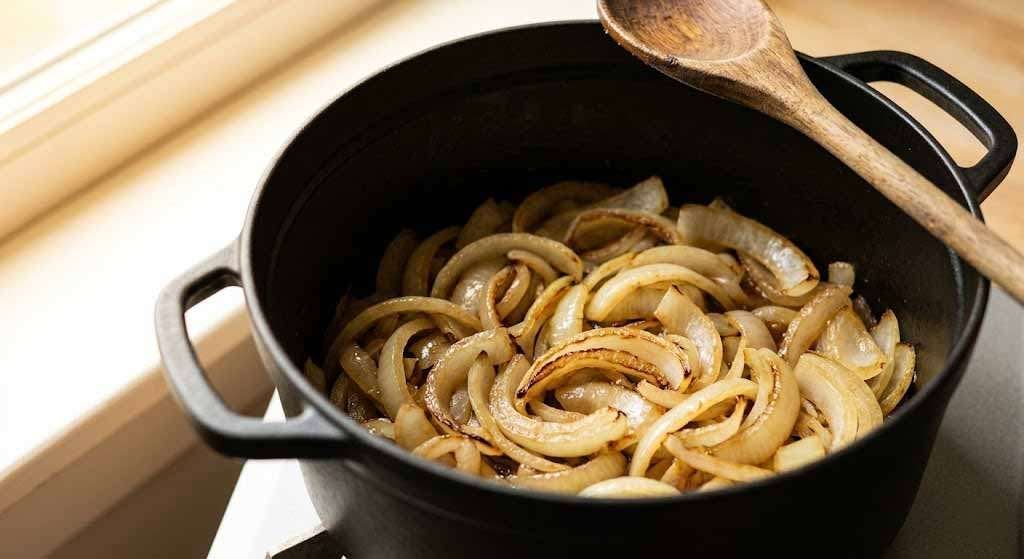
Start with the onions. In a large, heavy-bottomed pot or Dutch oven, warm three tablespoons of neutral oil or lard over medium heat. Add your three large yellow onions, sliced thin, and cook them low and patient — stirring occasionally — for about 20 to 25 minutes, until they’ve gone completely soft, golden, and fragrant. Don’t rush this step. The onions are building the foundation of the broth.
Once the onions are fully softened and beginning to take on color, remove the pot from the heat briefly and stir in four tablespoons of Hungarian sweet paprika along with one teaspoon of caraway seeds if using. Cooking the paprika in the residual heat, off direct flame, blooms the spice without burning it — a critical step. Return the pot to medium heat, add the garlic and tomato paste, and stir everything together for about two minutes until the paste darkens slightly.
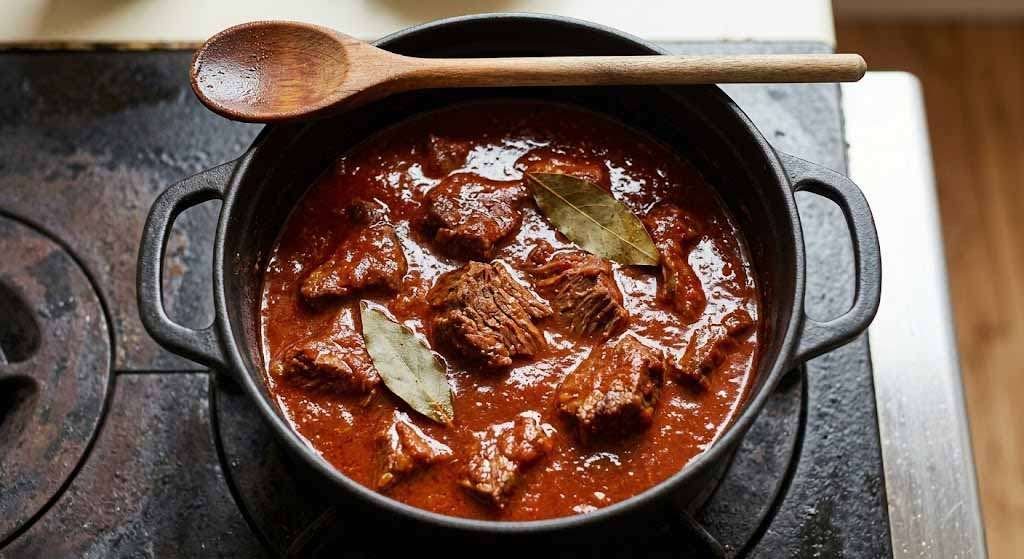
Now add the beef. Pat your cubed chuck dry with paper towels and season generously with salt and pepper. Add the beef directly to the pot without browning it separately — traditional goulash does not sear the meat first. Stir everything together so the beef is coated in the paprika-onion base, then pour in the beef broth, add the bay leaves, and bring the whole pot to a gentle simmer.
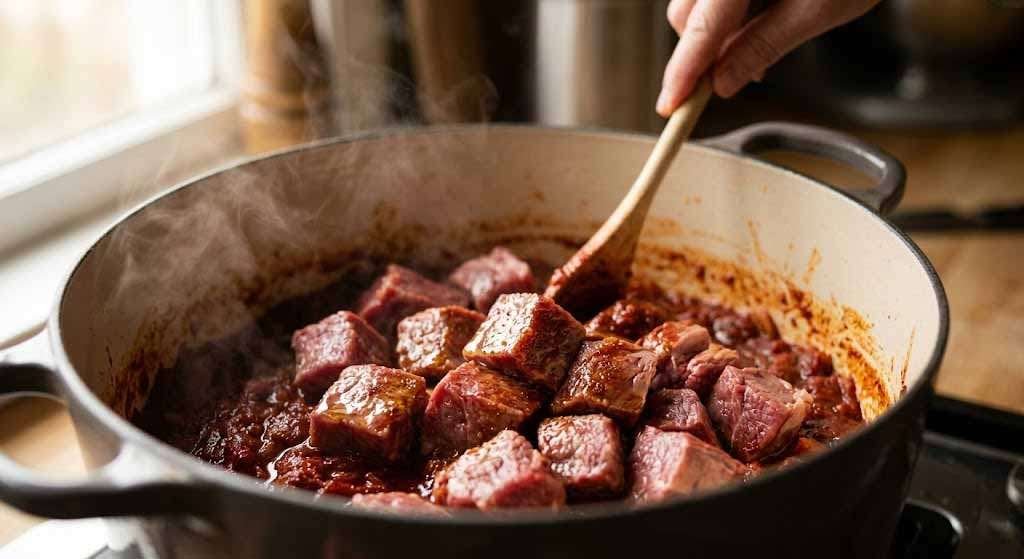
Cover and cook on low heat for 1 hour and 45 minutes to 2 hours, stirring occasionally. The goulash is ready when the beef is genuinely fork-tender and breaks apart with light pressure, and the broth has reduced to a thick, glossy stew. Taste and adjust salt toward the end of cooking. If the sauce is thinner than you’d like, uncover and simmer on medium for an additional 10 to 15 minutes.
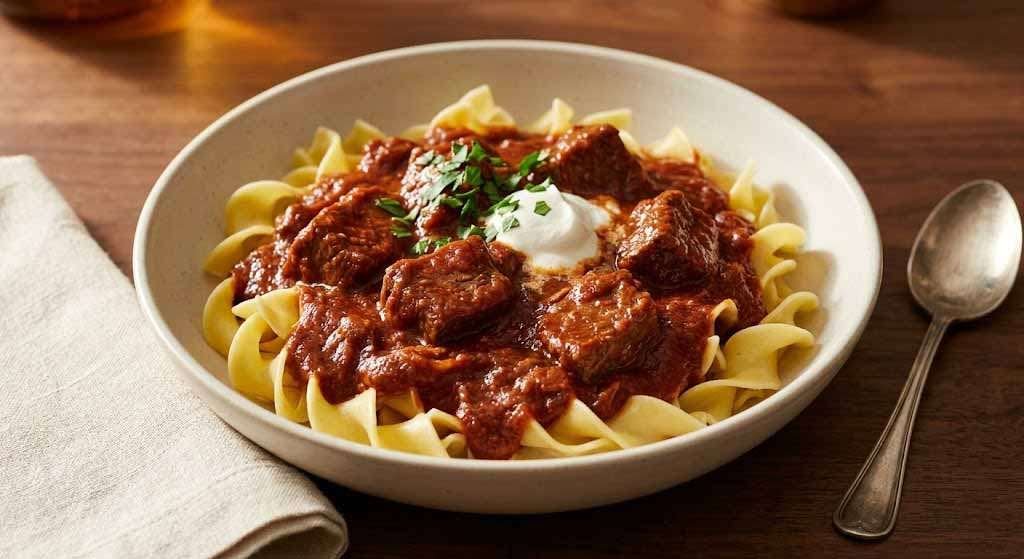
Cook your wide egg noodles according to the package directions in heavily salted water. Drain and toss immediately with a tablespoon of butter. Serve the goulash ladled generously over the buttered noodles, finished with a spoonful of sour cream and a pinch of fresh flat-leaf parsley.
Pro Tips
Never burn the paprika. Hungarian paprika scorches fast and turns bitter. Always take the pot off direct heat before adding the spice, or reduce to very low. This single step separates flat goulash from the real thing.
Skip the pre-sear. Classic Hungarian goulash does not brown the meat first. The slow build of flavor comes from the long braise in the paprika broth — not from a crust.
Let it rest before serving. Like most braises, goulash improves dramatically if you let it sit off heat for 15 to 20 minutes before plating. The beef relaxes and the flavors tighten.
Day-two goulash is better. The stew deepens overnight in the refrigerator. If you’re cooking for a dinner party, make it the day before and reheat gently over low heat, adding a splash of broth to loosen.
Salt your pasta water aggressively. The noodles should be seasoned properly before they meet the goulash. Under-seasoned noodles flatten the entire dish.
Storage & Make-Ahead
Refrigerator: Store the goulash in an airtight container for up to 4 days. Keep the noodles stored separately to prevent them from absorbing the sauce and going soft.
Freezer: The goulash (without noodles) freezes well for up to 3 months. Thaw overnight in the refrigerator and reheat on the stovetop over low heat with a splash of beef broth.
Reheating: Reheat goulash gently in a saucepan over medium-low heat. Cook fresh noodles when ready to serve rather than reheating stored ones — they only take minutes and the quality difference is significant.
Make-Ahead: This dish is ideal for make-ahead cooking. Prepare the goulash up to two days in advance and refrigerate. The flavor will be noticeably better.
Frequently Asked Questions
What cut of beef is best for goulash?
Beef chuck is the correct choice. It has the collagen and fat content needed to become tender and silky during a long braise. Leaner cuts like round or sirloin will turn dry and chewy at this cooking time.
Can I use smoked paprika instead of sweet paprika?
Smoked paprika will change the flavor profile significantly — it adds a smokiness that isn’t traditional in Hungarian goulash. Use sweet Hungarian paprika as the base. A small pinch of smoked paprika added at the end is fine if you like that note, but don’t substitute it entirely.
Can I make this in a slow cooker?
Yes. Complete the onion and paprika steps on the stovetop, then transfer everything to the slow cooker and cook on low for 7 to 8 hours. The result is slightly less reduced than the stovetop version — uncover and cook on high for the last 30 minutes if you want a thicker sauce.
What can I serve alongside goulash besides noodles?
Buttered spaetzle is traditional. Roasted potatoes, crusty bread, or steamed rice are all solid options. The goulash sauce is rich enough that a simple side is always the right call.
Can I add vegetables to the goulash?
Bell peppers and potatoes are common additions in some regional Hungarian versions. Add cubed potatoes in the last 45 minutes of cooking. Diced red or green peppers can go in with the onions at the beginning.
Recipe: Slow-Simmered Hungarian Beef Goulash Over Egg Noodles
Prep Time: 25 minutes Cook Time: 2 hours 15 minutes Total Time: 2 hours 40 minutes Servings: 6 Difficulty: Medium
Ingredients
For the Goulash:
- 2.5 lbs beef chuck, cut into 1.5-inch cubes
- 3 large yellow onions, thinly sliced
- 4 tablespoons Hungarian sweet paprika
- 3 tablespoons neutral oil or lard
- 4 garlic cloves, minced
- 2 tablespoons tomato paste
- 1 teaspoon caraway seeds (optional)
- 3 cups low-sodium beef broth
- 2 bay leaves
- 1 teaspoon salt, plus more to taste
- ½ teaspoon black pepper
For the Noodles:
- 12 oz wide egg noodles
- 1 tablespoon unsalted butter
- Salt for pasta water
For Serving:
- Sour cream
- Fresh flat-leaf parsley, chopped
Instructions
- Heat oil in a large Dutch oven over medium heat. Add sliced onions and cook, stirring occasionally, for 20–25 minutes until deeply softened and golden.
- Remove pot from heat. Stir in paprika and caraway seeds, letting the spice bloom in residual heat for 30 seconds.
- Return to medium heat. Add garlic and tomato paste. Stir and cook 2 minutes until the paste darkens slightly.
- Season beef cubes with salt and pepper. Add directly to the pot without searing. Stir to coat with the paprika-onion base.
- Pour in beef broth and add bay leaves. Bring to a gentle simmer.
- Cover and cook on low heat for 1 hour 45 minutes to 2 hours, stirring occasionally, until beef is fork-tender and sauce has thickened.
- Uncover and simmer an additional 10–15 minutes if a thicker sauce is desired. Taste and adjust salt.
- Cook egg noodles in heavily salted boiling water per package directions. Drain and toss with butter.
- Remove bay leaves. Serve goulash over buttered noodles. Top with a dollop of sour cream and fresh parsley.
Notes
- Do not skip blooming the paprika off direct heat — it prevents bitterness.
- Goulash is best made a day ahead; flavors deepen significantly overnight.
- Store goulash and noodles separately for best results.