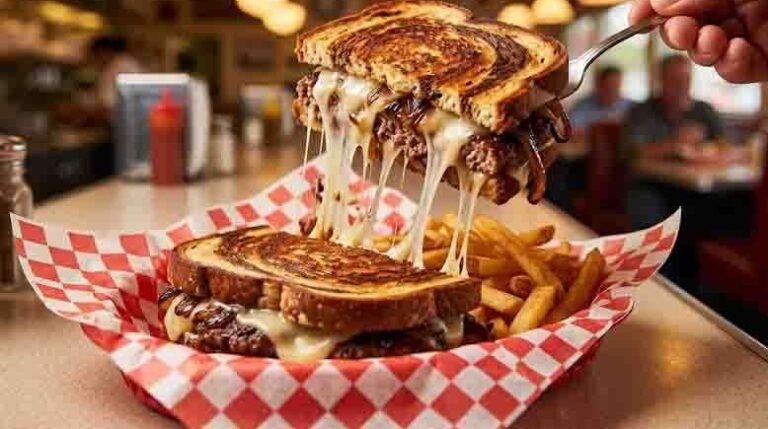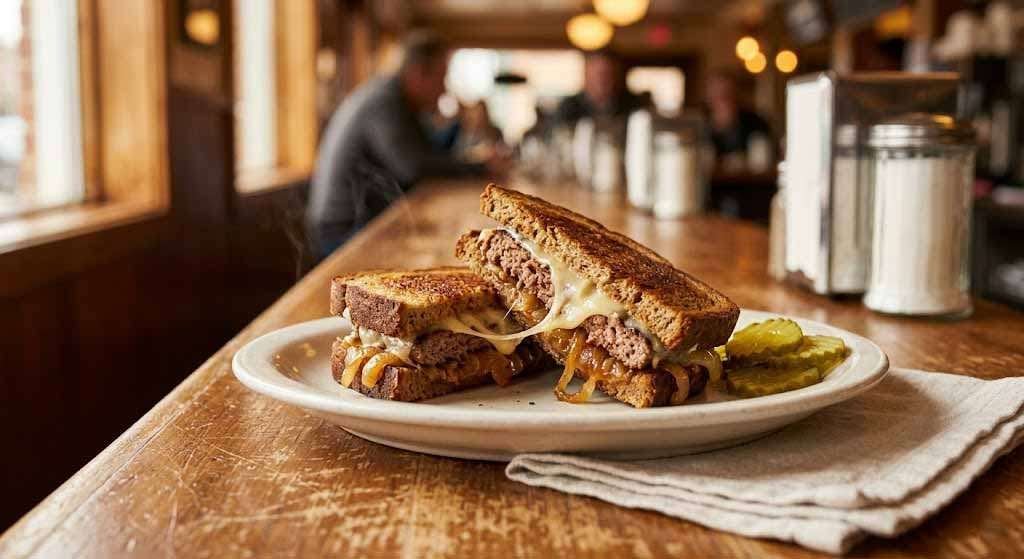
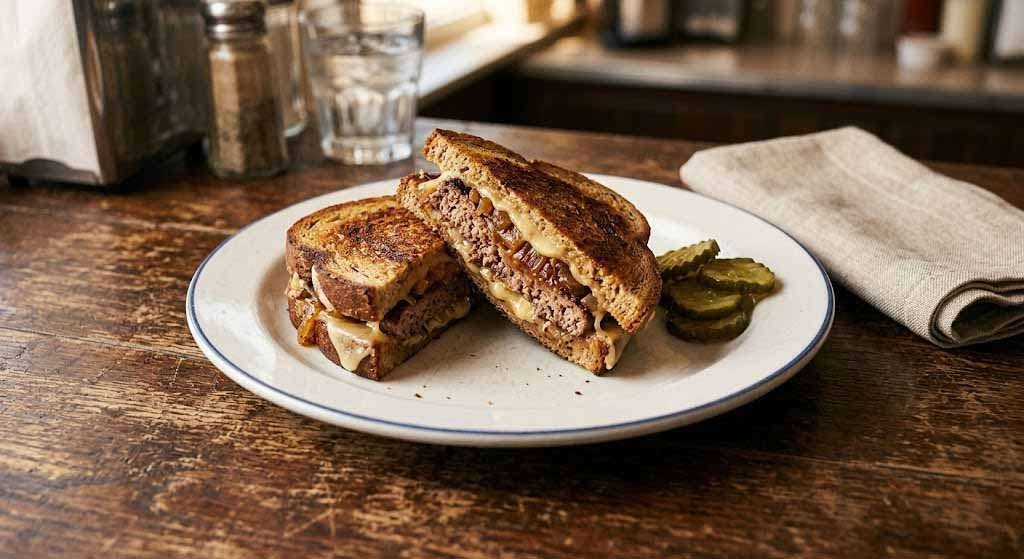
Two slices of dark rye, buttered and pressed hard against a flat-top griddle, enclosing a hand-formed beef patty buried under slow-cooked onions and molten Swiss cheese — the patty melt is one of American diner cooking’s most underappreciated achievements. It’s not a burger and it’s not a grilled cheese, but it borrows the best from both and lands somewhere more satisfying than either. Ready in under 30 minutes, this is the kind of recipe that stays in rotation.
Prep Time: 10 minutes Cook Time: 50 minutes (includes onion caramelization) Total Time: 60 minutes Servings: 2 Difficulty: Medium
Key Ingredients
Dark rye bread — Seeded or unseeded both work, but the bread needs to be dense enough to hold up under pressure on the griddle without tearing. Thin sandwich rye will fall apart. Look for a full loaf with a tight crumb — slices should be about ¾ inch thick. Pumpernickel is a reasonable substitute if rye isn’t available.
80/20 ground beef — The fat percentage matters here. Leaner beef will dry out and pull away from the bread; 80/20 stays juicy through the press-down required for a proper patty melt. Form the patties thin — about ½ inch — since they’ll cook fast between two hot surfaces.
Swiss cheese — Classic baby Swiss melts the cleanest and has the mild, nutty flavor that doesn’t compete with the onions. Gruyère is an excellent upgrade if you want a more pronounced flavor and a slightly stretchier melt. Avoid pre-shredded — it won’t melt as smoothly.
Yellow onions — One large onion per two sandwiches. The caramelization is the heart of this recipe; rushing it produces bitter, sharp onions instead of the sweet, silky strips the dish depends on. If you want to go deeper on the craft of slow-cooked onions and their role in diner cooking, The Heritage Diner’s piece on diner classics and the food behind them is worth a read.
Unsalted butter — Used for both the onion cook and the griddle stage. Clarified butter or a 50/50 mix with neutral oil will prevent burning if your pan runs hot.
How to Make the Patty Melt
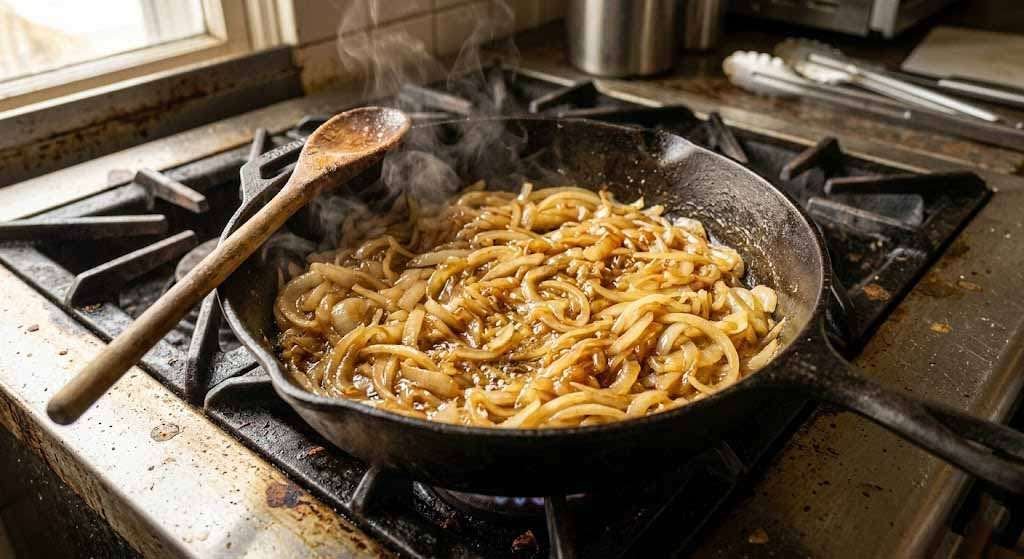
Start with the onions — they need the most time and can’t be rushed without losing what makes them essential. Slice one large yellow onion into thin half-moons and place them in a wide skillet over medium-low heat with a tablespoon of butter and a pinch of salt. Stir them every few minutes, keeping the heat low. They’ll soften first, then slowly turn golden, then a deep amber. The full process takes 35 to 40 minutes. If they start to stick or darken unevenly, add a small splash of water and drop the heat. The payoff is worth every minute.
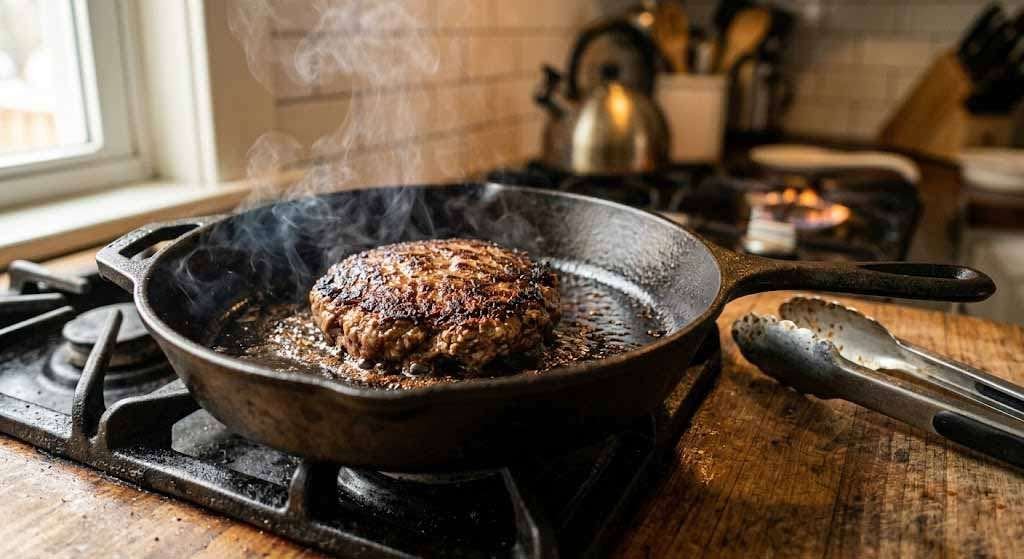
While the onions finish, form two beef patties slightly larger than your bread slices — they’ll shrink as they cook. Season both sides with salt and black pepper. Keep them ½ inch thick and press a shallow indent in the center with your thumb to prevent the center from puffing during cooking.
Heat a cast-iron skillet or griddle pan over medium-high. Cook the patties 3 to 4 minutes per side for medium — they should develop a deeply browned crust on each face. Remove from the heat and set aside. Lower the heat to medium.
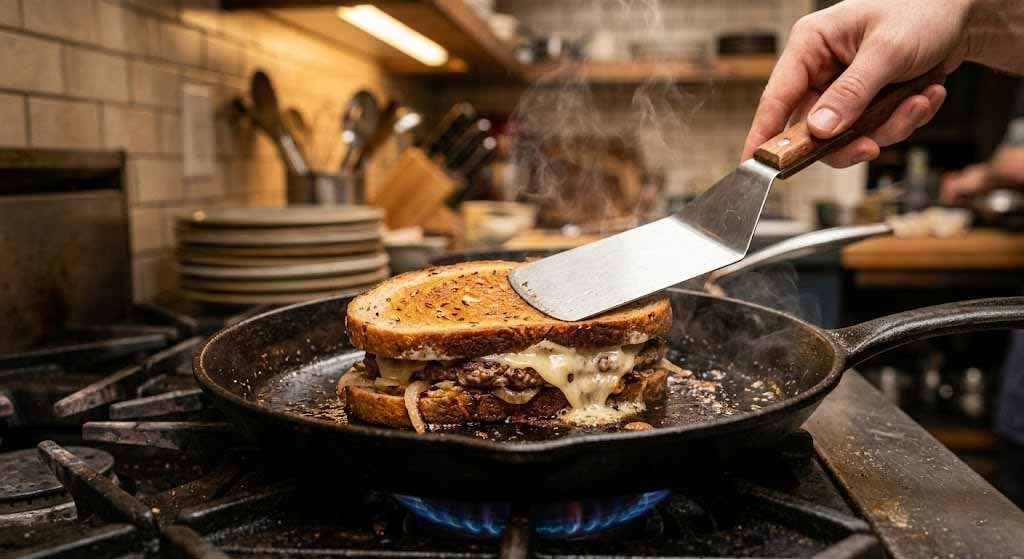
Butter one side of each slice of rye bread. Place two slices butter-side down in the skillet over medium heat. Layer one slice of Swiss on each, then add the patty, then a generous heap of caramelized onions, then another slice of Swiss on top. Cap with the remaining bread slices, butter-side up. Press down gently with a spatula.
Cook 3 to 4 minutes until the bottom is deeply golden and the bread has a firm, toasted crust. Carefully flip — using a wide spatula is essential here — and cook another 3 minutes on the second side. The cheese should be fully melted and threatening to escape at the edges. That’s exactly where it should be.
Remove, rest for one minute, then cut diagonally. That single diagonal cut isn’t just visual — it changes how you hold the sandwich and how the layers stack. Don’t skip it.
Pro Tips
Caramelized onions are non-negotiable. Raw or under-cooked onions have a sharp bite that clashes with everything else in the sandwich. If you only have 15 minutes, use a small amount of balsamic vinegar in the last 5 minutes of cooking to accelerate color and sweetness — but go low and slow whenever time allows.
Bread thickness controls everything. Too thin and it tears under pressure; too thick and the inside stays doughy before the outside burns. A ¾-inch slice of a dense rye loaf is the target. If the slices from your loaf are uneven, press them slightly before buttering.
Two layers of cheese — one under the patty, one on top. This isn’t just about maximum melt. The bottom layer acts as a barrier, preventing the bread from absorbing beef moisture too quickly and going soggy. The top layer melts down and bonds the onions to the patty.
A cast-iron pan is the right tool. It holds even heat across the surface and develops a crust on the bread that a non-stick pan simply won’t match. If you’re working with a non-stick, raise the heat slightly to compensate.
Don’t press too hard. A light press with the spatula helps the cheese melt and the bread contact the pan, but aggressive pressing compresses the patty and forces moisture out. Firm but gentle.
Storage & Make-Ahead
The patty melt is best eaten immediately — rye bread softens quickly once assembled and the crust loses its snap within 20 minutes. If you need to work ahead, caramelize the onions up to 3 days in advance and store them in a sealed container in the refrigerator. Reheat gently in a skillet before building the sandwich.
Formed raw patties can be wrapped and refrigerated for up to 24 hours, or frozen between sheets of parchment for up to 2 months. Defrost overnight in the refrigerator before cooking.
Frequently Asked Questions
Can I use a different bread instead of rye?
Sourdough is the most common substitute and works well — the slight tang holds up to the onions and beef the same way rye does. White or brioche bread will produce a softer, less structured sandwich. If you go that route, check out the Heritage Diner’s challah French toast post to understand how enriched breads behave differently on the griddle.
What’s the best cheese besides Swiss?
Gruyère is the top upgrade — it melts beautifully and has a more complex, nutty flavor. American cheese is a legitimate diner-style choice for a softer, creamier melt. Provolone works in a pinch.
My onions are burning before they’re caramelized. What am I doing wrong?
The heat is too high. True caramelization happens slowly at medium-low heat. Add a small splash of water whenever they start to stick and drop the burner down. Patience is the only real technique here.
Can I make this with a turkey or veggie patty?
Yes. A well-seasoned ground turkey patty works well; add a teaspoon of Worcestershire sauce to the mix to compensate for the lower fat content. Veggie patties with a firm texture — not crumbly — will hold up on the griddle.
How do I keep the sandwich from falling apart when I flip it?
Use a wide, thin spatula that can slide fully under the sandwich. Get under it with confidence — hesitation causes the flip to go sideways. One clean motion is better than two tentative ones.
Recipe: The Classic Patty Melt with Griddled Rye and Swiss Cheese
Prep Time: 10 minutes Cook Time: 50 minutes Total Time: 60 minutes Servings: 2 Difficulty: Medium
Ingredients
For the caramelized onions:
- 1 large yellow onion, thinly sliced into half-moons
- 1 tablespoon unsalted butter
- ¼ teaspoon kosher salt
- Splash of water as needed
For the patties:
- ¾ lb ground beef (80/20)
- ½ teaspoon kosher salt
- ¼ teaspoon freshly ground black pepper
For assembly:
- 4 slices dark rye bread (¾ inch thick)
- 4 slices Swiss cheese (or Gruyère)
- 2 tablespoons unsalted butter, softened
Instructions
- Heat a wide skillet over medium-low. Add 1 tablespoon butter, the sliced onions, and ¼ teaspoon salt. Cook, stirring every 5 minutes, for 35–40 minutes until deeply golden and soft. Add a splash of water if they begin to stick. Set aside.
- Divide the ground beef into 2 equal portions. Form each into a ½-inch-thick oval patty, slightly larger than your bread slices. Press a small indent in the center of each. Season both sides with salt and pepper.
- Heat a cast-iron skillet over medium-high. Cook the patties 3–4 minutes per side until a deep crust forms and the internal temperature reaches 160°F. Remove and set aside. Lower heat to medium.
- Butter one side of each bread slice. Place 2 slices butter-side down in the skillet.
- Lay one slice of Swiss on each piece of bread. Top with a patty, a generous portion of caramelized onions, then a second slice of Swiss. Cap with remaining bread slices, butter-side up.
- Press down gently with a wide spatula. Cook 3–4 minutes until the bottom is deeply golden. Flip carefully and cook another 3 minutes. Cheese should be fully melted.
- Rest 1 minute, slice diagonally, and serve immediately.
Notes
- Onions can be made up to 3 days ahead and refrigerated.
- 80/20 ground beef is essential for moisture — do not substitute lean beef.
- Serve alongside dill pickles or a simple side salad.