Every few weeks, someone walks into the diner and says some version of the same thing: I’ve been watching the listings for months and I can’t find anything. They’ve got their Zillow alerts set. They check Realtor.com before coffee. They know the inventory numbers, they know the interest rate environment, and they still feel like they’re standing outside a party that started without them. What they don’t know — and what most people outside the local market never figure out — is that a significant slice of North Shore real estate never appears on any platform they’re looking at. It moves quietly, between people who know people, and by the time a sign goes up, the deal is already done.
This is not a conspiracy. It’s geography, culture, and the particular way that trust operates in a place like this.
Why the North Shore Keeps Its Secrets
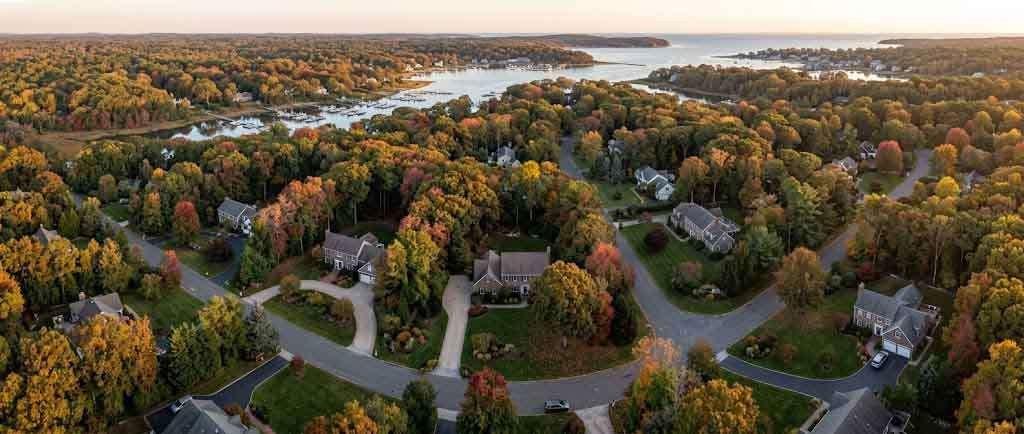
The communities strung along Route 25A from Port Jefferson to Oyster Bay share a certain character that outsiders sometimes mistake for aloofness. It isn’t that. It’s something closer to discretion — a preference for keeping things local, for not making a spectacle of transitions. Long-time homeowners who spent thirty years building equity in a waterfront village or a wooded half-acre lot aren’t necessarily eager to have their home photographed, listed publicly, and walked through by strangers on open-house Sundays. Many of them would rather call a neighbor, or a neighbor’s broker, and settle the matter among people they already trust.
That preference produces what the industry calls off-market or pocket listings — homes that sell through private channels before ever reaching the MLS. On the South Shore, where transaction volume is higher and the market moves faster, this is less common. The North Shore, with its smaller towns, longer ownership tenures, and stronger community identity, generates a disproportionate share of these quiet deals. Sellers who have lived in Mount Sinai or Miller Place or Sound Beach for twenty years often don’t want the process to feel like a commercial event. They want it to feel like a handoff.
The Relationship Layer That Algorithms Can’t Index
Zillow is extraordinarily good at showing you what’s available. It cannot show you what’s coming, what’s being considered, or what a homeowner might do if the right conversation happened at the right time. That gap — between the publicly available and the genuinely accessible — is where local brokers earn their value, and where buyers who rely solely on apps consistently lose ground.
A broker embedded in a North Shore community carries information that exists nowhere in a database. They know which estate is in the middle of a family discussion about whether to sell. They know the couple in Setauket who are thinking about downsizing but haven’t made a decision yet. They know the off-season rental that the owners might convert to a sale if the price made sense. None of that appears in any feed. It lives in phone calls, in conversations at the post office, in the particular knowledge that comes from having worked the same geography for years.
This is not a flaw in the system. For a buyer willing to work with someone who actually knows the territory, it’s an advantage — because most buyers don’t. They’re competing with algorithms and each other on the public listings while an entire secondary market operates just below the surface.
What “Local Knowledge” Actually Means
The phrase gets used loosely, but on the North Shore it has specific content. It means knowing which streets flood after a heavy rain and which sit high and dry. It means understanding why two houses with nearly identical specs can carry a $150,000 price difference based on which side of a school district line they fall on. It means recognizing that a listing price on a particular road is either generous or quietly inflated based on what sold around the corner eighteen months ago — a sale that may not have made any headlines but that a local broker has in their memory.
It also means knowing the community’s particular rhythms. The North Shore has strong year-round neighborhoods where value is driven by schools, harbor access, and proximity to the Long Island Rail Road. It has pockets of seasonal character near the water where pricing fluctuates differently. It has new development mixed into areas of century-old housing stock, and that mixture requires real discernment — not just a square footage comparison. The difference between a buyer who understands these layers and one who doesn’t can easily be measured in tens of thousands of dollars and months of wasted time.
The Timing Window That Most Buyers Miss
Here is something that the apps won’t tell you: the optimal moment to buy on the North Shore is often before a property is ready to list. The window between a seller’s decision to move and the actual listing going live — sometimes a matter of weeks, sometimes longer — is when the most straightforward deals happen. No bidding war. No escalation clause. No weekend of competing offers that drives the price past what the home rationally supports.
Buyers who have a broker in their corner with active local relationships get access to that window. They hear about the property while the seller is still deciding on price. They can make an offer that removes uncertainty for the seller without the theater of a public listing. For sellers, this often produces a better emotional experience even if the price is marginally lower — there’s no disruption, no open houses, no strangers in the kitchen.
For buyers, it means getting into a home they actually want at a price that reflects the market rather than a bidding frenzy. That’s not a minor difference in this environment.
What Serious Buyers Should Actually Do
If you’ve been watching North Shore listings for months and feel like nothing is hitting, the most useful thing you can do is stop waiting for the inventory to find you and start working the relationship layer instead. That means getting genuinely connected with a broker who has roots in the specific communities you’re targeting — not a regional office that handles everything from Riverhead to Great Neck, but someone who knows Mount Sinai from Miller Place, who has worked the same neighborhoods long enough to have a history there.
It means having a real conversation about what you need and being specific — not just bedrooms and bathrooms, but whether you need a flat lot or can work with a slope, whether you care about harbor proximity, whether the school district is fixed or flexible. The more precisely a broker understands your actual criteria, the better positioned they are to call you when something relevant surfaces before it lists.
And it means being ready. The hidden inventory moves because sellers in that market aren’t running an auction — they’re looking for the right buyer at the right moment. Being pre-approved, having a clear sense of your number, and being able to move without excessive hesitation are what separate the buyers who land the quiet deals from the ones who find out about them afterward.
The North Shore is not an impossible market. It’s a specific one. And like most specific things, it rewards people who take the time to understand how it actually works — not how it looks from the outside.
You Might Also Like:
- The Ride Down 25A: A Historic Motorcycle Journey Along Long Island’s North Shore to The Heritage Diner
- Rum Row and the Freeport Bootleggers: Long Island’s Clandestine War on the Water
Sources
- National Association of Realtors, Profile of Home Buyers and Sellers, 2024: https://www.nar.realtor/research-and-statistics/research-reports/highlights-from-the-profile-of-home-buyers-and-sellers
- Newsday, Long Island real estate market coverage, 2024–2025: https://www.newsday.com/long-island/real-estate
- Suffolk County MLS data via OneKey MLS: https://www.onekeymls.com
- Maison Pawli Realty, North Shore market expertise: https://maisonpawli.com/about/