Toyota, Samsung, and QuantumScape are betting billions on solid-state batteries. The technology is real, the timeline is 2027, and the internal combustion engine just got its expiration date.
Every battery you have ever used — in your phone, your laptop, your kid’s remote-control car — works on the same basic principle. Lithium ions shuttle between two electrodes through a liquid electrolyte. That liquid is the problem. It is flammable. It is heavy. It limits how much energy you can pack into a given space. And after about 150 years of tinkering with variations on this theme, the conventional lithium-ion cell has hit a wall. The chemistry has been optimized to within a few percentage points of its theoretical maximum. You cannot squeeze blood from a stone, and you cannot squeeze another 40% of range from a liquid electrolyte that has already given you everything it has.
Solid-state batteries throw out the liquid entirely. They replace it with a solid material — ceramic, sulfide, polymer, or a composite of all three — that conducts lithium ions between the anode and cathode without the need for any liquid medium. The concept has existed since the 19th century. What has changed is that in the last three years, multiple companies have moved from laboratory prototypes to functioning pilot production lines with real cells powering real vehicles. This is no longer theoretical. The question is not whether solid-state batteries will work. The question is how fast the factories can scale.
The Chemistry That Changes Everything
To understand why solid-state matters, you need to understand what limits current lithium-ion cells. A standard EV battery today uses a graphite anode — the negative terminal — with a theoretical capacity of about 372 milliamp-hours per gram. That number represents the ceiling. No amount of engineering can push graphite past it.
Lithium metal, by contrast, has a theoretical capacity of 3,860 milliamp-hours per gram. Ten times higher. The reason nobody uses lithium metal anodes in conventional batteries is that liquid electrolyte reacts violently with metallic lithium. Dendrites — tiny crystalline structures — grow through the liquid like tree roots through soil, eventually piercing the separator between the electrodes and causing a short circuit. That short circuit becomes a fire.
A solid electrolyte solves the dendrite problem by physically blocking their growth. Ceramic separators are dense enough to resist penetration. Sulfide-based electrolytes offer ionic conductivity comparable to liquids while remaining structurally rigid. The result is a cell that can safely use a lithium metal anode — or in some designs, no pre-formed anode at all — and achieve energy densities that liquid electrolyte systems cannot touch.
Samsung SDI has demonstrated cells at 500 watt-hours per kilogram and 900 watt-hours per liter. QuantumScape’s QSE-5 cells have been independently verified at 844 watt-hours per liter with charging from 10% to 80% in approximately 12 minutes. For context, the best commercial lithium-ion cells today sit around 250 to 300 watt-hours per kilogram. The gap is not incremental. It is generational.

Who Is Building What — and When
The race to commercialize solid-state batteries has consolidated around a handful of serious players, each taking a different technical approach.
Toyota holds more solid-state battery patents than any other company on earth — over 8,200 granted between 2020 and 2023 alone. Their sulfide-based electrolyte approach targets 1,000 kilometers of range (roughly 620 miles) with 10-minute charging. Toyota confirmed an agreement with Sumitomo Metal Mining in October 2025 to produce cathode materials, and their commercial deployment timeline targets 2027–2028 for initial production vehicles.
QuantumScape, the California startup backed by Volkswagen with over $2 billion in funding, has taken a ceramic separator approach. They partnered with PowerCo — Volkswagen’s battery division — to demonstrate their QSE-5 cells in a Ducati V21L electric racing motorcycle at IAA Mobility. PowerCo’s independent testing showed the cells retained more than 95% energy capacity after 1,000 charging cycles, equivalent to roughly 500,000 kilometers of driving. Their Cobra separator process — a heat-treatment system that processes cells 25 times faster than earlier methods — entered baseline production in 2025, with sample shipments to launch customers beginning the same year.
Samsung SDI has built a pilot production line called “S-Line” at their R&D facility in Suwon, South Korea, and partnered with BMW to develop cells for a next-generation i7 sedan. They are targeting mass production by 2027.
Nissan is developing their own solid-state cells with plans to begin operating a pilot production line, partnering with LiCAP Technologies on electrode production processes. Honda is targeting market readiness before the end of the decade. Mercedes-Benz, working with Factorial Energy, completed a 749-mile real-world road test in a modified EQS sedan — not a lab result under controlled conditions, but an actual car on actual highways.
And then there is China. GAC Group became the first automaker to bring a full all-solid-state production line online. SAIC Motor opened pre-sales for an MG4 powered by a semi-solid-state battery starting at just over $10,000. EVE Energy inaugurated a new production base and rolled a fully solid-state cell off the line at the ceremony. The Chinese battery industry is not waiting for 2028. They are shipping now, albeit in limited volumes and with semi-solid rather than fully solid chemistry.
The Manufacturing Wall
If solid-state batteries are so clearly superior, why has it taken this long? Because making them in a laboratory and making them in a factory are two entirely different problems.
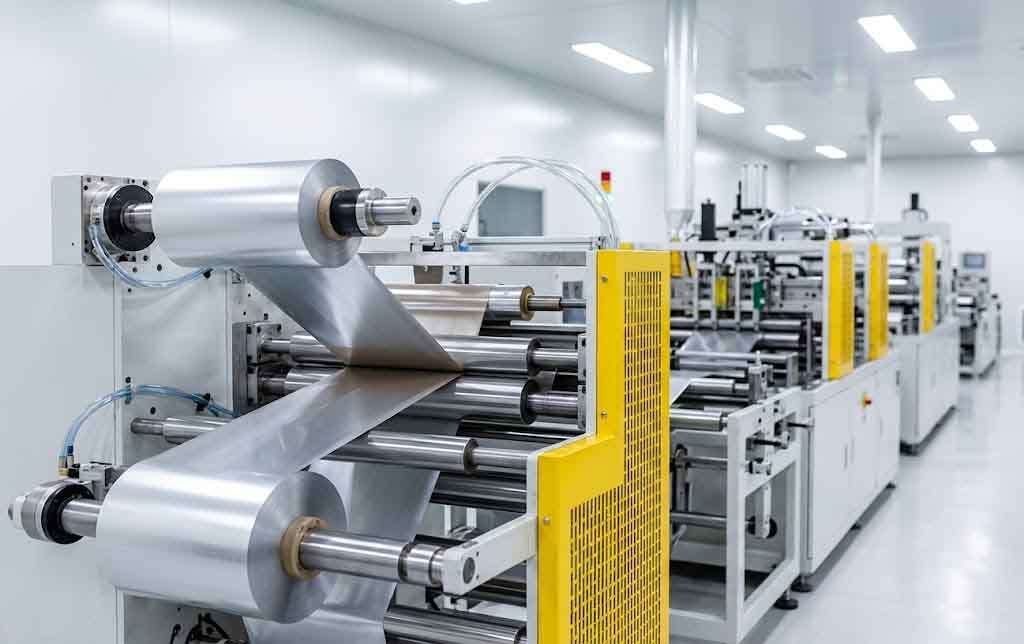
Ceramic electrolytes are brittle. Sulfide electrolytes are sensitive to moisture and release toxic hydrogen sulfide gas if exposed to humid air during production. Achieving consistent, defect-free contact between solid surfaces at the atomic scale — the kind of contact that a liquid electrolyte achieves automatically by filling every crevice — requires extraordinary manufacturing precision. One microscopic void between the electrolyte and the electrode creates a dead zone where lithium ions cannot flow, and that dead zone degrades performance over time.
The cost picture is equally challenging. The US Advanced Battery Consortium’s target cost for high-performance EV batteries is $125 per kilowatt-hour. Current lithium-ion packs are approaching that number. First-generation solid-state cells will almost certainly cost more, which is why early adoption will be confined to premium vehicles — think BMW 7-Series and Lexus flagships — where the cost premium can be absorbed into a six-figure sticker price.
But the trajectory is clear. Toyota, QuantumScape, Samsung SDI, and Solid Power are all investing in roll-to-roll manufacturing processes that adapt existing lithium-ion production equipment rather than requiring entirely new factories. That adaptation path is what makes a 2027–2028 commercial timeline credible rather than aspirational. The pilot lines exist. The cells work. The challenge now is yield rate, throughput, and cost reduction — problems that manufacturing engineers solve every day.
What This Means for Long Island
Long Island already leads New York State in electric vehicle adoption. The New York Power Authority’s EVolve NY program has installed over 1,000 fast-charging ports statewide, with the largest public hub on the island opening in Southold on the North Fork in 2025. New stations are coming online in Commack, Levittown, and Elmont. PSEG Long Island offers time-of-day charging rates with overnight discounts up to 40% off the standard flat rate. The Drive Electric Long Island coalition — led by Green Build Long Island and including PSEG, Farmingdale State College, Suffolk County Community College, NYSERDA, and Electrify America — is coordinating adoption efforts across the island.
The infrastructure is expanding. But solid-state batteries will change the infrastructure equation in ways that matter to anyone who drives Route 25A or sits in LIE traffic.
A solid-state EV with 600 to 1,000 miles of range eliminates the range anxiety that keeps most Long Islanders in their gas-powered cars. The daily commute from Mount Sinai to Manhattan is roughly 130 miles round trip. That is a single charge lasting four or five days on a solid-state pack. Weekend trips to Montauk, the Catskills, or Connecticut stop requiring any charging planning at all.
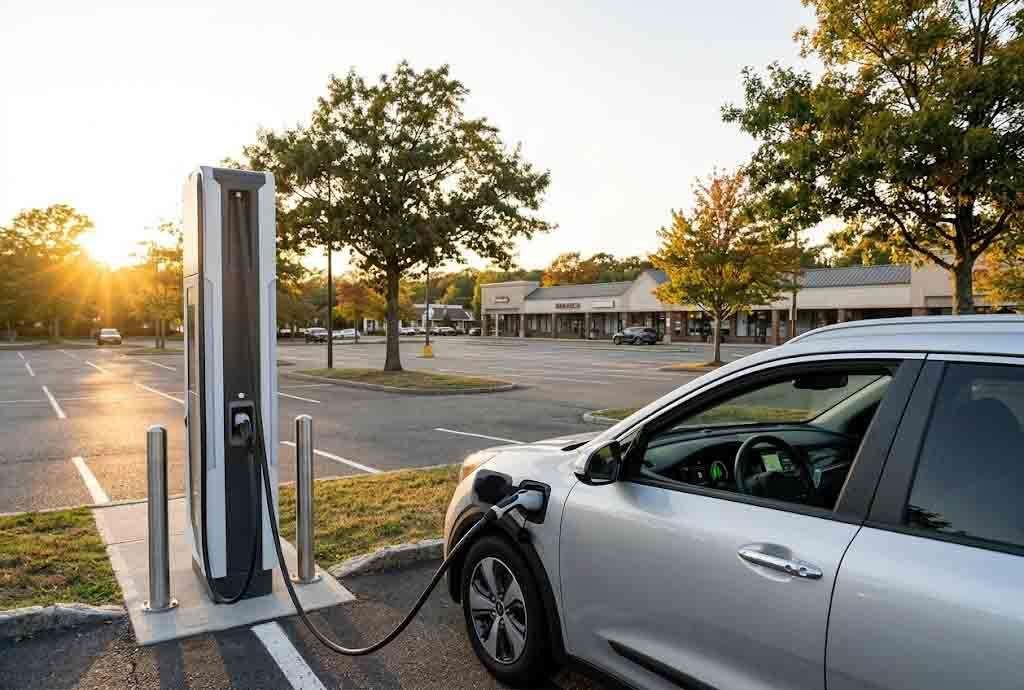
Ten-minute charging changes the psychology even more. When refueling an EV takes the same time as refueling a gas car, the last practical objection disappears. The charging stations already being installed along the LIE and Northern State — which currently deliver 150 kilowatts — will need hardware upgrades to handle the higher power levels that solid-state cells can accept. But the electrical infrastructure and real estate are already in place. The upgrade is a hardware swap, not a ground-up construction project.
There are federal tax credits available right now for home EV charger installation — 30% of total costs up to $1,000, and many Suffolk County census tracts qualify for the full credit. Combined with PSEG Long Island rebates and the New York Drive Clean incentive of up to $2,000 for new EV purchases, the economics of going electric are already shifting. When solid-state technology arrives and drives battery costs down while pushing range up, the math will become impossible to argue with.

The Three-Year Horizon
The realistic timeline looks like this: 2027 brings the first solid-state EVs from Toyota and Samsung SDI, likely in limited production at premium price points. 2028 through 2030 sees broader availability across multiple manufacturers, including options in the $40,000 to $60,000 range as production scales and costs decline. By the early 2030s, solid-state cells are expected to reach cost parity with lithium-ion, and at that point the transition accelerates from early-adopter territory into the mainstream.
The cycle life numbers strengthen the case. Where current lithium-ion batteries typically endure 500 to 2,000 charge cycles before degrading to 80% capacity — roughly 8 to 10 years of daily use — solid-state designs are demonstrating 2,000 to 10,000 cycles with minimal capacity loss. That is 15 to 20 years of service life. A solid-state battery pack could outlast the car it powers.
This is the kind of technology writing I find myself drawn to again and again — the moment when a scientific idea that has been simmering in laboratories for decades suddenly crosses a threshold into practical reality. I wrote about Nikola Tesla’s Wardenclyffe tower in Shoreham not long ago, a technology that was too early for its infrastructure. Solid-state batteries are the opposite case: the infrastructure is already being built, and the technology is finally catching up. The energy demands that AI is placing on the grid only make efficient storage more critical.
The internal combustion engine is not dying tomorrow. But the expiration date is on the label. For anyone on the North Shore watching their gas bill climb while new charging stations multiply along 25A, the solid-state revolution is not an abstraction. It is the next three years.
You Might Also Like:
- The Ground Beneath the Tower: Shoreham, New York, and the World Nikola Tesla Almost Built
- Cellular Broadband from Orbit: How SpaceX’s Upgraded Starlink Is Pushing 150Mbps to Your Smartphone
- The Tech Startups You’ve Never Heard of That Are Building the Future in NYC
Sources:
- QuantumScape QSE-5 Cell Performance and Cobra Separator Production Updates
- Toyota Solid-State Battery Roadmap and Sumitomo Metal Mining Partnership (October 2025)
- Samsung SDI S-Line Pilot Production and BMW Partnership — IDTechEx Solid-State Battery Report 2026–2036
- Solid-State Battery Overview — Wikipedia
- SK On Accelerates Solid-State EV Battery Timeline — Battery Technology
- EVolve NY Statewide EV Charging Network — New York Power Authority
- Long Island Leads State in Electric Vehicle Buying — Long Island Press (February 2026)
- PSEG Long Island Electric Vehicle Programs and Incentives
- Kempower and GET Charged Fast EV Charging — Queens and Long Island Stations (January 2026)
- Drive Electric Long Island Coalition
- Techno-Economic Assessment of Thin Lithium Metal Anodes for Solid-State Batteries — Nature Energy (December 2024)
- Solid-State Batteries: Hype vs. Reality — Undecided with Matt Ferrell (November 2025)