Before Amazon Prime, before next-day delivery, before you could order a mattress and have it rolled through your front door by Tuesday — you could order a house. Not a prefab shell, not a modular unit trucked in on a flatbed. A house. Lumber, nails, shingles, windows, hardware, and a 75-page instruction booklet, shipped by rail and deposited at your local freight depot. Yours to assemble.
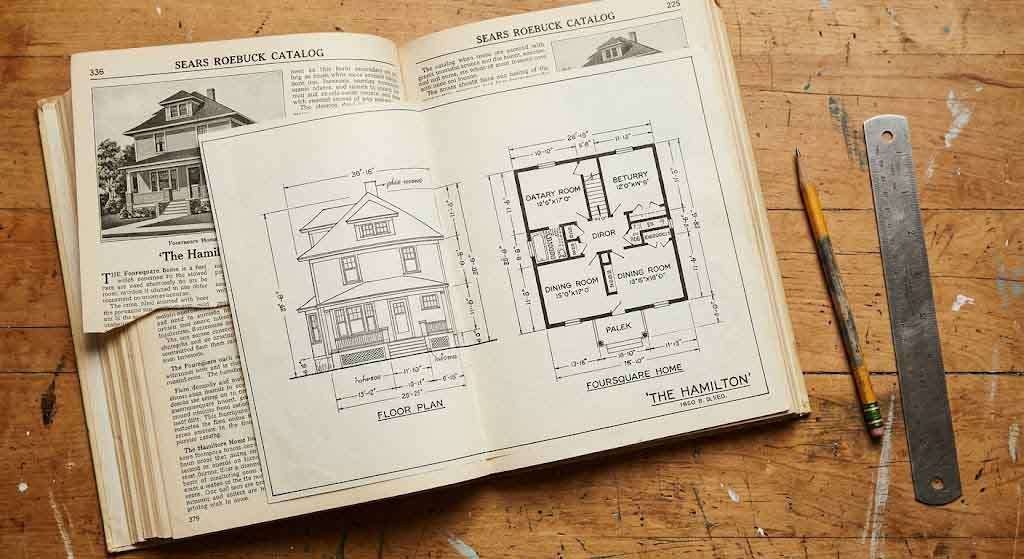
Between 1908 and 1940, Sears, Roebuck and Co. sold roughly 70,000 homes across the United States through its mail-order catalog program, marketed as Book of Modern Homes and Building Plans — later called Honor-Bilt Homes. The pitch was straightforward: choose your floor plan, send your money, receive your house. Cut lumber, pre-fitted and numbered. Everything standardized to reduce waste and eliminate guesswork. According to Houses by Mail, the definitive reference on the program published by the National Trust for Historic Preservation, Sears offered more than 370 home designs over the course of the program — from modest two-room cottages to substantial Colonial Revivals with five bedrooms and a full front porch.
Prices ranged from a few hundred dollars for the smallest models to over $5,000 for the top-of-the-line designs. You still had to build it.
The Box Car Arrives
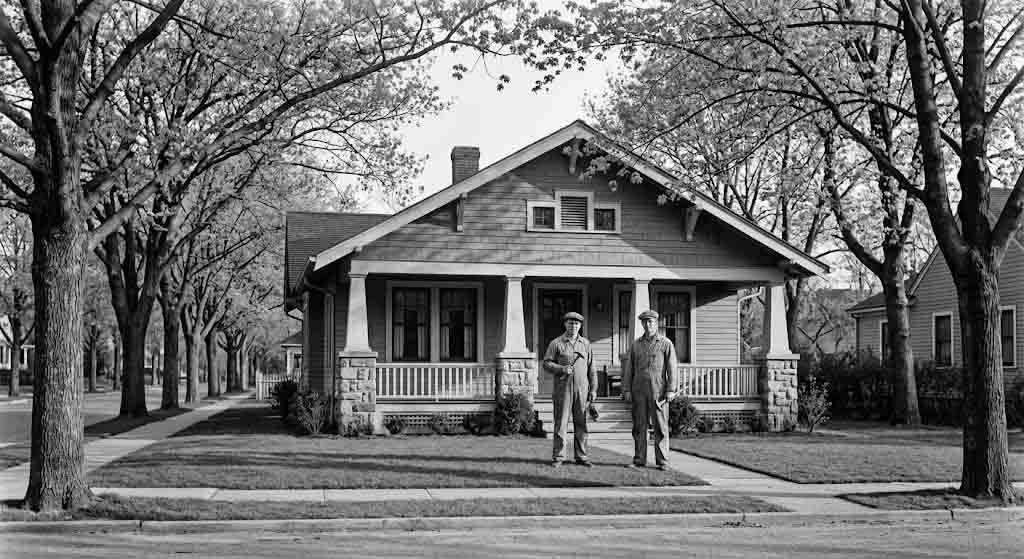
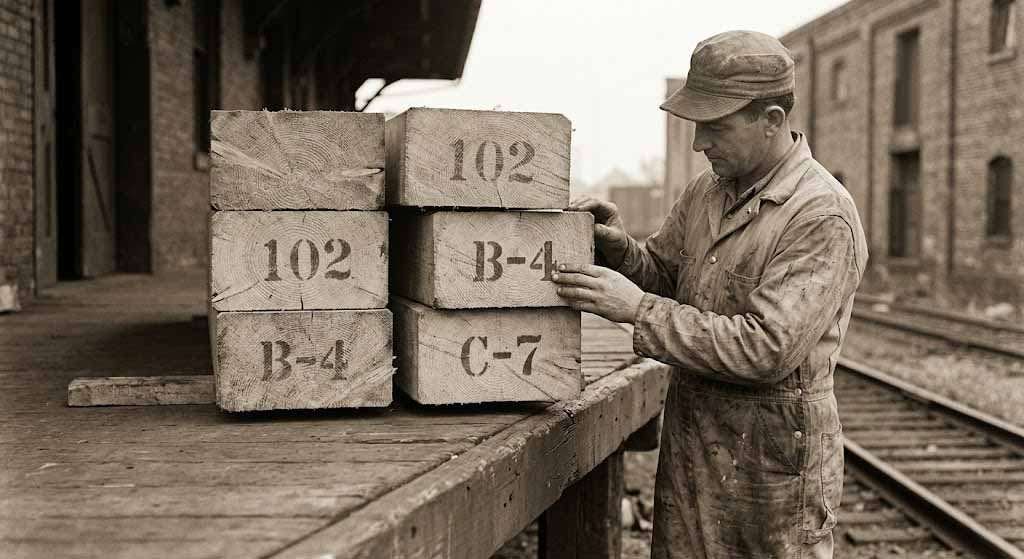
When a Sears kit arrived, it came in two boxcars. The average home required approximately 30,000 parts and 10,000 feet of lumber. The numbering system on the pre-cut pieces was designed so that a literate man with basic carpentry experience and a few able-bodied neighbors could raise the frame. Most buyers did exactly that. They did it on weekends and after work. They did it while holding down jobs at the mill, the factory, the freight yard. Sweat equity wasn’t a real estate concept back then — it was just the way things got done.
The Port Washington Public Library’s local history archives hold documentation of Sears homes constructed on Long Island in the early decades of the twentieth century. Port Washington, Bellmore, and surrounding communities received kits during the program’s peak years. These weren’t showpieces. They were working homes, built for families who needed shelter and couldn’t afford a custom builder. They had character not because an architect designed it in — but because someone’s hands put every board in place.
Some of those houses are still standing.
What the Catalog Said About America
The Sears catalog was many things to early twentieth-century Americans — a wish book, a supply chain, a democratizer of goods that city dwellers took for granted. The home program extended that logic to its furthest point. The idea that a working-class family in a railroad town could access the same floor plans, the same materials, the same quality of construction as a family in a prosperous suburb — that was genuinely radical.
The most popular Sears models were not the grand ones. They were the Craftsman bungalows. The foursquare farmhouses. The Cape Cods. Models like the Winona, the Vallonia, the Starlight — names that sound like they belong to ships, not houses, which feels appropriate. A ship is something you trust your life to. So is a foundation.
What’s notable about the kit home program isn’t just its scale. It’s the contract it made with the buyer: here are all the materials, here are the instructions, the rest is up to you. The house that resulted was yours in a way that few things ever are. You knew where every beam came from. You knew the afternoon you drove the ridge board into place. You knew the window you hung crooked and the one you got right on the first try.
Long Island’s Working-Class Building Tradition
Long Island in the early twentieth century was a place of enormous contrast. The Gold Coast estates of Nassau County’s North Shore — those vast properties with carriage houses, formal gardens, and servant quarters — were being built at the same time that working men and women in Bellmore and Port Washington were unloading Sears kits from freight depots.
The island has always held these two worlds in uncomfortable proximity. The mansion and the bungalow. The architect and the instruction booklet. What’s interesting is that the bungalow is still here, too. Some of those Sears homes on Long Island have outlasted the estates. The materials were sound — Sears backed their Honor-Bilt homes with a quality guarantee and offered financing through their own lending program. The craftsmanship, supplied by the buyers themselves, was the craftsmanship of people who had something at stake.
That tradition of working-class building runs deep on the North Shore. The communities that took shape in the early part of the last century — the modest streetscapes of bungalows and foursquares tucked behind commercial strips on Route 25A — were built by the same kind of people who built the docks and ran the farms and staffed the estates a few miles up the road. They built what they needed with what they had.
Recognizing a Sears Home
Identifying a surviving kit home is part architectural detective work, part local history. The clearest method involves checking the original shipping records — Sears kept meticulous documentation, and researchers have cross-referenced those records with property addresses in many communities. Architecturally, Honor-Bilt homes share certain tells: consistent framing dimensions, a particular style of balloon framing, and the pre-cut notching pattern on joists and rafters.
The National Trust for Historic Preservation has worked to catalog surviving Sears homes, and local historical societies across Long Island have contributed to that effort. The Port Washington Public Library’s local history collection includes materials relevant to kit home construction in Nassau County. These aren’t famous landmarks. Nobody puts up a plaque. But they’re there, on ordinary streets, doing exactly what they were designed to do a hundred years ago.
The craft is invisible now, absorbed into the walls. The man who drove the last nail is long gone. But the house remains.
What It Means to Build What You Live In
There’s something that gets said in real estate — that a house is an investment. That’s true. But for the people who assembled their Sears kit on a Saturday in 1922, it wasn’t an investment in the financial sense. It was a physical act of commitment. You hammered that thing together. You cut the boards. You built the staircase your children would run up and down for the next thirty years. The equity was literal before it was financial.
That relationship to property — the one built on labor and stakes rather than transactions — is worth remembering when looking at the current North Shore market. At Maison Pawli, Pawli works with buyers who are making the most significant financial decision of their lives. Many of them are also making a decision about community — about where they want to plant something permanent. That instinct goes back further than people usually realize. It goes back to a man unloading two boxcars at a Long Island freight depot and deciding to build a house with his own hands.
There is a version of ownership that comes before the deed. It comes before the appraisal. It comes in the moment you decide that this place, this particular piece of ground, is worth your effort. The Sears buyers understood that. They had to.
You Might Also Like
- What Never Hits Zillow: The Hidden Inventory Problem on Long Island’s North Shore
- First-Time Homebuyer’s Roadmap for Long Island in 2026
- Hidden Gem Neighborhoods on Long Island Under $500K
Sources
- Stevenson, Katherine Cole, and H. Ward Jandl. Houses by Mail: A Guide to Houses from Sears, Roebuck and Company. National Trust for Historic Preservation / Preservation Press, 1986. amazon.com
- Sears Archives — Sears Modern Homes Program. searsarchives.com/homes
- Port Washington Public Library, Local History Collection. pwpl.org/local-history
- National Trust for Historic Preservation. savingplaces.org