Long Island zoning was not designed for the way working people actually live.
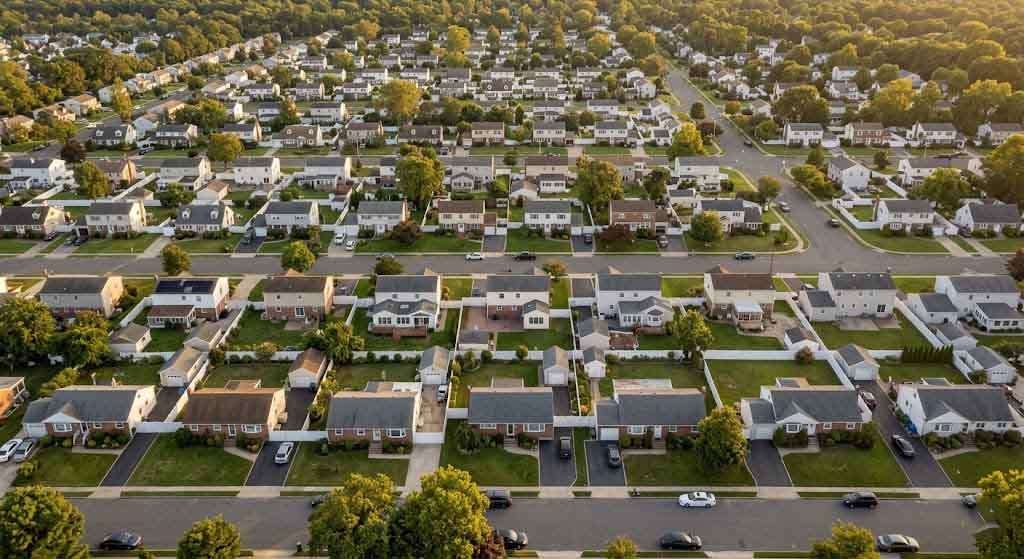
It was designed for a postwar ideal: one family, one house, one lawn, one car in the driveway. The dream of the separate American household, assembled in the 1940s and 1950s out of GI Bill money and the particular political will to keep suburbs economically and racially homogeneous. Single-family zoning, which spread across Nassau and Suffolk Counties with remarkable speed and completeness after World War II, enshrined that ideal in law. You could own your home. You just couldn’t share it — not officially, not without permits that were designed to be difficult to get and penalties that were designed to discourage asking.
Working-class families on Long Island did what working-class families do when the system doesn’t account for them. They built anyway.
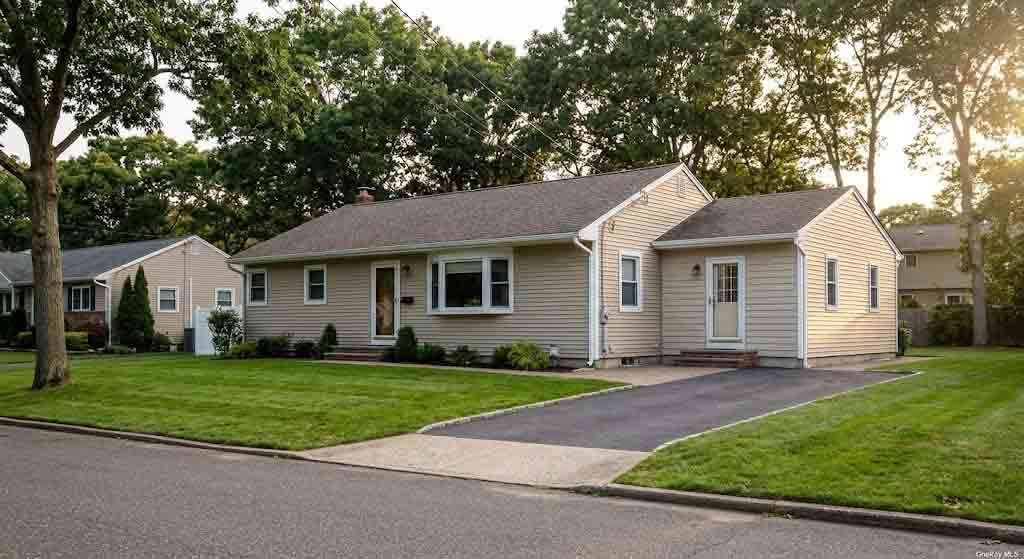
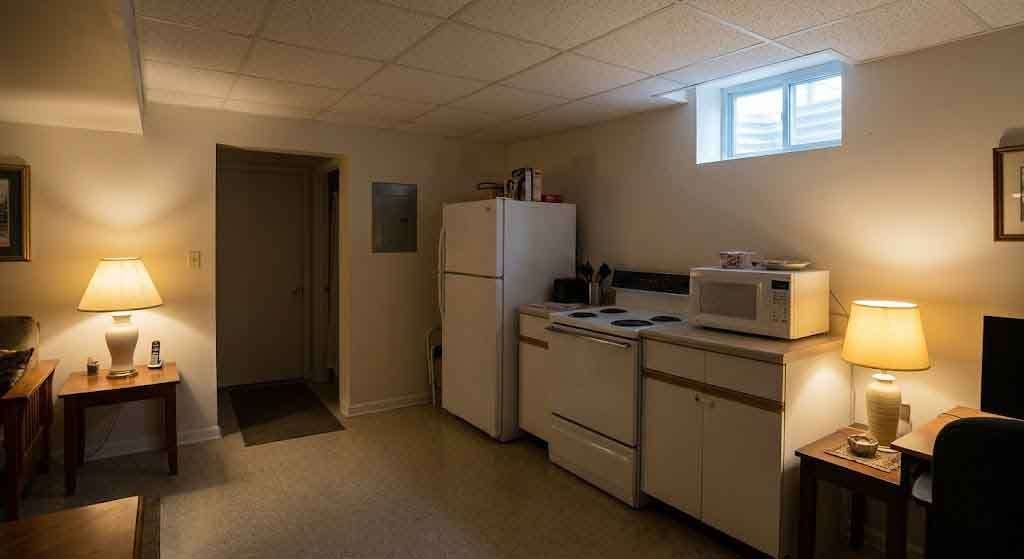
The mother-daughter house — a single-family structure with a second, partially self-contained living space, usually a converted basement or a rear addition with its own entrance and kitchen hookup — became one of the most recognizable features of Long Island’s residential landscape. It is also one of the most legally ambiguous. For decades, these units existed in a gray zone: technically illegal under zoning codes that restricted occupancy to a single family, practically ubiquitous in every working-class community from Hempstead to Holbrook. Contractors built them quietly. Homeowners finished them in stages. Real estate listings mentioned them in coded language, or not at all.
Where the Law Came From
The legal framework governing these spaces goes back to the foundational zoning codes that Long Island’s towns adopted in the postwar period. Suffolk County, which encompasses a patchwork of independently governed towns each with their own codes, created a complicated map of what was and wasn’t permissible. Nassau County, governed by the Town of Hempstead as the dominant municipality, had its own set of rules. What they shared was a bias toward single-occupancy residential units and a deep skepticism, embedded in law, about anything that looked like a rental apartment in a single-family zone.
The tension between that legal framework and economic reality produced exactly what you’d expect: widespread informality. A 1988 Newsday investigation estimated that 90,000 illegal accessory apartments had been created on Long Island since 1980 alone. That number was almost certainly an undercount, because the units that didn’t show up in any survey were the ones that never got permits, never got listed, and were carefully not mentioned to anyone with a clipboard. The island-wide prevalence of these units, documented in a 2016 report by Hofstra University’s Suburban Studies Center, was estimated at 2.34 percent of sold homes — and researchers acknowledged that was likely understated, because informal family units rarely show up in listing data.
The legal crackdown was sporadic and largely ineffective. Towns would periodically announce enforcement sweeps, issue notices, levy fines. Then the political pressure would build — these units housed parents, in-laws, grandparents, adult children who couldn’t afford to move out — and the enforcement would ease. The constituency for these homes was enormous, and it overlapped almost perfectly with the working and lower-middle class, Greek families, Italian families, Hispanic families, immigrant families of every background who had bought into suburban homeownership but needed the flexibility that single-family zoning expressly did not permit.
The Shift Toward Legalization
The first significant legal shift came not from moral conviction but from pragmatism. In the 1980s, a wave of accessory dwelling unit ordinances passed across Long Island, not because attitudes toward density had changed but because the housing shortage was visible and the political cost of ignoring illegal apartments had risen. Towns began creating formal accessory apartment programs — with conditions. The occupant had to be a family member. The unit had to be registered. The homeowner had to certify, annually in some cases, that the unit was being used by a qualifying relative. These were not liberalizations. They were regularizations of what was already happening, with bureaucratic guardrails designed to prevent the units from becoming de facto rental stock.
The enforcement of those family-occupancy rules was essentially impossible, and most municipalities knew it. A unit registered as a mother-daughter arrangement could be quietly converted to a rental within months of approval. Towns understood this. They looked away. The political reality was that the housing need was real, the units existed, and formalizing them created permit revenue and some legal accountability where there had been none.
Suffolk County took a relatively permissive approach over time, allowing accessory dwelling units broadly across unincorporated areas. Nassau County remained more restrictive, with the Town of Hempstead creating specific mother-daughter and senior residence designations that permitted the units under family-occupancy conditions while maintaining tighter controls than Suffolk. The 2016 Hofstra report documented this split clearly: Suffolk allowed ADUs broadly, Nassau allowed them conditionally, and a patchwork of incorporated villages had their own rules that existed on a spectrum from permissive to effectively prohibitive.
The Town of Brookhaven, which covers much of central and eastern Suffolk County and includes communities from Port Jefferson to Yaphank, has permitted accessory apartments in residentially zoned areas for years, subject to lot size minimums, setback requirements, and health department sign-off on septic capacity. The paperwork is real. The process is not fast. But the legal path exists, and it has existed long enough that many of the mother-daughter units you see in Brookhaven communities today were built with permits, registered, and are genuinely compliant — a very different animal from the informal basement conversions that still make up a significant portion of the island’s housing stock.
Why It Matters Now
The accessory dwelling unit question, which seemed like a local zoning backwater for decades, landed at the center of New York State housing policy in 2022 when Governor Hochul proposed a statewide mandate that would essentially allow ADUs by right on all single-family lots, overriding local zoning. The reaction from Long Island’s municipal governments was swift and almost universally hostile. Nassau County Executive Bruce Blakeman called it an attack on the suburbs. Representative Tom Suozzi, a Democrat, said it would eliminate single-family housing. Town supervisors across the island, bipartisan for once, presented a united front of opposition.
The proposal failed to pass in that form. But the housing need it was trying to address has not gone away. The Regional Planning Association estimated that legalizing ADUs statewide could create nearly 500,000 additional housing units in the Hudson Valley, New York City, and Long Island by 2040. Nassau County alone could generate 92,000 additional homes under their modeling. These are not small numbers on an island where housing inventory is chronically constrained and prices have put homeownership out of reach for a growing share of the population.
I wrote about the hidden inventory problem on the North Shore in What Never Hits Zillow, and the mother-daughter unit is a version of the same phenomenon: housing stock that exists, is used, but does not appear in any official count. Some of it is formal. A lot of it isn’t. And whether it’s formally registered or not, it represents the island’s working class doing what working people do — building solutions to problems the system didn’t design solutions for.
The Class Story Inside the Zoning Code
Strip it down and the mother-daughter house is a story about money and family and the specific pressures of trying to maintain multi-generational life in a region designed to atomize it. The postwar zoning framework that spread across Long Island was not ideologically neutral. It was built to create and maintain a particular kind of residential environment — single-family, low-density, owner-occupied — and it was enforced with more enthusiasm in some communities than others.
My own family’s version of multi-generational housing wasn’t a mother-daughter setup; it was a Brooklyn apartment building, my grandparents upstairs and us below, and the understanding that you didn’t let people you loved struggle alone if you had space to share. That ethic doesn’t disappear when you move to the suburbs. It just runs into a zoning ordinance.
The families who built these second units weren’t being clever or subversive. They were being practical. A parent aging out of the ability to live fully independently. An adult child who can’t carry a Long Island mortgage alone. A recent immigrant family where multiple incomes under one roof is not a lifestyle choice but a mathematical necessity. The law said one family, one unit. Life said something different.
The legalization movement, which has moved forward fitfully across the island over four decades, represents the law slowly catching up to the reality it always pretended didn’t exist. Paola Meyer, Associate Broker at Realty Connect USA, sees the market reality up close: buyers increasingly ask about mother-daughter configurations specifically, and the legal status of the unit — permitted or unpermitted — is a material consideration that affects financing, insurance, and long-term value. An unpermitted unit carries risk. A permitted one carries value. Getting right with the municipality is not just paperwork; it’s the difference between an asset and a liability when it’s time to sell.
That clarification — from informal survival strategy to documented real estate asset — is the full arc of the mother-daughter house on Long Island. It took forty years and a housing crisis the island couldn’t pretend away. The working-class families who built these spaces quietly, in the back of basements and behind side entrances, were never waiting for permission. They were waiting for everyone else to catch up.
What Buyers and Sellers Need to Know Today
If you’re buying a home on Long Island with an existing mother-daughter unit, the first question is not how much it adds to the value — it’s whether it’s legal. The Town of Brookhaven, the Town of Islip, the Town of Huntington, and the other Suffolk municipalities each have their own compliance process. A registered, permitted unit will survive transfer of ownership. An unpermitted one is the new owner’s problem, and potentially their liability.
If you’re a current homeowner with an informal unit and you’re thinking about a sale, legalization before listing is almost always the right move. It converts a disclosure problem into a selling point, and on Long Island, where inventory remains chronically constrained, any documented income-producing or multi-family-capable feature adds real value.
The mother-daughter house is not a workaround anymore. It is, increasingly, the product. New York State’s Plus One ADU Program has made grant funding available for homeowners to create or legalize accessory units. The political winds, after years of local resistance, are slowly shifting toward the units rather than against them. The housing math is too stark to ignore.
Long Island built these homes out of necessity. It is only now, belatedly, starting to count them.
You Might Also Like
- Buying Your First Home on Long Island: The Neighborhoods Nobody Talks About
- The Craftsman Home Revival on Long Island: Architecture, History, and Market Value
- What Never Hits Zillow: The Hidden Inventory Problem on Long Island’s North Shore
Sources
- Hofstra University Suburban Studies Center — Accessory Dwellings on Long Island: An Overview (Christopher Niedt, 2016)
- Metropolitics — The Second Coming of the Accessory Dwelling Unit (Joseph Weil Huennekens, 2022)
- Regional Planning Association — New York State ADU Legislation Fact Sheets
- The Foggiest Idea — Is It Too Late to Bring the Roof Down on Hochul’s ADU Plan? (Richard Murdocco, 2022)
- LI Herald — Hochul: End Zoning Focus on Single Families
- New York State Plus One ADU Program — Long Island Housing Partnership