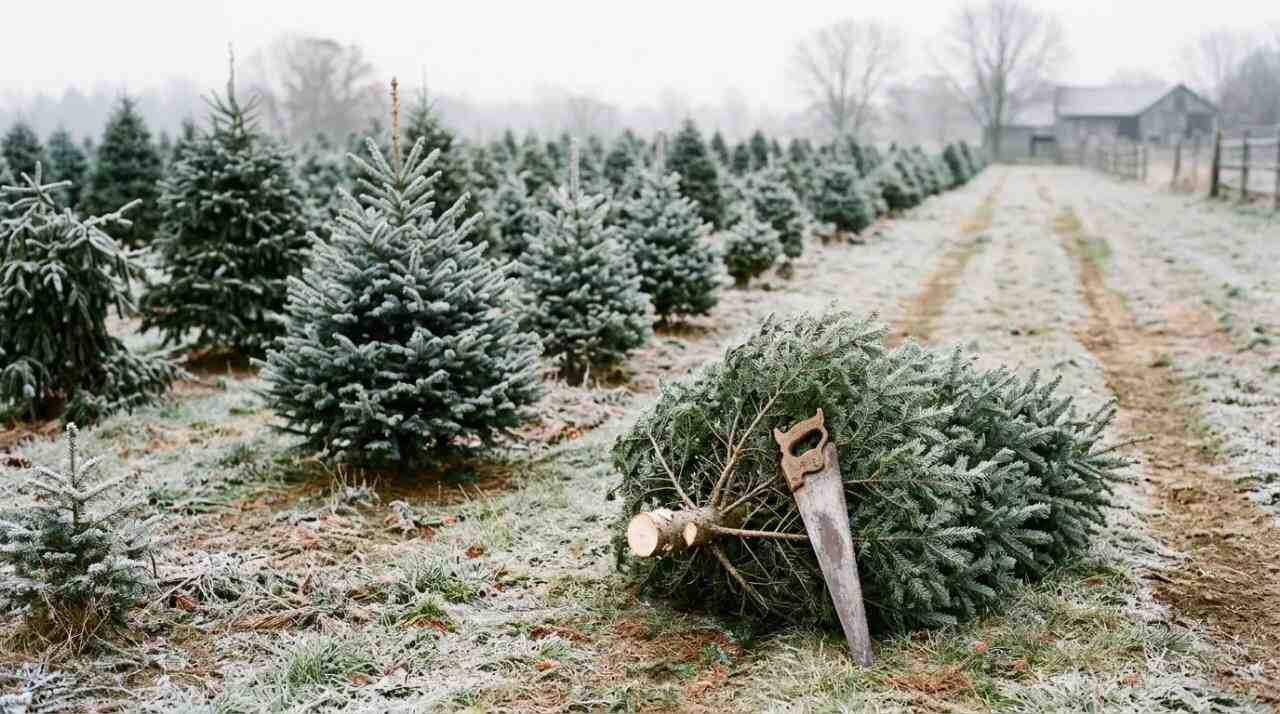
Suffolk County has a short list of working tree farms where a family can walk the rows, pick a spruce or fir, and cut it down with a hand saw, and most of them open on the same cue: the weekend after Thanksgiving, which in 2026 begins on Friday, November 27. The farms below are the ones whose own pages were checked for this guide, from Miller Place and Huntington to Manorville, Bay Shore and the edge of the North Fork. Where a farm has posted 2026 dates, they appear here exactly as written; where it has not, the guide says so instead of guessing.
How the Christmas tree season works on Long Island
The calendar is more predictable than the weather. Thanksgiving falls on November 26 in 2026, and the choose-and-cut farms that name a start point tend to anchor it to the holiday. Mike’s Christmas Tree Farm in Manorville describes its season on its own page as running from the day after Thanksgiving through Christmas Eve, and Matt’s Christmas Tree Farm, also in Manorville, uses nearly identical language: “We are open everyday except Tuesday 8:00 am to 4:30 pm from the day after Thanksgiving to Christmas Eve.”
A few farms start earlier. Carter Christmas Tree Farm in Miller Place lists a 2026 season of “November 21st until December 20th, 2026”, with Saturday and Sunday hours of 9 am to 4:30 pm and an extra Friday opening on November 27. That makes it the earliest confirmed start among the farms reviewed here, and it ends before the final week of December, a detail worth noting for anyone planning a late trip.
The farms differ in format as much as in dates. Some are pure choose-and-cut operations where the saw is the whole experience. Others, such as Brightwaters Farms in Bay Shore, wrap the tree field inside a holiday event with Santa, animals and admission tickets. A third group sells trees already cut and stood up, and a few offer both.
Farm listings elsewhere on the web often lag behind. One regional directory of Long Island tree farms tells readers to call each farm before visiting, because hours, tree availability and listing details may be out of date, and that advice holds even for farms with a current website.
Choose-and-cut farms on the North Shore and in Huntington
Carter Christmas Tree Farm, Miller Place. The farm sits at 123 North Country Road, and its 2026 season page lists Scotch pine, white fir, white spruce, blue spruce and Norway spruce, in heights from 3 to 10 feet. Visitors may bring a hand saw or borrow one from the farm; the page adds that chainsaws are not permitted. Pre-tagging, which lets a family mark a tree and return to cut it later, opens on November 21. The farm wraps most trees, and the page asks visitors to bring a sturdy rope for fastening the tree to the vehicle. The phone number on the page is (631) 331-4699.
Elwood Pumpkin and Christmas Tree Farm, Huntington. Elwood, at 1500 East Jericho Turnpike, lists Norway spruce, Douglas fir, Fraser fir, blue spruce and Turkish fir, with the large Norway spruce and Douglas fir reaching up to 30 feet; the page asks buyers of those sizes to call for details. Customers who want to cut their own should bring a saw, and staff will do the cutting for anyone who prefers not to. Axes and chainsaws are not permitted, tying the tree to the car is free, and the page states that credit cards are not accepted. The page posts hours under its pumpkin season and gives no separate Christmas tree dates, so the farm’s phone line, 631-368-8626, is the way to confirm when the trees are ready.
Choose-and-cut farms in Manorville
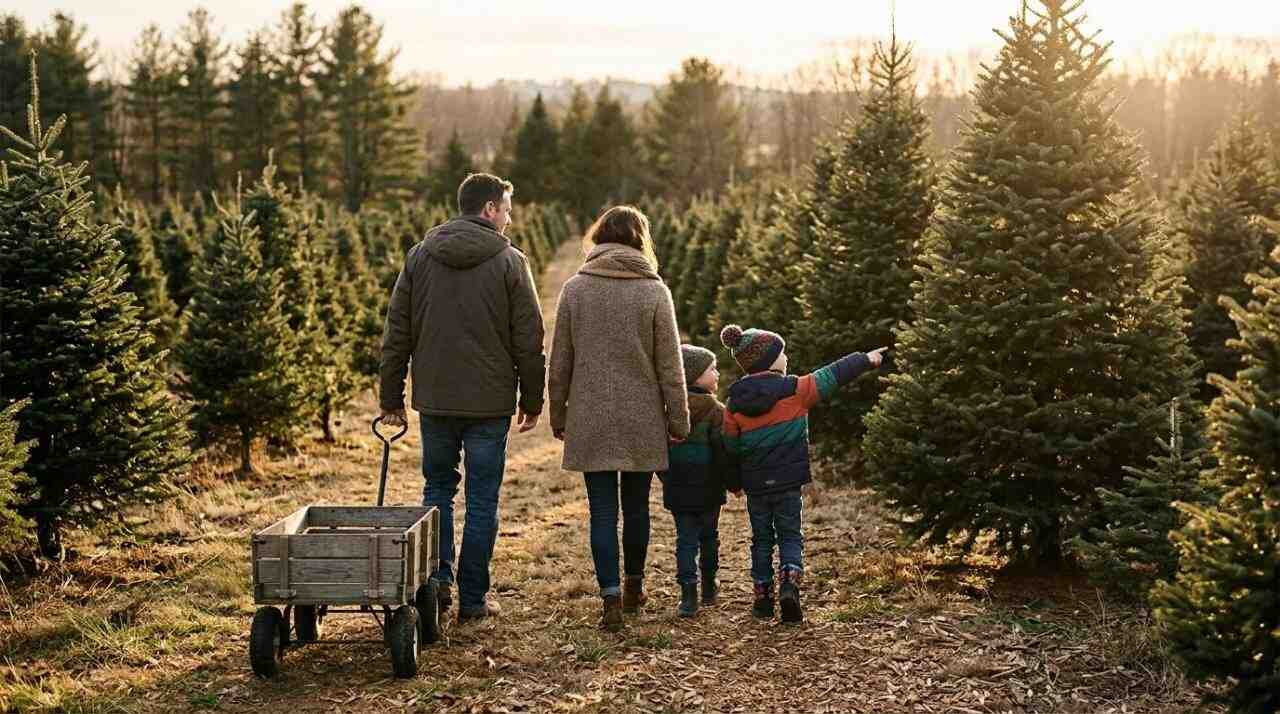
Weeks Avenue in Manorville holds two neighboring tree farms, and between them they cover most of what a family wants from a traditional trip.
Mike’s Christmas Tree Farm, 323 Weeks Avenue. According to the farm’s own page, the doors are open every day from 8:00 am to 4:30 pm from the day after Thanksgiving through Christmas Eve. The selection is described as “a good selection of Norway Spruce, White Spruce, Colorado Blue Spruce and others.” Saws are provided, staff will cut, wrap and tie a tree to the roof, and balled and burlapped trees are available for planting afterward. Leashed dogs are welcome, tractor rides and fresh wreaths made on site round out the visit, and payment is cash only. The page lists (631) 874-3551 and states per-foot pricing, but it carries no year, so prices should be confirmed by phone before the trip.
Matt’s Christmas Tree Farm, 305 Weeks Avenue. The farm’s website shows Norway spruce, blue spruce, white spruce, Serbian spruce and balsam fir in its photographs. The page promises bow saws, trailer rides back to the parking area, netting, and help loading and tying. Live trees are offered in pots or burlap balls, and trees can also be dug from the fields, weather permitting. Leashed dogs are welcome, and the farm invites professional photographers to bring clients for holiday portraits. The street address comes from the regional directory listing, since the farm’s own page does not print one. The farm’s page lists a flat per-foot price with cash and credit cards accepted but, like Mike’s, carries no year, so confirmation by phone is sensible.
Bay Shore, Baiting Hollow and the edge of the North Fork
Brightwaters Farms, Bay Shore. The Suffolk County farm and office sits at 1624 Manatuck Boulevard, and its Christmas program is built as a full outing. The farm’s Christmas Extravaganza page describes “Acres of Cut Christmas Trees that are stood in the field to pick or cut” and says the 2026 event will begin in late November, with opening dates still to come. Weekday admission is free until 4 PM; after that, and on weekends, the page lists admission of $20 per family of up to five or $10 per person. Santa appears at 4 PM on weekdays, and the page notes that weekend tree fields run extended hours without printing the times. The page also sells a Breakfast with Santa package that includes farm admission. The page names no tree species and posts no tree prices.
Lewin Farms, Wading River. The family farm describes itself as serving the North Fork, Baiting Hollow, Calverton and Wading River, and its Christmas tree page is run through the Baiting Hollow Nursery on Fresh Pond Avenue. At the time of writing, that page still carries a closing notice for the 2025 season, so no 2026 dates or prices have been posted. The same page does outline the farm’s tree selection and its field rules: Douglas fir is described as the most popular and most abundant tree, with blue spruce, Norway spruce, other spruces and some larger white pine also available. Visitors are asked not to cut small trees or tops, to walk rather than run among the stumps and holes, and to arrive by 3 pm because the field has no lights.
Which trees grow on Long Island, and how they differ
Across the farms above, the lineup is consistent. Spruces dominate the Manorville fields, with Norway, white, blue and Serbian all named, while Carter adds Scotch pine and white fir, Elwood lists Douglas, Fraser and Turkish firs, and Lewin leans on Douglas fir.
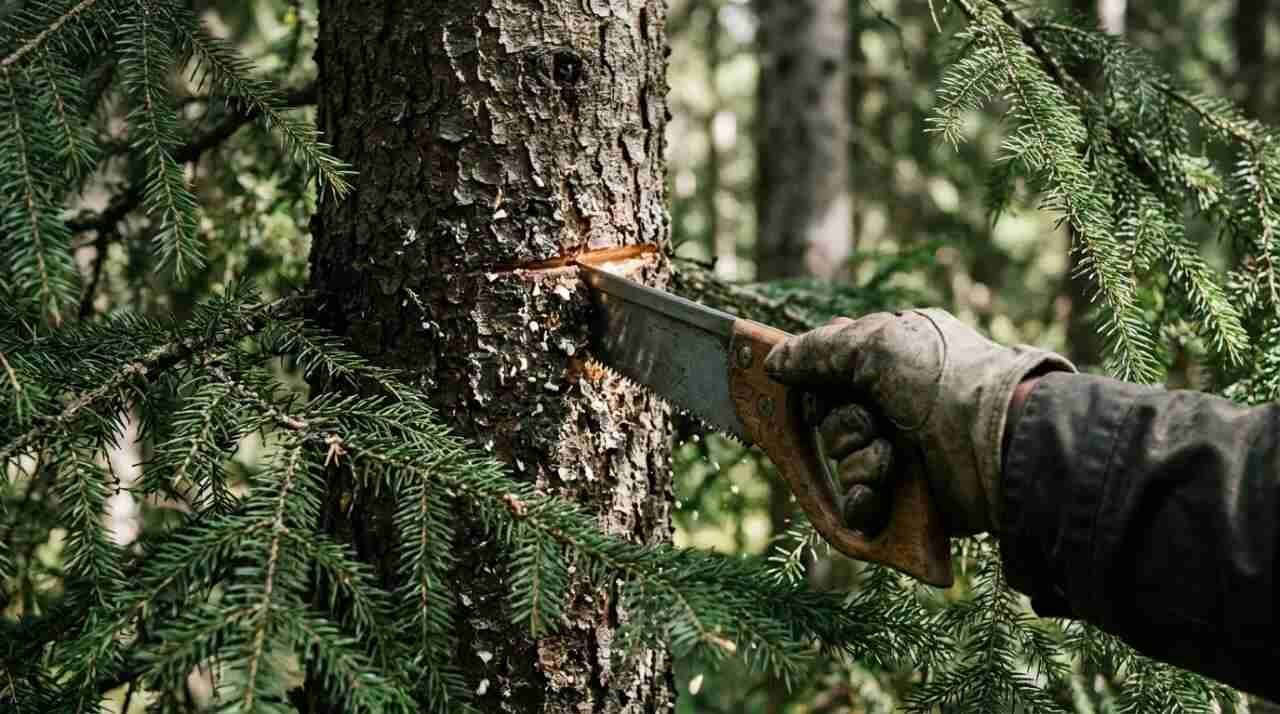
Cornell’s extension bulletin on selection and care of Christmas trees draws one useful distinction: spruces and firs carry short needles, and pines carry long ones. The same bulletin warns that hemlock is notably unsuitable for Christmas use, because its needles drop quickly and its branches are too limber. Lewin’s page supplies the practical side for blue spruce, noting strong, blue-tinted branches that are spiny to handle, while Norway spruce is described as slightly less prickly with dark green needles.
Taste matters too. Cornell experts quoted in a university tip sheet note that spruce, pine and fir each have advantages, with some offering better scent and others holding heavy ornaments better. The National Christmas Tree Association’s FAQ puts the choice more simply: “The best species is the one YOU like best.”
Growing is slow. According to the same association, the average tree takes 7 to 10 years to reach six or seven feet, and farms plant new seedlings to replace what is harvested. For the state as a whole, New York’s Department of Agriculture and Markets reported in a November 2025 release more than 875 tree farms on nearly 20,000 acres, ranking sixth nationally for number of farms and fourth for acreage.
What to ask before driving out
Because Long Island farms run on small crews and field conditions, a two-minute call saves a wasted trip. The questions that matter most are the simplest.
Ask for the 2026 opening day and the last day, since several farms close before Christmas Eve. Ask whether trees are priced by the foot or by size, and which payment methods are accepted: Mike’s takes cash only, Elwood does not accept credit cards, and Matt’s accepts both cash and cards. Ask whether saws are supplied, and bring a rope or ratchet strap regardless.
Pre-tagging deserves a question of its own. Carter’s page says tagging starts on November 21, which suits families who want the best-shaped tree in the field without the Thanksgiving-weekend crowd. Ask, too, about balled and burlapped trees if a planting is in mind. The state’s November 2025 release points to potted trees for anyone who wants to plant after the holidays, and Mike’s and Matt’s both say they offer live options.
Finally, ask about dogs, strollers and photography. Mike’s and Matt’s welcome leashed dogs, Elwood requires a permit for photography, and Matt’s invites professional photographers.
Keeping a fresh-cut tree from drying out
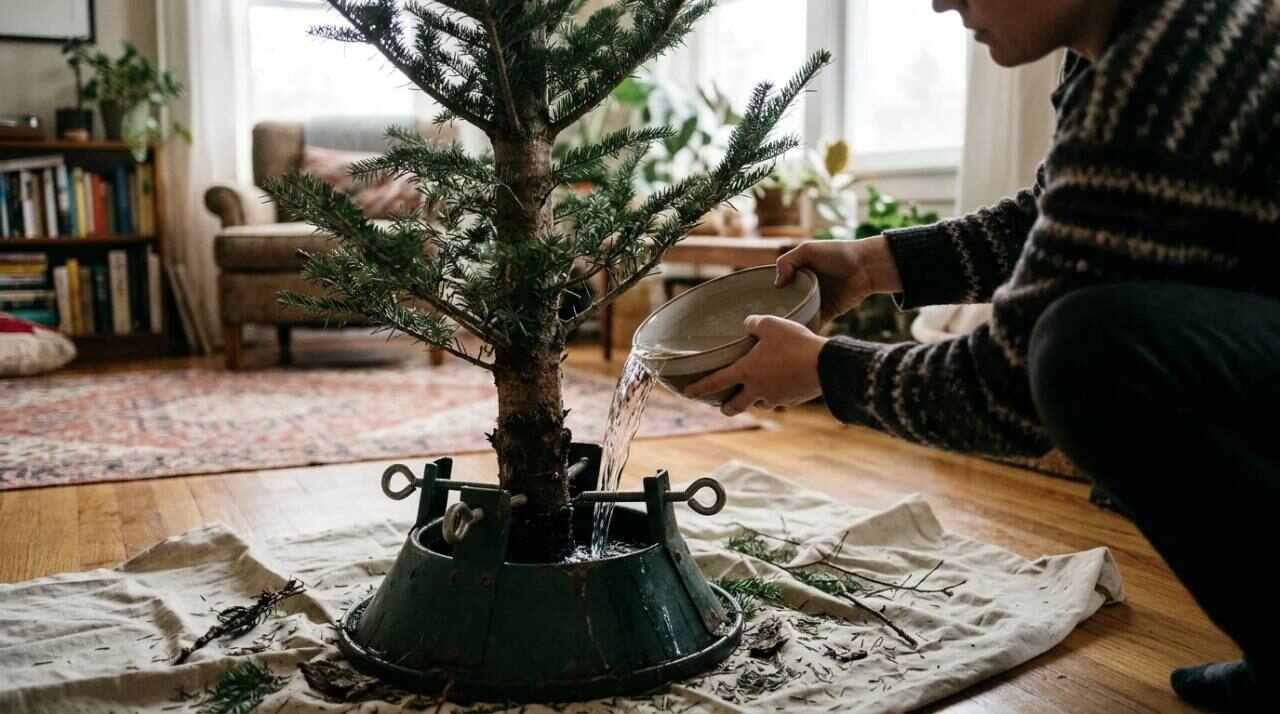
Water is the whole story. Cornell Cooperative Extension’s bulletin says to “Keep the reservoir filled above the base of the tree at all times.” A stand with a real reservoir matters, and lukewarm water is absorbed more readily than cold.
A tree that has sat for hours since cutting may need a fresh trim. The bulletin recommends a new cut across the trunk at least one inch above the old one, while the national association’s FAQ says that only a half-inch trim is needed and warns against angled or tapered cuts, which take up less water. The association also reports that a tree may drink up to a quart of water daily for each inch of trunk diameter, so a four-inch trunk calls for a stand holding at least a gallon, and it advises plain tap water over additives such as bleach or aspirin.
Cornell specialist Elizabeth Lamb, in the university’s tip sheet, advises checking the water level often, sometimes several times a day during the first few days when the tree drinks the most. Trees cut by customers in the field have usually been through several frosts, she notes, which helps needle retention.
Placement and wiring count as well. The Cornell bulletin says heat will cause the needles of some conifers to drop quickly, so a spot away from vents and fireplaces is better, and it advises checking all lights for loose connections or bare wires before they go on the tree.
Farms to cross off the list
Older articles and directories still send readers to farms that no longer sell trees. Dart’s Christmas Tree Farm in Southold, which describes itself as Long Island’s oldest Christmas tree farm, states on its website that it ceased Christmas operations as of 2023. A farm directory that still lists it, or any entry that says it has not been updated in years, should be treated as a lead to verify rather than a plan.
Nassau County readers have retail nurseries listed in the same regional directory, including Dees’ Nursery in Oceanside and Hicks Nursery in Westbury, but their own pages were not reviewed for this guide, so no 2026 details are given here. The Christmas Tree Farmers’ Association of New York, founded in 1953, also maintains a statewide farm locator for cut-your-own fields and fresh-cut trees.
Sources
- Carter Christmas Tree Farm
- Elwood Pumpkin and Christmas Tree Farm
- Mike’s Christmas Tree Farm
- Matt’s Christmas Tree Farm
- Brightwaters Farms: http://www.brightwatersfarms.com/ and https://www.brightwatersfarms.com/christmas-extravaganza
- Lewin Farms: https://www.lewinfarm.com and https://www.lewinfarm.com/christmas-trees
- Dart’s Christmas Tree Farm
- Pick Your Own Christmas Tree directory, New York
- Cornell Cooperative Extension, Selection and Care of Your Christmas Tree
- Cornell tip sheet
- National Christmas Tree Association FAQ
- NYS Department of Agriculture and Markets, November 24, 2025
- Christmas Tree Farmers’ Association of New York
- For informational purposes only. Confirm all hours, prices and policies with each farm before visiting.