For decades, the standard nutritional advice surrounding red meat was uncompromisingly bleak. If you wanted to protect your heart, manage your waistline, and live a long, healthy life, the prevailing wisdom dictated that you should skip the steak and order the salad. Red meat became the ultimate dietary villain, synonymous with clogged arteries and cholesterol spikes. But science is rarely static. Over the last few years, a quiet revolution has taken place within the nutritional science community, challenging the dogmas of the 1980s and 1990s. Today, a closer look at the data reveals a much more nuanced picture. The question is no longer just whether you can eat steak and be healthy, but how high-quality beef might actually play a functional role in a balanced, nutrient-dense diet.
The Historical Vilification of Red Meat
The war on red meat didn’t happen overnight. It was born out of the diet-heart hypothesis of the mid-20th century, which posited that dietary saturated fat directly caused coronary heart disease. By the time the USDA released its infamous Food Pyramid in 1992, red meat was firmly shoved toward the narrow tip, lumped together with sweets and fats as an indulgence to be eaten sparingly.
During this era, public health messaging relied heavily on observational studies. These studies frequently pointed to a correlation between high meat consumption and poor health outcomes. However, observational research often struggles to untangle individual foods from overall lifestyle patterns. For years, the typical “heavy meat eater” in these studies was also statistically more likely to smoke, drink heavily, exercise less, and consume fewer fruits and vegetables (Harvard T.H. Chan School of Public Health, 2020). The steak wasn’t being eaten in a vacuum; it was part of a larger, unhealthier lifestyle.
The PURE Study and Shifting Paradigms
The turning point in the red meat conversation began when researchers started applying more rigorous scrutiny to the existing data. A major shift occurred with the publication of findings from the Prospective Urban Rural Epidemiology (PURE) study, a massive global research project tracking the dietary habits of over 135,000 people across 18 countries. The PURE study data suggested that moderate consumption of unprocessed red meat was not associated with the increased risks of cardiovascular disease and early death that previous models had predicted (Diet Doctor, 2021).
Further disrupting the status quo, a controversial but highly impactful 2019 systematic review published in the Annals of Internal Medicine by the NutriRECS consortium concluded that the evidence linking red meat to cancer and heart disease was actually of “low to very low certainty.” The researchers argued that the absolute risk reductions associated with cutting out meat were so small that they did not warrant a blanket public health recommendation urging everyone to stop eating it (Annals of Internal Medicine, 2019). While this sparked fierce debate among established nutrition organizations, it forced a necessary conversation about the quality of evidence used to shape global dietary guidelines.
Unpacking the “Healthy User Bias”
To understand why older studies demonized meat while newer perspectives are more forgiving, we have to look at “healthy user bias.” In the past, individuals who ignored public health warnings to limit meat were often the same people ignoring warnings about smoking or sedentary behavior. Conversely, those who ate less meat were usually health-conscious individuals who exercised, took vitamins, and ate plenty of vegetables.
Today, however, a new demographic has emerged: the health-conscious omnivore. With the rise of whole-food, protein-forward dietary patterns, there is a growing cohort of people who proactively consume red meat while also maintaining high fitness levels and avoiding refined sugars. As discussed in recent nutritional analyses, until we study this modern, health-conscious meat-eater, it remains incredibly difficult to disentangle the effects of the meat itself from the lifestyle of the person eating it. For a great breakdown of how this bias skews nutritional narratives, check out this video analyzing the current red meat longevity claims: https://www.youtube.com/watch?v=tegXWZtMsvk
Processed vs. Unprocessed: The Crucial Distinction
Perhaps the biggest flaw in historical meat research was the failure to separate a fresh cut of beef from highly processed alternatives. Lumping a grass-fed ribeye into the same statistical category as a gas-station hot dog or industrially cured salami is a recipe for bad science.
Processed meats are chemically altered, cured, smoked, or preserved with additives and high levels of sodium. It is the processing—not the meat itself—that is most strongly associated with negative health outcomes. The Global Burden of Disease Study highlighted that diets high in heavily processed meats are linked to increased risks of heart disease and certain cancers, potentially causing thousands of premature deaths annually (NutritionFacts, 2022). Unprocessed red meat, eaten in appropriate portions, simply does not carry the same epidemiological risks. For a quick visual explanation of the differences in health outcomes between the two, this short breakdown is highly informative: https://www.youtube.com/shorts/XXpv_oQ0gik
The Nutritional Powerhouse on Your Plate
When we strip away the controversy, the biological reality is that unprocessed beef is one of the most nutrient-dense foods available. It is an exceptional source of high-quality, highly bioavailable protein, containing all the essential amino acids required for muscle maintenance, repair, and overall metabolic health.
Beyond protein, red meat is uniquely rich in vital micronutrients. It provides highly absorbable heme iron, which is critical for preventing anemia and supporting oxygen transport in the blood—a stark contrast to the less bioavailable non-heme iron found in plants. It is also one of the best natural sources of Vitamin B12, essential for nerve function and red blood cell production, and zinc, which is a foundational element for a well-functioning immune system.
Sourcing Matters: Respecting the Raw Material
Just as a master artisan at a boutique leatherworking shop like Marcellino NY knows that the quality of the raw hide completely dictates the durability and beauty of the final product, a modern nutritionist knows that the source of your food dictates its impact on your body. Not all steak is created equal.
Cattle raised on open pastures and finished on grass tend to yield meat with a more favorable nutritional profile than conventionally raised, grain-fed beef. Grass-fed beef typically contains higher levels of anti-inflammatory Omega-3 fatty acids and conjugated linoleic acid (CLA), a fat associated with various health benefits.
How you prepare the meat also matters. Heavy charring and cooking at extremely high temperatures can create heterocyclic amines (HCAs), which are linked to inflammation. Opting for gentler cooking methods, using marinades rich in herbs and spices, and pairing the meat with fibrous, antioxidant-rich vegetables can mitigate these risks while enhancing flavor.
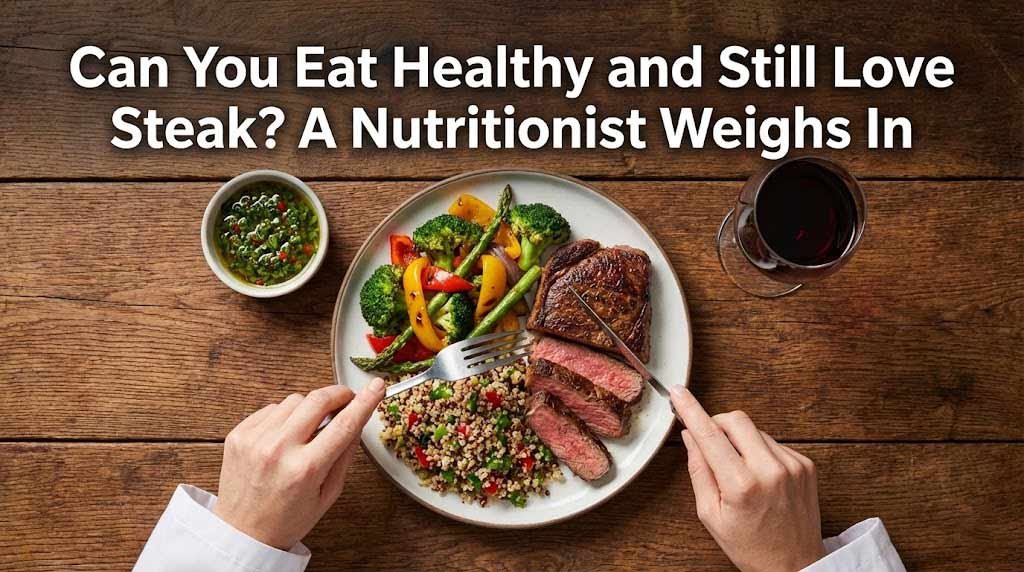
Whether you are cooking a high-quality cut at home or settling into a booth at a classic heritage diner to enjoy a perfectly seared steak and eggs, the context of the meal matters. A steak paired with a colorful salad, roasted asparagus, and a mindful approach to eating is a vastly different biological event than a fast-food burger eaten under stress.
The era of fearing food is slowly giving way to an era of food intelligence. The science is increasingly clear that you do not have to banish beef from your plate to live a long, vibrant life. By focusing on unprocessed cuts, prioritizing quality sourcing, and building a plate that includes plenty of fiber and micronutrients, you can absolutely enjoy a great steak while supporting your long-term health. Nutrition is about the aggregate of your choices, not the demonization of a single ingredient. Eat mindfully, source well, and savor every bite.