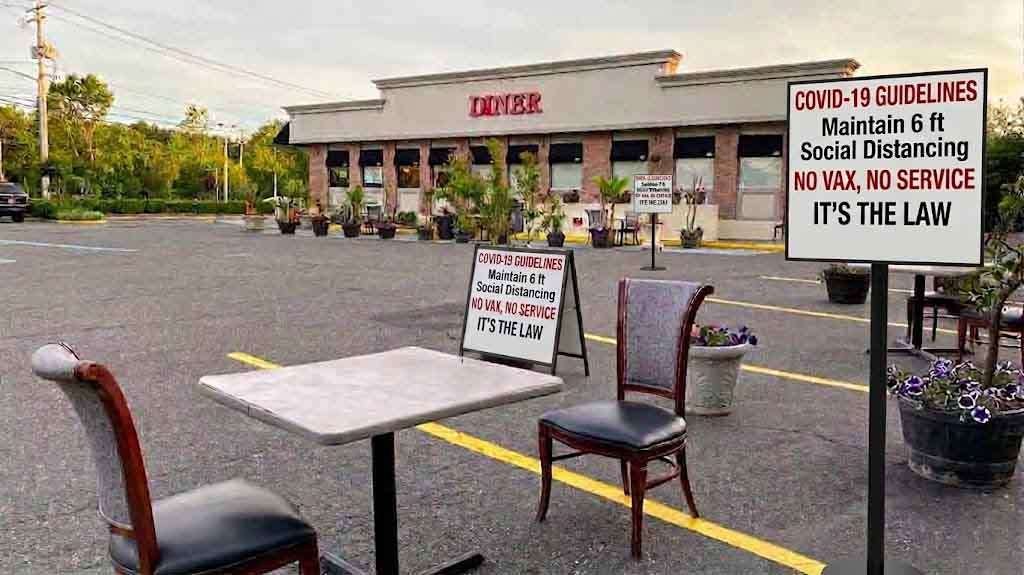
Five years ago this month, I taped a handwritten sign to the front door of The Heritage Diner that said PICKUP ONLY. I dragged a four-top table from the dining room and wedged it sideways into the doorframe so nobody could walk past it. That table became the boundary between us and whatever was coming. Customers stood on the other side with their masks half-on, reaching over for Styrofoam containers of eggs and toast like we were passing contraband. I handed them their bags and they disappeared into a parking lot that had never been so quiet on a Saturday morning.
That was March 2020. The month the world shut its doors. The month I became, for the first time in twenty years of running a diner, essential.
The Feeling Before the Fall
The dread started before the lockdown did. All through February and into early March, the news kept tightening like a belt notch at a time. Reports from Wuhan. Footage of empty streets in Italian cities. Case counts doubling overnight. President Trump was calling it the “China Virus,” which gave people permission to think it was someone else’s problem, something happening over there, across an ocean, in a country most Americans couldn’t find on a map. But you could feel it closing in. Every morning I’d open the diner and check the headlines the way you check the weather before a road trip — not because you can change it, but because you want to know how bad it’s going to be.
New York’s first confirmed Covid case hit on March 1st — a healthcare worker who’d come home to Manhattan from Iran. Within days the numbers started climbing in a way that made the math terrifying. Governor Cuomo banned gatherings of more than 500 people on March 12th. Schools closed on the 16th. By March 20th, the “New York State on PAUSE” executive order shut down all non-essential businesses statewide. Restaurants were restricted to takeout and delivery only. Bars closed. Gyms, movie theaters, malls — gone. The NBA had already cancelled its season. Broadway went dark. If you lived on Long Island, in Suffolk County, you watched the virus rip through New York City at five times the national infection rate and waited for the wave to reach 25A.
It reached us. Suffolk and Nassau counties would become two of the ten hardest-hit counties in the entire country. By the end of March, New York State had over 75,000 cases and nearly 2,000 dead. The city alone was losing people at a rate that made the nightly news feel like a war dispatch.
The Table by the Door
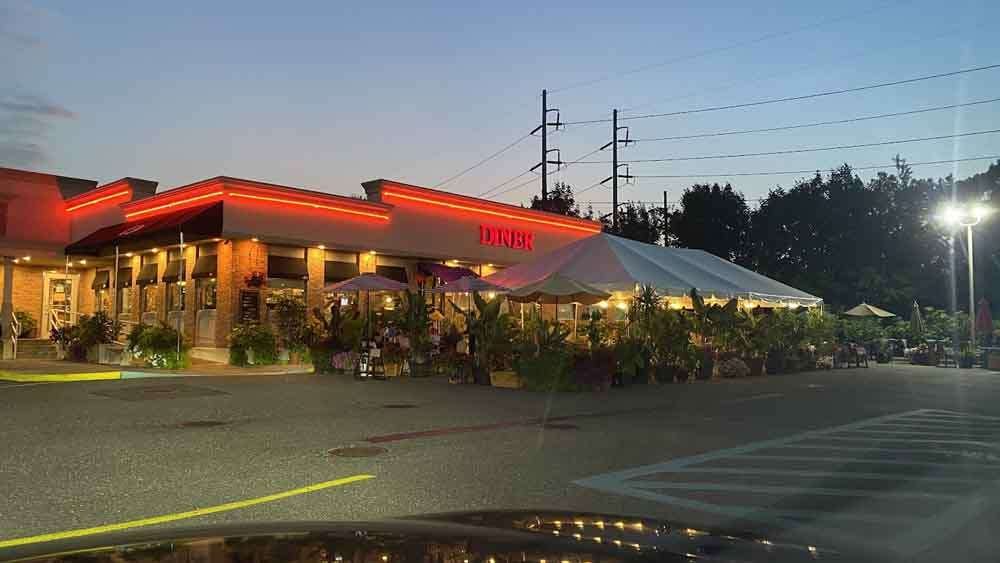
I’ve been running The Heritage Diner at 275 Route 25A in Mount Sinai since I opened it with my father in 2000. Twenty years in, I thought I’d seen every version of hard this business could throw at you — the 2008 recession, the slow months, the staffing nightmares, the margins that make you wonder why anyone opens a restaurant in the first place. None of it prepared me for the morning I pushed a table into my own doorway and told my customers they couldn’t come inside.
We were classified as essential. Restaurants could stay open for takeout and delivery under the governor’s order. I remember reading that list of essential businesses and thinking — really? We’re essential? The auto mechanic, the pharmacy, the grocery store, sure. But the diner? For the first time in my life I felt essential. I say that with every ounce of sarcasm my body can produce. Because what “essential” really meant was that someone in Albany decided people still needed to eat, and the people who made the food were expendable enough to keep showing up.
So we stayed open. A lot of places around us didn’t. Other diners on the North Shore went dark. Restaurants in Port Jefferson, Smithtown, Stony Brook — closed signs in the windows, chairs stacked on tables, kitchens going cold. Some of them never came back. Nationally, more than 110,000 restaurants closed permanently during the pandemic. On Long Island, the Suffolk County Restaurants and Taverns Association would later describe the industry as “crippled.” That word isn’t dramatic enough. Crippled implies you can recover with therapy. Some of those places were buried.
Who Showed Up
Here’s the part nobody wrote about in the newspapers, the part that sat in my gut then and still sits there now. When the lockdown came, my staff split along a line I’d always known existed but never had to look at this directly.
The American-born staff stayed home. I don’t say that with bitterness — I understand it. They had unemployment benefits. They had stimulus checks coming. They had the luxury of being scared, of following the guidance, of doing the responsible thing. They could afford to be safe. Good for them. I mean that.
My kitchen staff — the immigrants, the guys from Ecuador and Mexico and Guatemala — they came in every single day. Not because they were braver. Not because they believed in some noble idea of essential service. They came in because they couldn’t afford not to. A day without work was a day without pay, and a day without pay was a day their families didn’t eat. There was no safety net shaped like them. No government program that understood their math. They showed up because the alternative was worse than the virus.
My father was a Greek immigrant who worked in restaurants his entire life. He came to this country with nothing and built something with his hands and his back. He never missed a day of work for anything that didn’t put him in a hospital bed. I watched him operate the same way I watched my kitchen crew operate in March 2020 — not with pride or patriotism, but with the cold arithmetic of people who know that the system doesn’t catch them when they fall. They just keep working. That’s not heroism. That’s survival wearing an apron.
I should say — I was right there with them. We couldn’t afford to close either. The diner doesn’t run on savings. It runs on today’s receipts paying for tomorrow’s food order. Shutting down wasn’t a philosophical decision. It was a financial impossibility.
The DoorDash Shift
Before Covid, delivery was something we did occasionally. A phone call, a local kid with a car, a regular who couldn’t make it in. It was an afterthought. Then the lockdown hit and suddenly delivery wasn’t a convenience — it was the entire business model.
DoorDash had been growing before the pandemic, mostly in the suburbs, but Covid turned it into a machine. Their revenue went from $885 million in 2019 to $2.88 billion in 2020. Orders tripled. Every restaurant in the country that wanted to survive was suddenly on a delivery platform, and every customer who used to sit at a booth was now tapping their phone and waiting for a stranger to bring them a bag of food.
At the diner, DoorDash became a lifeline and a parasite at the same time. The orders kept us alive. But the commission fees — up to 30 percent on every delivery — ate into margins that were already bleeding. You’re making a cheeseburger for twelve dollars and DoorDash takes nearly four of it before you’ve paid for the beef, the bun, the gas bill, or the cook who’s standing in a hot kitchen wearing a mask over his face for eight hours. The math was brutal. But the alternative was no math at all, because you were closed.
Those DoorDash drivers became part of the scenery at The Heritage Diner. They’d pull into the lot, walk up to the table in the doorway, grab the bag, and leave. No small talk. No sitting down. No lingering over coffee. The entire social architecture of a diner — the counter conversation, the waitress who knows your name, the guy who reads the paper in the same booth every morning — all of it evaporated. What was left was a transaction. Food in a bag, passed over a table, to a stranger in a mask.
The Hospital Ward
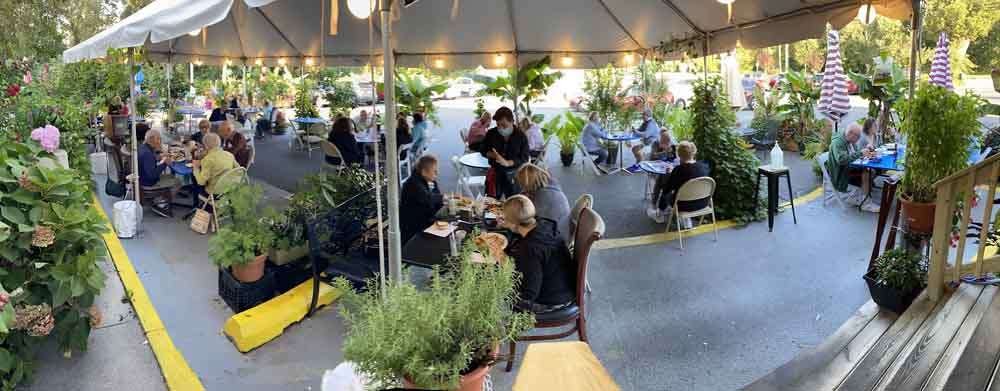
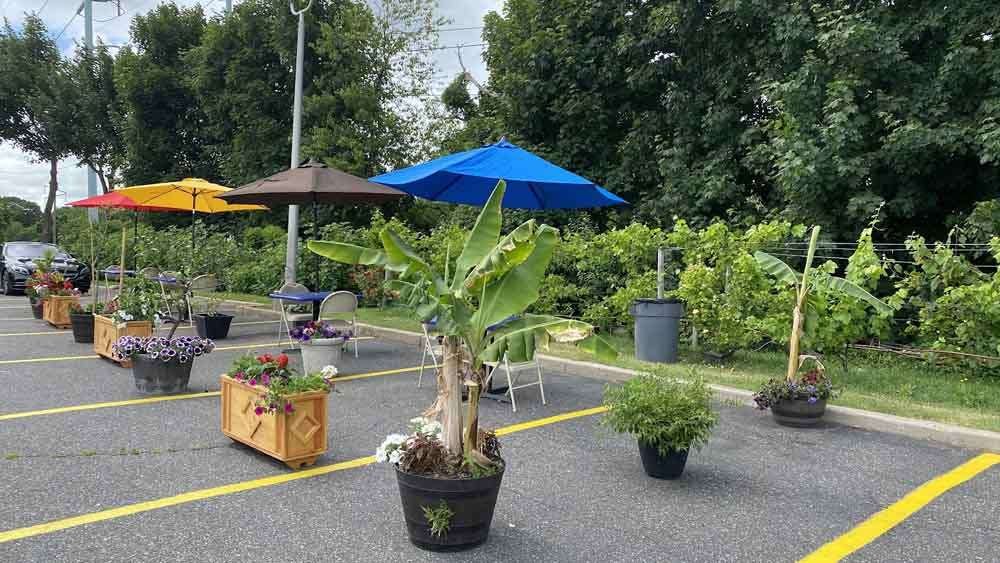
Eventually the lockdown eased. Not all at once — it came in phases, the way the state parceled out permission to live again. Phase 1, Phase 2, Phase 3. Long Island entered Phase 2 in June of 2020, which allowed outdoor dining. Phase 3 brought indoor dining back at 50 percent capacity. But reopening the dining room didn’t mean going back to normal. It meant transforming the diner into something that looked like a hospital ward.
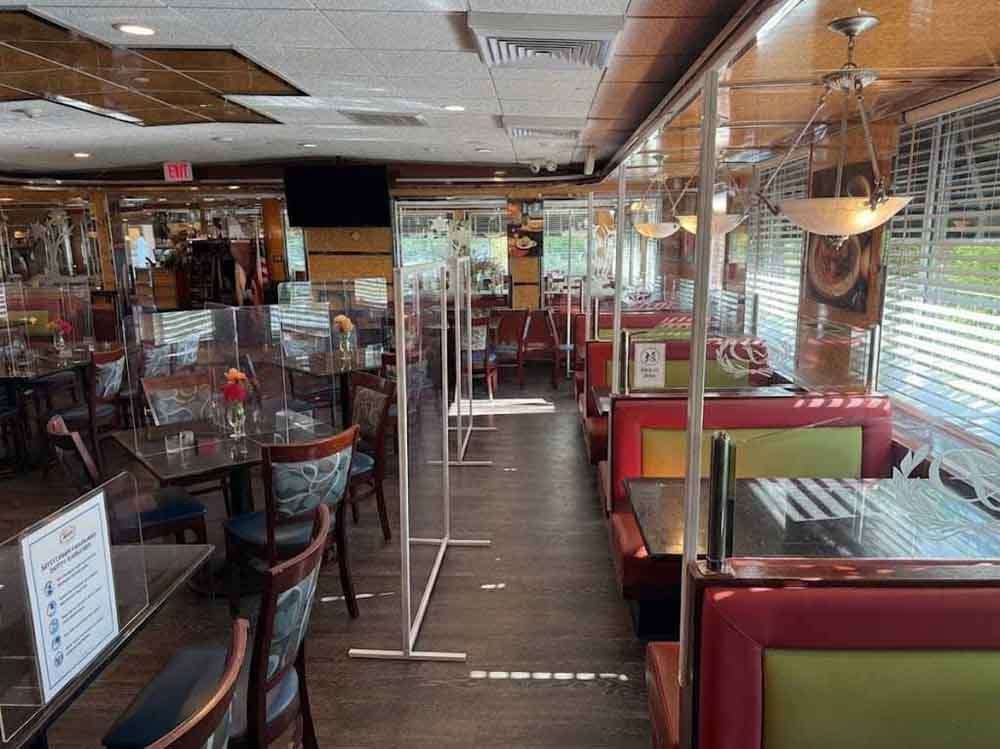
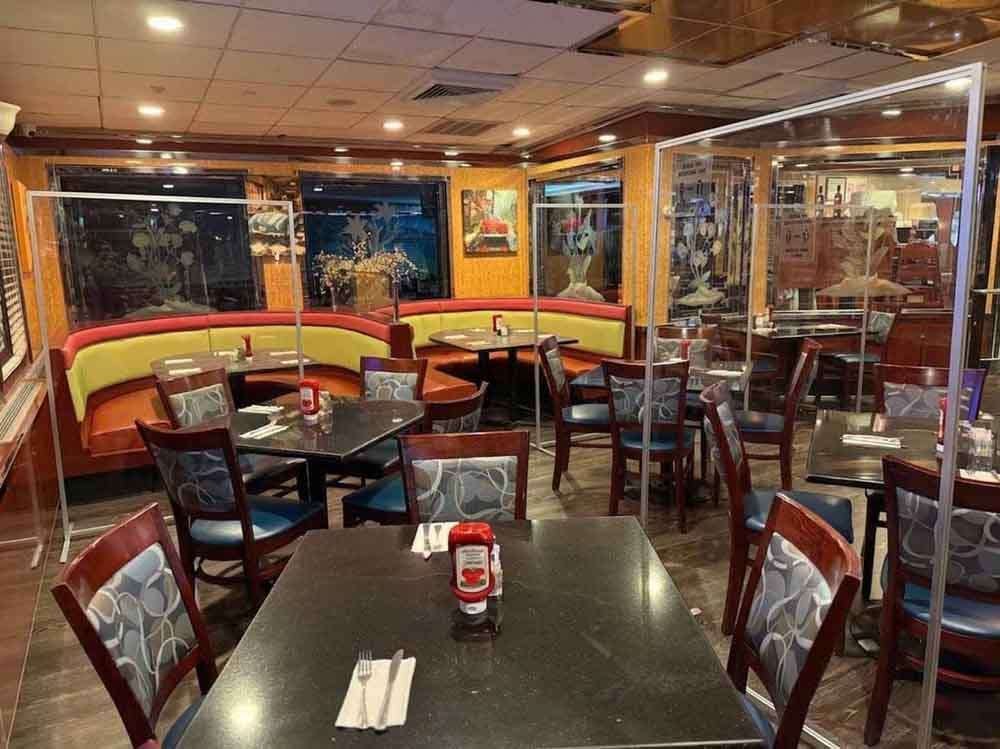
Partitions went up between every booth. Plexiglass dividers on the counter. Hand sanitizer stations at the door, at the register, on every table. Menus were replaced with QR codes. Tables that had been two feet apart for twenty years were suddenly six feet apart, which meant half the seats were gone, which meant half the revenue was gone, which meant the math got worse.
And the masks. The masks were the worst of it for us. I understand why. I’m not arguing the science. But working in a diner kitchen with a mask on for an entire shift — standing over a flattop grill at 400 degrees, pulling plates from under a heat lamp, moving through a space built for efficiency and not for breathing room — it was suffocating in the most literal sense. Your face sweats. The mask gets wet. You pull it down to breathe and someone tells you to pull it up. Eight, ten, twelve hours of that. My guys never complained. They just worked. That’s what they do.
The dining room felt wrong with the partitions. This place has original artwork on the walls. It was designed to feel open, to feel like a neighborhood spot where you could sit and breathe and take your time. Now it looked like a medical facility. Customers sat behind plexiglass and talked to their waitress through a barrier. The whole thing was surreal — a word I don’t use often because it usually means someone’s being dramatic, but there’s no better word for eating a plate of eggs behind a plastic shield while the news plays footage of refrigerated trucks parked outside hospitals in Queens.
Through a Door
I lost my grandmother during the lockdown.
There is no transition smooth enough for that sentence, so I’m not going to try. She was in a facility, and the virus had turned every nursing home and assisted living center in the state into a sealed vault. No visitors. Cuomo’s administration had issued a policy requiring nursing homes to accept Covid-positive patients discharged from overwhelmed hospitals — a decision that would later become one of the most devastating controversies of the entire pandemic. Thousands of elderly New Yorkers died in those facilities. My grandmother was in one.
Our visits during her last days happened through a door. I stood on one side. She was on the other. There was no hand to hold. No forehead to kiss. No sitting beside her bed and just being there the way you’re supposed to be there when someone you love is leaving. A door. That’s what I got. That’s what she got.
I’m not going to dress that up with language or make it mean something larger. It was what it was. A closed door between me and a woman who had crossed an ocean from Greece, who had fed me, who had shaped the man who shaped me. And I stood on the wrong side of it.
What “Essential” Actually Means
Five years later, I still think about that word. Essential. It was supposed to be a compliment — a recognition that certain workers kept the country running while everyone else stayed home and watched Netflix and baked sourdough bread they didn’t need. But essential, when you strip it down, just means you can’t afford to stop. The essential workers of 2020 were overwhelmingly the lowest paid, the most vulnerable, the least protected. They were Nurses, doctors, cops, grocery store clerks, delivery drivers and meatpacking plant workers and, yes, diner cooks. The people who showed up because the system gave them no other option.
I’ve written before about the 1918 influenza pandemic on the North Shore — how that virus tore through communities a hundred years before ours did, how the St. James General Store became a makeshift hospital. The parallels are uncomfortable. Different century, different virus, same math: the people who had money got to hide, and the people who didn’t had to keep working.
The Heritage Diner survived Covid. We’re still here, still open, still making eggs and burgers and sourdough bread at 275 Route 25A in Mount Sinai. My kitchen staff — those guys who showed up every day when the world was falling apart — most of them are still with me. We don’t talk about it much. There’s nothing to say that we didn’t already say by showing up.
But I think about the table in the doorway sometimes. The Styrofoam containers. The quiet parking lot. The masks and the plexiglass and the hand sanitizer. And my grandmother, on the other side of a door I couldn’t open.
Five years. It feels like last month.
Sources
- Timeline of the COVID-19 Pandemic in New York City — Wikipedia
- Timeline: The First 100 Days of New York Gov. Andrew Cuomo’s COVID-19 Response — ABC News
- Remembering March 2020 in NYC: When the “Before Times” Came to an End — Gothamist
- Rapid Spread of COVID-19 in New York and the Response of the Community — National Center for Global Health and Medicine / PMC
- How COVID-19 Accelerated DoorDash’s Business — TechCrunch
- Hundreds of Restaurants Reopen as Long Island Starts Phase II — NBC New York
- New York State COVID-19 Actions — National Governors Association
You Might Also Like
- The Forgotten Influenza Ward: How the 1918 Pandemic Turned St. James General Store Into a Makeshift Hospital
- The Ride Down 25A: A Historic Motorcycle Journey Along Long Island’s North Shore to The Heritage Diner
- Dandelion Green Salads: Foraging the North Shore Estates During the 1930s Great Depression