 275 Route 25A, Mt Sinai, NY 11766


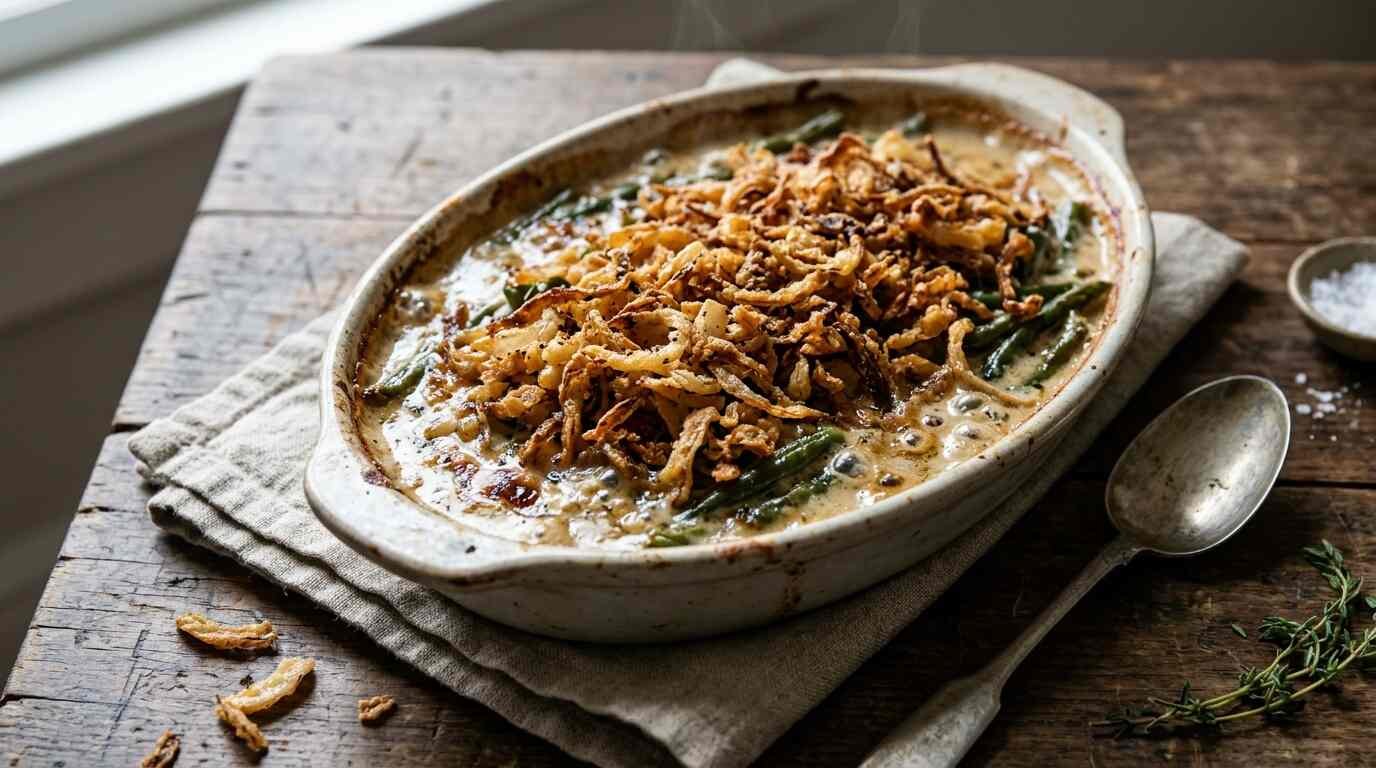
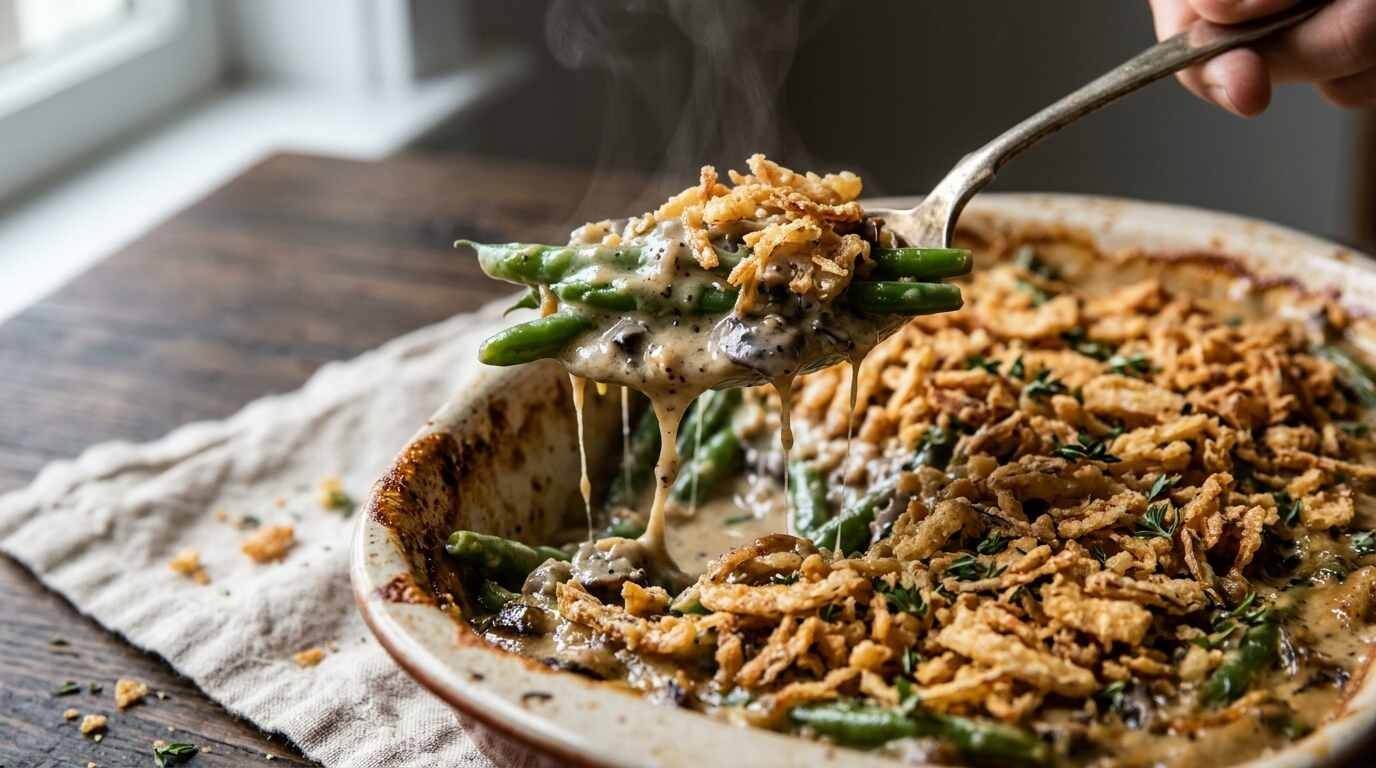
Green bean casserole has a birth year, a birthplace and a named author, which is unusual for a dish that now sits on so many holiday tables that it feels older than any recipe card. According to Campbell’s own account, Dorcas Reilly made it in 1955 at the company’s headquarters in Camden, New Jersey, as one of the first full-time members of the Home Economics department, the group now called the Test Kitchen.
Chowhound, “Four Things You Don’t Know About Dorcas Reilly and The Green Bean Casserole,” on YouTube.
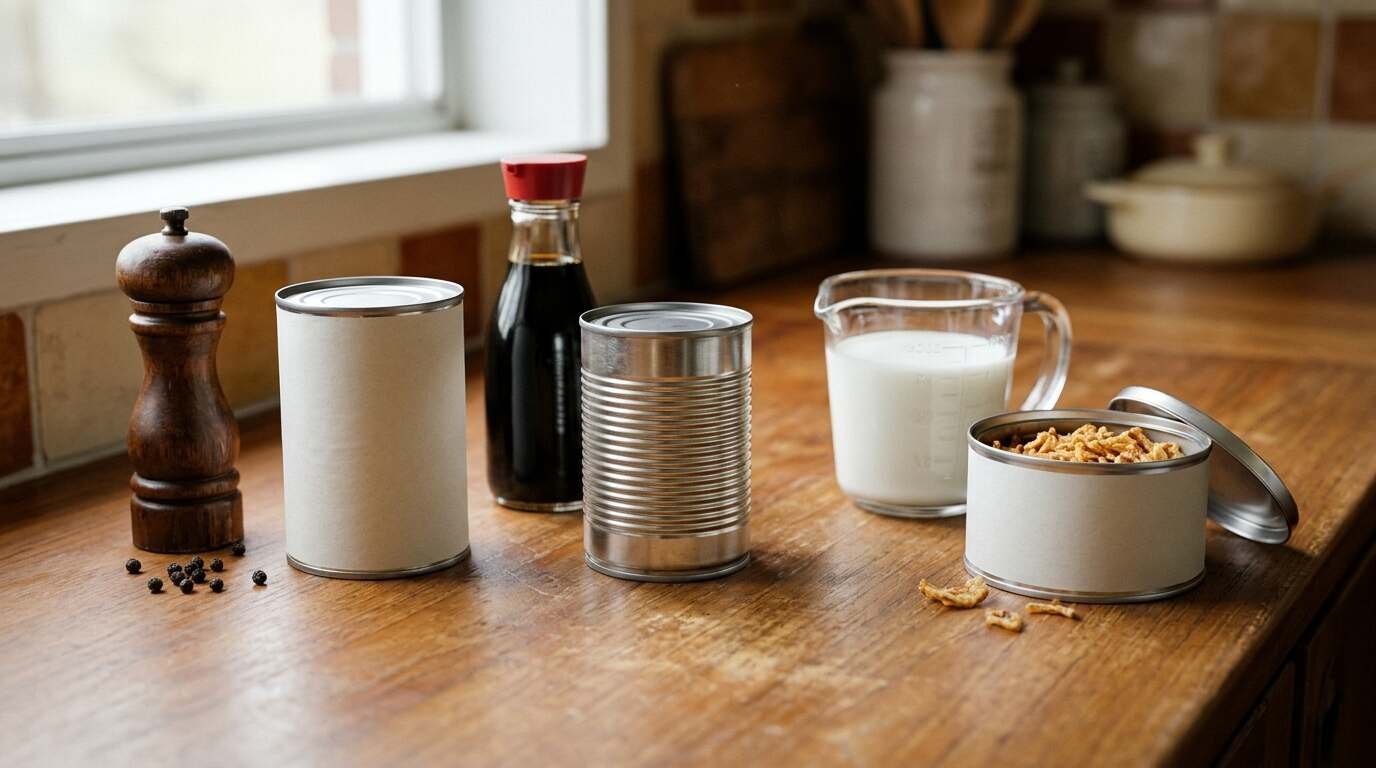
The assignment was practical, not poetic. A recipe was needed, and it had to use things a household already owned. What came back was a can of condensed soup, a can of beans, a bottle of soy sauce, a shaker of pepper and a tin of fried onions. The rest of the story, including how a weekday side dish turned into a ritual, is partly documented and partly argued over.
A Test Kitchen Assignment in Camden
An Associated Press request, a pantry-only brief and a woman hired to sell soup
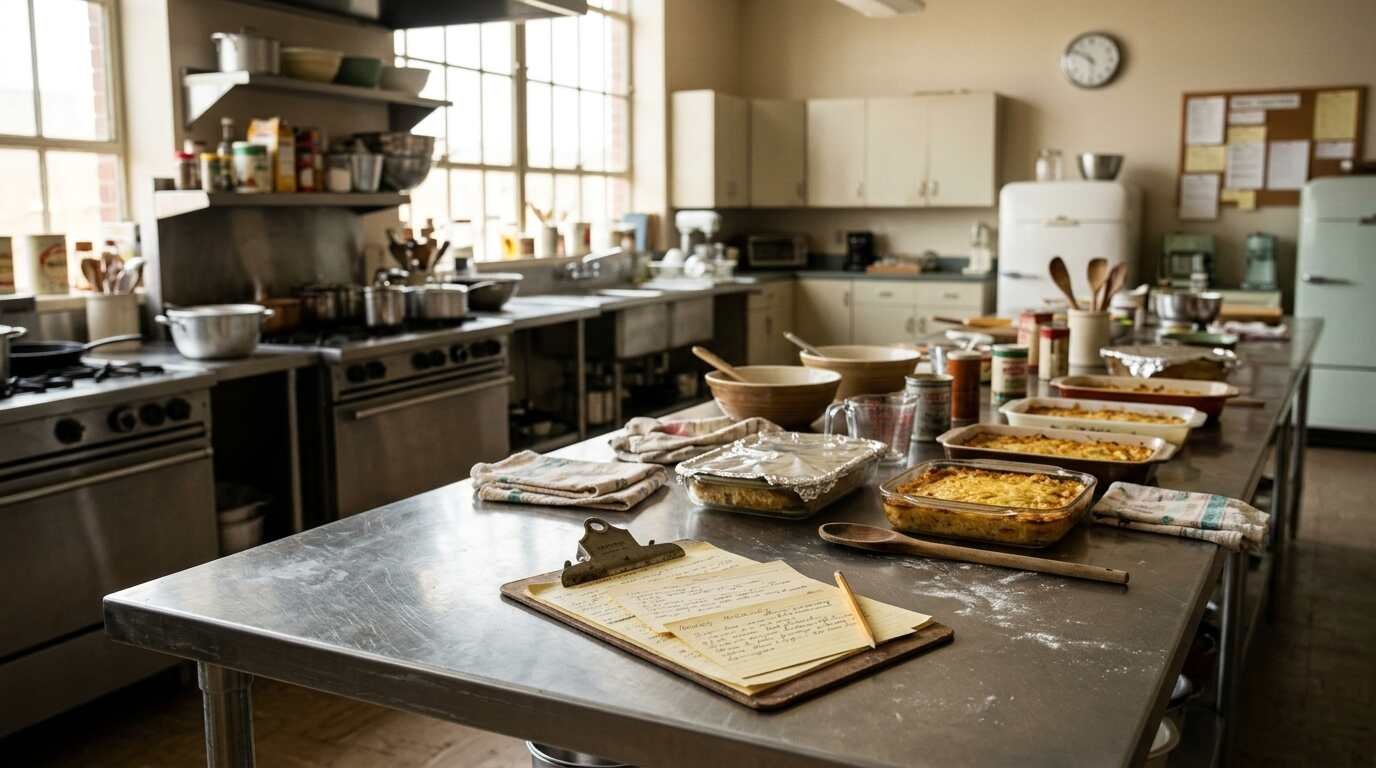
Reilly was born in 1926 in Woodbury, New Jersey, raised in Camden, and earned a home economics degree at Drexel, according to Smithsonian magazine. New Jersey Monthly reports that Campbell’s hired her in 1949 to develop recipes built around its products. That job description matters. The casserole was never a family heirloom that a company later adopted; it was a marketing instrument from the first day, designed to put condensed soup in more oven dishes.
The 1955 brief came from outside the building. Smithsonian describes a recipe assigned for an Associated Press feature, calling for ingredients home cooks would already have. The Wikipedia entry says the same thing in nearly the same words, and WHYY quotes her aim as finding “an easy and creative way to encourage people to eat more vegetables.”
Reilly’s own later description of the result was modest. She told interviewers she was “very proud” of it and “shocked” at how popular it had become, as Smithsonian recorded. She also said, in a line the same article repeats, that food should be fun.
The Original Recipe, Ingredient by Ingredient
Six items, one mixing bowl and two stretches in a 350-degree oven
The recipe was called “Green Bean Bake,” a name confirmed by Campbell’s. Mental Floss gives the original quantities, and they run smaller than the modern 12-serving version on Campbell’s recipe page, which calls for two cans of soup, 8 cups of cooked beans and 2⅔ cups of fried onions.
Original quantities, as reported by Mental Floss:
- 1 can condensed cream of mushroom soup
- ½ cup milk
- 4 cups green beans
- 1 teaspoon soy sauce
- A dash of black pepper
- 1⅓ cups French fried onions, with half held back for the top
Stir the soup, milk, soy sauce and pepper together in a baking dish. Fold in the beans and half the onions. Bake at 350°F for 25 minutes, scatter the remaining onions over the top, and return the dish to the oven for 5 minutes.
Two details deserve attention. Soy sauce is the only seasoning with any real force, and it supplies the savory depth that mushroom soup alone lacks. And the onions go in twice, once to soften into the sauce and once to stay crisp. The structure of the dish, a creamy base under a brittle lid, comes from that split.
On the bean itself, sources diverge slightly. Smithsonian says the casserole works with frozen or canned beans, while New Jersey Monthly reports that canned cut green beans won the team’s internal taste test. Mental Floss lists 4 cups of green beans without specifying a form.
What Reilly Tested and Dropped
Celery salt, ham and the vegetables that lost to the green bean
The finished recipe is shorter than the one that went into the test kitchen. Campbell’s lists Worcestershire sauce, celery salt and ham among the ingredients tried in the original version and later removed, without saying why. The Daily Meal and Smithsonian mention celery salt and ham as well, and Smithsonian adds that the team settled on six ingredients afterward.
The vegetable was not a foregone conclusion either. WHYY reports that peas, lima beans and corn were set aside before green beans were chosen. New Jersey Monthly widens the field to fresh and frozen green beans, canned lima beans, peas, corn and mixed vegetables, with canned cut green beans coming out ahead.
The dish also met some resistance at home base. Campbell’s memorial statement says her first attempt did not earn the top rating in internal testing and that persistence carried it to the final version. A recipe now cited as the most requested in the company’s history, according to New Jersey Monthly, began as a middling result.
Why Mushroom Soup and Canned Onions Became Fixed
A sauce in a can and a topping in a tin, both already in the cupboard
Cream of mushroom soup was an obvious starting point because it had stopped being only soup. Wikipedia reports that Campbell’s began producing it in 1934 and that it was the first of the company’s soups marketed as a sauce as well as a soup. By the 1950s it was common enough in Midwestern casseroles to be nicknamed “Lutheran binder,” a detail repeated by The Daily Meal.
Canned fried onions had their own supply chain. The Daily Meal quotes Kevan Vetter of McCormick Global saying that, as far as the company knows, Olney & Carpenter were the first large-scale producers of canned French-fried onions, in the 1930s, and that the product passed through several acquisitions to become French’s. Campbell’s page uses the generic phrase “French-fried onions,” WHYY does the same, and New Jersey Monthly names French’s directly. Campbell’s current recipe page specifies French’s, so the brand tie is documented for the present day more firmly than for 1955.
Smithsonian places the dish inside a wider shift. Wartime canned-food rations had lifted, canning and freezing had improved, and more women worked outside the home, all of which pushed cooks toward convenience. A casserole whose only fresh work was opening three containers fit that moment exactly.
Why the formula then stopped changing is less documented than why it started. The company itself kept printing it. Campbell’s puts the recipe on its soup label, and the 2026 recipe page still lists the same components, with milk, soy sauce and pepper doing the supporting work. The company also notes that for years its food stylists placed the onions only around the edges of the dish, a rule that has since relaxed. A recipe that a major brand reprints on millions of cans for decades hardens into a standard almost by repetition.
From Weekday Side to Thanksgiving Staple
The 1960s can label, a name change that depends on who is telling it, and a holiday nobody planned
Campbell’s says the dish began as an everyday side and became a Thanksgiving favorite in the 1960s after the recipe was printed on the cream of mushroom soup label. The company’s test kitchen manager, Sheila Miller, credits that move, according to The Daily Meal.
Accounts of the earliest publicity do not match each other. Mental Floss says the Associated Press featured the recipe in a 1955 Thanksgiving story. New Jersey Monthly says an AP reporter requested the recipe and that the wire service ran it nationally without a holiday tie-in. Smithsonian and Wikipedia describe an AP feature assignment without saying whether Thanksgiving was part of it. WHYY quotes Campbell’s archivist Sarah Rice as saying the casserole reached the public through print ads in the early 1960s. The 1955 holiday connection is therefore contested, and it is the claim most in need of a primary newspaper clipping.
The name is contested too. Campbell’s, Smithsonian and Wikipedia say “Green Bean Bake” was the original title, which is consistent across sources. New Jersey Monthly adds that Campbell’s renamed it “green bean casserole” in the 1960s and printed the recipe on soup labels and in promotional pamphlets. No source reviewed here gives an exact date for the change.
Nobody at Campbell’s claims to know exactly how it got from side dish to ritual. New Jersey Monthly quotes the test kitchen’s director, Jane Freiman, as saying that no one really knows how it became a holiday staple. Because the dish asks so little, it fits any table. That same ease is the best explanation on record, and it comes from Reilly herself: she credited its success to the dish being delicious, easy to prepare and made from pantry staples, as New Jersey Monthly reported.
Credit, Numbers and What Remains Uncertain
Reilly’s recipe card, the percentage that keeps changing and the claims nobody has checked
On the question of who made it, the sources agree: Reilly. None of the pages reviewed names a competing claimant, and Campbell’s donated her handwritten recipe card to the National Inventors Hall of Fame in Akron, Ohio, in 2002, according to its memorial statement and Wikipedia. She left the company in 1961 to raise her children, returned in 1981 to manage the Campbell’s Kitchen and retired in 1988, per Smithsonian. She died on October 15, 2018, at age 92.
The statistics are less settled, and all of them are company estimates:
- Campbell’s says more than 20 million American households serve the dish at Thanksgiving; an older New Jersey Monthly piece cited about 30 million homes.
- Smithsonian reports a 2015 spokesperson’s claim that 40 percent of Campbell’s cream of mushroom soup sales go into the casserole. Mental Floss puts the figure at about a third of cans sold.
- The company’s current page says green bean casseroles appear on more than half of Thanksgiving tables nationally, and that half of the soup’s yearly sales fall between November and January.
These numbers do not agree, partly because they were measured in different years and partly because they come from the seller, not from an independent survey. The Smithsonian piece notes that the dish took off after the label printing; it does not say how many cans are involved.
For anyone planning a holiday table, the dish pairs naturally with a Thanksgiving timeline built for a small kitchen. The same condensed-soup logic that built this casserole also underlies a diner-style grilled cheese and tomato soup, and leftovers from the table can be worked into eight ways to use leftover turkey.
Sources
- Campbell’s, “10 things you didn’t know about green bean casserole”: https://www.thecampbellscompany.com/newsroom/campbells-history/10-things-you-didnt-know-about-green-bean-casserole/
- Campbell’s, “In memory of American inventor Dorcas Reilly”: https://www.thecampbellscompany.com/newsroom/nutrition/memory-american-inventor-dorcas-reilly/
- Campbell’s recipe page, Green Bean Casserole: https://www.campbells.com/kitchen/recipes/green-bean-casserole/
- Smithsonian magazine, “The Woman Who Invented the Green Bean Casserole”: https://www.smithsonianmag.com/smart-news/remembering-dorcas-reilly-inventor-green-bean-casserole-180970635/
- Mental Floss, Dorcas Reilly’s original recipe: https://www.mentalfloss.com/article/609275/campbells-green-bean-casserole-recipe
- WHYY, “From Campbell’s test kitchen to America’s tables”: https://whyy.org/articles/from-campbells-test-kitchen-to-americas-tables-nj-chefs-green-bean-casserole-an-enduring-favorite
- New Jersey Monthly, “Green bean casserole: time saver America took to heart”: https://njmonthly.com/articles/eat-drink/green-bean-casserole-time-saver-america-took-heart/
- The Daily Meal, “How Canned Fried Onions Became A Holiday Meal Staple”: https://www.thedailymeal.com/1426423/canned-fried-onions-history-holidays
- Wikipedia, “Green bean casserole”: https://en.wikipedia.org/wiki/Green_bean_casserole
- Chowhound on YouTube: https://www.youtube.com/watch?v=VW5eGHb1GSU
Leave a Reply