Some links in this post are Amazon affiliate links. As an Amazon Associate, Heritage Diner earns from qualifying purchases at no extra cost to you.
Gravy is the last thing made on Thanksgiving and the first thing that goes wrong. The turkey is resting, the sides are fighting for burners, and a dozen relatives are hovering with plates. That is no time to learn what a roux does.
The fix is to take almost all the work out of Thursday. Spread it across the week and the final step is a ten-minute whisk.
The ratio that drives everything
A roux is equal parts fat and flour by weight, cooked together, and then used to thicken liquid. For a medium-bodied gravy, a common starting point is two tablespoons of fat and two tablespoons of flour for each cup of liquid. Want it thicker? Add a little more of each. Thinner? Back off.
The fat can be butter, turkey drippings, or a mix. Turkey fat skimmed from the roasting pan brings the most flavor. Butter fills the gap when the pan drippings are scant, which is common with a turkey cooked in a bag or brined.
Flour cooked in fat swells without clumping because each grain is coated. That coating is the secret behind a smooth sauce, and it is the reason adding raw flour straight into hot liquid produces dumplings.
Roux or cornstarch?. Plenty of cooks reach for a cornstarch slurry, and it does work. It thickens fast, it keeps the gravy clear and glossy, and it suits anyone avoiding wheat. The trade is flavor and texture. A flour roux, cooked in fat until nutty, adds a toasted depth that starch simply cannot supply, and it holds up better when the gravy sits on a warm stove.
A roux also gives you a head start that a slurry never will. You can make it days ahead, which is the entire reason this plan works. With cornstarch you are always mixing at the last minute, with a bowl of cold water and a rush.
There is nothing wrong with keeping a little cornstarch in the cabinet as a backup. If the finished gravy is still thin and the relatives are lining up, whisk a teaspoon into a spoonful of cold water and stir that in. Simmer a full minute so the raw taste cooks off.
Sunday: roast the parts and make the stock
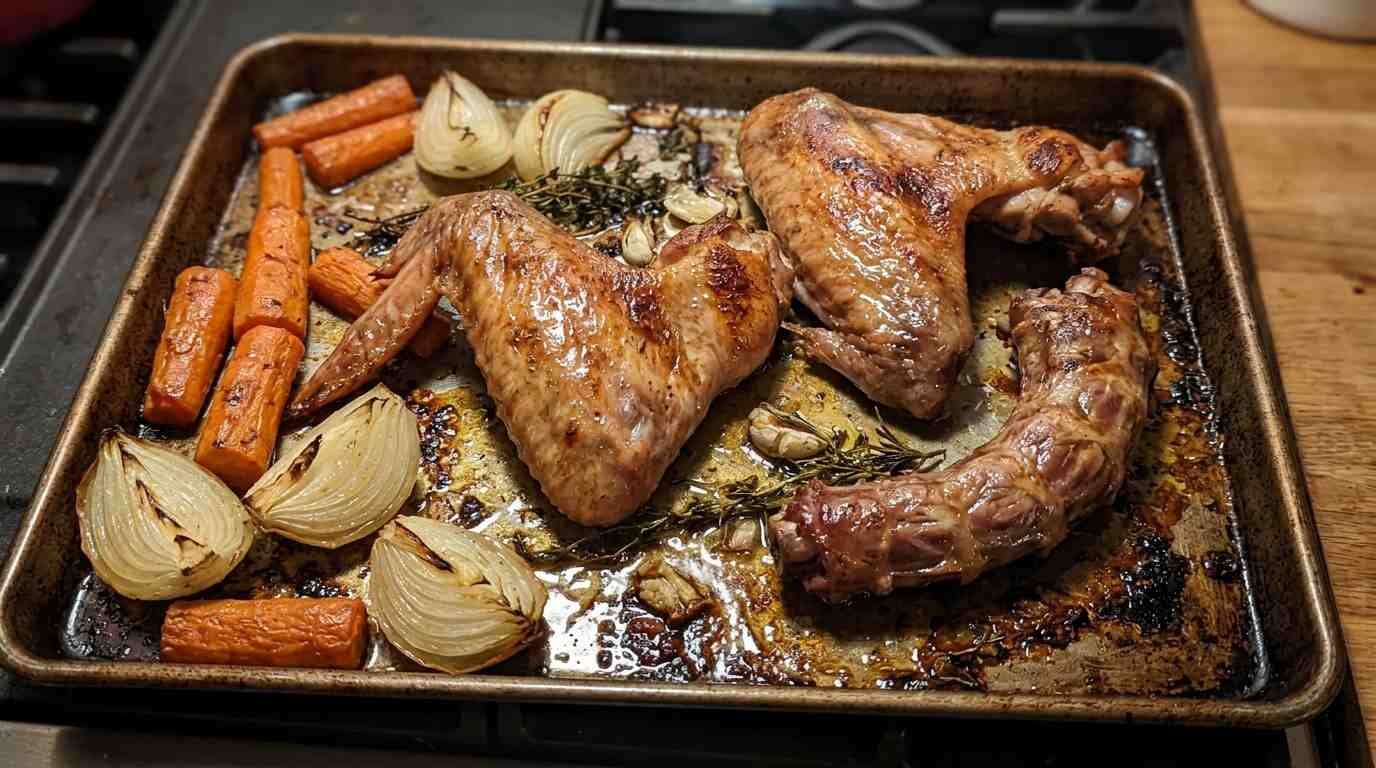
Pick up a couple of turkey wings or a neck and some backs, if your butcher sells them. Roast them on a sheet pan at a high oven heat, around 425 degrees F, with a halved onion, a carrot and a stalk of celery, until deeply browned, about forty-five minutes. Browning is where the flavor lives.
Move everything to a large pot, deglaze the pan with a cup of water and scrape up the stuck bits, and add that too. Cover with cold water by an inch or two. Add a bay leaf and a few peppercorns. Bring it up slowly, then hold a bare simmer for two to three hours, skimming now and then.
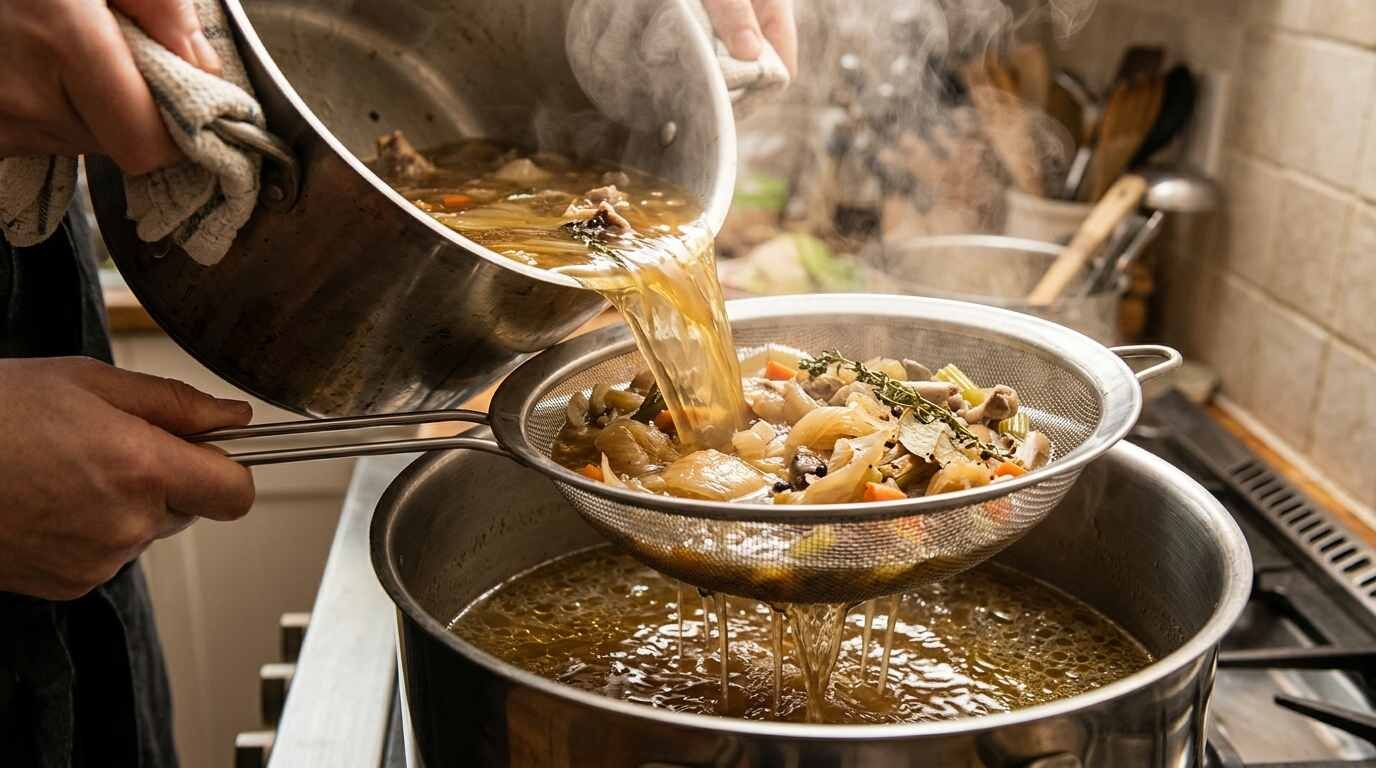
Strain the stock through a fine strainer. Cool it quickly in a shallow container or an ice bath, since large hot pots stay in the danger zone far too long. The USDA says cooked food should be refrigerated within two hours. A large stockpot and a fine mesh strainer make this a clean job.
Tuesday: cook the roux
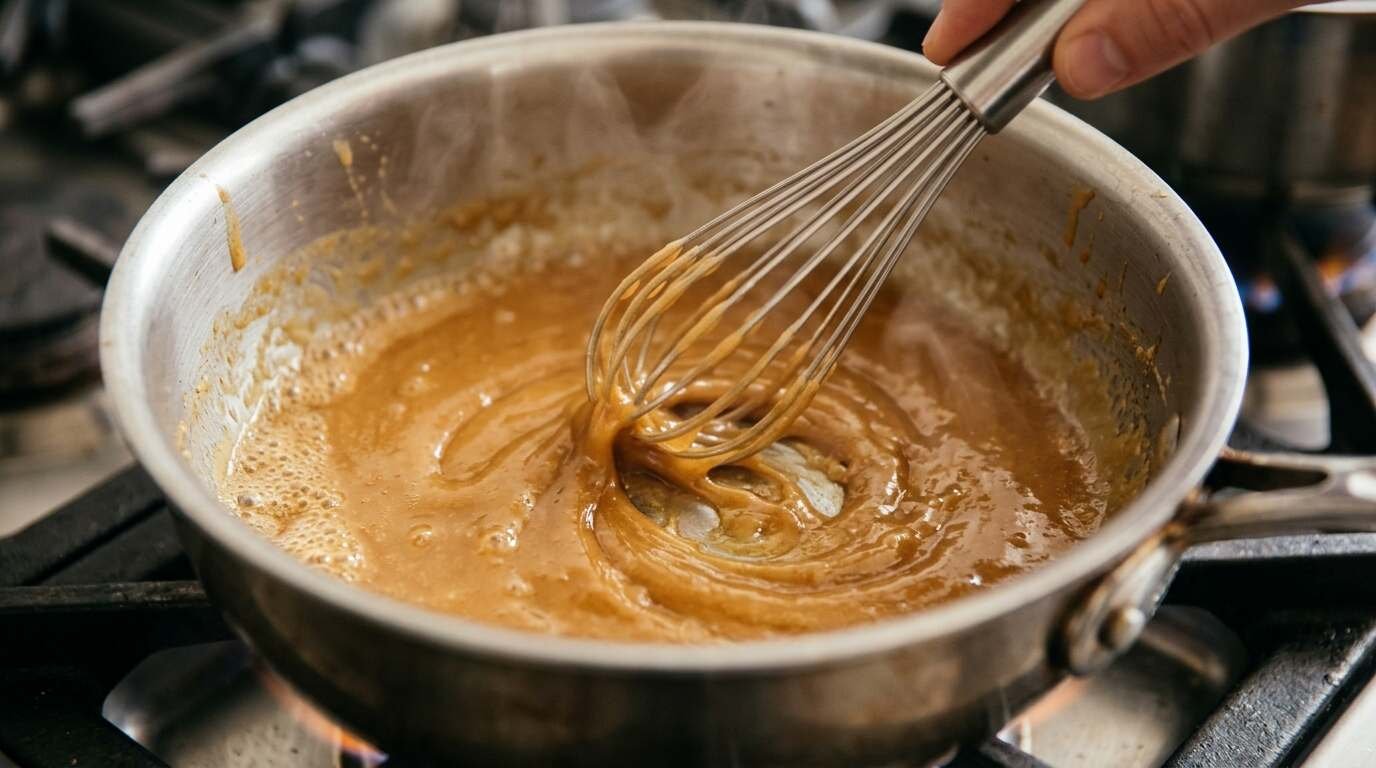
Melt butter in a saucepan over medium-low heat. Whisk in the flour and keep stirring. Cook until the roux smells nutty and turns the color of peanut butter, about five to eight minutes. A lighter roux thickens a little better; a darker one adds flavor and thickens a bit less.
Scrape the finished roux into a small container and chill it. A roux keeps in the refrigerator for several days, which is the whole point. It will set up like soft clay. On Thursday you will break off what you need.
A flat-edged wooden spoon reaches the corners of the pan better than a whisk while you cook the roux.
Wednesday: taste, adjust, hold. Taste the stock cold from the refrigerator. If it is weak, simmer it down for twenty minutes to concentrate it. If it is too salty, you now have time to stretch it with water. Salt lightly at this stage, because the pan drippings will contribute their own seasoning tomorrow.
Check for a layer of fat on top. Leave it there; it protects the stock and can be skimmed and used on Thursday. If the stock has set into jelly, that is a good sign. It means plenty of collagen came through, and it will melt right back.
If you made the stock earlier in the week, keep it to three or four days in the refrigerator. For a longer wait, freeze it. Label the container with the date.
Thursday: finish in ten minutes
Once the turkey is out and resting, pour the pan juices into a glass measuring cup. Let the fat rise, then skim off a few tablespoons. A gravy separator does this in seconds, and it is one of the better buys of the season if you cook a bird every year; a fat separator costs very little.
Set the roasting pan over a burner, add a splash of stock, and scrape the bottom with a wooden spoon. Pour that into a saucepan and bring it up with the rest of the warm stock. Heat the stock separately, because cold stock plus hot roux invites lumps.
Whisk in the cold roux a spoonful at a time, letting each piece dissolve before the next. Simmer for five minutes. The gravy thickens as it simmers, so judge it by how it coats the back of a spoon and not by how it looks in the first minute.
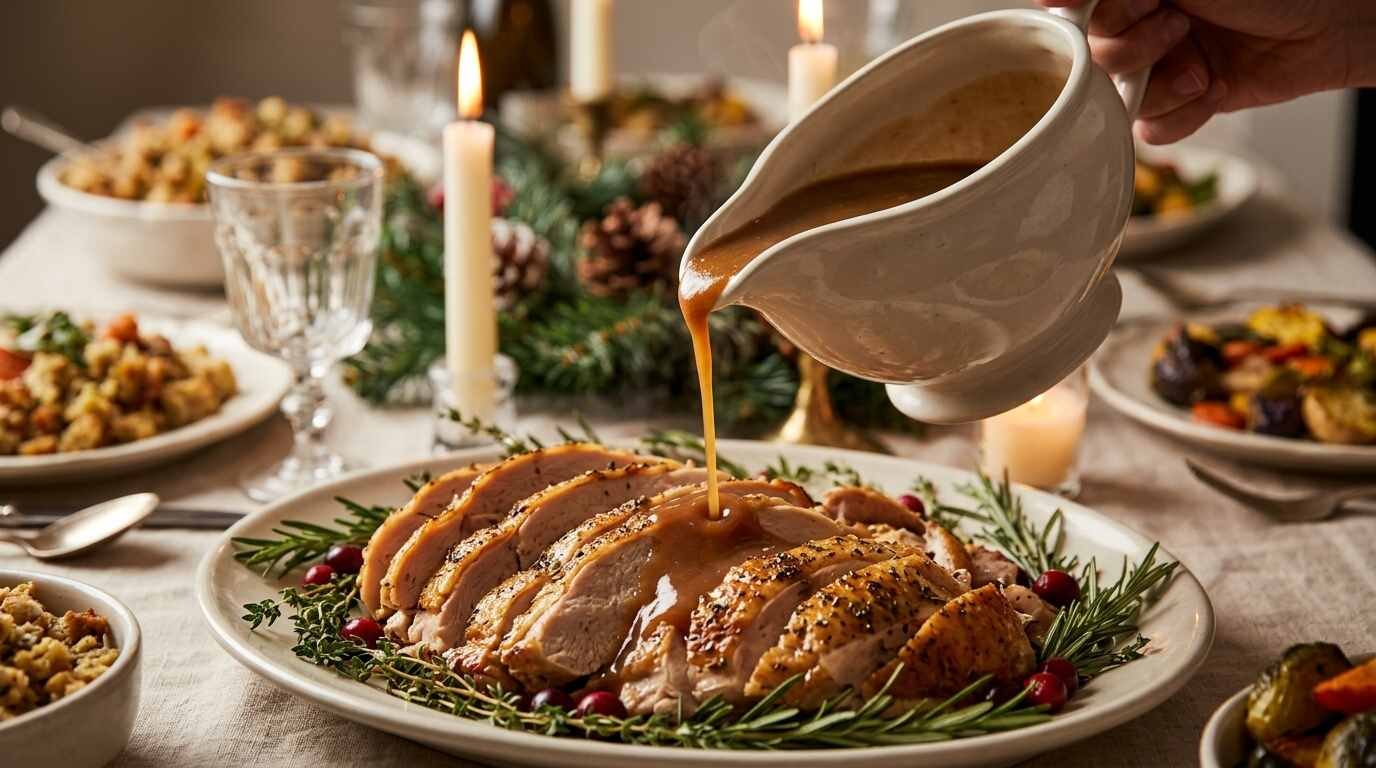
Season at the end, and pass a little pepper at the table. Keep the pot over very low heat, or ladle it into a pre-warmed gravy boat.
Rescuing a lumpy or thin gravy
- Lumpy: pour it through a strainer, or whirl it briefly with an immersion blender.
- Too thin: simmer longer, or whisk in a bit more roux dissolved in a ladle of hot gravy.
- Too thick: add warm stock, a splash at a time.
- Pale: a few drops of soy sauce or a pinch of browning agent adds color, though the real answer is a darker roast on the bones.
- Salty: add unsalted stock or a little water, and stir in a little more roux if needed.
Gravy that has cooled should be refrigerated within two hours and reheated until steaming hot, 165 degrees F, before it goes back on the table.
How much gravy to make. A common rule is about a third to a half cup per person, a little more if your crowd treats gravy as a beverage. For ten people, plan on five to six cups, then make a little extra, since leftover gravy turns up on sandwiches and hot plates for days.
To scale the roux, stay with the ratio. Six cups of liquid needs about twelve tablespoons each of fat and flour, which is three-quarters of a cup of each. That sounds like a lot until you see how much liquid it will thicken.
If your stock turns out smaller than planned, stretch it with a good low-sodium broth from a carton and do not worry about it. Nobody at the table will taste the difference once the drippings are in.
Keeping gravy hot without ruining it
Gravy thickens as it sits and forms a skin on top. Cover it, or float a thin pat of butter on the surface to slow the skin. Keep it on the lowest burner setting or in a small slow cooker set to warm. Stir before ladling, and thin it with a splash of hot stock if it tightens up.
A small slow cooker on the warm setting frees your stove and holds gravy for the length of a long dinner. Leave the lid on between servings.
A note on drippings. If your turkey leaves behind a full pan of dark, flavorful juices, wonderful. Use them in place of some of the stock. If the juices are burnt or very salty, taste first and dilute. A brined bird often produces drippings that are saltier than you expect, so go easy on added salt until you have tasted the finished gravy.