Consider the scale of what we’re talking about.
The observable universe is 93 billion light-years across. It contains two trillion galaxies, each holding hundreds of billions of stars, each star potentially orbited by worlds. In cosmic time, Homo sapiens arrived eleven seconds before midnight on New Year’s Eve — a blink so brief that the light from our first campfires hasn’t reached the nearest star cluster. And yet, within this incomprehensibly brief window of existence, we have managed to spend a considerable portion of our energy arguing about which questions belong to which department.
That argument has a name. It’s called NOMA.
The Truce That Pleased Nobody
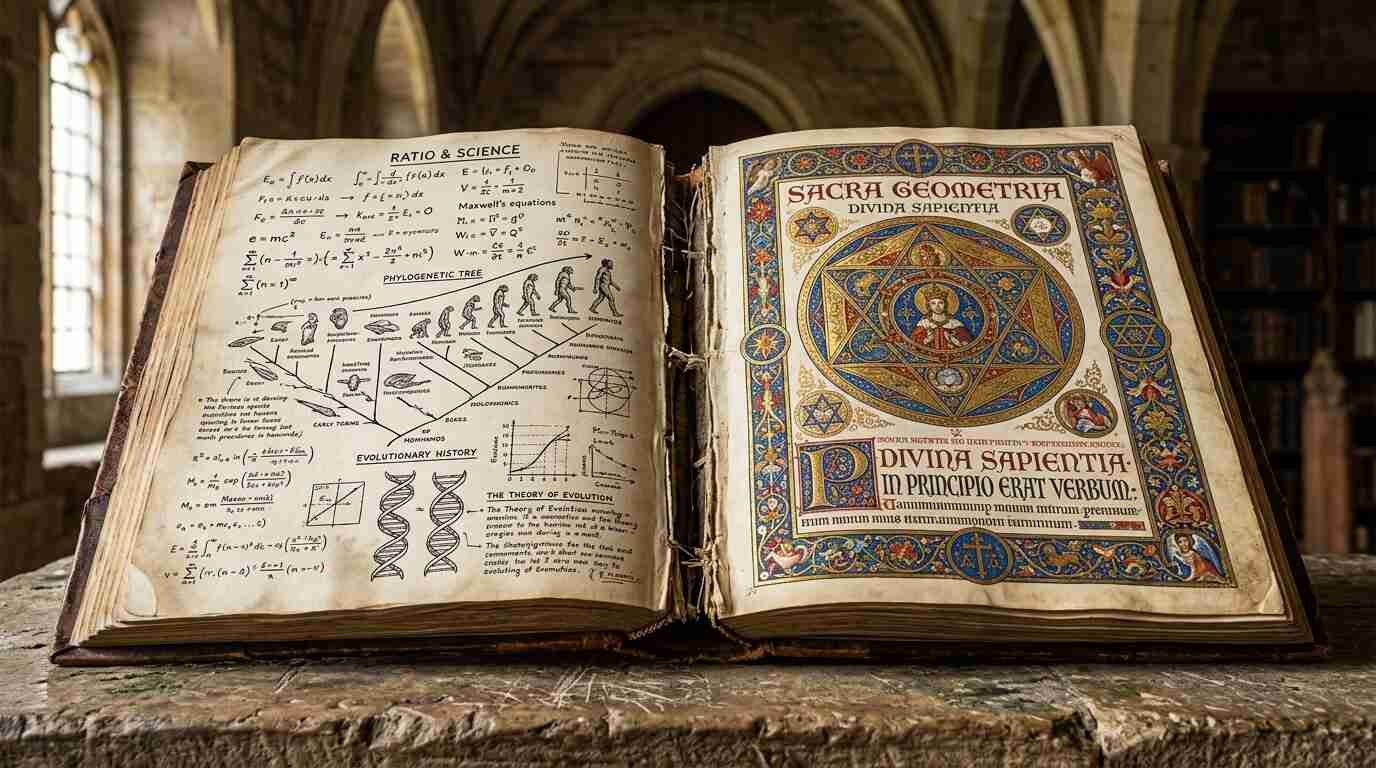
In March 1997, Stephen Jay Gould published an essay in Natural History magazine proposing what he believed was an elegant solution to the oldest standoff in intellectual history. He called it Non-Overlapping Magisteria — NOMA for short. The premise was clean: science covers the empirical realm, what things are and how they work. Religion covers the normative realm, questions of ultimate meaning and moral value. The two magisteria, Gould argued, do not conflict because they do not overlap. They are, as he put it, “non-overlapping.”
Two years later, he expanded the idea into a book — Rocks of Ages (1999, Ballantine Books) — and the argument crystallized into something that felt almost irresistible in its reasonableness. Here was a Harvard paleontologist, one of the most celebrated scientists of the twentieth century, a Queens kid who grew up in the same American Northeast culture where science and religious tradition coexisted uneasily in kitchen-table conversations — here was that man offering both sides an honorable exit from the conflict.
Both sides took one look at the exit and barricaded the door.

Dawkins Calls It a Diplomatic Sop
Richard Dawkins was not looking for a truce. In The God Delusion (2006, Houghton Mifflin), he dismissed NOMA with a phrase that has stuck to the idea ever since — he called it “a diplomatic sop.” The charge was precise and devastating: Gould had not resolved the conflict; he had papered over it. Because religion, Dawkins argued, does not actually stay in its lane. It makes empirical claims. The Virgin Birth is an empirical claim. The Resurrection is an empirical claim. The age of the Earth as understood by Young Earth creationists is an empirical claim, one that happens to be wrong by approximately 4.5 billion years.
For Dawkins, NOMA was a category error performed with the best of intentions. You cannot quarantine metaphysics on one side of a border when the practitioners on that side keep crossing it to plant flags in the empirical territory. Gould had drawn a map that the territory refused to honor.
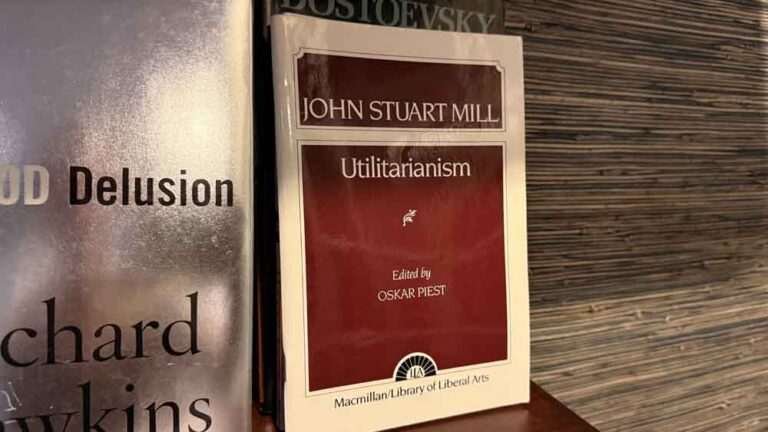
I’ve spent time with The God Delusion — wrote about it here on the blog — and what strikes me, reading it alongside Rocks of Ages, is not that Dawkins was wrong about Gould’s blind spot. He wasn’t. He was right that NOMA, as a descriptive account of how religion actually behaves, was empirically naive. But Dawkins was solving a different problem. He was arguing about what religion does. Gould was arguing about what it should be asked to do. Those are not the same argument, and conflating them is what made the debate generate more heat than light for the next twenty years.
Daniel Dennett, in Breaking the Spell (2006), added a third angle: that NOMA assumed religion was entitled to its own special epistemological protection — an immunity from scrutiny that no other human belief system receives. Why, Dennett asked, should claims about the transcendent be exempt from the same standards of evidence we apply to claims about anything else? The question was fair. It also, as with Dawkins, missed what Gould was actually trying to do.
The Cardinal Enters, Stage Right
While the New Atheists were dismantling NOMA from the secular side, the religious side was doing its own demolition from the other direction.
On July 7, 2005, Cardinal Christoph Schönborn of Vienna published an op-ed in The New York Times titled “Finding Design in Nature.” It is a verifiable primary source — you can pull it from the Times archive today. And it is remarkable, because what Schönborn did was reject not just NOMA but the entire premise of evolutionary science’s authority over the question of biological origins. He wrote that neo-Darwinism, as an ideology claiming that life is the result of unguided processes, was incompatible with Catholic teaching. Evolution as a scientific mechanism — fine. Evolution as a worldview — incompatible with a purposeful creation.
This was not an attack on Gould specifically. But it was an attack on the NOMA framework, because NOMA requires religion to yield the empirical ground. Schönborn was saying: we won’t yield it. The question of whether biological complexity is purposeful is not a question science gets to answer alone.
The op-ed caused a scientific uproar. Lawrence Krauss — physicist, author, one of the signatories on a formal scientific response — co-authored a rebuttal that circulated through Nature and Scientific American channels. The Templeton Foundation, which had funded dialogue between science and religion for decades, found itself caught in the crossfire, funding researchers on both sides of a line that kept moving.
What the Schönborn episode revealed was precisely what Dawkins had argued: religion does not agree to NOMA’s terms. But it also revealed what Dawkins’s critics argued about him — that treating all religious claims as equivalent to Young Earth creationism was intellectually imprecise. Cardinal Schönborn was a serious theologian arguing a serious position. Caricaturing that position as mere superstition was as much an evasion as Gould’s diplomatic sop.

The Man Who Proposed the Truce
Stephen Jay Gould died in 2002, four years before The God Delusion appeared and three years before Schönborn’s op-ed. He never had the chance to respond to either critique in print. This is one of the peculiar ironies of intellectual history: the figure who started the fight had already left the building.
Gould was born in Queens in 1941, son of a court stenographer and a passionate amateur naturalist. His intellectual formation was shaped by the American Northeast — baseball, museums, the intersection of immigrant aspiration and scientific culture that made New York in the mid-twentieth century uniquely fertile ground for a certain kind of polymathic mind. He was buried in New York. He spent his career at Harvard studying land snails and writing essays that connected paleontology to everything from baseball statistics to architectural history. He was, by any measure, one of the great scientific communicators of the century.
And he proposed NOMA, I think, not because he believed religion deserved epistemological immunity, but because he was genuinely frustrated by what the science-religion war was doing to both sides. He had watched creationists distort evolutionary science for decades. He had also watched scientists caricature religious believers as uniformly credulous and anti-intellectual. He saw people in both camps who deserved better than the cartoon version of the other.
The truce failed. But the diagnosis was not wrong.
Why Both Sides Were Right About the Wrong Things
Here is what the cosmos teaches you, if you spend enough time looking at it honestly: scale changes everything. At the scale of a single human life, the question of whether existence has meaning is not academic — it is the question. It determines how you get up in the morning. At the scale of 13.8 billion years of cosmic evolution, the question looks different. Not smaller, exactly. Just differently shaped.
Gould understood that people need both scales simultaneously. A universe of pure mechanism — particles colliding without purpose, stars burning without witness, consciousness arriving by accident and departing without trace — is a universe that most human beings cannot live inside without some framework of meaning to hold it together. That framework, historically, has been religion. NOMA was Gould’s attempt to say: you can have the framework without compromising the science. Science doesn’t threaten what religion actually gives people. It only threatens religion when religion tries to do science’s job badly.
Dawkins understood that you cannot run a civilization on frameworks that are systematically protected from scrutiny. If a belief system makes empirical claims — and most do — those claims are subject to empirical evaluation. Full stop. The problem is not religion’s answers. The problem is religion’s insistence that certain questions are off limits.
Schönborn understood — and here is where the Cardinal deserves more credit than the New Atheist literature typically gives him — that purpose and mechanism are not the same question. The question of how something happened and the question of why it happened are grammatically distinct. Whether that distinction maps onto a real metaphysical difference is exactly what the debate is about. But it is a serious distinction, not a trivial one.
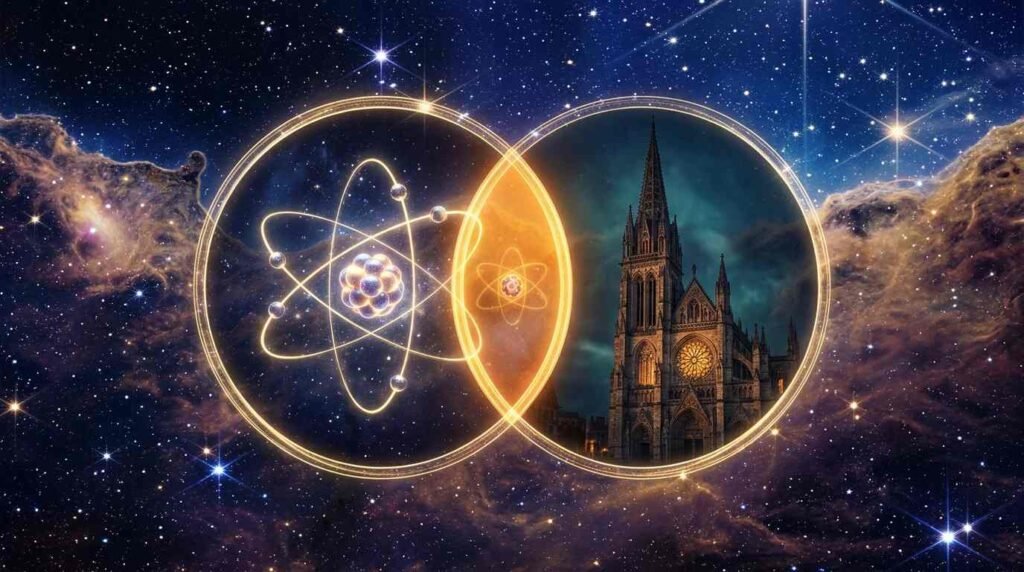
The three-way fight Gould started with a single word was, at its core, a dispute about jurisdiction. Who gets to answer which questions, with which methods, subject to which standards of evidence. That dispute is not resolved. It may not be resolvable. But it produced some of the most serious intellectual work of the late twentieth and early twenty-first century — and for that, the dead Harvard paleontologist from Queens deserves a measure of credit, even from the people who rejected his truce.
The Argument That Outlived Its Author
Twenty-seven years after that Natural History essay, NOMA is still generating arguments. That is either evidence that Gould was wrong — because a good solution should resolve the conflict, not perpetuate it — or evidence that he was pointing at something real that no one has managed to resolve more elegantly.
I tend toward the second interpretation. Gould didn’t solve the problem. But he named it precisely enough that we can still argue about it in terms he established. In intellectual history, that’s not nothing. That’s, in fact, quite a lot.
The universe doesn’t offer opinions on the question. It is 93 billion light-years across and entirely indifferent to the jurisdictional dispute. Whether that indifference is itself an answer, or merely the absence of one, depends on which side of NOMA you’re standing on.
This post presents documented positions from published primary sources and does not adjudicate the science-religion debate. Readers with strong commitments on either side are encouraged to engage directly with the cited primary sources.
You Might Also Like:
- The God Delusion by Richard Dawkins — A Review
- Darwin’s Dangerous Idea by Daniel Dennett
- Dialogues Concerning Natural Religion by David Hume — The God Darwin Couldn’t Quite Kill
Sources:
- Stephen Jay Gould, Rocks of Ages: Science and Religion in the Fullness of Life (1999, Ballantine Books): https://www.amazon.com/Rocks-Ages-Science-Religion-Fullness/dp/0345430093
- Stephen Jay Gould, “Nonoverlapping Magisteria,” Natural History magazine, March 1997: https://www.naturalhistorymag.com
- Cardinal Christoph Schönborn, “Finding Design in Nature,” The New York Times, July 7, 2005: https://www.nytimes.com/2005/07/07/opinion/finding-design-in-nature.html
- Richard Dawkins, The God Delusion (2006, Houghton Mifflin): https://www.amazon.com/God-Delusion-Richard-Dawkins/dp/0618918248
- Daniel Dennett, Breaking the Spell: Religion as a Natural Phenomenon (2006, Viking): https://www.amazon.com/Breaking-Spell-Religion-Natural-Phenomenon/dp/0143038338
- Lawrence Krauss et al., responses documented in Scientific American and Nature archives