 275 Route 25A, Mt Sinai, NY 11766



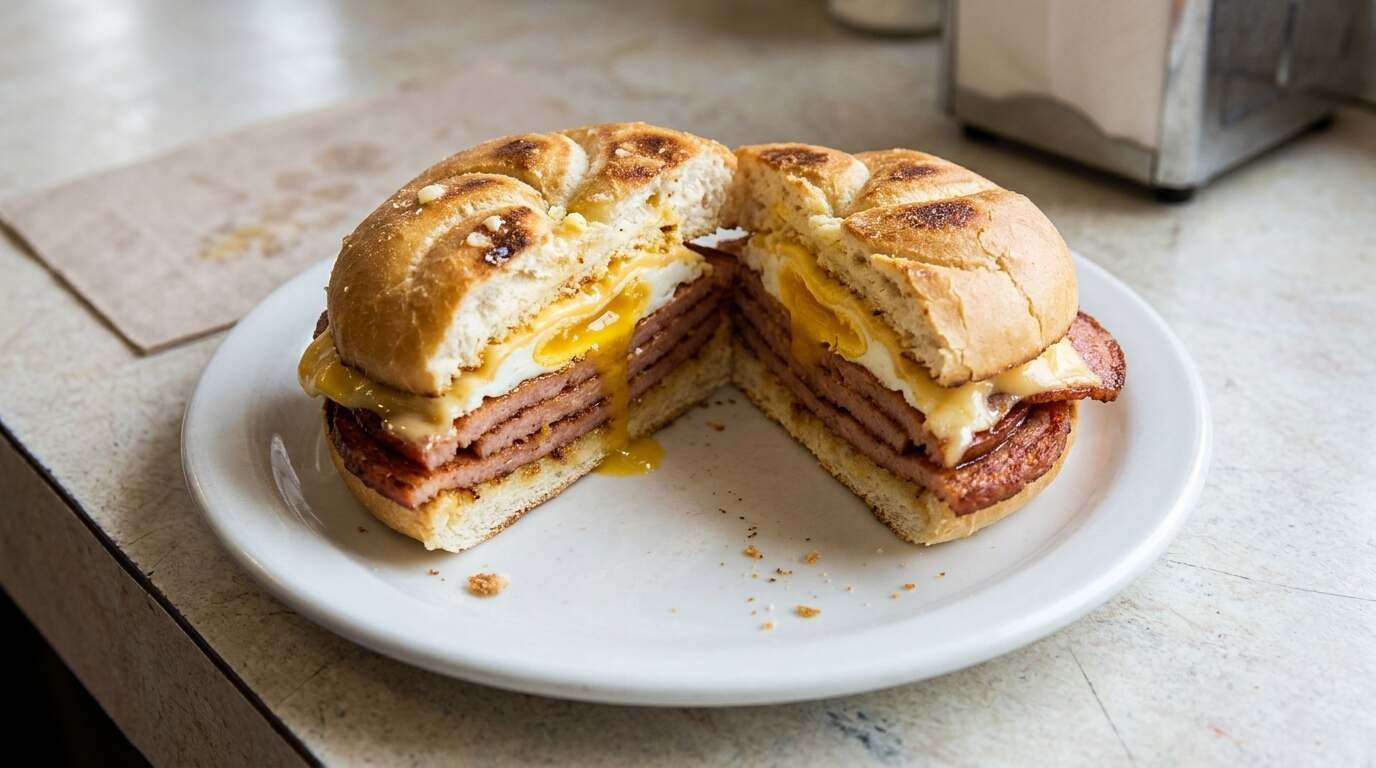
Two Trenton companies sell nearly the same thing, a lightly smoked, spiced pork product that gets sliced, notched, fried and stacked with egg and cheese on a roll, and the name printed on the wrapper is only half the argument. The other half happens at the counter, where the same slice is “pork roll” to one customer and “Taylor ham” to the next, and where a wrong guess can start a conversation that outlasts the coffee.
The paper trail behind the names is thinner than the loyalty to them. Several of the best-known dates come from the companies themselves, and the one outside researcher who went looking in old newspapers and court records could not verify the 1856 date at all.
The Pork Roll (Or Taylor Ham), Egg, And Cheese, from the Insider Food channel on YouTube.
What follows sorts the claims by who makes them and what supports them, then moves to the griddle, because the sandwich is the reason the argument exists.
What pork roll is, and why the name matters
A processed pork product with trade-secret seasoning and a legal problem in its first name
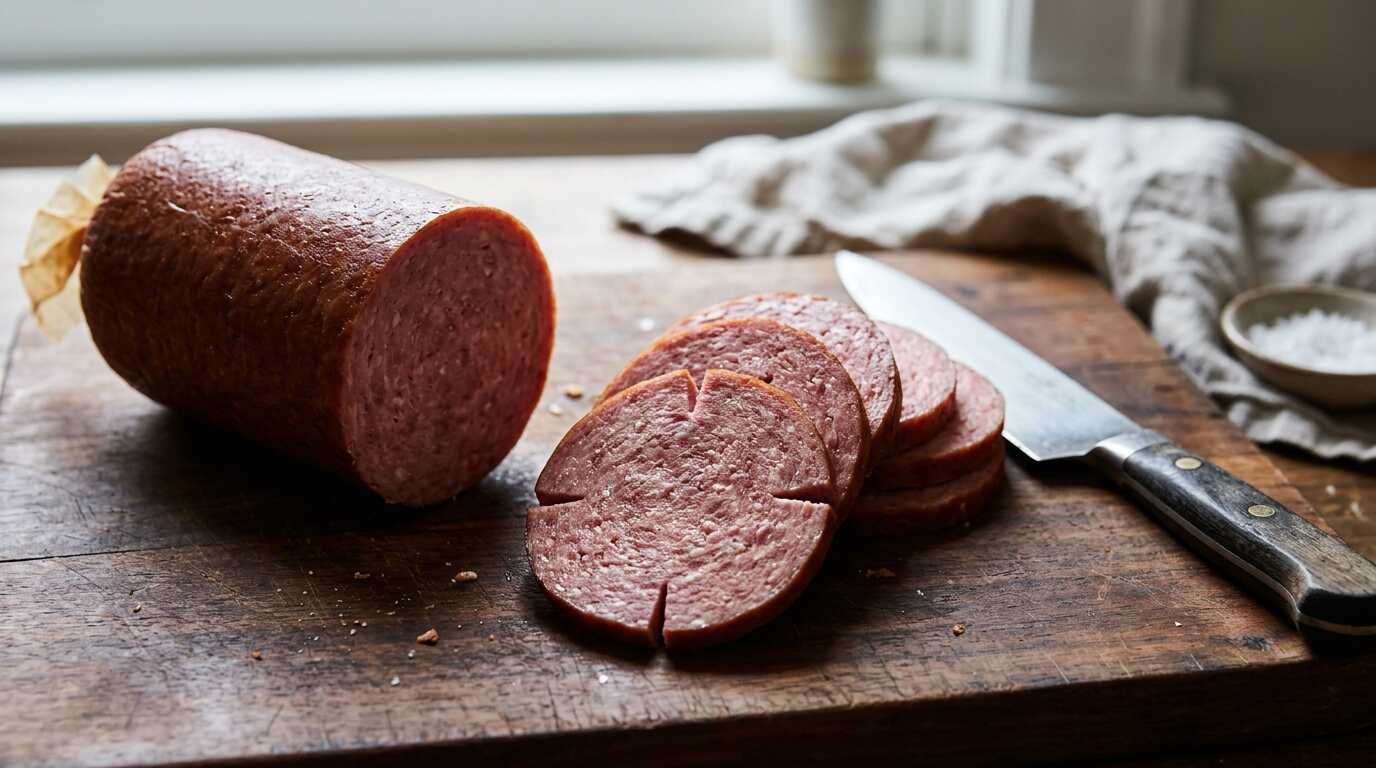
Pork roll is a cylinder of seasoned, lightly smoked pork, sold in a casing or cloth wrapper and cut into rounds at the deli counter or in the factory. Wikipedia’s summary describes the ingredients as lightly smoked pork, salt, a preservative and spices, and notes that both major producers keep their exact recipes secret. Atlas Obscura lists the mix as miscellaneous pork product, sugar, spices and salt, and says there is a good chance that the original product was never ham at all. That doubt sits at the center of the naming story, because “ham” was the word on the original label.
Two companies, both in Trenton, dominate the category. Taylor Provisions sells under the Taylor and Trenton names, and Case’s sells under its own. A reader-facing history from the Taylor company uses “Taylor Ham” only for the product as it existed before 1906. After that year, the company’s own timeline says, the label read “Taylor pork Roll.” The customers kept the older name anyway.
Steve Chernoski, who surveyed New Jersey menus, is quoted by Atlas Obscura as saying, “No one disputes that it’s Jersey’s meat.” Almost everything else is disputed.
John Taylor and the 1856 claim
A Trenton provisioner, a recipe date and a gap in the documents
The Taylor side of the story begins with John Taylor, and its date is 1856. The Taylor company’s timeline says that in that year Taylor refined a family recipe into “Taylor Prepared Ham.” A history published by the Greater Trenton partnership states that Taylor formulated the secret recipe for pork roll in 1856, and gives his birth as October 6, 1836, in Hamilton Square, which would make him about twenty at the time. The same page dates his entry into the pork and cattle trade to around 1870, his service as a Mercer County state senator to 1880 through 1883, the opening of the Taylor Provision Company to 1888, and his death to February 10, 1909. It does not reconcile an 1856 recipe with a trade career that it starts fourteen years later.
The word-origins researcher found references to a Trenton provisions seller named Taylor from that general period but did not confirm the 1856 date, and no document behind the company’s claim is cited. The earliest unambiguous printed use of a Taylor product name that the same researcher located is a Baltimore Sun advertisement of October 31, 1896, for “Taylor’s Prepared Ham.” An 1878 Montreal Gazette notice for “Pork Rolls!” turned up too, but nothing ties it to New Jersey.
So 1856 is a claim, repeated by the company and by Trenton boosters, and a plausible one for a product that took decades to become a brand. The earliest dated advertisement that can be checked is forty years later.
Atlas Obscura adds a detail about how the product was sold: Taylor’s Prepared Ham came rolled in a cloth sack, so a cook could slice and fry it without stripping the packaging. The same article gives no year for any of this.
Case’s and the other Trenton claim
A farmer and butcher in Belle Mead, corn husks and a competing date of 1870
George Washington Case is the second name in the dispute. Jersey Digs calls him a farmer and butcher who began selling his own version in 1870 and packed it in corn husks, and Atlas Obscura gives the same year and says he founded the Case Pork Pack Co. then. A Trenton Daily profile of the company puts the start in the 1870s on his farm in Belle Mead, with the business moving to Trenton in the 1930s. The same profile says the sixth generation of the family still cures the meat over hickory chips.
If the date holds, Case’s started fourteen years after Taylor’s claimed recipe and well before the Taylor Provision Company opened. That order of events is the reason each side can describe itself as the original: Taylor by the recipe date, Case by the earliest continuous family business. Neither framing has an independent document attached in the sources checked.
The profile’s president, Tom Dolan, is quoted saying only, “We’re here to stay.” The profile makes no mention of Taylor, and none of the Case sources checked address the name “Taylor ham” directly.
The 1906 story and the 1910 court case
The Pure Food and Drug Act explanation, and what the paper evidence says about it
The most widely repeated explanation for why two names exist is that Taylor was forced to stop calling his product ham. Jersey Digs says the Pure Food and Drug Act of 1906 barred Taylor Provisions from the word, so “pork roll” was added to the name and the packaging. The Taylor company’s timeline dates the rename to 1906 and attributes it to a ruling under the Pure Food and Drug Act, without saying what the ruling required or who issued it. The Greater Trenton history names the Act as the reason for the change but gives no date.
Here the documents help. The word-origins researcher reports two Trenton newspaper advertisements from that autumn. The Trenton Evening Times of October 18, 1906, advertised Taylor’s “Pork Roll” as similar to the prepared ham sold the previous year. A competitor’s notice on November 1, 1906, offered “pork roll (formerly called prep. ham).” The timing fits the story as told.
A federal court opinion from 1910 goes further. In Taylor Provision Co. v. Gobel, decided in the Eastern District of New York, the company sought an injunction over the use of “pork roll” and lost. As reported there, the court said the label had to change because the product “did not consist of ham.” The ruling also held that an unregistered “Pork Roll” could not serve as a trademark, according to Wikipedia’s account of the case, which is the pointer used here because the case text itself could not be retrieved.
One consequence follows from that. Once “pork roll” was generic, any producer could use it, and Case’s did. “Taylor ham” survived as a spoken habit with no label behind it, and Jersey Digs frames the modern dispute along these lines, as a brand name against a generic name.
Jersey Digs also says Taylor sued Case in 1910. The case caption cited by the other sources names a different defendant, Gobel, and this account has not been reconciled with it.
Where the line falls between the two names
A poll of more than 70,000 votes and a map that depends on who drew it
In 2016, NJ.com ran a reader poll that drew more than 70,000 votes. Jersey Digs, summarizing the analysis, reports that North Jersey says “Taylor Ham” and South Jersey says “pork roll,” and that Central Jersey, unusually, sides with the south. The dividing line runs roughly north of Middlesex County and along Interstate 78. Wikipedia puts the eastern edge of the divide at the Union-Middlesex county border, and notes that a 2014 NJ.com menu survey by Chernoski found a less tidy split, with Monmouth County restaurants often using “Taylor ham” and the main boundary sitting further south.
A menu is not a mouth, which may explain the difference in results. Wikipedia adds that restaurant “Taylor ham” is frequently not the Taylor brand at all, even in the north; it is often another maker’s pork roll, Case’s included, carrying the Taylor name by habit.
On May 25, 2023, New Jersey Gov. Phil Murphy declared the “Taylor Swift Ham, Egg, and Cheese” the state sandwich in a tongue-in-cheek proclamation framed as settling the Taylor ham versus pork roll question, days before Taylor Swift played MetLife Stadium. It settled nothing, and it was not meant to.
How to cut and griddle pork roll
Four notches, medium heat and a flat-top that does the browning
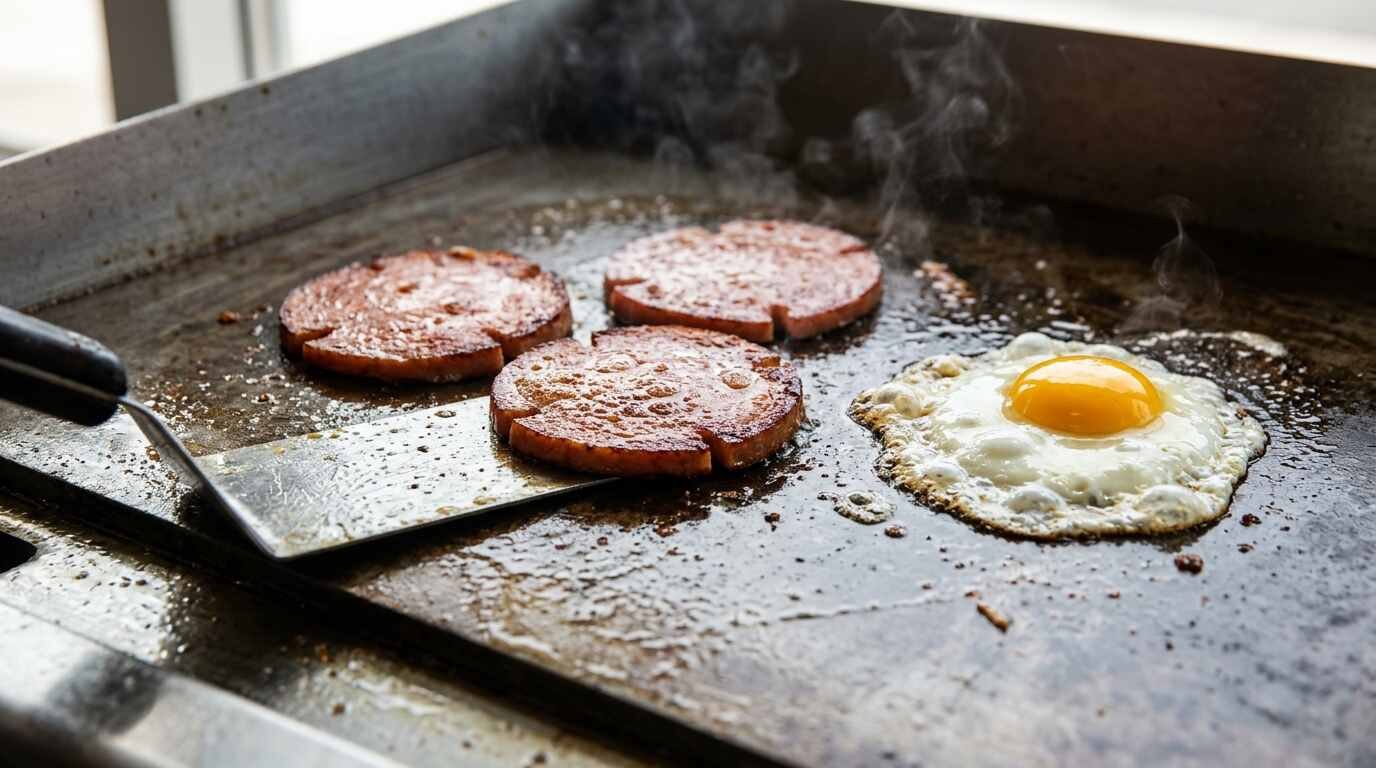
Pork roll behaves oddly in a hot pan. A round slice contracts at the edges faster than in the middle, curls into a cup and sits on its rim, leaving the center pale. The standard remedy is notching. Taylor’s own recipe calls for four cuts in each slice, starting at the outer edge and running about half an inch toward the center, evenly spaced around the circumference, to keep the slice from curling in the middle. A Jersey pork roll guide gives the same advice in looser terms: little notches around the edge, four should do it. Wikipedia describes two common patterns, a single radial cut and four inward cuts.
Thickness is a choice. The same guide notes that some cooks slice very thin and fry until crisp, while others cut thick and only warm the slice through.
For the heat, Taylor’s recipe melts a teaspoon of butter in a frying pan, adds the slices over medium heat and cooks them until they sizzle and the edges turn golden brown. Saveur’s version uses a 10-inch skillet at medium with a tablespoon of butter, flips the pork roll once and gives about three minutes for the meat and egg together. Both sources describe a pan. On a diner flat-top, the same logic holds with more room: the slices go down on a buttered or lightly oiled section at medium heat, the notched edges keep the whole round in contact with the steel, and the browning comes from the same chemistry covered in the Maillard reaction on the diner flat-top.
Sugar in the mix, as Atlas Obscura lists it, is one reason the edges color so quickly. Watching the edges, not a timer, is the more reliable signal.
Building the sandwich
Egg and cheese on a roll, with a few choices that change the result
The classic build is pork roll, egg and cheese on a hard roll. Wikipedia lists the usual bread as a hard roll, bagel or English muffin, the cheese as American, and the egg as fried or scrambled. Taylor’s recipe uses Kaiser rolls toasted, a layer of pork roll on the bottom half, the eggs, a second layer of pork roll, one slice of cheese and the top. Saveur splits the pork roll around the egg on an English muffin, putting plain slices below and cheese-topped slices above, which melts the cheese onto the meat instead of the egg.
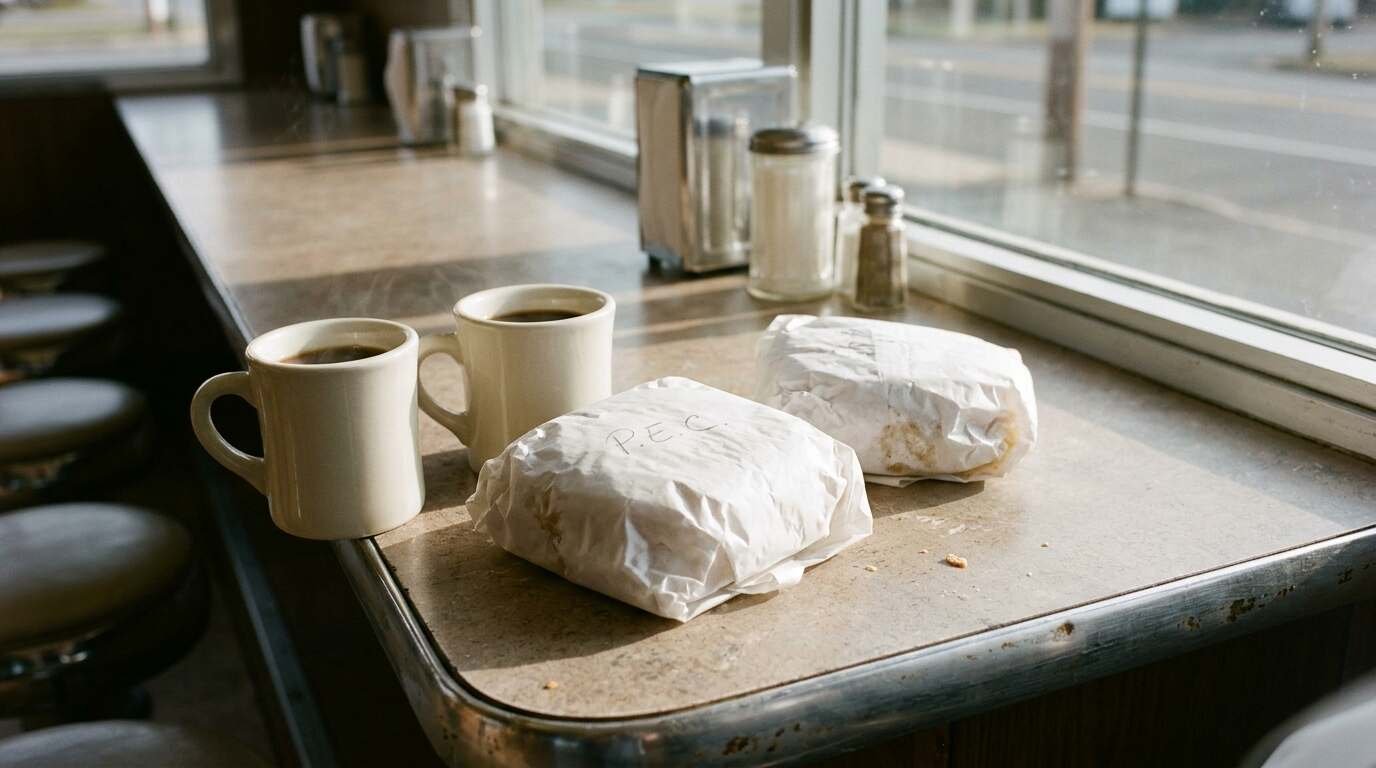
Wikipedia also lists variations, among them a Jersey burger with pork roll in place of bacon and a pork roll Monte Cristo. In New Jersey diners, the order is often placed with a name attached to the meat, and the name that is spoken, as the poll suggests, depends on the speaker’s county.
Disco fries, covered in a separate post on the New Jersey classic with a Long Island diner finish, come out of the same Jersey diner tradition. And pork roll sits alongside homemade breakfast sausage patties and their spice ratio as another seasoned pork breakfast meat built for the griddle, though one is ground and shaped by the cook while the other arrives already formed.
Sources
- https://wordorigins.org/big-list-entries/pork-roll-taylor-ham
- https://en.wikipedia.org/wiki/Pork_roll
- https://www.atlasobscura.com/articles/thats-not-mystery-meat-its-new-jerseys-beloved-pork-roll
- https://originaltaylorporkroll.com/?p=1131
- https://originaltaylorporkroll.com/?p=1254
- https://www.greatertrenton.org/?p=5490
- https://jerseydigs.com/taylor-ham-or-pork-roll-history-of-nj-great-debate/
- https://www.trentondaily.com/cases-pork-roll-a-new-jersey-staple
- https://jerseyporkroll.com/?p=223
- https://www.saveur.com/pork-roll-breakfast-sandwich-egg-cheese-taylor-ham-recipe
- https://patch.com/new-jersey/across-nj/taylor-swift-ham-declared-part-njs-official-breakfast-sandwich
- https://www.youtube.com/watch?v=homS64LlURU
Leave a Reply