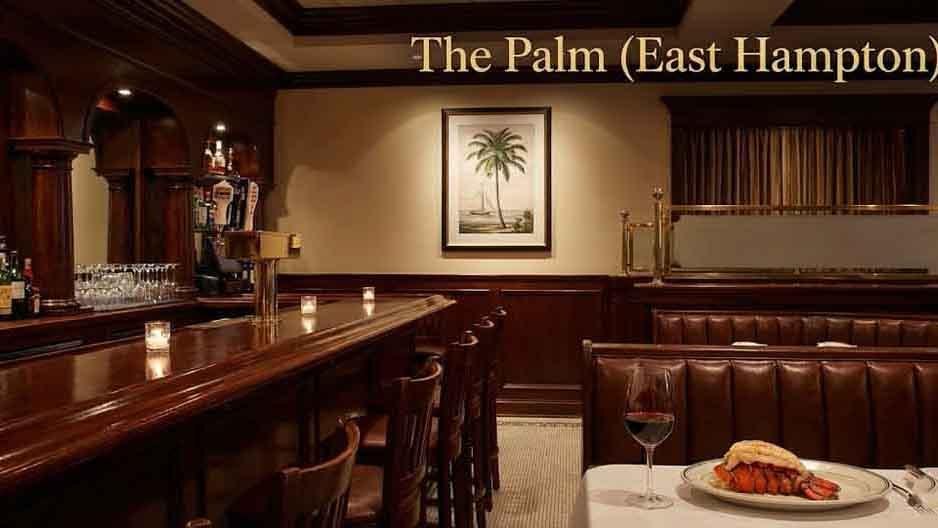
Ninety-eight years ago, a Manhattan licensing clerk couldn’t parse the Emilian dialect of two Italian immigrants, and a dynasty was born under the wrong name. Pio Bozzi and John Ganzi wanted to call their Second Avenue restaurant “La Parma,” after the province in Emilia-Romagna where both men were raised. The bureaucrat heard “Palm.” Rather than fight New York City paperwork — a war no immigrant has ever won — the founders kept the mistake and built around it one of the most recognized steakhouse empires in American dining history (Wikipedia, 2025). The East Hampton outpost, nestled inside the Huntting Inn on a Main Street that National Geographic once named the most beautiful in America, has spent forty-five summers as the unofficial commissary of the Hamptons power class — a dining room where hedge fund managers sit beneath hand-drawn caricatures of Billy Joel and Jerry Seinfeld and where, on a warm September evening in 2011, the entire restaurant broke into a spontaneous rendition of “Happy Birthday” for Bill Clinton (Social Life Magazine, 2025).
As someone who has spent twenty-five years behind the grill at The Heritage Diner in Mount Sinai, I know exactly what it costs to keep a restaurant alive across decades and through recessions, pandemics, and shifting palates. The Palm East Hampton has done it for nearly half a century in one of the most unforgiving seasonal markets on the Eastern Seaboard. That alone earns a kind of respect that no Michelin star can confer.
A Building Older Than the Republic
The Huntting Inn predates the United States by seventy-seven years. In 1699, the town of East Hampton deeded a two-acre plot of land on Main Street to the Reverend Nathaniel Huntting, the second Presbyterian minister of the village, as part of his compensation for leading the congregation. The original structure was a two-story saltbox — massive timber framing, leaden window sashes, miniature diamond-shaped glass — and the Huntting family occupied it for nine consecutive generations (The East Hampton Star, 2024). During the Revolutionary War, the property served as neutral territory between American and British forces, the only such sanctuary on the South Fork. Mary Huntting, the Reverend’s wife, opened the house as a public tavern in 1751, and the building has been pouring drinks in some capacity ever since (Dan’s Papers, 2019).
By 1875, with the Long Island Rail Road pushing east toward Bridgehampton and summer visitors flooding the village, the Huntting home was converted into a full boardinghouse. Additional wings followed in 1912. The last Huntting descendant sold the property in 1939 to Mr. and Mrs. Ralph C. Frood, who managed it alongside the Maidstone Arms and the Hedges Inn. Then, in 1980, the Palm Restaurant Group purchased the Huntting Inn and installed its sixth location inside the 300-year-old building — a marriage of Manhattan steakhouse bravado and colonial Long Island gentility that has proven remarkably durable (Behind The Hedges, 2019).
The Accidental Empire: From Second Avenue to Main Street
Understanding The Palm East Hampton requires understanding how this brand evolved from a modest Italian eatery into one of the most powerful dining names in America. When Bozzi and Ganzi opened the original Palm at 837 Second Avenue in 1926, they served the same red-sauce fare you could find in any Little Italy trattoria. The transformation began when a customer requested a steak. The founders walked to a Second Avenue butcher, bought a cut of beef, and broiled it on the spot. Word spread. More requests followed. Prime aged beef and Nova Scotia lobsters were added to the menu, and the Palm became something new: a steakhouse with an Italian accent (Wikipedia, 2025).
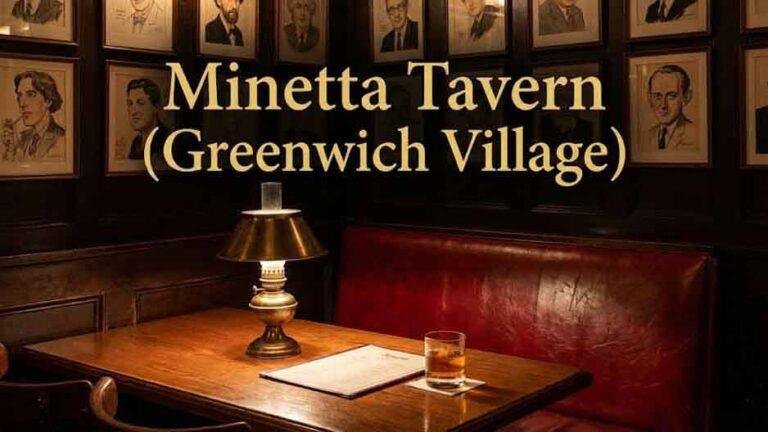
The restaurant’s proximity to the New York Daily Mirror, King Features Syndicate, and the Herald Tribune made it a natural canteen for the city’s press elite. Cartoonists from King Features began drawing caricatures of fellow diners directly on the walls — a tradition born from the Depression-era barter economy, where artists paid for supper with art. Jolly Bill Steinke, a well-known King Features artist and radio personality, became the Palm’s first unofficial artist-in-residence, compensated with a steady supply of his preferred gin cocktails (The Palm, 2025). Those caricatures became the brand’s most recognizable feature — a visual shorthand for power, celebrity, and belonging that now carries over $500,000 in insurance coverage across all locations (Social Life Magazine, 2025).
The third generation — Bruce Bozzi Sr. and Wally Ganzi Jr. — drove the national expansion. The Washington, D.C. location opened in 1972, reportedly at the urging of then–United Nations Ambassador George H.W. Bush, who complained about the capital’s lack of quality American fare. Los Angeles and Houston followed through the 1970s. By 1980, the family turned east toward the Hamptons, acquiring the Huntting Inn and establishing what would become one of the chain’s most prestigious addresses.
The Fertitta Chapter
The family saga took a dramatic turn in the late 2010s. A lawsuit between controlling owners Bruce Bozzi and Walter Ganzi and their cousins — descendants of the original founders — revealed that the operating branch had paid licensing fees far below market value. A court awarded the aggrieved relatives $120 million. The debt forced the parent company, Just One More Restaurant Corp., into Chapter 11 bankruptcy in early 2020 (Restaurant Business Online, 2020).
Houston billionaire Tilman Fertitta, through his Landry’s Inc. hospitality empire, stepped in with a $45 million acquisition that included every Palm location and the Huntting Inn itself. Fertitta — the sole owner of Fertitta Entertainment, Golden Nugget Hotels and Casinos, and the NBA’s Houston Rockets — was already the largest restaurateur in America, operating over 600 properties across more than 60 concepts including Morton’s, Mastro’s, Del Frisco’s, and Chart House (Landry’s Inc., 2025). The Palm acquisition added the final jewel to what is arguably the most prestigious collection of steakhouse brands ever assembled under a single ownership.
I have a personal connection to Tilman Fertitta’s world that makes this acquisition especially resonant. At Marcellino NY, my bespoke leather workshop in Huntington, I’ve had the privilege of crafting English bridle leather briefcases for Mr. Fertitta — pieces built with the same hand-saddle stitching and vegetable-tanned leather philosophy that I bring to every commission for the global elite. When a man who owns 600 restaurants trusts you with his daily carry, you understand something fundamental about how he thinks about quality and permanence. The Fertitta stewardship of The Palm, from what I can observe, reflects that same sensibility — an unwillingness to let a legacy brand become a museum piece.
Caricatures, Celebrities, and the Hamptons Social Theater
Every Palm location carries on the caricature tradition, but the East Hampton walls tell a distinctly Hamptons story. Among the celebrity patrons whose faces adorn the dining room: Billy Joel, Calvin Klein, Jon Bon Jovi, Jerry Seinfeld, Sarah Jessica Parker, and Alec Baldwin. Jimmy Fallon, Renée Zellweger, Jack Nicholson, and Andy Cohen have all claimed corner tables beneath their own portraits (Social Life Magazine, 2025). The tradition is maintained today by artists Al Evcimen, who began drawing at The Palm Too in 1974, and Steve Spector, who joined the Las Vegas location in 1998, along with the Bird family of classically trained artists, including Zack Bird, who has developed a signature mural style seen across multiple Palm locations (The Palm, 2025).
Locals refer to the dining room ritual as “The Palm Look” — that reflexive glance upward when a new party enters, evaluating the arrivals like a casting director scanning headshots. During peak summer, the scene rivals anything on Madison Avenue. The cozy Oak Bar, with its dozen stools, four intimate booths, and resident piano, functions almost as a separate establishment — a place where regulars settle in with martinis and backgammon boards while tourists wage a pitched campaign for dining room reservations.
The restaurant sits among the Hamptons’ most reliable celebrity-spotting destinations, alongside Nick & Toni’s, Tutto il Giorno, and Le Bilboquet. Social Life Magazine’s 2025 guide notes that The Palm’s walk-in-friendly policy for small parties creates opportunity for those who haven’t planned weeks ahead (Social Life Magazine, 2025). Peak celebrity season runs from the Fourth of July through Labor Day, but year-round residents like Seinfeld and Joel can appear anytime the mood strikes.
The Menu: Italian Roots, American Scale
The Palm has never chased trends. Its philosophy — as stated in its own materials — is that when you start with the best ingredients available, you don’t need elaborate recipes or culinary fads. The kitchen serves USDA Prime aged beef, corn-fed and hand-selected, aged a minimum of 35 days. The signature cuts include the New York Strip (reportedly the most popular dish at the East Hampton location), filet mignon, bone-in ribeye, and the Prime double-cut New York Strip. A full range of enhancements is available: Classic Oscar, black truffle butter, cowboy butter, cowboy buttered shrimp, and lobster tail additions ranging from petite to full-sized.
The lobster program deserves special attention. In the 1940s, second-generation owners Walter Ganzi and Bruno Bozzi added Nova Scotia lobster to the menu. Their sons then introduced the legendary four-pound whole lobster in 1965, a move that challenged the conventional wisdom that large lobsters were tough and flavorless. The results were immediate — lobster sales exploded from 150 pounds per week to 25,000 pounds, fundamentally altering the restaurant’s identity (Social Life Magazine, 2025).
The Italian DNA shows most clearly in dishes like the Chicken Parmigiana, Veal Martini, Baked Clams Casino, and a wagyu beef shank braised in house-made tomato sauce with red wine, herbs, and cacio e pepe fregula pasta. The Palm’s COO James Hamilton has described the brand’s differentiator succinctly: it is the only classic American steakhouse with Italian heritage at its roots (PaperCity Magazine, 2021). The sides — Half & Half cottage fries with fried onions, three-cheese potatoes au gratin, and creamed spinach — are designed for sharing. For dessert, the flourless chocolate cake, classic vanilla crème brûlée, and warm cinnamon sugar donut holes have earned loyal followings. An award-winning wine list rounds out the experience.
Dining Details and Practical Information
Address: 94 Main Street, East Hampton, NY 11937
Telephone: (631) 324-0411
Reservations: (631) 324-0410 or via OpenTable
Website: thepalm.com/location/the-palm-east-hampton
Hours: Monday – Thursday: 4:00 PM – 9:00 PM Friday – Saturday: 4:00 PM – 10:00 PM Sunday: 4:00 PM – 9:00 PM
Delivery & Takeout: Available via DoorDash at doordash.com/store/palm-restaurant-east-hampton-943618
Catering: Online event catering ordering available through The Palm’s website.
Dress Code: Business attire or smart casual. No beachwear, gym attire, athletic apparel, jerseys, hats, tank tops, or sleeveless shirts. Admittance at the discretion of management.
Valet Parking: Available.
Private Dining & Events: Multiple options for parties and milestone celebrations; contact the restaurant directly.
Loyalty Program: Landry’s Select Club — $25 welcome reward, $25 birthday reward, points earned on every dollar spent, redeemable in $25 increments.
Gift Cards: Available online through Landry’s. Bulk and corporate options for orders over $500.
Overnight Accommodations: The Huntting Inn offers boutique hotel rooms with complimentary continental breakfast, beach passes, and garden patio access. Book at hunttinginn.com or call (631) 324-0410.
Google Rating: 4.4 stars (386 reviews)
OpenTable Rating: Based on 1,119 reviews
Transportation: The Hampton Jitney and Hampton Luxury Liner both stop directly in front of the Huntting Inn.
Why The Palm Endures
Running a restaurant for forty-five years in a town where seasonal economics can destroy lesser operations in a single bad summer is an achievement that deserves analysis, not just admiration. The Palm East Hampton has survived because it understood something that most restaurants never learn: the difference between a meal and an institution. A meal satisfies hunger. An institution satisfies the human need for ritual, continuity, and belonging.
I think about this constantly at The Heritage Diner, where twenty-five years of serving breakfast and lunch on Route 25A in Mount Sinai has taught me that the unseen details — the temperature of the coffee, the way the griddle holds its seasoning, the fact that the same faces appear at the same counter stools every Tuesday — are what transform a business into a landmark. The Palm operates on the same principle at a very different price point. The caricatures are not decoration; they are a contract between the restaurant and its guests, a promise that your presence matters enough to be commemorated on the wall. The lobsters are not luxury; they are tradition, a direct line back to the 1940s innovation that defined the brand. The Huntting Inn is not merely a building; it is three centuries of continuous hospitality layered into the plaster and the floorboards.
When Paola and I prepare to launch Maison Pawli in 2026, our boutique real estate venture focused on Long Island’s North Shore, we study places like The Palm East Hampton carefully. The Huntting Inn demonstrates a thesis that my graduate studies in philosophy at Long Island University and The New School confirmed through entirely different channels: the most valuable things in this world are the ones that accumulate meaning through time. A briefcase gains its character through years of daily use, the leather developing a patina that no factory can replicate. A diner earns its place in the community not through grand gestures but through twenty-five years of consistent presence. And a restaurant like The Palm earns its authority not because it serves the most expensive steak on Long Island, but because it has been serving that steak inside a building that was already old when the Declaration of Independence was signed.
The Palm East Hampton is not just a place to eat. It is a place to be witnessed — beneath the caricatures, beside the piano, within walls that have absorbed nearly a century of ambition, celebration, and the particular electricity that flows through a room where everyone understands the stakes. You do not merely dine at The Palm. You participate in its ongoing story.
Peter — Owner of The Heritage Diner, Mount Sinai, NY | Founder of Marcellino NY, Huntington, NY | Co-Founder of Maison Pawli (2026) | Graduate degrees in Philosophy from Long Island University and The New School University, NYC