The stamp reads “Genuine Leather.” The price feels right. The color is uniform, the surface unblemished, and for a moment, standing in the department store under fluorescent light, you believe you’ve found a bargain. You haven’t. You’ve found the most successful linguistic sleight-of-hand in the history of consumer goods — a phrase engineered to make you feel confident about purchasing the lowest rung of real leather on the market. It is the culinary equivalent of “made with real cheese” on a box of frozen pizza, or the real estate equivalent of “cozy” in a listing for a 400-square-foot studio. The words are technically accurate. The implication is a lie. After twenty-five years running The Heritage Diner on Route 25A in Mount Sinai, and another decade hand-selecting hides for Marcellino NY briefcases that ship to attorneys and surgeons across four continents, I’ve come to understand that the distance between marketing language and material truth is where most people lose their money — and their trust. This is the guide I wish someone had handed me before I cut my first hide. Consider it a public service from a man who has spent his life studying the unseen details that separate the disposable from the eternal.
The Anatomy of a Hide: Understanding What You’re Cutting
Before you can understand leather grades, you must understand the hide itself. A raw cowhide — typically from cattle raised for the meat industry — arrives at a tannery as a thick, multi-layered skin ranging from six to ten millimeters in total thickness (Popov Leather, 2025). That thickness is unworkable for virtually any consumer product. It must be split.
The tannery runs the hide through a band knife splitter, shearing it horizontally into layers. The outermost layer — the side that once faced the sun, endured barbed wire, absorbed insect bites, and grew the animal’s hair — contains the densest, tightest concentration of collagen fibers in the entire hide. This is the grain. It is to leather what the crust is to a Heritage Diner sourdough loaf: the part that develops character, resists the elements, and tells you everything about how the thing was made.
The bottom layer, called the split or drop, contains only loose, fibrous material with no natural grain surface. It is structurally weaker, less moisture-resistant, and fundamentally different in character. These two layers are then processed, finished, and sold under different names — and it is in this naming convention that the entire leather industry’s most persistent deception lives.
Understanding this basic anatomy is essential. Without it, the terms “full grain,” “top grain,” and “genuine leather” remain abstractions. With it, they become a map of exactly where your money goes.
Full Grain Leather: The Uncompromised Standard
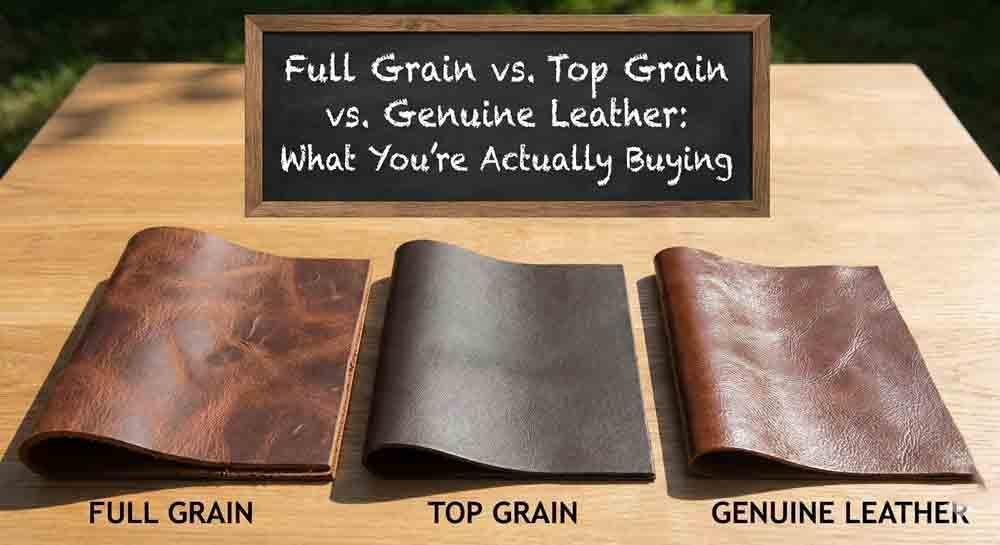
Full grain leather is the outermost layer of the hide with the complete grain surface left intact. Nothing has been sanded. Nothing has been buffed. Nothing has been removed except the hair (International Leather Club, 2024). Every scar, every insect bite, every stretch mark from the animal’s life remains visible — and that is precisely the point.
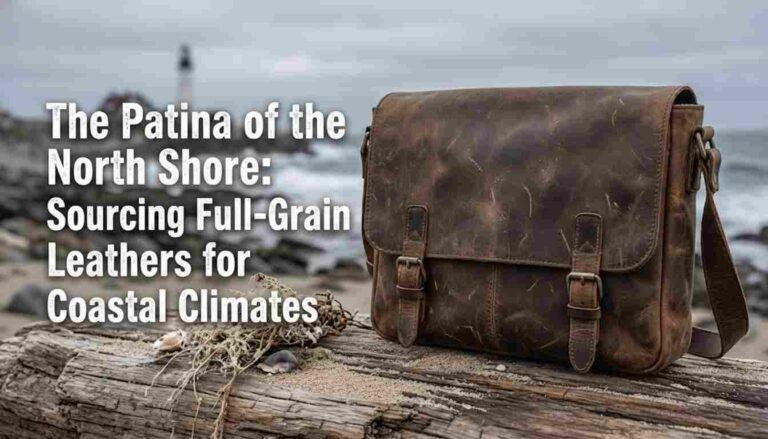
The dense, tight fiber structure of the full grain surface provides unmatched tensile strength and durability. It resists moisture, absorbs natural oils from handling, and over months and years develops what leather craftsmen call “patina” — a rich, deepening luster that cannot be manufactured, replicated, or rushed. A full grain briefcase at year one looks handsome. At year ten, it looks magnificent. At year twenty-five, it looks like an heirloom.
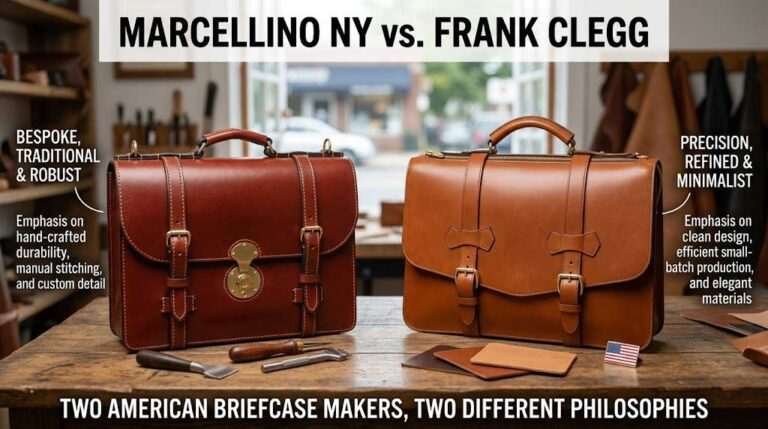
At Marcellino NY, we work exclusively with Grade A full grain vegetable tanned English bridle leather — sourced from both American tanneries and the legendary J & E Sedgwick & Co. of Walsall, England, who have been tanning hides with century-old pit methods since 1900 (Marcellino NY, 2025). Sedgwick’s process takes over four and a half months from start to finish. Hides are carefully selected from UK and Irish cattle. The leather is pit-tanned using one hundred percent vegetable tannins, then hand-waxed by highly skilled curriers whose training takes years to complete (Tsuchiya-Kaban, 2025). The result is a leather with extraordinary tensile strength, a distinctive waxy bloom, and a richness of character that no machine finishing can approach.
Only an estimated ten to fifteen percent of leather on the global market qualifies as full grain (IsItLeather, 2024). The reason is economic: because the full grain surface preserves every natural marking, a craftsman can typically utilize only about seventy-five percent of any given hide. The rest — the scarred portions, the branded areas, the insect-damaged sections — becomes expensive waste. This scarcity and waste factor is reflected directly in the price.
Full grain leather is the filet mignon of the leather world. It is the cut I serve, figuratively and literally, whether the medium is a plate at The Heritage Diner or a briefcase leaving our Huntington workshop bound for a client in London.
Top Grain Leather: The Capable Compromise
Top grain leather originates from the same outermost layer of the hide as full grain. The critical difference is what happens next: the very top surface of the grain is sanded or buffed to remove natural imperfections — scars, blemishes, insect bites, branding marks (Leather Honey, 2025). After this correction, a finish coat is applied to create a smooth, uniform appearance.
This process accomplishes two things simultaneously. It makes the leather thinner, more pliable, and easier for manufacturers to work with. And it removes the visual evidence of the animal’s life, producing a surface that looks consistent, clean, and polished. For many consumers, this is actually desirable — top grain leather stains less easily because its sealed pores prevent liquid absorption, and its uniform color makes it a reliable choice for high-end furniture, handbags, and dress accessories.
The trade-off is real but often overstated. Top grain leather is still cut from the strongest part of the hide. It still possesses significant durability. It will still last years with proper care. What it sacrifices is the development of natural patina — that slow, organic deepening of color and character that only occurs when natural oils and moisture interact with an unsealed grain surface over time. A full grain wallet tells your story. A top grain wallet looks the same on day one thousand as it did on day one.
In the language of real estate — a language my wife Paola and I speak fluently as we prepare to launch Maison Pawli in 2026 — top grain leather is the renovated colonial with the original character sanded smooth and painted a tasteful gray. It is attractive, functional, and well-built. But the buyers who truly understand provenance will always prefer the house with the original wide-plank floors, the hand-forged hardware, and the patina of two centuries of family dinners still visible in the woodwork.
The industry sometimes uses the term “corrected grain” interchangeably with top grain. Technically, corrected grain refers specifically to a top grain leather that has been sanded and then re-embossed with an artificial grain pattern — a further step away from the original surface. The distinction matters if precision matters to you. In my workshops, precision always matters.
Genuine Leather: The Great American Misdirection
Here is where the leather industry earns its reputation for opacity. The phrase “genuine leather” sounds reassuring. It was designed to. But in the hierarchy of leather quality, “genuine leather” occupies the lowest tier of actual animal hide — sitting beneath both full grain and top grain, and just above bonded leather, which barely qualifies as leather at all (Carl Friedrik, 2025).
Genuine leather is typically made from the lower layers of a split hide — the portion that remains after the valuable grain layer has been sheared off for full grain or top grain products. It contains none of the original grain’s tight collagen structure. It lacks the density, the moisture resistance, and the natural surface character that define premium leather. To compensate, manufacturers sand it, emboss it with an artificial grain pattern, coat it with pigments and finishes, and sell it under a name that implies quality.
The global leather goods market was valued at approximately $266 billion in 2024 and is projected to approach $538 billion by 2033 (Grand View Research, 2025). Of that market, the genuine leather segment alone accounts for over fifty-four percent of revenue. This statistic is not a testament to quality — it is a testament to marketing. The majority of leather goods sold worldwide are made from the least desirable cut of the hide, dressed up in language that sounds premium.
A genuine leather belt will crack and peel within a year or two of regular wear. A genuine leather briefcase will lose its shape, absorb water, and begin deteriorating at the seams within months. A genuine leather sofa — the kind selling for eight hundred dollars at a furniture warehouse — will begin flaking and disintegrating within three to five years, leaving your living room looking like the aftermath of a small, slow-motion disaster.
I’ve watched this pattern unfold for a quarter century from my counter at The Heritage Diner, where local contractors, teachers, and attorneys cycle through the same frustrating replacement loop: buy cheap, replace often, and wonder why quality seems impossible to find. The answer is that quality was never in the product. It was only in the label.
The Tanning Process: Where Chemistry Meets Craft
The grade of the leather tells you where it came from on the hide. The tanning process tells you how it was preserved — and this second variable is equally critical to the final product’s character, durability, and environmental footprint.
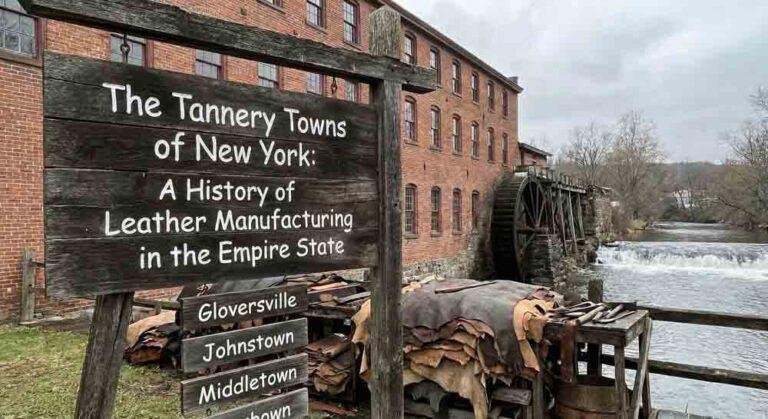
There are two dominant tanning methods in the modern leather industry. Chrome tanning, invented during the Industrial Revolution, uses chromium sulfate to preserve the hide in a matter of hours or days. It is fast, cheap, and produces approximately ninety percent of the world’s leather (Walnut Studiolo, 2019). The resulting leather is supple, uniform in color, and consistent in texture — but it is chemically treated, less biodegradable, and often produces significant industrial pollution in regions with lax environmental oversight.
Vegetable tanning — the method we insist upon at Marcellino NY — uses natural tannins derived from tree bark, leaves, and roots. Common sources include oak, chestnut, mimosa, and quebracho. The process takes between thirty and ninety days, depending on the tannery’s methods, and the resulting leather is firmer, more structural, and develops a rich patina over time that chrome-tanned leather simply cannot replicate (Galen Leather, 2025). Less than ten percent of the world’s leather is vegetable tanned. It is the artisanal loaf in a world of factory bread.
The Sedgwick process, which produces the English bridle leather we use at Marcellino NY, represents perhaps the pinnacle of vegetable tanning. The hides are first pit-tanned using hundred percent vegetable tannins, then drum-tanned to refine the fiber structure. After tanning, natural cod oils and tallow fats are infused into the fiber structure by hand, multiple times, to ensure suppleness and longevity. The entire process takes approximately four and a half months — and the resulting leather carries a distinctive waxy bloom on its surface that signals authenticity to anyone who knows what to look for (Coastal Leather Supply, 2022).
This is the leather equivalent of slow-cooking a Heritage Diner brisket for fourteen hours: the time investment is enormous, the attention to detail is constant, and the result is so superior to the fast-processed alternative that comparison becomes almost unfair.
The Buy-It-For-Life Calculus: Why Cheap Leather Costs More
There is a reason the subreddit r/BuyItForLife has become a cultural phenomenon, and it is the same reason my diner has survived twenty-five years on the North Shore while chains and franchises have come and gone around it: people are tired of replacing things. They are tired of planned obsolescence masquerading as value. They are tired of spending four hundred dollars on a briefcase every two years when they could spend eight hundred dollars once and never think about it again.
The United States leather goods market alone was valued at approximately $123 billion in 2024 (Precedence Research, 2025). The premium tier of that market — products made from full grain leather with vegetable tanning and hand-finishing — represents a fraction of total sales but is growing at a compound annual rate that outpaces the mass market significantly. The consumer is waking up. The question is whether the consumer knows what to look for.
Here is the practical calculus. A genuine leather wallet costs forty to sixty dollars and lasts one to three years before cracking, peeling, or losing its shape. Over a twenty-year span, you will purchase between seven and twenty wallets, spending $280 to $1,200. A full grain vegetable tanned wallet costs $120 to $250 and, with minimal care — an occasional application of leather conditioner, storage away from direct heat — will last twenty years or more, developing a patina that makes it more beautiful with age, not less.
The same arithmetic applies to briefcases, belts, watch straps, and every other leather product in your life. The cheap option is never cheap. It is merely a subscription service disguised as a purchase.
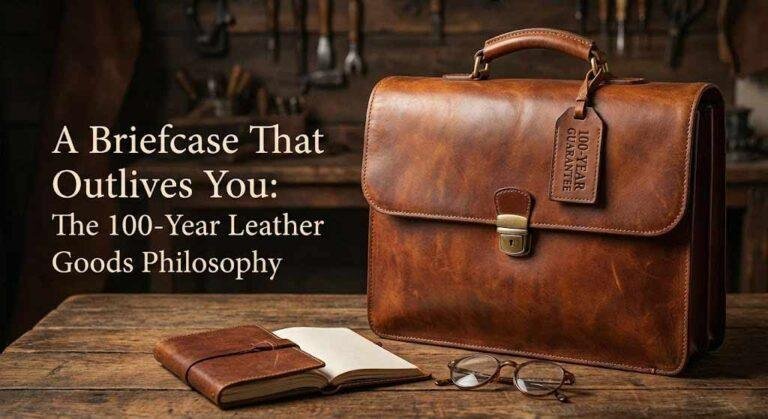
This philosophy — the hundred-year philosophy, as I’ve come to call it — undergirds everything we build at Marcellino NY, everything we serve at The Heritage Diner, and everything Paola and I are planning for Maison Pawli. It is the conviction that things worth having are things worth building to last, and that the unseen details — the quality of the tannage, the integrity of the thread, the provenance of the hide — are what separate a product from a possession, and a possession from a legacy.
How to Read the Leather: A Practical Field Guide
You are standing in a store. Or scrolling through a product page. And you need to know, right now, whether the leather in front of you is worth your money. Here is what to look for.
Smell it. Full grain and top grain leather smell like leather — a warm, organic, slightly sweet scent that is unmistakable once you know it. Genuine leather, bonded leather, and synthetic alternatives smell like chemicals, plastic, or nothing at all. Your nose is your most reliable tool.
Touch it. Full grain leather has a natural texture — slight variations, visible pores, a tactile richness that feels alive under your fingers. Press your thumb into it and you’ll see the color shift slightly as the fibers compress, then return to their original shade when you release. This is called “pull-up” and it is a hallmark of quality aniline-dyed full grain leather. Genuine leather feels flat, rubbery, or slick — the surface coating creates a barrier between your skin and the material beneath.
Look at the edges. Cut edges of full grain leather reveal a consistent, fibrous cross-section — you can see the dense collagen structure with the naked eye. Genuine leather and bonded leather edges often show layering, glue lines, or a painted-over uniformity that conceals the material’s actual composition.
Read the label — skeptically. If a product says “genuine leather” and nothing more, treat it as a warning, not a promise. If a product specifies “full grain,” names the tannery, identifies the tanning method, and provides information about the hide’s origin, you are looking at a manufacturer who is proud of their materials. At Marcellino NY, we list every detail on our leather selection page — from the Sedgwick English bridle to the Hermann Oak harness leather — because transparency is the first obligation of any craftsman who takes his work seriously.
Check the price. A full grain vegetable tanned leather briefcase from a reputable maker will cost between $400 and $1,500 depending on size, complexity, and the specific tannery used. If you find a “full grain leather briefcase” for $89 on an unfamiliar website, the claim is almost certainly false. The raw materials alone — a Grade A full grain hide, solid brass hardware, linen thread — cost more than that.
The leather market, like the real estate market, rewards informed buyers and punishes the naive. In both arenas, the asking price tells you something, but the materials, the craftsmanship, and the provenance tell you everything.
Twenty-five years behind a diner counter and a decade behind a leather bench have taught me the same lesson from two different angles: people can feel quality before they can name it. They know when the burger is made from fresh-ground chuck and when it’s a frozen puck from a supply warehouse. They know when the leather is alive with natural grain and when it’s been processed into a simulation of itself. The body knows. The hands know.
The global leather goods industry is approaching a half-trillion-dollar inflection point, and the choices consumers make in the coming years will determine whether that growth favors the artisans or the imitators. Every full grain briefcase purchased from a workshop like Marcellino NY, every vegetable tanned belt sourced from a heritage tannery, every informed decision made by a buyer who understands the difference between a grade and a marketing term — these are votes cast for a world where craftsmanship still matters, where provenance still commands respect, and where the things we carry through our lives are worthy of the journeys they accompany.
The stamp on the leather tells you what the manufacturer wants you to believe. The grain tells you the truth. Learn to read the grain.
Peter is the owner of The Heritage Diner, located at 275 Route 25A, Mount Sinai, NY, and the founder of Marcellino NY, a bespoke English bridle leather briefcase workshop in Huntington. He and his wife Paola are launching Maison Pawli, a boutique real estate venture on the North Shore, in 2026.
Sources cited: Grand View Research (2025), Precedence Research (2025), Popov Leather (2025), International Leather Club (2024), IsItLeather (2024), Carl Friedrik (2025), Leather Honey (2025), Galen Leather (2025), Walnut Studiolo (2019), Coastal Leather Supply (2022), Tsuchiya-Kaban (2025), Marcellino NY (2025).
Recommended reading:
- Gentleman’s Gazette: “The Truth About Leather Goods” — https://www.gentlemansgazette.com/leather-goods-truth/
- Tanner Leatherstein (PEGAI): “Leather Grades Explained with a Muffin” — https://www.pegai.com/blogs/tanners-newsleather/leather-muffin-leather-grades-explained
- Marcellino NY: Leather Choices — https://marcellinony.com/leather-choice/